
BuddhistCatholicContemplativeEvangelicalGeneral ChristianHinduJewishLatter-day SaintMuslimNew VisionsProgressive Christian
Beliefs
- Buddhist
- Catholic
- Contemplative
- Evangelical
- General Christian
- Hindu
- Jewish
- Latter-day Saint
- More Voices
- Muslim
- New Visions
- Pagan
- Progressive Christian
Topics
- Religion News
- Food and Religion
- Sports and Religion
- Religious Art
- Religious Music and Entertainment
- Religious Events
- History and Religion
- Style and Religion
- Politics and Religion
- Women in Religion
- Recreation Outdoors and Religion
- Business Finance and Religion
- Careers Workplace and Religion
- Education and Religion
- Family Parenting and Religion
- Health Fitness and Religion
- Home and Religion
- Relationships and Religion
- Technology and Religion
- Travel and Religion
Columnists
- Buddhist Columnists
- Business Finance and Religion Columnists
- Careers Workplace and Religion Columnists
- Catholic Columnists
- Contemplative Columnists
- Education and Religion Columnists
- Evangelists Columnists
- Family Parenting and Religion Columnists
- General Christian Columnists
- Health Fitness and Religion Columnists
- Hindu Columnists
- History and Religion Columnists
- Home and Religion Columnists
- Jewish Columnists
- More Voices Columnists
- Latter Day Columnists
- Muslim Columnists
- New Visions Columnists
- Nonreligious Columnists
- Pagan Columnists
- Politics and Religion Columnists
- Progressive Columnists
- Recreation Outdoors and Religion Columnists
- Relationships and Religion Columnists
- Religion News Columnists
- Religious Art Columnists
- Religious Events Columnists
- Religious Music and Entertainment Columnists
- Sports and Religion Columnists
- Style and Religion Columnists
- Technology and Religion Columnists
- Travel and Religion Columnists
- Women in Religion Columnists
Resource Library
- 2026 Calendar
- Library of World Religions
- The 100 Most Holy Places on Earth
- Patheos Answers
- Podcasts
- Videos
- Faith Leaders Database
- Anglican Episcopalian
- Bahai
- Baptist
- Buddhism
- Christianity
- Confucianism
- Eastern Orthodoxy
- Hinduism
- Holiness and Pentecostal
- ISKCON
- Islam
- Judaism
- Lutheran
- Methodist
- The Church of Jesus Christ of Latter-day Saints
- New Age
- Paganism
- Presbytarian and Reformed
- Protestantism
- Religion Behind the Scenes
- Roman Catholic
- Scientology
- Shia Islam
- Sikhism
- Sufism
- Sunni Islam
- Taoism
- Zen
- See all religions
Research Tools
 Ad-Free & Subscriber Log-In Subscription Support
Ad-Free & Subscriber Log-In Subscription Support
Follow Patheos 

- Trending:
- Forgiveness
- |
- Marriage
- |
- Consciousness
- |
- Death Penalty
- |
- Election
- |
- Halloween
 American Buddhist Perspectives
- Home
- Buddhist
- Religion News
- When You are You, Zen is Zen
When You are You, Zen is Zen
Last updated on: February 11, 2010 at 11:07 am by Justin Whitaker
When You are You, Zen is Zen 2010-02-11T11:07:00-07:00 Justin Whitaker
Patheos Explore the world's faith through different perspectives on religion and spirituality! Patheos has the views of the prevalent religions and spiritualities of the world.
 Thoughts on Zen from a Theravādin perspective*
Students of Theravādin Buddhism will no doubt find such statements to be a bit peculiar. In Theravāda, as well as most Tibetan Buddhism, their is an emphasis on gradual personal/moral/spiritual development on the path to awakening. Teachings of a gradual path are found throughout the Pāli Canon, the preserved teachings of the Buddha from the Theravādin tradition. Indeed the Buddha’s own life, and numerous past lives, reflect this gradual perfection of virtues en route to nibbāna.
However, over time in Buddhism there developed an idea of sudden awakening. Whether this development was primarily made by philosophical-literary monks such as those who wrangled over the vast Abhidharma literature, or by so-called forest meditators, alone in deep practice, is unknown. In fact these divisions may themselves be false and unhelpful. In either case, the basic idea behind sudden awakening is that the mind is primordialy pure, only shrouded by later defilements. This idea itself is found in the Pāli Canon (from Accesstoinsight.org):
“Luminous, monks, is the mind.1 And it is defiled by incoming defilements.” {I,v,9}
“Luminous, monks, is the mind. And it is freed from incoming defilements.” {I,v,10}
“Luminous, monks, is the mind. And it is defiled by incoming defilements. The uninstructed run-of-the-mill person doesn’t discern that as it actually is present, which is why I tell you that — for the uninstructed run-of-the-mill person — there is no development of the mind.” {I,vi,1}
“Luminous, monks, is the mind. And it is freed from incoming defilements. The well-instructed disciple of the noble ones discerns that as it actually is present, which is why I tell you that — for the well-instructed disciple of the noble ones — there is development of the mind.” {I,vi,2}
And the Pāli (from AN i 5 and 6, here and here):
- ‘‘Pabhassaramidaṃ, bhikkhave, cittaṃ. Tañca kho āgantukehi upakkilesehi upakkiliṭṭha’’nti. Navamaṃ.
50. ‘‘Pabhassaramidaṃ, bhikkhave, cittaṃ. Tañca kho āgantukehi upakkilesehi vippamutta’’nti. Dasamaṃ.
- ‘‘Pabhassaramidaṃ , bhikkhave, cittaṃ. Tañca kho āgantukehi upakkilesehi upakkiliṭṭhaṃ. Taṃ assutavā puthujjano yathābhūtaṃ nappajānāti. Tasmā ‘assutavato puthujjanassa cittabhāvanā natthī’ti vadāmī’’ti. Paṭhamaṃ.
52. ‘‘Pabhassaramidaṃ , bhikkhave, cittaṃ. Tañca kho āgantukehi upakkilesehi vippamuttaṃ. Taṃ sutavā ariyasāvako yathābhūtaṃ pajānāti. Tasmā ‘sutavato ariyasāvakassa cittabhāvanā atthī’ti vadāmī’’ti.
No time now for linguistic analysis, but Thanissaro Bhikkhu’s comments (see link above) on this statement are helpful for understanding it in the Therāvadin context. But in the developing Mahāyāna thought, this statement pointed to a profound truth in the nature of the individual: that we all have within us an essence of awakening. To realize this, not just intellectually but in one’s whole being, would be awakening.
The statement: “When you are you, Zen is Zen” points to that original nature. It points to the fact that no defilement is essential, none of your problems are yours or you. YOU are not an angry person or a jealous person or a depressed person. You are you.
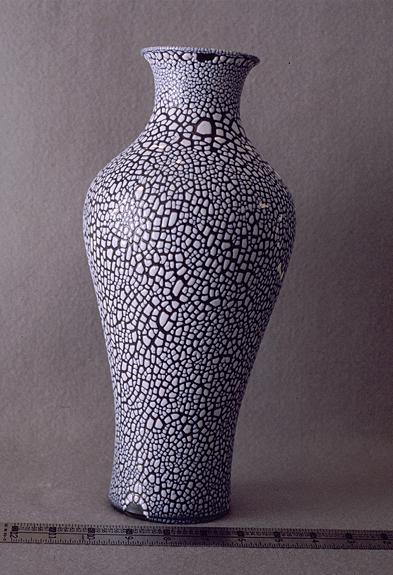 It’s like taking a hammer to a beautiful porcelain vase. Tap it and cracks begin to appear. Tap more and the whole thing begins to fall apart, pieces falling to the ground. The vase is the you that has been constructed through a thousand-million thoughts and actions and words. Thinking, “I am a depressed person” and saying to others “Oh, I have depression” and acting this out, we polish our vase of depression. This is not to minimize the reality, for us, of depression. But it is only a reality for you because it has been constructed and maintained all this time. It is not you.
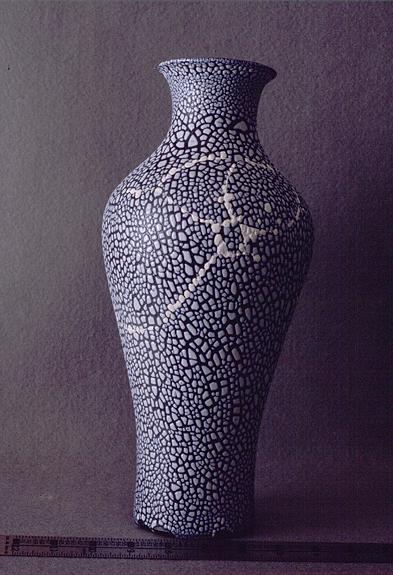 The statement, “When you are you, Zen is Zen” tries to stop another kind of vase-building, spiritual vase-building. When we enter on the path, it is easy to desperately want to get it right, to have profound realizations, to make progress. We can strive and set goals, and strive toward them. As we do so, we may wonder, “is this right? Is this ‘Zen’?”
The answer is, “No. When you are you, Zen is Zen.”
We think we are the vase, this delicate collection of clay and mineral and colors and polish. Just like we think we are our possessions, our career, our family, our spirituality. But this is all mere self-cherishing; the very activity that Buddhism seeks to undercut. And if your practice doesn’t undercut it, reality will for you. Possessions will fade, careers will be lost, people will die or slip out of touch. In self-cherishing we scramble to fill the hole, find new things and activities and people. And this can fill one’s whole life: getting, losing, getting new, losing again. A life of reactivity.
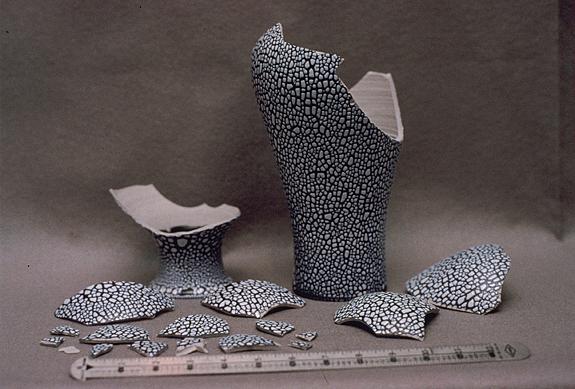 This life of scrambling is not only exhausting and unfulfilling, it cuts us off fundamentally from others and the world. We are so busy cramming everything into our gaps that we too rarely stop to look closely at who we are with, what we are doing. Look closely. Slow down. It is only when you look fully that you are you and Zen is Zen. tap the vase. Watch it crack and crumble. As the pieces of the vase fall to the ground, you see that you were not the vase all along.
You are the space that the vase occupied: unfettered, unbounded, undefiled, free.
As Dogen Zenji wrote in his Genjo Koan:
To study the Buddha way is to study the self.
To study the self is to forget the self.
To forget the self is to be enlightened by the ten thousand dharmas.
To be enlightened by the ten thousand dharmas is to free one’s body and mind and those of others.
No trace of enlightenment remains,and this no-trace continues endlessly.
* The post is subtitled, Thoughts on Zen from a Theravādin perspective, but even “Theravādin” is of course a piece of that vase that one can cling to, polishing it with Pāli studies, Vipassanā meditation, and visits with this or that teacher. The quote, “When You are You, Zen is Zen” is from Shunryu Suzuki Roshi, quoted in a wonderful talk by Edward Brown on Facets of Self.
** broken vase images from http://www.collectioncare.org/treatm/treatmwv.html (ironically a company that repairs and restores broken vases)

Previous Post

February 9, 2010
Slow bloggin, road trips, more photos
Next Post
February 18, 2010 Zen is Not Buddhism
Browse Our Archives
Select a Category Academia Activism American Buddhism Art Book review Buddhism Buddhism Today Buddhist Ethics Burma/Myanmar China Christianity Commodification Environment Gender Happiness Health Humor India Interfaith Islam Japanese Buddhism Kant Media / News Meditation mindfulness Photography Poetry Politics quicktakes Running Teaching Technology Thailand Theism/Atheism Theravada Tibet Tibetan Buddhism Travels Uncategorized Unitarian Universalism video Western Philosophy Zen
Select a Month June 2021 January 2021 November 2020 August 2020 July 2020 March 2020 January 2020 October 2019 August 2019 June 2019 May 2019 March 2019 February 2019 January 2019 December 2018 November 2018 October 2018 September 2018 August 2018 July 2018 June 2018 May 2018 April 2018 March 2018 February 2018 January 2018 December 2017 November 2017 October 2017 September 2017 August 2017 July 2017 June 2017 May 2017 April 2017 March 2017 February 2017 January 2017 December 2016 November 2016 October 2016 September 2016 August 2016 July 2016 June 2016 May 2016 April 2016 March 2016 February 2016 January 2016 December 2015 November 2015 October 2015 September 2015 August 2015 July 2015 June 2015 May 2015 April 2015 March 2015 February 2015 January 2015 December 2014 November 2014 October 2014 September 2014 August 2014 July 2014 June 2014 May 2014 April 2014 March 2014 February 2014 January 2014 December 2013 November 2013 October 2013 September 2013 August 2013 July 2013 June 2013 May 2013 April 2013 March 2013 February 2013 January 2013 December 2012 November 2012 October 2012 September 2012 August 2012 July 2012 June 2012 May 2012 April 2012 March 2012 February 2012 January 2012 December 2011 November 2011 October 2011 September 2011 August 2011 July 2011 June 2011 May 2011 April 2011 March 2011 February 2011 January 2011 December 2010 November 2010 October 2010 September 2010 August 2010 July 2010 June 2010 May 2010 April 2010 March 2010 February 2010 January 2010 December 2009 November 2009 October 2009 September 2009 August 2009 July 2009 June 2009 May 2009 April 2009 March 2009 February 2009 January 2009 December 2008 November 2008 October 2008 September 2008 August 2008 July 2008 June 2008 May 2008 April 2008 March 2008 September 2007 August 2007 July 2007 June 2007 May 2007 April 2007 March 2007 February 2007 January 2007 December 2006 November 2006 October 2006 September 2006 August 2006 July 2006 June 2006 May 2006 April 2006 March 2006 February 2006 January 2006 December 2005 November 2005 October 2005 September 2005 November 2004 September 2004 August 2004
Follow Us!
TAKE THE
Religious Wisdom Quiz
In James, what is the correct sequence that leads from temptation to death?
Select your answer to see how you score.
Desire, sin conceived, sin full-grown, death Desire, temptation, sin, death Sin, desire, full-grown sin, death Temptation, desire, death, judgment
Support this
Column


Related posts from American Buddhist Perspectives

For Pride Month: Our 2015 Interview with La...
American Buddhist Perspectives

Standing up to Lies: Can America Emerge from...
American Buddhist Perspectives

Progressive responses to the 2020 election of Biden...
American Buddhist Perspectives

In strife and uncertainty: let us remember loving-kindness
American Buddhist Perspectives
TRENDING AT PATHEOS Buddhist

On Taking Refuge in the Dharma
(Here I continue the feature of sharing talks and essays by teachers...

(Continuing my intention to share talks and essays by other members of Empty...
The Subtle Art of Bowing: A Dharma Discourse
(This presentation was first offered by my dear friend Dharma Holder Tom...

Internal Family Systems Can Heal you Mentally &...
How IFS Helped Me Stop Fighting Myself Internal Family Systems (IFS) is...

The Bible No One Spoke About: A Family’s...
A mysterious family Bible, unspoken faith, and a journey from curiosity to...

How Uncertainty Can Transform Your Life in 2025
Embracing Uncertainty: A New Year’s Resolution for the Brave As 2025 approaches,...
view all Buddhist blogs
Ad-Free & Subscriber Log-In Subscription Support
- About Us
- 2026 Calendar
- Videos
- Podcasts
- Library of World Religions
- Faith In Media Tracker
- Advertise With Us
- Write for Us
- Privacy Policy
- Terms of Service
- Do Not Sell My Data
- Contact Us
- Radiant Digital
- Manage Newsletter Subscriptions
- Unsubscribe From Notifications
- Sitemap
Copyright 2008-2026, Patheos. All rights reserved.
Subscription Support Ad-Free & Subscriber Log-In
Follow Patheos