
BuddhistCatholicContemplativeEvangelicalGeneral ChristianHinduJewishLatter-day SaintMuslimNew VisionsProgressive Christian
Beliefs
- Buddhist
- Catholic
- Contemplative
- Evangelical
- General Christian
- Hindu
- Jewish
- Latter-day Saint
- More Voices
- Muslim
- New Visions
- Pagan
- Progressive Christian
Topics
- Religion News
- Food and Religion
- Sports and Religion
- Religious Art
- Religious Music and Entertainment
- Religious Events
- History and Religion
- Style and Religion
- Politics and Religion
- Women in Religion
- Recreation Outdoors and Religion
- Business Finance and Religion
- Careers Workplace and Religion
- Education and Religion
- Family Parenting and Religion
- Health Fitness and Religion
- Home and Religion
- Relationships and Religion
- Technology and Religion
- Travel and Religion
Columnists
- Buddhist Columnists
- Business Finance and Religion Columnists
- Careers Workplace and Religion Columnists
- Catholic Columnists
- Contemplative Columnists
- Education and Religion Columnists
- Evangelists Columnists
- Family Parenting and Religion Columnists
- General Christian Columnists
- Health Fitness and Religion Columnists
- Hindu Columnists
- History and Religion Columnists
- Home and Religion Columnists
- Jewish Columnists
- More Voices Columnists
- Latter Day Columnists
- Muslim Columnists
- New Visions Columnists
- Nonreligious Columnists
- Pagan Columnists
- Politics and Religion Columnists
- Progressive Columnists
- Recreation Outdoors and Religion Columnists
- Relationships and Religion Columnists
- Religion News Columnists
- Religious Art Columnists
- Religious Events Columnists
- Religious Music and Entertainment Columnists
- Sports and Religion Columnists
- Style and Religion Columnists
- Technology and Religion Columnists
- Travel and Religion Columnists
- Women in Religion Columnists
Resource Library
- 2026 Calendar
- Library of World Religions
- The 100 Most Holy Places on Earth
- Patheos Answers
- Podcasts
- Videos
- Faith Leaders Database
- Anglican Episcopalian
- Bahai
- Baptist
- Buddhism
- Christianity
- Confucianism
- Eastern Orthodoxy
- Hinduism
- Holiness and Pentecostal
- ISKCON
- Islam
- Judaism
- Lutheran
- Methodist
- The Church of Jesus Christ of Latter-day Saints
- New Age
- Paganism
- Presbytarian and Reformed
- Protestantism
- Religion Behind the Scenes
- Roman Catholic
- Scientology
- Shia Islam
- Sikhism
- Sufism
- Sunni Islam
- Taoism
- Zen
- See all religions
Research Tools
 Ad-Free & Subscriber Log-In Subscription Support
Ad-Free & Subscriber Log-In Subscription Support
Follow Patheos 

- Trending:
- Forgiveness
- |
- Marriage
- |
- Consciousness
- |
- Death Penalty
- |
- Election
- |
- Halloween
 Always Re-forming
- Home
- Progressive Christian
- Women in Religion
- What Does It Mean to Say “We Believe”?
What Does It Mean to Say “We Believe”?
Last updated on: August 11, 2023 at 1:46 pm by Liz Cooledge Jenkins
What Does It Mean to Say “We Believe”? 2023-08-11T13:46:32-07:00 Liz Cooledge Jenkins
Patheos Explore the world's faith through different perspectives on religion and spirituality! Patheos has the views of the prevalent religions and spiritualities of the world.
There was a time in my life when I found it comforting to sing a particular worship song loosely based on the Apostles’ Creed. The lyrics were meaningful to me as a way of expressing our shared beliefs as a faith community. Sometimes, if I remember right, we would even change some of the “I”s to “we”s. As in, “We believe in God our Father,” and so on. These days, though, I wonder: What does it mean to say “we believe”?
Can We Just Believe Ourselves Into Hope?
The other day, two Jehovah’s Witnesses came to our door. While I was planning to pretend I wasn’t home, my husband was kind enough to answer. He spent a few minutes talking with them.
I eavesdropped from another room as they asked him whether or not he felt a sense of hope about our world. He answered.
I’m not sure it mattered much what he said. They had a predetermined spiel about how God gives us hope and such, because the Bible says so, and here are the scripture passages that show us.
There was a lot of talk of what “we believe.” (I’m reminded of something some folks at a former church used to say: “The Bible says it, I believe it, that settles it.” Sigh. The Bible is so more complex than that.)
The Jehovah’s Witnesses left my husband a tract I didn’t read. But I was left wondering: What does it even mean to collectively believe something as a religious community? What does it mean to say “we believe”?
Sure, we have some choice, sometimes, as to what we believe. But we also find some things hard to believe—and other things impossible—because of our life experiences, or the experiences of people we know.
And hope is a complicated thing. I don’t think it’s as simple as saying, This scripture verse says that God will come and save. We believe that. Therefore we have hope.
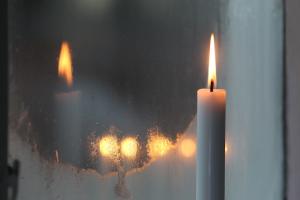
Can we believe ourselves into hope? / Photo by Anne Nygård on Unsplash
Does Any Group Really All Believe the Same Things, Anyway?
A while back, I reflected on the complications of church belief statements. (And then I reflected on, well, the complications of these complications.)
I think part of the problem with church belief statements is that they tend to raise all sorts of unanswered questions about what it actually means to “believe” the things they say.
What is belief?
If a group really does all think the exact same things, perhaps it’s not really “belief”—in the sense that people have sorted through what makes sense to them, feels right in their gut, and honors their own experiences and the experiences of others. Perhaps it’s more regurgitation—people being encouraged to passively absorb and unthinkingly repeat the things authority figures are teaching.
Perhaps these authority figures see themselves as the community’s answer-givers. Perhaps they don’t really want people to learn to authorize themselves.
For me, the point of a church community is not to be in a room on Sunday mornings with a few dozen or a few hundred people who think exactly the same way I do. That’s terrifying. There’s no room for us to challenge one another, to be transformed, to grow together.
Even though it’s hard sometimes, I think we’re meant to recognize that we’re all different. And that it’s good that we’re different. We don’t have to all believe the same things in order to practice faith together, to learn from one another, to be open to changing our minds.
Religion as Correct Doctrine Is a Western Invention
I’ve found it helpful to learn that not all faith communities put the same sort of emphasis on doctrine and so-called “orthodoxy” as Western Christianity often has. Trying to get everyone to believe the same thing is a particular type of exercise of authority. Faith communities do not have to be this way.
In Indigenous Theology and the Western Worldview: A Decolonized Approach to Christian Doctrine, Randy Woodley reflects on the differences between Western and Indigenous worldviews when it comes to belief and practice:
“My sixty-three years of experience in America have taught me that beliefs are basically everything to Western folks and the practices and values in the worldview are just a part of that, but not a big part of it. In an Indigenous worldview, all of life is spirituality, beliefs are de-emphasized, spirituality is passed on primarily via observation and participation or practices” (61).
I think it’s good to know that a Western emphasis on particular beliefs is not the only way of seeing things.
I like the idea of spirituality, faith, or religion being passed along from one person to another not by someone telling someone else what to believe, but instead by “observation and participation.” We share spiritual practices together. We participate in rituals that help us connect with God, care for one another, and understand who we are in this world.
Sure, there are beliefs that lie behind these practices. But being able and willing to regurgitate specific doctrines with precision is not the point. Seeking God together through shared spiritual practice is.
From “We Believe…” to “We Want to Be…”
Maybe who do we want to be as a community? is a more productive question than what exactly do each of us as individuals believe? Maybe we can shift from focusing on what “we believe” to what kind of people we want to become together.
It’s okay if some beliefs work for some people and not others. And the only way we can have honest conversations about our truest beliefs is if a faith community is a safe place to think differently.
We can be united, maybe, by the traditions we share. Hopefully, by some shared values that we develop together. Definitely, by our unconditional love for one another.
We can question the beliefs handed down to us. We can develop the courage to speak honestly about what we do and don’t believe. We can resist the urge to try to tell others what to believe.
And maybe, in the real community that is born through all of this, there is hope.
Religious Music and Entertainment
Previous Post

August 2, 2023
Deprogramming from Patriarchy Is Not as Easy as Barbie Makes It Seem
Next Post

August 18, 2023 Will This Fall Be the Fall of the Patriarchy?
Recent Comments
Browse Our Archives
Select a Category conversations seminary Uncategorized
Select a Month September 2023 August 2023 July 2023 June 2023 May 2023 April 2023 March 2023 February 2023 January 2023 December 2022 November 2022
Follow Us!
TAKE THE
Religious Wisdom Quiz
True or False: The Ten Commandments were written on three stone tablets.
Select your answer to see how you score.
TRUE FALSE
Related posts from Always Re-forming

The Bible is Inspired...and Complex

When Clarity of Belief Is Important

Faith Is a Practice, Not a Belief Statement
Forming and Re-forming: Words of Welcome, Words of...
TRENDING AT PATHEOS Progressive Christian

Emotion in Early Christianity by Andrew Crislip
Andrew Crislip’s Emotion in Early Christianity examines an often overlooked dimension of...

16 Spiritual Touchstones for a More Grounded Life
After decades of spiritual study, here are 16 principles I try...

Catholic Evangelization: Sharing Your Faith Every Day
Welcome back to the Graceful Awakening mini-series called, “From Faith to Mission.” ...

The Pillar of the Boatmen: the Ancient Monument...
The Pillar of the Boatmen is a Romano-Gaulish sculpture that dates from...

In one sense walking into Westminster Abbey is like walking down the...

'Super Scam Me' Exposes AI Jon Bon Jovi...
Leslie Pickett believed she was in a relationship with Jon Bon Jovi....
view all Progressive Christian blogs
Ad-Free & Subscriber Log-In Subscription Support
- About Us
- 2026 Calendar
- Videos
- Podcasts
- Library of World Religions
- Faith In Media Tracker
- Advertise With Us
- Write for Us
- Privacy Policy
- Terms of Service
- Do Not Sell My Data
- Contact Us
- Radiant Digital
- Manage Newsletter Subscriptions
- Unsubscribe From Notifications
- Sitemap
Copyright 2008-2026, Patheos. All rights reserved.
Subscription Support Ad-Free & Subscriber Log-In
Follow Patheos