
BuddhistCatholicContemplativeEvangelicalGeneral ChristianHinduJewishLatter-day SaintMuslimNew VisionsProgressive Christian
Beliefs
- Buddhist
- Catholic
- Contemplative
- Evangelical
- General Christian
- Hindu
- Jewish
- Latter-day Saint
- More Voices
- Muslim
- New Visions
- Pagan
- Progressive Christian
Topics
- Religion News
- Food and Religion
- Sports and Religion
- Religious Art
- Religious Music and Entertainment
- Religious Events
- History and Religion
- Style and Religion
- Politics and Religion
- Women in Religion
- Recreation Outdoors and Religion
- Business Finance and Religion
- Careers Workplace and Religion
- Education and Religion
- Family Parenting and Religion
- Health Fitness and Religion
- Home and Religion
- Relationships and Religion
- Technology and Religion
- Travel and Religion
Columnists
- Buddhist Columnists
- Business Finance and Religion Columnists
- Careers Workplace and Religion Columnists
- Catholic Columnists
- Contemplative Columnists
- Education and Religion Columnists
- Evangelists Columnists
- Family Parenting and Religion Columnists
- General Christian Columnists
- Health Fitness and Religion Columnists
- Hindu Columnists
- History and Religion Columnists
- Home and Religion Columnists
- Jewish Columnists
- More Voices Columnists
- Latter Day Columnists
- Muslim Columnists
- New Visions Columnists
- Nonreligious Columnists
- Pagan Columnists
- Politics and Religion Columnists
- Progressive Columnists
- Recreation Outdoors and Religion Columnists
- Relationships and Religion Columnists
- Religion News Columnists
- Religious Art Columnists
- Religious Events Columnists
- Religious Music and Entertainment Columnists
- Sports and Religion Columnists
- Style and Religion Columnists
- Technology and Religion Columnists
- Travel and Religion Columnists
- Women in Religion Columnists
Resource Library
- 2026 Calendar
- Library of World Religions
- The 100 Most Holy Places on Earth
- Patheos Answers
- Podcasts
- Videos
- Faith Leaders Database
- Anglican Episcopalian
- Bahai
- Baptist
- Buddhism
- Christianity
- Confucianism
- Eastern Orthodoxy
- Hinduism
- Holiness and Pentecostal
- ISKCON
- Islam
- Judaism
- Lutheran
- Methodist
- The Church of Jesus Christ of Latter-day Saints
- New Age
- Paganism
- Presbytarian and Reformed
- Protestantism
- Religion Behind the Scenes
- Roman Catholic
- Scientology
- Shia Islam
- Sikhism
- Sufism
- Sunni Islam
- Taoism
- Zen
- See all religions
Research Tools
 Ad-Free & Subscriber Log-In Subscription Support
Ad-Free & Subscriber Log-In Subscription Support
Follow Patheos 

- Trending:
- Forgiveness
- |
- Marriage
- |
- Consciousness
- |
- Death Penalty
- |
- Election
- |
- Halloween
 Always Re-forming
- Home
- Progressive Christian
- Women in Religion
- Aligning Our Biases With God’s
Aligning Our Biases With God’s
Last updated on: January 27, 2023 at 3:00 pm by Liz Cooledge Jenkins
Aligning Our Biases With God’s 2023-01-27T15:00:31-08:00 Liz Cooledge Jenkins
Patheos Explore the world's faith through different perspectives on religion and spirituality! Patheos has the views of the prevalent religions and spiritualities of the world.
I realize that the “love and justice” part of reading the Bible with a bias toward love and justice might sound a little vague. So I want to offer another angle on this, with a few more specifics. The angle: aligning our biases with God’s.
We’ve explored the idea (in the love and justice post) that we as humans are never without bias. We’ve also explored some of the ways these biases have gone badly awry, and what that might mean for us today.
Now, I want to get a little more into the specifics. What does it look like to go about aligning our biases with God’s?
Wait . . . God Is Biased?
I recently enjoyed Desmond Tutu’s book God is Not a Christian: And Other Provocations (HarperOne 2011). (Please do provoke us, Archbishop. We need it.)
I love how Tutu holds together two truths that might seem to exist in tension:
- God loves every person, values every person, and honors every person’s dignity—seeing all people as equals.
- God cares especially for people who are impoverished or otherwise marginalized, and God invites God’s people to do the same.
As far as the second point goes, Tutu puts it this way: “God is not evenhanded. God is biased horrendously” (p. 214).
I like this idea that God is “biased horrendously.” I appreciate the clarity it brings.
According to Tutu, as a few examples from the Bible, God is biased:
- Toward the enslaved people in the Exodus story.
- Toward those for whom harvesters were instructed to leave something (in the practice known as gleaning, outlined in Leviticus).
- Toward the alien and the outsider, because God’s people were aliens and outsiders themselves.
Tutu sums it up like this: “When you’re holy and the people of this God, you are always going to have to be biased in favor of the weak, the poor, the hungry” (p. 215). God is biased; therefore, we should be too.
You Don’t Have to Be Catholic to Want a Preferential Option for the Poor
The Catholic social teaching of a “preferential option for the poor” is more or less saying the same thing as Tutu. It’s another way of saying that God favors people who are impoverished, prioritizing their needs and well-being—and, I would say, honoring the gifts they have to offer.
I don’t know if Protestants are generally aware of this idea of a “preferential option for the poor.” I first heard the term when I read Tracy Kidder’s Mountains Beyond Mountains (as assigned summer reading before my freshman year of college—good choice, Stanford!), and it stuck with me. Dr. Paul Farmer’s global medical work with Partners in Health, although not specifically religious, is deeply motivated by Catholic social teachings that stem from Latin American liberation theology.
You don’t have to identify as Catholic to think that this idea of a “preferential option” is a good one. For me, it’s a helpful way of approaching religious thought (and life in general). And it’s a faithful way of reading the Bible.
When I say the Bible is about love and justice, part of what I mean is that the Bible is about rooting out inequality, equalizing humans, addressing and fighting the systems that make and keep people poor.
So, feel free to hold onto the term “preferential option for the poor” if you like it. Or feel free to leave it and find other language that resonates with you. It’s just another handle on the idea of God’s love and justice, another angle on what these things look like in our real (and very unjust) world.
It’s another way of saying that God is biased—in some very specific directions.
Not Unlike Black Lives Matter
It might sound jarring to say that God is biased. And on the flip side, it might sound nice to say that God is unbiased.
It strikes me, though, that saying “God is unbiased” is not totally unlike saying “all lives matter.”
Of course all lives matter. But people use this phrase as a response—a correction—to people who say “Black lives matter.” “All lives matter” is a way of refusing to pay particular attention to the ways Black lives have not been treated as lives that matter.
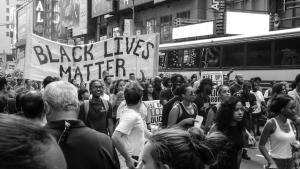
This is what needs to be said. / Photo by Nicole Baster on Unsplash
“All lives matter” may be true, but it is not how our world currently operates. And so, “Black lives matter” is what needs to be said. It’s the only thing that fully acknowledges the ways Black lives are not currently treated with value—that acknowledges this and tries to make it right.
Likewise, we could say that “God is unbiased”—and it would be true, in the sense that God loves everyone. But in our unjust world, God’s honor and dignity for everyone means special attention toward those whose lives are not treated with honor and dignity on a regular basis.
Explosive, in a Good Way
If, even considering all these things, the idea that God is biased is still controversial, that’s okay. Desmond Tutu gets this. As he recalls stories from the Bible that show God’s bias, Tutu goes on to say this: “Let’s read Bibles again, because they’re the most explosive things ever” (p. 214).
Let’s get back to those explosive Bibles.
I had to read that line a couple times. Because reading the Bible in ways that feel “explosive” is not necessarily a good thing in its own right. There are unproductive ways to be explosive, ways that “explode” toward injustice and further oppression.
But there are also productive ways to be “explosive.” There are ways of thinking and being, theologies and systems, that need to get blown up. (A couple years back I wrote a poem about a few of them.)
Not in a violent sense—I think often of Paul’s words in Ephesians, that our struggle is not against flesh and blood but against spiritual forces of evil in the heavenly realms. We don’t want to “blow up” people. But we do want to disrupt and shake up the systems that keep people trapped in cycles of poverty so that a few rich folks can keep getting richer.
This is the way in which the Bible is explosive. By constantly pushing toward love in a lonely world, community in an individualistic world (or at least in dominant white U.S. culture), justice in an unjust world, redistribution of resources in an unequal world, abundance in a world that fears scarcity.
Toward a world where everyone’s needs are met, such that everyone is able to give and receive in networks of belonging and mutuality. Let’s explode in these directions.
God is not unbiased. So let’s get to work aligning our biases with God’s.
General Christian
Politics and Religion
Previous Post
January 20, 2023
Historical Abuses of Scripture Give Me Pause
Next Post

February 3, 2023 Casually Authoritarian Language in Church (or, Don’t Tell Me What to Do)
Recent Comments
Browse Our Archives
Select a Category conversations seminary Uncategorized
Select a Month September 2023 August 2023 July 2023 June 2023 May 2023 April 2023 March 2023 February 2023 January 2023 December 2022 November 2022
Follow Us!
TAKE THE
Religious Wisdom Quiz
What does Hebrews say is living and active?
Select your answer to see how you score.
The word of God Prayer Faith The church
Related posts from Always Re-forming

What Kind of Authority Does Tradition Have?
Casually Authoritarian Language in Church (or, Don’t Tell...
Historical Abuses of Scripture Give Me Pause
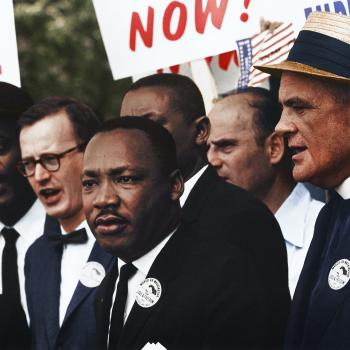
I'm Still Thinking About Martin Luther King Class
TRENDING AT PATHEOS Progressive Christian

Emotion in Early Christianity by Andrew Crislip
Andrew Crislip’s Emotion in Early Christianity examines an often overlooked dimension of...

16 Spiritual Touchstones for a More Grounded Life
After decades of spiritual study, here are 16 principles I try...

Catholic Evangelization: Sharing Your Faith Every Day
Welcome back to the Graceful Awakening mini-series called, “From Faith to Mission.” ...

The Pillar of the Boatmen: the Ancient Monument...
The Pillar of the Boatmen is a Romano-Gaulish sculpture that dates from...

In one sense walking into Westminster Abbey is like walking down the...

'Super Scam Me' Exposes AI Jon Bon Jovi...
Leslie Pickett believed she was in a relationship with Jon Bon Jovi....
view all Progressive Christian blogs
Ad-Free & Subscriber Log-In Subscription Support
- About Us
- 2026 Calendar
- Videos
- Podcasts
- Library of World Religions
- Faith In Media Tracker
- Advertise With Us
- Write for Us
- Privacy Policy
- Terms of Service
- Do Not Sell My Data
- Contact Us
- Radiant Digital
- Manage Newsletter Subscriptions
- Unsubscribe From Notifications
- Sitemap
Copyright 2008-2026, Patheos. All rights reserved.
Subscription Support Ad-Free & Subscriber Log-In
Follow Patheos