
BuddhistCatholicContemplativeEvangelicalGeneral ChristianHinduJewishLatter-day SaintMuslimNew VisionsProgressive Christian
Beliefs
- Buddhist
- Catholic
- Contemplative
- Evangelical
- General Christian
- Hindu
- Jewish
- Latter-day Saint
- More Voices
- Muslim
- New Visions
- Pagan
- Progressive Christian
Topics
- Religion News
- Food and Religion
- Sports and Religion
- Religious Art
- Religious Music and Entertainment
- Religious Events
- History and Religion
- Style and Religion
- Politics and Religion
- Women in Religion
- Recreation Outdoors and Religion
- Business Finance and Religion
- Careers Workplace and Religion
- Education and Religion
- Family Parenting and Religion
- Health Fitness and Religion
- Home and Religion
- Relationships and Religion
- Technology and Religion
- Travel and Religion
Columnists
- Buddhist Columnists
- Business Finance and Religion Columnists
- Careers Workplace and Religion Columnists
- Catholic Columnists
- Contemplative Columnists
- Education and Religion Columnists
- Evangelists Columnists
- Family Parenting and Religion Columnists
- General Christian Columnists
- Health Fitness and Religion Columnists
- Hindu Columnists
- History and Religion Columnists
- Home and Religion Columnists
- Jewish Columnists
- More Voices Columnists
- Latter Day Columnists
- Muslim Columnists
- New Visions Columnists
- Nonreligious Columnists
- Pagan Columnists
- Politics and Religion Columnists
- Progressive Columnists
- Recreation Outdoors and Religion Columnists
- Relationships and Religion Columnists
- Religion News Columnists
- Religious Art Columnists
- Religious Events Columnists
- Religious Music and Entertainment Columnists
- Sports and Religion Columnists
- Style and Religion Columnists
- Technology and Religion Columnists
- Travel and Religion Columnists
- Women in Religion Columnists
Resource Library
- 2026 Calendar
- Library of World Religions
- The 100 Most Holy Places on Earth
- Patheos Answers
- Podcasts
- Videos
- Faith Leaders Database
- Anglican Episcopalian
- Bahai
- Baptist
- Buddhism
- Christianity
- Confucianism
- Eastern Orthodoxy
- Hinduism
- Holiness and Pentecostal
- ISKCON
- Islam
- Judaism
- Lutheran
- Methodist
- The Church of Jesus Christ of Latter-day Saints
- New Age
- Paganism
- Presbytarian and Reformed
- Protestantism
- Religion Behind the Scenes
- Roman Catholic
- Scientology
- Shia Islam
- Sikhism
- Sufism
- Sunni Islam
- Taoism
- Zen
- See all religions
Research Tools
 Ad-Free & Subscriber Log-In Subscription Support
Ad-Free & Subscriber Log-In Subscription Support
Follow Patheos 

- Trending:
- Forgiveness
- |
- Marriage
- |
- Consciousness
- |
- Death Penalty
- |
- Election
- |
- Halloween
 Always Re-forming
- Home
- Progressive Christian
- Women in Religion
- Reading the Bible, Avoiding Authoritarianism
Reading the Bible, Avoiding Authoritarianism
Last updated on: December 20, 2022 at 6:39 pm by Liz Cooledge Jenkins
Reading the Bible, Avoiding Authoritarianism 2022-12-20T18:39:35-08:00 Liz Cooledge Jenkins
Patheos Explore the world's faith through different perspectives on religion and spirituality! Patheos has the views of the prevalent religions and spiritualities of the world.

How do we separate the idea of being “biblical” from its authoritarian uses? / Photo by Stephen Radford on Unsplash
Looking to the Bible for guidance, as I wrote about last week, is a little more complex than it might seem.
One part of the complexity is this: The idea of looking to the Bible for guidance can easily get twisted. In particular, it can get twisted into authoritarianism.
Or, authoritarian leaders can twist it to uphold their own oversized authority. This is a problem. How, then, do we read the Bible for guidance but avoid authoritarianism?
Biblical: A Magical (Authoritarian) Word
I was struck recently by Brian McLaren’s reflections on his experience of parenting. In Do I Stay Christian?, McLaren writes this:
“My approach to parenting was strongly influenced by Christian leaders whose teachings I am now repulsed by. I trusted those leaders because they were respected in the Evangelical community to which I belonged and because they used a magic word, biblical, to describe their teaching. Now, I’ve come to see that what they called biblical was actually authoritarian, and I am coming to terms with how much better a parent I could have been if I had found better teachers.”
Biblical: a magical word. Used to mean: Listen to me. I know best. This is what you should do. Obey, or else.
This is what (at least at our best) we don’t want. We want guidance. But we want to avoid authoritarianism.
There was a time when I didn’t really think twice when someone called something biblical or unbiblical. Now, I am a little more careful.
Now I realize, as McLaren did when it came to parenting, that pastors and other religious leaders often use these words in ways that are manipulative and disingenuous.
This is not okay. What is or isn’t biblical has to do with communities wrestling with the stories of scripture together, listening carefully to one another and especially to those who are most vulnerable in our world. It has nothing to do with what a religious leader tells people in order to gain and maintain control over them.
“Biblical” Marriages
For something to be biblical, it has to involve actual Bible texts, not just what a preacher or Christian radio host says. And, if “biblical” means “apply this to your life and live in this way,” it has to involve some thoughtful interpretation of what those texts mean for us today.
It has to involve everyone thinking, and praying, and looking for God in our lives and our world and the scriptures passed down to us.
I think of the meme going around about “biblical” marriage. Unfortunately I’m not sure of its origin, but here’s a blog where it’s posted. Take a look, if you haven’t yet.
There are all sorts of different kinds of marriages that made it into the stories the Bible tells. Are all of them good? Of course not.
So there’s the question of what’s “biblical,” as in what exists in the Bible. And then there’s the question of which of these models from the Bible are meant to be followed—and which are meant to be avoided like the plague.
It is our responsibility as individuals and as communities of faith—everyone’s voices heard, and especially those most impacted by the issue—to wrestle with these questions.
It’s Okay to Leave Authoritarian Communities
The word biblical can hold many different meanings. But whenever it starts to mean this is the One Right Way, and you can trust that because I’m an authority figure, well, I would say it’s time to get out.
That goes for when a Christian leader says there’s one right way to discipline your kids. And it goes for when a pastor says there’s one right way to be married.
Too many churches operate in this way. But the Bible itself is full of people and communities who wrestled. In the Bible, leaders who manipulate people are not presented as positive role models.
There are churches that are not like this. There are churches where the Bible is a source of guidance and not a coverup for authoritarianism. Churches where leaders read and try to understand scripture alongside the rest of the community. Where pastors hope to encourage and inspire but not manipulate or control.
To those who have experienced church as an authoritarian space, I would say this: It’s okay to expect better. It’s good to expect better. It’s okay to leave a religious community that is trying to tell you what to think rather than encouraging you to think for yourself. And it’s not okay for church leaders to use it’s biblical to cover over a multitude of sins.
Here’s to more guidance and less authoritarianism. More love and less manipulation. More freedom and less control. And to walking out the doors of buildings and theologies that have tried to control rather than liberate us.
General Christian
Family, Parenting and Religion
Previous Post

December 16, 2022
What Does It Mean to Read the Bible for Guidance?
Next Post

December 28, 2022 Reading the Bible, Looking for Love and Justice
Browse Our Archives
Select a Category conversations seminary Uncategorized
Select a Month September 2023 August 2023 July 2023 June 2023 May 2023 April 2023 March 2023 February 2023 January 2023 December 2022 November 2022
Follow Us!
TAKE THE
Religious Wisdom Quiz
Who said, "The Lord will fight for you; you need only to be still"?
Select your answer to see how you score.
Joshua Moses Solomon David
Related posts from Always Re-forming

What Is a Pastor, Really? (thoughts on Alexander...

Christian Education: From Teaching to Co-learning
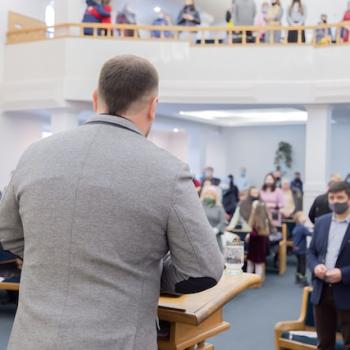
What If Sermons Were a Conversation?

I Take Sermons With a Grain of Salt
TRENDING AT PATHEOS Progressive Christian

Emotion in Early Christianity by Andrew Crislip
Andrew Crislip’s Emotion in Early Christianity examines an often overlooked dimension of...

16 Spiritual Touchstones for a More Grounded Life
After decades of spiritual study, here are 16 principles I try...

Catholic Evangelization: Sharing Your Faith Every Day
Welcome back to the Graceful Awakening mini-series called, “From Faith to Mission.” ...

The Pillar of the Boatmen: the Ancient Monument...
The Pillar of the Boatmen is a Romano-Gaulish sculpture that dates from...

In one sense walking into Westminster Abbey is like walking down the...

'Super Scam Me' Exposes AI Jon Bon Jovi...
Leslie Pickett believed she was in a relationship with Jon Bon Jovi....
view all Progressive Christian blogs
Ad-Free & Subscriber Log-In Subscription Support
- About Us
- 2026 Calendar
- Videos
- Podcasts
- Library of World Religions
- Faith In Media Tracker
- Advertise With Us
- Write for Us
- Privacy Policy
- Terms of Service
- Do Not Sell My Data
- Contact Us
- Radiant Digital
- Manage Newsletter Subscriptions
- Unsubscribe From Notifications
- Sitemap
Copyright 2008-2026, Patheos. All rights reserved.
Subscription Support Ad-Free & Subscriber Log-In
Follow Patheos