
BuddhistCatholicContemplativeEvangelicalGeneral ChristianHinduJewishLatter-day SaintMuslimNew VisionsProgressive Christian
Beliefs
- Buddhist
- Catholic
- Contemplative
- Evangelical
- General Christian
- Hindu
- Jewish
- Latter-day Saint
- More Voices
- Muslim
- New Visions
- Pagan
- Progressive Christian
Topics
- Religion News
- Food and Religion
- Sports and Religion
- Religious Art
- Religious Music and Entertainment
- Religious Events
- History and Religion
- Style and Religion
- Politics and Religion
- Women in Religion
- Recreation Outdoors and Religion
- Business Finance and Religion
- Careers Workplace and Religion
- Education and Religion
- Family Parenting and Religion
- Health Fitness and Religion
- Home and Religion
- Relationships and Religion
- Technology and Religion
- Travel and Religion
Columnists
- Buddhist Columnists
- Business Finance and Religion Columnists
- Careers Workplace and Religion Columnists
- Catholic Columnists
- Contemplative Columnists
- Education and Religion Columnists
- Evangelists Columnists
- Family Parenting and Religion Columnists
- General Christian Columnists
- Health Fitness and Religion Columnists
- Hindu Columnists
- History and Religion Columnists
- Home and Religion Columnists
- Jewish Columnists
- More Voices Columnists
- Latter Day Columnists
- Muslim Columnists
- New Visions Columnists
- Nonreligious Columnists
- Pagan Columnists
- Politics and Religion Columnists
- Progressive Columnists
- Recreation Outdoors and Religion Columnists
- Relationships and Religion Columnists
- Religion News Columnists
- Religious Art Columnists
- Religious Events Columnists
- Religious Music and Entertainment Columnists
- Sports and Religion Columnists
- Style and Religion Columnists
- Technology and Religion Columnists
- Travel and Religion Columnists
- Women in Religion Columnists
Resource Library
- 2026 Calendar
- Library of World Religions
- The 100 Most Holy Places on Earth
- Patheos Answers
- Podcasts
- Videos
- Faith Leaders Database
- Anglican Episcopalian
- Bahai
- Baptist
- Buddhism
- Christianity
- Confucianism
- Eastern Orthodoxy
- Hinduism
- Holiness and Pentecostal
- ISKCON
- Islam
- Judaism
- Lutheran
- Methodist
- The Church of Jesus Christ of Latter-day Saints
- New Age
- Paganism
- Presbytarian and Reformed
- Protestantism
- Religion Behind the Scenes
- Roman Catholic
- Scientology
- Shia Islam
- Sikhism
- Sufism
- Sunni Islam
- Taoism
- Zen
- See all religions
Research Tools
 Ad-Free & Subscriber Log-In Subscription Support
Ad-Free & Subscriber Log-In Subscription Support
Follow Patheos 

- Trending:
- Forgiveness
- |
- Marriage
- |
- Consciousness
- |
- Death Penalty
- |
- Election
- |
- Halloween
 altmuslim
- Home
- Muslim
- How a New Muslim Tribe in West Africa Took Me Back to the Basics
How a New Muslim Tribe in West Africa Took Me Back to the Basics
Last updated on: May 27, 2018 at 12:41 pm by Guest Contributor
How a New Muslim Tribe in West Africa Took Me Back to the Basics 2018-05-27T12:41:16-04:00 Guest Contributor
Patheos Explore the world's faith through different perspectives on religion and spirituality! Patheos has the views of the prevalent religions and spiritualities of the world.
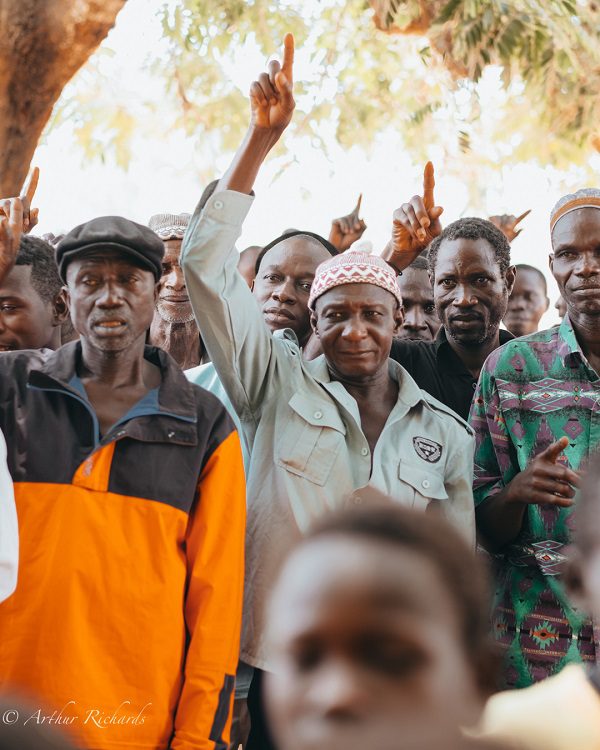
The Balanta. Image source: Arthur Richards
This is Day 11 of the 2018 #30Days30Writers Ramadan series.
Bunde had an aura about him. When he stood, he would tower over others. When he spoke, he was clear and commanded attention. It didn’t take long for my team and I to realize that the man sitting and watching us was one of the village elders, a man who had been declared a judge by his people.
Days before, he and hundreds from his village in Guinea Bissau, West Africa proclaimed the declaration that There is no god except God and the Prophet Muhammad is His messenger. He understood the message and believed in these words but wanted to see how the actions of these foreign teachers would measure up to this religion he and his people had now accepted.
That night our Ameer gave a talk in the masjid after the village’s first communal prayer together as Muslims. He had chosen to speak on the Prophet Abraham (God’s peace and blessings upon him) and on the logical conclusions that he was able to arrive at when searching for the truth of his Lord.
And thus did We show Abraham the realm of the heavens and the earth that he would be among the certain [in faith]
So when the night covered him [with darkness], he saw a star. He said, “This is my lord.” But when it set, he said, “I like not those that disappear.”
And when he saw the moon rising, he said, “This is my lord.” But when it set, he said, “Unless my Lord guides me, I will surely be among the people gone astray.”
And when he saw the sun rising, he said, “This is my lord; this is greater.” But when it set, he said, “O my people, indeed I am free from what you associate with Allah. — (Surah Al An’am, Ayah 76-78)
I sat next to the Ameer as he spoke and watched the faces of the village members, especially that of Bunde. His eyes never once hinted that an abundance of emotions was waiting to burst out from behind his eyelids and sprint from his lips; he held it all back. Or maybe he truly had nothing to say at that point due to the vast amount of thoughts racing around his brain.
We came to the point of history where Abraham now took it upon himself to show his people the truth behind the false gods they worshipped:
So he made them into fragments, except a large one among them, that they might return to it [and question]. (Surah Al Anbiya, Ayah 58)
I began to see unrest, and uneasiness crept through the room and tickled the spines of everyone as they shifted from side to side. But, he kept going, and I kept sweating, wondering when the outburst of disdain and rage would come from one of the village elders reminding us that culture and traditions reigned supreme in a land still untouched by 4G internet and Tesla innovations.
The Ameer came to the part in the story where the Prophet Abraham was now to be punished and thrown into a fire so large that some scholars mention he had to be catapulted into it. It was at that point that God ordered a fire that customarily would have scorched him alive to become cool in the face of ignorant tyrants. And, like the peace that God ordered upon the fire that quelled its heat, so too could I see a peace descend on the hearts of all the listeners of these ayat. It was Bunde who spoke first:
“I have idols, my children have idols, my wife has idols. Whenever we become sick we go to the local soothsayer and she tells us how many cows or chickens to sacrifice for our idols. When a birth or death happens, again, we sacrifice in the name of these idols. They have been passed down generation to generation just like the people of Abraham argued and told him.
They were a people that were just as we are today, but I must tell you that I have never found benefit in them. They have never done anything for me or my people, and so I want to be like Abraham and that is why I have accepted Islam and why I want my children to enter this faith. What do we do now with these idols now that we know the truth?”
I share this story not only because it was a powerful one, but because of its simplicity. This one historical moment in history is only one of many historical stories relayed to us through the words of God. All of them share the same simplicity, all of them share the same ability to profoundly impact a people despite the people’s variance in education, socio-economic status, etc.
And, most importantly, all of them are the Divinely revealed words of God revealed upon the Angel Gabriel onto his blessed servant, the Prophet Muhammad (God’s peace and blessings upon him) in the month that we are now in — Ramadan. This simplicity is at the core of the message of Islam, a message that is so primordial that throughout history it has never changed.
There is no god except God and Muhammad is His messenger. This message is for all of us in this blessed month, a message to re-evaluate, to re-inculcate and to re-etch onto the hearts that in every moment are sustained by the Divine.
May God accept our fasting, our prayers, our tears and our smiles as we aim to gain consciousness and proximity to the One who gave us intellect, the One who is not limited by time and space, and the One who will answer His servants call.
Ameen.

About Arthur Richards
Arthur Richards is a father, writer and student of the Islamic Sciences. Currently living in Cairo, Egypt, he studies at Al-Azhar University while also working as a translator and writer at the Dar Al-Ifta (Center for Islamic Legal Research) of Egypt. He also occasionally works as a freelance photographer. Among his story, work and family life, he is committed to serving the Muslim community however possible. Follow him on Instagram: @AuthorKRichards; Facebook: ArthurkRichards. You can also follow his latest work at @TheBissauProject You can read more about the author here.
Previous Post

May 25, 2018
Holding Fast to Ramadan Rituals Around the World
Next Post
May 27, 2018 Existing in the Shadows in Ramadan
Browse Our Archives
Select a Category 2012 Elections 30 Dayd 30 Writers (2017) 30 Days 30 Writers 30 Days 30 Writers (2015) 30 Days 30 Writers (2016) 30 Days 30 Writers (2018) 30 Days 30 Writers 2017 Ali Asadullah Ali Eteraz Alper Bilgili Arthur Richards Asides Asma Uddin Black History Month Briefings Charles Turner Commentary Cyrus McGoldrick Eman H Aly Fatimah Popal Hajj Hajj and Dhul Hijjah Hesham Hassaballa Hisham Hellyer Ibrahim Abusharif Inas Younis Irfan Yusuf Jalal Baig Junaid Afeef Laila Alawa Laila Alwala Mas'ood Cajee Muqtedar Khan Nakia Jackson Newsmakers Parvez Ahmed Podcasts Rabia Chaudry Rafia Zakaria Ramadan Reviews Safiyyah Ally Saud Inam Shahed Amanullah Svend White The Opinionated Oncologist Visions Wajahat Ali Zahed Amanullah Zahir Janmohamed Zainab Khan
Select a Month November 2018 October 2018 September 2018 August 2018 July 2018 June 2018 May 2018 April 2018 March 2018 February 2018 January 2018 December 2017 November 2017 October 2017 September 2017 August 2017 July 2017 June 2017 May 2017 April 2017 March 2017 February 2017 January 2017 December 2016 November 2016 October 2016 September 2016 August 2016 July 2016 June 2016 May 2016 April 2016 March 2016 February 2016 January 2016 December 2015 November 2015 October 2015 September 2015 August 2015 July 2015 June 2015 May 2015 April 2015 March 2015 February 2015 January 2015 December 2014 November 2014 October 2014 September 2014 August 2014 July 2014 June 2014 May 2014 April 2014 March 2014 February 2014 January 2014 December 2013 November 2013 October 2013 September 2013 August 2013 July 2013 June 2013 May 2013 April 2013 March 2013 February 2013 January 2013 December 2012 November 2012 October 2012 September 2012 August 2012 July 2012 June 2012 May 2012 April 2012 March 2012 February 2012 January 2012 December 2011 November 2011 October 2011 September 2011 August 2011 July 2011 June 2011 May 2011 April 2011 March 2011 February 2011 January 2011 December 2010 November 2010 October 2010 September 2010 August 2010 July 2010 June 2010 May 2010 April 2010 March 2010 February 2010 January 2010 December 2009 November 2009 October 2009 September 2009 August 2009 July 2009 June 2009 May 2009 April 2009 March 2009 February 2009 January 2009 December 2008 November 2008 October 2008 September 2008 August 2008 July 2008 June 2008 May 2008 April 2008 March 2008 February 2008 January 2008 December 2007 November 2007 October 2007 September 2007 August 2007 July 2007 June 2007 May 2007 April 2007 March 2007 February 2007 January 2007 December 2006 November 2006 October 2006 September 2006 August 2006 July 2006 June 2006 May 2006 April 2006 March 2006 February 2006 January 2006 December 2005 November 2005 October 2005 September 2005 August 2005 July 2005 June 2005 May 2005 April 2005 March 2005 February 2005 January 2005 December 2004 November 2004 October 2004 September 2004 August 2004 July 2004 June 2004 May 2004 April 2004 March 2004 February 2004 January 2004 December 2003 November 2003 October 2003 September 2003 August 2003 July 2003 June 2003 May 2003 April 2003 March 2003 February 2003 January 2003 December 2002 November 2002 October 2002 September 2002 August 2002 July 2002 June 2002 May 2002 April 2002 March 2002
Follow Us!
TAKE THE
Religious Wisdom Quiz
Who saw a vision of wheels within wheels by the Kebar River?
Select your answer to see how you score.
Micah Ezekiel Daniel Jonah
Related posts from altmuslim

Mawlid 2018: Praise Songs from Around the World
Are Muslims Willing to Travel the Road to...
Ashura and the Story of Hussain - Achieving...
Reading the Quran: A Primer in History, Facts...
TRENDING AT PATHEOS Muslim

25 Years Later: How Much Has Changed for...
As we approach the 25th anniversary of September 11th, I’ve found myself...

Podcast: Third Spaces & The Rise of Yemeni...
In the latest episode of The Artistic Foodies Podcast, hosts Abbas...

HalalFest Picks: Best 60 Halal Spots for Super...
Back in 2016, I came up with a list of 29...

Unity Is America’s Strength — Division Is Its...
by Hidayatullah Ahsan When Valentina Gomez, a Republican candidate for Congress in...

Zohran Mamdani and New York’s Fight Against Islamophobia
This past June, against all odds, Zohran Mamdani won the Democratic primary...

What the Fourth of July Means to a...
As we mark another Fourth of July, millions of Americans will celebrate...
view all Muslim blogs
Ad-Free & Subscriber Log-In Subscription Support
- About Us
- 2026 Calendar
- Videos
- Podcasts
- Library of World Religions
- Faith In Media Tracker
- Advertise With Us
- Write for Us
- Privacy Policy
- Terms of Service
- Do Not Sell My Data
- Contact Us
- Radiant Digital
- Manage Newsletter Subscriptions
- Unsubscribe From Notifications
- Sitemap
Copyright 2008-2026, Patheos. All rights reserved.
Subscription Support Ad-Free & Subscriber Log-In
Follow Patheos