
BuddhistCatholicContemplativeEvangelicalGeneral ChristianHinduJewishLatter-day SaintMuslimNew VisionsProgressive Christian
Beliefs
- Buddhist
- Catholic
- Contemplative
- Evangelical
- General Christian
- Hindu
- Jewish
- Latter-day Saint
- More Voices
- Muslim
- New Visions
- Pagan
- Progressive Christian
Topics
- Religion News
- Food and Religion
- Sports and Religion
- Religious Art
- Religious Music and Entertainment
- Religious Events
- History and Religion
- Style and Religion
- Politics and Religion
- Women in Religion
- Recreation Outdoors and Religion
- Business Finance and Religion
- Careers Workplace and Religion
- Education and Religion
- Family Parenting and Religion
- Health Fitness and Religion
- Home and Religion
- Relationships and Religion
- Technology and Religion
- Travel and Religion
Columnists
- Buddhist Columnists
- Business Finance and Religion Columnists
- Careers Workplace and Religion Columnists
- Catholic Columnists
- Contemplative Columnists
- Education and Religion Columnists
- Evangelists Columnists
- Family Parenting and Religion Columnists
- General Christian Columnists
- Health Fitness and Religion Columnists
- Hindu Columnists
- History and Religion Columnists
- Home and Religion Columnists
- Jewish Columnists
- More Voices Columnists
- Latter Day Columnists
- Muslim Columnists
- New Visions Columnists
- Nonreligious Columnists
- Pagan Columnists
- Politics and Religion Columnists
- Progressive Columnists
- Recreation Outdoors and Religion Columnists
- Relationships and Religion Columnists
- Religion News Columnists
- Religious Art Columnists
- Religious Events Columnists
- Religious Music and Entertainment Columnists
- Sports and Religion Columnists
- Style and Religion Columnists
- Technology and Religion Columnists
- Travel and Religion Columnists
- Women in Religion Columnists
Resource Library
- 2026 Calendar
- Library of World Religions
- The 100 Most Holy Places on Earth
- Patheos Answers
- Podcasts
- Videos
- Faith Leaders Database
- Anglican Episcopalian
- Bahai
- Baptist
- Buddhism
- Christianity
- Confucianism
- Eastern Orthodoxy
- Hinduism
- Holiness and Pentecostal
- ISKCON
- Islam
- Judaism
- Lutheran
- Methodist
- The Church of Jesus Christ of Latter-day Saints
- New Age
- Paganism
- Presbytarian and Reformed
- Protestantism
- Religion Behind the Scenes
- Roman Catholic
- Scientology
- Shia Islam
- Sikhism
- Sufism
- Sunni Islam
- Taoism
- Zen
- See all religions
Research Tools
 Ad-Free & Subscriber Log-In Subscription Support
Ad-Free & Subscriber Log-In Subscription Support
Follow Patheos 

- Trending:
- Forgiveness
- |
- Marriage
- |
- Consciousness
- |
- Death Penalty
- |
- Election
- |
- Halloween
 altmuslim
- Home
- Muslim
- The Pain in Our Joy – On Blackness, Ashura, and Remembering
The Pain in Our Joy – On Blackness, Ashura, and Remembering
Last updated on: October 11, 2017 at 1:29 pm by Guest Contributor
The Pain in Our Joy – On Blackness, Ashura, and Remembering 2017-10-11T13:29:45-04:00 Guest Contributor
Patheos Explore the world's faith through different perspectives on religion and spirituality! Patheos has the views of the prevalent religions and spiritualities of the world.
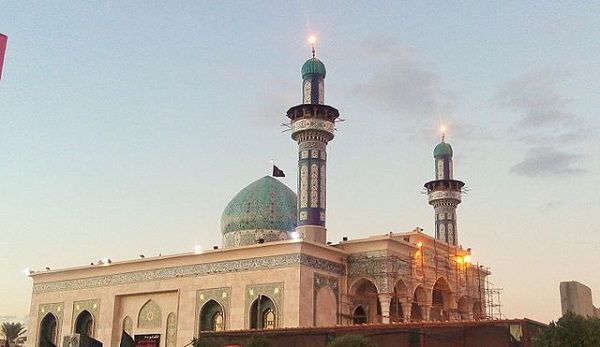
By ن.عامری – Own work, CC BY-SA 4.0, Link
As contentious as pre-Eid moonsighting gets each year, I hold that the most intense Islamic holiday debate is over the days of Muharram that lead up to and include Ashura.
Consider that the twice-annual moon fights center around establishing a fact, whether by calculations, optical aids or with the naked eye. Muslims who differ can often go their separate ways for Ramadan and Eid but agree on most other issues without a major rift. We even joke about how much we quibble over it.
But with Muharram, the debate is over the nature of the occasion. Shi’as mourn the martyrdom of Husayn ibn Ali, the grandson of the Prophet Muhammad (SAWS). Sunni takes on Ashura vary from celebrating Prophet Nuh (AS) emerging from the Ark to honoring the Exodus, to the Hijrah (migration) from Mecca to what was then known as Yathrib.
Even when literal fistfights break out at the masjid, the divide that sparks them is insignificant compared to the difference between a celebration and a time of mourning. For years, I didn’t know where to stand on Muharram and Ashura. But then my Blackness showed me the way.
“Every day is Ashura, every land Is Karbala.” This Shi’a refrain refers to the martyrdom of Husayn. He saw that the sacred duty to carry on the legacy of the Prophet Muhammad (SAWS) was devolving into a commonplace political squabble, so he resisted. He refused to swear allegiance to Yazid, who had been recognized as caliph by a significant portion of the Makkan Muslim community.
Husayn sought to establish a rival caliphate outside of Madinah, and left for the city of Kufa in present-day Iraq with his family and those who sided with him. But, they would never make it. They were captured in the first days of Muharram. Husayn and his family were brutally assassinated in Karbala, which is in modern-day Iraq.
Shi’a Muslims continue the rituals of mourning to this day, for it was not merely the death of human beings that happened more than a thousand years ago, but a death of justice, a murder of hope. Some Sunnis learn about this facet of Ashura. Many don’t. Not only have these rites of mourning been banned in some Sunni-majority areas, but the erasure of Husayn’s martyrdom creates a rift that deepens the marginalization of Shi’a Muslims today.
If every land is Karbala, then it must certainly include Brooks County, Georgia. For there lived Mary Turner, a young mother who would never hold her child. Her heritage was humble. Born in 1888, she was no more than two generations removed from slavery. But in May 1918, when white farmers went on a murderous rampage against Black men in an attempt to avenge a white man who held Black people in peonage, Mary Turner could tolerate no more.
She sought to have the farmers arrested. Perhaps she thought her womanhood or her pregnancy would protect her. She was wrong. Mary Turner was kidnapped and lynched. The violence inflicted upon her and her unborn child shocked the nation but would not change it. Just as Sunni narratives about Muharram erase the brutality of Husayn’s martyrdom, narratives on U.S. history don’t include Mary Turner. Today, white Americans see the pastoral beauty of rural Georgia in May. Black Americans see the blood soaking into the clay.
Ashura’s complexity extends through Turkey, where it is a celebration of the landing of Noah’s Ark. A special rice pudding is prepared and distributed to friends, family and neighbors alike, containing nuts, spices, and dried fruit– all non-perishable ingredients you might have with you for a disaster, a long voyage, or both.
After emerging from the Ark, the world is said to be made new, with all sin and injustice wiped from it with the evildoers. But this new world is filled with uncertainty. Islamic sources say little about the attempt to rebuild the world.
Noah’s wife did not join her husband. Neither did John Tubman join his wife, Harriet. While she is called Black Moses, I think the act of escape shares aspects with the Flood. Escaping was immensely dangerous and difficult. Not all who were enslaved had the courage to make the journey. The sea of a slaveholding society looks innocuous, but it could mean an early death to Black escapees who made the slightest missteps.
Those who made the journey knew that it meant a final farewell to friends and relatives, as even recapture could entail being sold into the sugar trade, where deadly accidents were commonplace. To emerge in Canada would have been to survive that dangerous crossing and attempt to rebuild lives and communities.
The dominant narrative about Ashura, however, is complex. There is a hadith describing it as a commemoration of part of the Exodus, but it differs markedly from how Passover is observed by Jewish people today. There are several fasting days on the Jewish calendar, but none seem to line up exactly with the hadith about fasting on a day that honors the Exodus . That said, over the centuries, religious practices change.
The holidays may have been more alike in late antiquity, or they may have deliberately differed. How people shape and maintain celebrations is never set in stone. Or perhaps the key lies in the cultural fractures that diaspora produces. The Jewish communities of the Arabian Peninsula differed from their Levantine siblings, in ways that echo the cultural diversity of the African diaspora today. Our similarities, our differences, our debates over legitimacy, our cultural mythos share many parallels. Sometimes, our legends prove to have basis in established fact.
Often, we choose to honor them as part of our culture regardless of the evidence. Perhaps historical evidence will establish a link between how Arabian Jewish communities observed the Exodus with Ashura. But I’m not sure that we need it to honor our past.
What interests me most about Ashura is its position in the Islamic calendar, and how it came to be. It is the tenth day of Muharram, the first month of the Islamic calendar. This calendar was reset to place the Hijrah as the Islamic New Year. This flight of Mecca to Yathrib would have been exhilarating and exhausting. But ten days later, something new would have set in: utter bewilderment.
The new migrants needed to find more than a job and a place to live. They needed to find an identity. Receiving financial help was vital, but for the community to last, they had to figure out how they would form a cohesive group with strangers. Yathrib is now Madinah, the city of the Prophet, but the citizens of Yathrib had to live there, too.
That bewilderment would echo through the centuries to those newly freed in the spring of 1865. With little more than the clothes on their backs, often sneaking out of their former owners’ homes, the formerly enslaved took their freedom as it came. Many had valuable skills, but few had the means to rent a storefront or purchase tools. But with the promise of the freedom to speak, pray, work, and live as they wished, one of the most heated debates was over how this newly freed people would define themselves.
With the tatters of languages, religions and cultures left, the debate over how much to assimilate continues today.
I’d considered writing this month’s column about my visit to the National Museum of African American History and Culture, but trying to make sense of Ashura was in the back of my mind during the ride there. As I went from exhibits about stepping to the one of Angola prison, I said, “this is us.”
The jarring contrasts between the celebrations and the strife were us.
The ability to find joy in our pain was us.
The ability to honor the pain in our joy was us.
We are our ability to remember and forget, to mourn and to exult, our ability to build anew with the scraps we could take with us.
The many iterations of Ashura tell the story of our connection to the other children of Abraham. They recount our tragedies and our tendency to whitewash our histories. Ashura tells us that the stories not lining up will not keep us from our joy. Ashura tells us that we can restart the clock, but we can’t erase ourselves.
The many facets of Ashura tell us that though the road is never easy, we can face the journey and what we meet when we get there. Ashura is complicated because we are Ashura. So, this year, I will recognize the pain, the failings, the joy and the renewal. I pray that you are able to do the same.
Nakia Jackson is a mom, musician and writer. From her first (terrible) story at age six to the ad copy and background music she sells to keep the family in yarn and Cheerios, creating has been her life’s breath. When not creating, Nakia enjoys family excursions designed to show the world that normal is merely a setting on the washing machine. Her column, Another Kind of Voice, is published in the last week of every month.
Previous Post

September 21, 2017
On Accidental Brilliance and Leaving My Silo
Next Post

October 2, 2017 Nouman Ali Khan Shows Us that We Need More Women Religious Leaders
Browse Our Archives
Select a Category 2012 Elections 30 Dayd 30 Writers (2017) 30 Days 30 Writers 30 Days 30 Writers (2015) 30 Days 30 Writers (2016) 30 Days 30 Writers (2018) 30 Days 30 Writers 2017 Ali Asadullah Ali Eteraz Alper Bilgili Arthur Richards Asides Asma Uddin Black History Month Briefings Charles Turner Commentary Cyrus McGoldrick Eman H Aly Fatimah Popal Hajj Hajj and Dhul Hijjah Hesham Hassaballa Hisham Hellyer Ibrahim Abusharif Inas Younis Irfan Yusuf Jalal Baig Junaid Afeef Laila Alawa Laila Alwala Mas'ood Cajee Muqtedar Khan Nakia Jackson Newsmakers Parvez Ahmed Podcasts Rabia Chaudry Rafia Zakaria Ramadan Reviews Safiyyah Ally Saud Inam Shahed Amanullah Svend White The Opinionated Oncologist Visions Wajahat Ali Zahed Amanullah Zahir Janmohamed Zainab Khan
Select a Month November 2018 October 2018 September 2018 August 2018 July 2018 June 2018 May 2018 April 2018 March 2018 February 2018 January 2018 December 2017 November 2017 October 2017 September 2017 August 2017 July 2017 June 2017 May 2017 April 2017 March 2017 February 2017 January 2017 December 2016 November 2016 October 2016 September 2016 August 2016 July 2016 June 2016 May 2016 April 2016 March 2016 February 2016 January 2016 December 2015 November 2015 October 2015 September 2015 August 2015 July 2015 June 2015 May 2015 April 2015 March 2015 February 2015 January 2015 December 2014 November 2014 October 2014 September 2014 August 2014 July 2014 June 2014 May 2014 April 2014 March 2014 February 2014 January 2014 December 2013 November 2013 October 2013 September 2013 August 2013 July 2013 June 2013 May 2013 April 2013 March 2013 February 2013 January 2013 December 2012 November 2012 October 2012 September 2012 August 2012 July 2012 June 2012 May 2012 April 2012 March 2012 February 2012 January 2012 December 2011 November 2011 October 2011 September 2011 August 2011 July 2011 June 2011 May 2011 April 2011 March 2011 February 2011 January 2011 December 2010 November 2010 October 2010 September 2010 August 2010 July 2010 June 2010 May 2010 April 2010 March 2010 February 2010 January 2010 December 2009 November 2009 October 2009 September 2009 August 2009 July 2009 June 2009 May 2009 April 2009 March 2009 February 2009 January 2009 December 2008 November 2008 October 2008 September 2008 August 2008 July 2008 June 2008 May 2008 April 2008 March 2008 February 2008 January 2008 December 2007 November 2007 October 2007 September 2007 August 2007 July 2007 June 2007 May 2007 April 2007 March 2007 February 2007 January 2007 December 2006 November 2006 October 2006 September 2006 August 2006 July 2006 June 2006 May 2006 April 2006 March 2006 February 2006 January 2006 December 2005 November 2005 October 2005 September 2005 August 2005 July 2005 June 2005 May 2005 April 2005 March 2005 February 2005 January 2005 December 2004 November 2004 October 2004 September 2004 August 2004 July 2004 June 2004 May 2004 April 2004 March 2004 February 2004 January 2004 December 2003 November 2003 October 2003 September 2003 August 2003 July 2003 June 2003 May 2003 April 2003 March 2003 February 2003 January 2003 December 2002 November 2002 October 2002 September 2002 August 2002 July 2002 June 2002 May 2002 April 2002 March 2002
Follow Us!
TAKE THE
Religious Wisdom Quiz
Ecclesiastes 3:1 says, "To everything there is a ______."
Select your answer to see how you score.
Purpose Season Blessing Time limit
Related posts from altmuslim

Mawlid 2018: Praise Songs from Around the World

Gaslighting, Anti-Jewish and Anti-Muslim Rhetoric: What to Know

How One Ottoman Reconciled Islamic Teachings with Darwin's...

As #TreeofLife Shows, Trump's Mainstreaming of Hate Puts...
TRENDING AT PATHEOS Muslim

25 Years Later: How Much Has Changed for...
As we approach the 25th anniversary of September 11th, I’ve found myself...

Podcast: Third Spaces & The Rise of Yemeni...
In the latest episode of The Artistic Foodies Podcast, hosts Abbas...

HalalFest Picks: Best 60 Halal Spots for Super...
Back in 2016, I came up with a list of 29...

Unity Is America’s Strength — Division Is Its...
by Hidayatullah Ahsan When Valentina Gomez, a Republican candidate for Congress in...

Zohran Mamdani and New York’s Fight Against Islamophobia
This past June, against all odds, Zohran Mamdani won the Democratic primary...

What the Fourth of July Means to a...
As we mark another Fourth of July, millions of Americans will celebrate...
view all Muslim blogs
Ad-Free & Subscriber Log-In Subscription Support
- About Us
- 2026 Calendar
- Videos
- Podcasts
- Library of World Religions
- Faith In Media Tracker
- Advertise With Us
- Write for Us
- Privacy Policy
- Terms of Service
- Do Not Sell My Data
- Contact Us
- Radiant Digital
- Manage Newsletter Subscriptions
- Unsubscribe From Notifications
- Sitemap
Copyright 2008-2026, Patheos. All rights reserved.
Subscription Support Ad-Free & Subscriber Log-In
Follow Patheos