
BuddhistCatholicContemplativeEvangelicalGeneral ChristianHinduJewishLatter-day SaintMuslimNew VisionsProgressive Christian
Beliefs
- Buddhist
- Catholic
- Contemplative
- Evangelical
- General Christian
- Hindu
- Jewish
- Latter-day Saint
- More Voices
- Muslim
- New Visions
- Pagan
- Progressive Christian
Topics
- Religion News
- Food and Religion
- Sports and Religion
- Religious Art
- Religious Music and Entertainment
- Religious Events
- History and Religion
- Style and Religion
- Politics and Religion
- Women in Religion
- Recreation Outdoors and Religion
- Business Finance and Religion
- Careers Workplace and Religion
- Education and Religion
- Family Parenting and Religion
- Health Fitness and Religion
- Home and Religion
- Relationships and Religion
- Technology and Religion
- Travel and Religion
Columnists
- Buddhist Columnists
- Business Finance and Religion Columnists
- Careers Workplace and Religion Columnists
- Catholic Columnists
- Contemplative Columnists
- Education and Religion Columnists
- Evangelists Columnists
- Family Parenting and Religion Columnists
- General Christian Columnists
- Health Fitness and Religion Columnists
- Hindu Columnists
- History and Religion Columnists
- Home and Religion Columnists
- Jewish Columnists
- More Voices Columnists
- Latter Day Columnists
- Muslim Columnists
- New Visions Columnists
- Nonreligious Columnists
- Pagan Columnists
- Politics and Religion Columnists
- Progressive Columnists
- Recreation Outdoors and Religion Columnists
- Relationships and Religion Columnists
- Religion News Columnists
- Religious Art Columnists
- Religious Events Columnists
- Religious Music and Entertainment Columnists
- Sports and Religion Columnists
- Style and Religion Columnists
- Technology and Religion Columnists
- Travel and Religion Columnists
- Women in Religion Columnists
Resource Library
- 2026 Calendar
- Library of World Religions
- The 100 Most Holy Places on Earth
- Patheos Answers
- Podcasts
- Videos
- Faith Leaders Database
- Anglican Episcopalian
- Bahai
- Baptist
- Buddhism
- Christianity
- Confucianism
- Eastern Orthodoxy
- Hinduism
- Holiness and Pentecostal
- ISKCON
- Islam
- Judaism
- Lutheran
- Methodist
- The Church of Jesus Christ of Latter-day Saints
- New Age
- Paganism
- Presbytarian and Reformed
- Protestantism
- Religion Behind the Scenes
- Roman Catholic
- Scientology
- Shia Islam
- Sikhism
- Sufism
- Sunni Islam
- Taoism
- Zen
- See all religions
Research Tools
 Ad-Free & Subscriber Log-In Subscription Support
Ad-Free & Subscriber Log-In Subscription Support
Follow Patheos 

- Trending:
- Forgiveness
- |
- Marriage
- |
- Consciousness
- |
- Death Penalty
- |
- Election
- |
- Halloween
 altmuslim
- Home
- Muslim
- How Ramadan Can Boost Some Towards Salafism
How Ramadan Can Boost Some Towards Salafism
Last updated on: May 24, 2017 at 11:55 am by Guest Contributor
How Ramadan Can Boost Some Towards Salafism 2017-05-24T11:55:17-04:00 Guest Contributor
Patheos Explore the world's faith through different perspectives on religion and spirituality! Patheos has the views of the prevalent religions and spiritualities of the world.
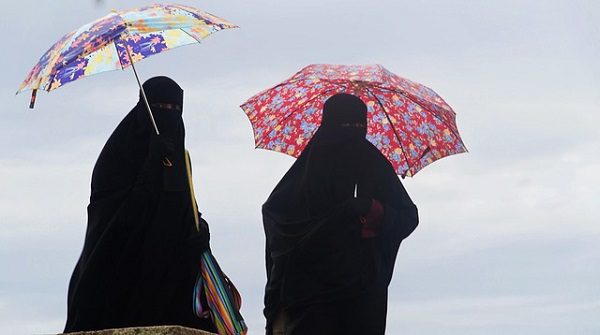
Image source: Pixabay
I’ve often heard Muslims describe the holy month of Ramadan as an ‘iman [i.e. faith] boost’ – as though it were some kind of spiritual energy drink. A whole month, in other words, to recharge one’s spiritual batteries. In busy modern lives, Ramadan is an opportunity to focus on getting closer to God through religious practices – like praying, charitable giving, and avoiding alcohol – that may have been sidelined during the rest of the year.
Just like New Year’s resolutions, these determined efforts to ingrain virtuous habits and abandon objectionable ones often lose steam by the following month. Indeed, sometimes this is quite deliberate.
In other cases, however, Ramadan resolutions can usher in a rigorous programme of self-improvement that continues long after the month has passed. In fact, for some of the young Salafi Muslims I interviewed in London, it actually triggered a series of behavioural changes that led to fundamental shifts in identity and the acceptance of a highly conservative version of Islam.
Since the 1980s, Britain has been host to small but rapidly growing communities that follow Salafism (often called ‘Wahhabism’). These communities are disproportionately young and first-generation in membership, meaning that most adherents grew up in non-Salafi families, and became Salafi during their teens or twenties. For women, adopting a strict (or stricter) Islamic dress code is a demanding but a necessary ingredient of this transformation.
Salafi teachings require women to wear long, loose-fitting gowns and recommend face veils, too. This makes Salafi women particularly vulnerable to stereotyping and Islamophobic attacks in contemporary Western societies – as well as to criticism from their generally less conservative families.
Of course, such strict dress codes are widely regarded by many Muslims, as well as non-Muslims, to be excessive. Indeed, the perception of Salafis as “extremists” is commonplace, and even some of my interviewees admitted that they’d initially seen Salafism as a “cult” that imposed draconian restrictions on its followers. Salafis say that these sartorial rules are justified because they mirror those followed by the salaf, or first three generations of Muslims, which includes the Prophet Muhammad and his wives.
Salafis want to restore Islam to the “pure” form of this early period by drawing on the holy texts – the Quran and “authentic” hadith, or traditions of the Prophet – as literally and exclusively as possible. This leads to controversial and conservative teachings, such as separation from non-believers, wifely obedience and strict gender segregation. Salafism is a global trend with significant diversity, especially in terms of attitudes towards political engagement, but my research focused on key UK Salafi groups that oppose Jihadism and all organized forms of political participation.
Saidah’s story is particularly striking. Growing up in a largely non-Muslim neighbourhood of south London, she often felt too self-conscious to wear any clothes that identified her as a Muslim. She covered her head only for occasional trips to the local Nigerian mosque with her parents.
As a teenager, she had started wearing a fashionable head wrap, but this decision had little to do with religion, and it did not stop her from going clubbing, dating and even selling class A drugs. “I used to go and meet people to sell drugs to them,” she said, “and I used to wear a fashionable-looking headscarf just so I didn’t look like a suspect!”
She repeated this on-off cycle for several years until Ramadan in 2010, when she was 21. That year, she decided to attend night prayers (tarawih) at the Salafi mosque in Brixton, south London. There, she bumped into some old school friends, many of whom were from non-Muslim families, and was astonished to find that they were now all observant Muslims.
“They inspired me to start practicing,” she explained. “They said: ‘Why don’t you come to iftar [the breaking of the fast] at the mosque?’ I realized I didn’t have much excuse.”
The young women would go from mosque to mosque, attending Islamic study circles and praying together. Everyone except Saidah would be covered from head to toe in black, so her thoughts naturally turned to her own dress. “I used to wear all sorts of colours, with gems down my abayas, and I used to stick out like a sore thumb. I felt really uncomfortable.”
She asked her friends to take her to a shop to buy her first plain black abaya. Not long afterwards, she bought a niqab, too, and relished the anonymity it gave her when she realised that old acquaintances from her drug-dealing days did not recognise her in the street. “I fell in love with this piece of cloth that protected me from my past,” she said.
Saidah’s story, and many others I heard, highlights the intense social interaction that often occurs during Ramadan. In certain cases, this interaction could prompt or ease a young woman’s conversion to an austere brand of Islam that she might otherwise have avoided.
Of course, this pull factor is neither necessary nor sufficient for conversion to Salafism to occur. Many Muslims share similar intense social experiences during Ramadan, yet only a very small number find anything appealing in Salafism. For the women I interviewed, becoming Salafi was a gradual process related to a complex combination of pushes and pulls that was unique to each individual.
But it is clear that the holy month and the social activities it fosters – such as tarawih and iftar – had helped to create an environment in which conservative practices, such as the niqab, were judged by the women to be right and praiseworthy, rather than extreme and embarrassing. Ramadan gives them the social and spiritual ‘boost’ necessary to be more daring and consistent in their religious practices, despite the negative reactions these often provoke beyond Salafi spaces.
Anabel Inge completed her PhD at the Department of Theology and Religious Studies, King’s College London, where she won the Arts and Humanities Research Council (AHRC) Doctoral Award and Walton Scholarship. She is the author of The Making of a Salafi Muslim Woman. This piece originally appeared on Altmuslimah, where it was republished with permission from the OUP blog.
Previous Post

May 10, 2017
A Muslim Sexual Abuse Survivor Pushes Back
Browse Our Archives
Select a Category 2012 Elections 30 Dayd 30 Writers (2017) 30 Days 30 Writers 30 Days 30 Writers (2015) 30 Days 30 Writers (2016) 30 Days 30 Writers (2018) 30 Days 30 Writers 2017 Ali Asadullah Ali Eteraz Alper Bilgili Arthur Richards Asides Asma Uddin Black History Month Briefings Charles Turner Commentary Cyrus McGoldrick Eman H Aly Fatimah Popal Hajj Hajj and Dhul Hijjah Hesham Hassaballa Hisham Hellyer Ibrahim Abusharif Inas Younis Irfan Yusuf Jalal Baig Junaid Afeef Laila Alawa Laila Alwala Mas'ood Cajee Muqtedar Khan Nakia Jackson Newsmakers Parvez Ahmed Podcasts Rabia Chaudry Rafia Zakaria Ramadan Reviews Safiyyah Ally Saud Inam Shahed Amanullah Svend White The Opinionated Oncologist Visions Wajahat Ali Zahed Amanullah Zahir Janmohamed Zainab Khan
Select a Month November 2018 October 2018 September 2018 August 2018 July 2018 June 2018 May 2018 April 2018 March 2018 February 2018 January 2018 December 2017 November 2017 October 2017 September 2017 August 2017 July 2017 June 2017 May 2017 April 2017 March 2017 February 2017 January 2017 December 2016 November 2016 October 2016 September 2016 August 2016 July 2016 June 2016 May 2016 April 2016 March 2016 February 2016 January 2016 December 2015 November 2015 October 2015 September 2015 August 2015 July 2015 June 2015 May 2015 April 2015 March 2015 February 2015 January 2015 December 2014 November 2014 October 2014 September 2014 August 2014 July 2014 June 2014 May 2014 April 2014 March 2014 February 2014 January 2014 December 2013 November 2013 October 2013 September 2013 August 2013 July 2013 June 2013 May 2013 April 2013 March 2013 February 2013 January 2013 December 2012 November 2012 October 2012 September 2012 August 2012 July 2012 June 2012 May 2012 April 2012 March 2012 February 2012 January 2012 December 2011 November 2011 October 2011 September 2011 August 2011 July 2011 June 2011 May 2011 April 2011 March 2011 February 2011 January 2011 December 2010 November 2010 October 2010 September 2010 August 2010 July 2010 June 2010 May 2010 April 2010 March 2010 February 2010 January 2010 December 2009 November 2009 October 2009 September 2009 August 2009 July 2009 June 2009 May 2009 April 2009 March 2009 February 2009 January 2009 December 2008 November 2008 October 2008 September 2008 August 2008 July 2008 June 2008 May 2008 April 2008 March 2008 February 2008 January 2008 December 2007 November 2007 October 2007 September 2007 August 2007 July 2007 June 2007 May 2007 April 2007 March 2007 February 2007 January 2007 December 2006 November 2006 October 2006 September 2006 August 2006 July 2006 June 2006 May 2006 April 2006 March 2006 February 2006 January 2006 December 2005 November 2005 October 2005 September 2005 August 2005 July 2005 June 2005 May 2005 April 2005 March 2005 February 2005 January 2005 December 2004 November 2004 October 2004 September 2004 August 2004 July 2004 June 2004 May 2004 April 2004 March 2004 February 2004 January 2004 December 2003 November 2003 October 2003 September 2003 August 2003 July 2003 June 2003 May 2003 April 2003 March 2003 February 2003 January 2003 December 2002 November 2002 October 2002 September 2002 August 2002 July 2002 June 2002 May 2002 April 2002 March 2002
Follow Us!
TAKE THE
Religious Wisdom Quiz
In Philippians, Paul says to work out your salvation with what?
Select your answer to see how you score.
Joy and thanksgiving Fear and trembling Faith and obedience Prayer and fasting
Related posts from altmuslim

Mawlid 2018: Praise Songs from Around the World

Gaslighting, Anti-Jewish and Anti-Muslim Rhetoric: What to Know

How One Ottoman Reconciled Islamic Teachings with Darwin's...

As #TreeofLife Shows, Trump's Mainstreaming of Hate Puts...
TRENDING AT PATHEOS Muslim

25 Years Later: How Much Has Changed for...
As we approach the 25th anniversary of September 11th, I’ve found myself...

Podcast: Third Spaces & The Rise of Yemeni...
In the latest episode of The Artistic Foodies Podcast, hosts Abbas...

HalalFest Picks: Best 60 Halal Spots for Super...
Back in 2016, I came up with a list of 29...

Unity Is America’s Strength — Division Is Its...
by Hidayatullah Ahsan When Valentina Gomez, a Republican candidate for Congress in...

Zohran Mamdani and New York’s Fight Against Islamophobia
This past June, against all odds, Zohran Mamdani won the Democratic primary...

What the Fourth of July Means to a...
As we mark another Fourth of July, millions of Americans will celebrate...
view all Muslim blogs
Ad-Free & Subscriber Log-In Subscription Support
- About Us
- 2026 Calendar
- Videos
- Podcasts
- Library of World Religions
- Faith In Media Tracker
- Advertise With Us
- Write for Us
- Privacy Policy
- Terms of Service
- Do Not Sell My Data
- Contact Us
- Radiant Digital
- Manage Newsletter Subscriptions
- Unsubscribe From Notifications
- Sitemap
Copyright 2008-2026, Patheos. All rights reserved.
Subscription Support Ad-Free & Subscriber Log-In
Follow Patheos