
BuddhistCatholicContemplativeEvangelicalGeneral ChristianHinduJewishLatter-day SaintMuslimNew VisionsProgressive Christian
Beliefs
- Buddhist
- Catholic
- Contemplative
- Evangelical
- General Christian
- Hindu
- Jewish
- Latter-day Saint
- More Voices
- Muslim
- New Visions
- Pagan
- Progressive Christian
Topics
- Religion News
- Food and Religion
- Sports and Religion
- Religious Art
- Religious Music and Entertainment
- Religious Events
- History and Religion
- Style and Religion
- Politics and Religion
- Women in Religion
- Recreation Outdoors and Religion
- Business Finance and Religion
- Careers Workplace and Religion
- Education and Religion
- Family Parenting and Religion
- Health Fitness and Religion
- Home and Religion
- Relationships and Religion
- Technology and Religion
- Travel and Religion
Columnists
- Buddhist Columnists
- Business Finance and Religion Columnists
- Careers Workplace and Religion Columnists
- Catholic Columnists
- Contemplative Columnists
- Education and Religion Columnists
- Evangelists Columnists
- Family Parenting and Religion Columnists
- General Christian Columnists
- Health Fitness and Religion Columnists
- Hindu Columnists
- History and Religion Columnists
- Home and Religion Columnists
- Jewish Columnists
- More Voices Columnists
- Latter Day Columnists
- Muslim Columnists
- New Visions Columnists
- Nonreligious Columnists
- Pagan Columnists
- Politics and Religion Columnists
- Progressive Columnists
- Recreation Outdoors and Religion Columnists
- Relationships and Religion Columnists
- Religion News Columnists
- Religious Art Columnists
- Religious Events Columnists
- Religious Music and Entertainment Columnists
- Sports and Religion Columnists
- Style and Religion Columnists
- Technology and Religion Columnists
- Travel and Religion Columnists
- Women in Religion Columnists
Resource Library
- 2026 Calendar
- Library of World Religions
- The 100 Most Holy Places on Earth
- Patheos Answers
- Podcasts
- Videos
- Faith Leaders Database
- Anglican Episcopalian
- Bahai
- Baptist
- Buddhism
- Christianity
- Confucianism
- Eastern Orthodoxy
- Hinduism
- Holiness and Pentecostal
- ISKCON
- Islam
- Judaism
- Lutheran
- Methodist
- The Church of Jesus Christ of Latter-day Saints
- New Age
- Paganism
- Presbytarian and Reformed
- Protestantism
- Religion Behind the Scenes
- Roman Catholic
- Scientology
- Shia Islam
- Sikhism
- Sufism
- Sunni Islam
- Taoism
- Zen
- See all religions
Research Tools
 Ad-Free & Subscriber Log-In Subscription Support
Ad-Free & Subscriber Log-In Subscription Support
Follow Patheos 

- Trending:
- Forgiveness
- |
- Marriage
- |
- Consciousness
- |
- Death Penalty
- |
- Election
- |
- Halloween
 altmuslim
- Home
- Muslim
- How do Honor Killings and Women’s Rights Factor into the #MuslimBan 2.0?
How do Honor Killings and Women’s Rights Factor into the #MuslimBan 2.0?
Last updated on: March 9, 2017 at 11:15 am by Guest Contributor
How do Honor Killings and Women’s Rights Factor into the #MuslimBan 2.0? 2017-03-09T11:15:45-04:00 Guest Contributor
Patheos Explore the world's faith through different perspectives on religion and spirituality! Patheos has the views of the prevalent religions and spiritualities of the world.
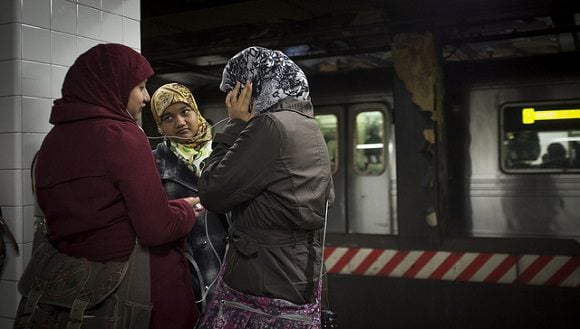
Photo from Flickr Creative Commons, user “Runs with Scissors”
By Engy Abdelkader
Our president has a history of using anti-Muslim stereotypes sounding in misogyny and oppression.
Last July, for instance, his attack against Gold Star mother Ghazala Khan sparked a firestorm of public controversy, bi-partisan rebuke and several direct responses from the assailed Muslim American woman who chose to remain silent next to her husband at the 2016 Democratic National Convention.
The false assumption underlying Trump’s accusation that the grief-stricken Mrs. Khan “wasn’t allowed to have anything to say” as her husband delivered his powerful speech on their behalf highlights how stereotypes are weapons wielded against a subordinated group.
More recently, on January 27th, Trump unsheathed that sword when he signed the original Muslim Ban stating: “In addition, the United States should not admit those who engage in acts of bigotry or hatred …including “honor” killings [or] other forms of violence against women…”
On March 6th, Trump replaced the original ban with a new one that not only excludes immigrants from six Muslim majority countries but also requires the government to collect data surrounding the frequency of “honor killings” in the U.S. Again, this Administration employs a stereotype to further marginalize an already marginalized minority.
Still, this Women’s History Month, Trump’s concern with Muslim women’s experiences confronting bigotry, hatred and violence is a welcome opportunity to educate and dialogue.
In both the U.S. and European Union, Muslim women observing hijab are vulnerable to verbal and physical attacks. And, while so-called “honor killings” are seen as undermining women’s rights, such hate crimes are generally viewed through the lens of religion alone.
In other words, when victimized by co-religionists in a so-called honor crime, a Muslim woman is in fact a woman who enjoys the full protection of the international human rights legal regime. She is often stripped of that status, however, when members of the majority or “in” group visit violence on her. She is then Muslim.
In reality, Muslim women’s experiences with bigotry, hatred and violence are influenced by multiple and intersecting aspects of her identity including religion, gender, race, ethnicity, immigration status, disability, etc. In fact, in the public sphere of hate crimes, the slurs used at the time of her attack evidence the perpetrator’s awareness her unique status as a woman (arguably revealing the bias motive underlying the incident).
Below are a few representative examples highlighting the relationship between language and the victim’s intersecting identities:
• In 2008, a man murdered a pregnant Muslim woman in Dresden, Germany. Initially, the man saw the victim with her son at a playground where he called her a “slut,” [speaking to her gender] and an “Islamist terrorist” [speaking to her religious identity]. He also demanded she remove her headscarf. Later, when he was prosecuted in court, he lunged at his victim with a knife and stabbed her 18 times.
• In 2011, a prominent British journalist and political commentator who was awarded the European Muslim Woman of Influence Award was attacked on social media by a political activist who called her an “Arab whore” [speaking to her race and gender].
• In 2015, while riding a bus in London, a pregnant Muslim woman was verbally assaulted by another women who threatened to kick her in the stomach while repeatedly referring to her as an “ISIS btch,” “sand buckets,” and “sand rats” thus evidencing her awareness of the victim’s gender, religion and race.
• In 2016, a male passenger on a New Jersey transit train attacked three Muslim American college women in hijab. Initially, he asked, “Why are you staring at me, ha? Why are you staring at me you fking Muslim btch” [speaking to her religion and gender]. He then spit at one of the students.
While some argue that these women were attacked exclusively on account of religious identity, the language used at the time of the crimes suggest otherwise. This is an important consideration for women’s rights advocates and feminists to reflect upon.
Significantly, Muslim American women are often responding to bigotry, hatred and violence with strength and courage.
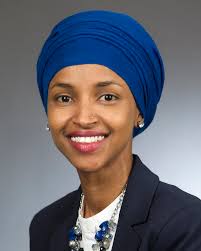
Ilhan Omar, official Minnesota House of Representatives photo
Ilhan Omar, a black Muslim woman who observes hijab and loves politics, is illustrative. In 2014, Omar was at a Minnesota Party Caucus, where she was working as an aide, when more than a half dozen people physically attacked her. She suffered injuries including a concussion. Still, she remained undeterred in pursuing a career in politics. She was determined to help minority communities.
And, two years later, in 2016, Omar won public office becoming the first Muslim female state legislator in Minnesota and the first Muslim, East African woman to hold public office in the country. Ilhan Omar overcame bigotry, hatred and violence, making American history.
It’s important to note, however, that Omar is also a refugee. She fled war-torn Somalia as a young child together with her family. Today, women and girls like her are barred from entering our country or realizing their potential because of who they are and what they believe. The Muslim Ban doesn’t just hurt them, it hurts us all – it hurts America.
And, this Women’s History Month, Ilahn Omar’s story reminds us of that fact.
Engy Abdelkader is research faculty at Georgetown’s Edmund A. Walsh School of Foreign Service. A senior fellow with the Bridge Initiative, a research project on Islamophobia, her work explores the intersection of law, religion and society. This essay was adapted from a presentation made at a race, gender and intersectional inquiries conference at Notre Dame. A version of it originally appeared in onfaith.
Previous Post

March 6, 2017
#MuslimBan 2.0 Executive Order Goes from Seven to Six Countries
Next Post

March 10, 2017 6 Misconceptions Held about Salafi Muslims
Browse Our Archives
Select a Category 2012 Elections 30 Dayd 30 Writers (2017) 30 Days 30 Writers 30 Days 30 Writers (2015) 30 Days 30 Writers (2016) 30 Days 30 Writers (2018) 30 Days 30 Writers 2017 Ali Asadullah Ali Eteraz Alper Bilgili Arthur Richards Asides Asma Uddin Black History Month Briefings Charles Turner Commentary Cyrus McGoldrick Eman H Aly Fatimah Popal Hajj Hajj and Dhul Hijjah Hesham Hassaballa Hisham Hellyer Ibrahim Abusharif Inas Younis Irfan Yusuf Jalal Baig Junaid Afeef Laila Alawa Laila Alwala Mas'ood Cajee Muqtedar Khan Nakia Jackson Newsmakers Parvez Ahmed Podcasts Rabia Chaudry Rafia Zakaria Ramadan Reviews Safiyyah Ally Saud Inam Shahed Amanullah Svend White The Opinionated Oncologist Visions Wajahat Ali Zahed Amanullah Zahir Janmohamed Zainab Khan
Select a Month November 2018 October 2018 September 2018 August 2018 July 2018 June 2018 May 2018 April 2018 March 2018 February 2018 January 2018 December 2017 November 2017 October 2017 September 2017 August 2017 July 2017 June 2017 May 2017 April 2017 March 2017 February 2017 January 2017 December 2016 November 2016 October 2016 September 2016 August 2016 July 2016 June 2016 May 2016 April 2016 March 2016 February 2016 January 2016 December 2015 November 2015 October 2015 September 2015 August 2015 July 2015 June 2015 May 2015 April 2015 March 2015 February 2015 January 2015 December 2014 November 2014 October 2014 September 2014 August 2014 July 2014 June 2014 May 2014 April 2014 March 2014 February 2014 January 2014 December 2013 November 2013 October 2013 September 2013 August 2013 July 2013 June 2013 May 2013 April 2013 March 2013 February 2013 January 2013 December 2012 November 2012 October 2012 September 2012 August 2012 July 2012 June 2012 May 2012 April 2012 March 2012 February 2012 January 2012 December 2011 November 2011 October 2011 September 2011 August 2011 July 2011 June 2011 May 2011 April 2011 March 2011 February 2011 January 2011 December 2010 November 2010 October 2010 September 2010 August 2010 July 2010 June 2010 May 2010 April 2010 March 2010 February 2010 January 2010 December 2009 November 2009 October 2009 September 2009 August 2009 July 2009 June 2009 May 2009 April 2009 March 2009 February 2009 January 2009 December 2008 November 2008 October 2008 September 2008 August 2008 July 2008 June 2008 May 2008 April 2008 March 2008 February 2008 January 2008 December 2007 November 2007 October 2007 September 2007 August 2007 July 2007 June 2007 May 2007 April 2007 March 2007 February 2007 January 2007 December 2006 November 2006 October 2006 September 2006 August 2006 July 2006 June 2006 May 2006 April 2006 March 2006 February 2006 January 2006 December 2005 November 2005 October 2005 September 2005 August 2005 July 2005 June 2005 May 2005 April 2005 March 2005 February 2005 January 2005 December 2004 November 2004 October 2004 September 2004 August 2004 July 2004 June 2004 May 2004 April 2004 March 2004 February 2004 January 2004 December 2003 November 2003 October 2003 September 2003 August 2003 July 2003 June 2003 May 2003 April 2003 March 2003 February 2003 January 2003 December 2002 November 2002 October 2002 September 2002 August 2002 July 2002 June 2002 May 2002 April 2002 March 2002
Follow Us!
TAKE THE
Religious Wisdom Quiz
What does Paul offer to do if Onesimus owes Philemon anything?
Select your answer to see how you score.
Pray for resolution Have the church pay it Forgive the debt Pay it back himself
Related posts from altmuslim

Mawlid 2018: Praise Songs from Around the World

Gaslighting, Anti-Jewish and Anti-Muslim Rhetoric: What to Know

How One Ottoman Reconciled Islamic Teachings with Darwin's...

As #TreeofLife Shows, Trump's Mainstreaming of Hate Puts...
TRENDING AT PATHEOS Muslim

25 Years Later: How Much Has Changed for...
As we approach the 25th anniversary of September 11th, I’ve found myself...

Podcast: Third Spaces & The Rise of Yemeni...
In the latest episode of The Artistic Foodies Podcast, hosts Abbas...

HalalFest Picks: Best 60 Halal Spots for Super...
Back in 2016, I came up with a list of 29...

Unity Is America’s Strength — Division Is Its...
by Hidayatullah Ahsan When Valentina Gomez, a Republican candidate for Congress in...

Zohran Mamdani and New York’s Fight Against Islamophobia
This past June, against all odds, Zohran Mamdani won the Democratic primary...

What the Fourth of July Means to a...
As we mark another Fourth of July, millions of Americans will celebrate...
view all Muslim blogs
Ad-Free & Subscriber Log-In Subscription Support
- About Us
- 2026 Calendar
- Videos
- Podcasts
- Library of World Religions
- Faith In Media Tracker
- Advertise With Us
- Write for Us
- Privacy Policy
- Terms of Service
- Do Not Sell My Data
- Contact Us
- Radiant Digital
- Manage Newsletter Subscriptions
- Unsubscribe From Notifications
- Sitemap
Copyright 2008-2026, Patheos. All rights reserved.
Subscription Support Ad-Free & Subscriber Log-In
Follow Patheos