
BuddhistCatholicContemplativeEvangelicalGeneral ChristianHinduJewishLatter-day SaintMuslimNew VisionsProgressive Christian
Beliefs
- Buddhist
- Catholic
- Contemplative
- Evangelical
- General Christian
- Hindu
- Jewish
- Latter-day Saint
- More Voices
- Muslim
- New Visions
- Pagan
- Progressive Christian
Topics
- Religion News
- Food and Religion
- Sports and Religion
- Religious Art
- Religious Music and Entertainment
- Religious Events
- History and Religion
- Style and Religion
- Politics and Religion
- Women in Religion
- Recreation Outdoors and Religion
- Business Finance and Religion
- Careers Workplace and Religion
- Education and Religion
- Family Parenting and Religion
- Health Fitness and Religion
- Home and Religion
- Relationships and Religion
- Technology and Religion
- Travel and Religion
Columnists
- Buddhist Columnists
- Business Finance and Religion Columnists
- Careers Workplace and Religion Columnists
- Catholic Columnists
- Contemplative Columnists
- Education and Religion Columnists
- Evangelists Columnists
- Family Parenting and Religion Columnists
- General Christian Columnists
- Health Fitness and Religion Columnists
- Hindu Columnists
- History and Religion Columnists
- Home and Religion Columnists
- Jewish Columnists
- More Voices Columnists
- Latter Day Columnists
- Muslim Columnists
- New Visions Columnists
- Nonreligious Columnists
- Pagan Columnists
- Politics and Religion Columnists
- Progressive Columnists
- Recreation Outdoors and Religion Columnists
- Relationships and Religion Columnists
- Religion News Columnists
- Religious Art Columnists
- Religious Events Columnists
- Religious Music and Entertainment Columnists
- Sports and Religion Columnists
- Style and Religion Columnists
- Technology and Religion Columnists
- Travel and Religion Columnists
- Women in Religion Columnists
Resource Library
- 2026 Calendar
- Library of World Religions
- The 100 Most Holy Places on Earth
- Patheos Answers
- Podcasts
- Videos
- Faith Leaders Database
- Anglican Episcopalian
- Bahai
- Baptist
- Buddhism
- Christianity
- Confucianism
- Eastern Orthodoxy
- Hinduism
- Holiness and Pentecostal
- ISKCON
- Islam
- Judaism
- Lutheran
- Methodist
- The Church of Jesus Christ of Latter-day Saints
- New Age
- Paganism
- Presbytarian and Reformed
- Protestantism
- Religion Behind the Scenes
- Roman Catholic
- Scientology
- Shia Islam
- Sikhism
- Sufism
- Sunni Islam
- Taoism
- Zen
- See all religions
Research Tools
 Ad-Free & Subscriber Log-In Subscription Support
Follow Patheos 

- Trending:
- Advent
- |
- Forgiveness
- |
- Thanksgiving
- |
- Election
- |
- Seasonal Holidays
- |
- Marriage
 altmuslim
- Home
- Muslim
- Between Disengagement and Changing Paradigms – A New Path for America’s Mosques
Between Disengagement and Changing Paradigms – A New Path for America’s Mosques
Last updated on: March 3, 2017 at 9:11 pm by Guest Contributor
Between Disengagement and Changing Paradigms – A New Path for America’s Mosques 2017-03-03T21:11:41-04:00 Guest Contributor
Patheos Explore the world's faith through different perspectives on religion and spirituality! Patheos has the views of the prevalent religions and spiritualities of the world.
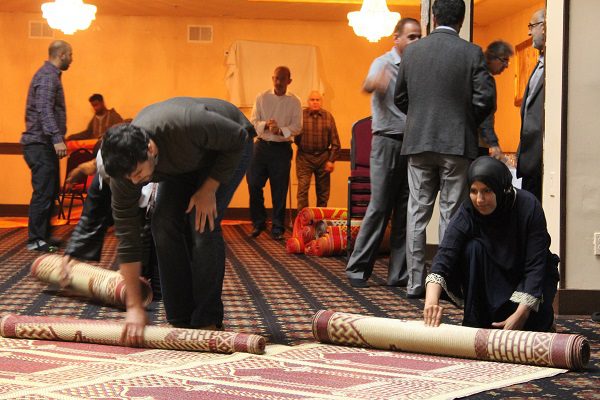
Congregants fold prayer mats after Friday prayer organized by MakeSpace. Photo: Madiha Qureshi
By Madiha Waris Qureshi
On this rainy Friday afternoon, more than 200 men and women fill the banquet hall of Dunya Restaurant in Alexandria, Va. They sit cross-legged on colorful plastic prayer mats on the carpet, listening intently to a speaker at the podium. A dark-haired man in a crisp suit and tie speaks softly into a mic in fluent English.
The hall is a fixture for dinner parties in Fairfax County’s Muslim community. On Friday afternoons, it’s where MakeSpace holds its Friday prayers.
MakeSpace, which calls itself an inclusive hub for the Washington Metro area’s Muslim community, was founded by Imam Zia Makhdoom — the man at the podium. Zia says it was a response to what he considered a failure of many traditional mosques to cater to an increasingly diverse generation of American Muslims. It is not affiliated with any mosque; instead, it holds its events, ranging from prayer circles to family picnics and dramatic readings, at restaurants and public places.
And unlike most mosques, these events have no screens separating men and women.
In today’s sermon, Imam Zia is talking about the power of prayer in Islam. He begins by telling the story of a 1947 Cary Grant movie, “The Bishop’s Wife.”
In the movie, an angel responds to a bishop’s prayer to build a new cathedral and repair his fractured marriage. Zia recalls how the angel redirects the Bishop’s vision for a grandstanding cathedral into smaller projects to help his community. He grows passionate as he criticizes the obsession with large personal platforms among some in the Muslim community, and why prayer must lead to humility and generosity, not self-fulfillment.
Zia goes on to recite verses from the poetry of Rumi, the Persian Sufi poet, and draws laughs when he gently mocks people’s emotional dependence on their Facebook likes.
“We must try to link our happiness with our relationship with God,” he says.
***********
If you live in America, chances are you have heard about the growing threat of Islam.
We are in the middle of a legal battle waged by the current administration to ban Muslim immigration from several countries, waiting for a 2.0 version of the #MuslimBan to drop on us. Radical Islamic terrorists may have claimed fewer American lives in the past decade than toddlers with guns but have long been rightwing media’s favorite weapon to stoke public fear. A quick Google search reveals hundreds of conspiracy theories claiming that American cities are under attack by shariah law and that mosques – Jihadi training grounds – are multiplying like ants.
In reality, at 3.3 million, Muslims in America form just one percent of its population, a number projected to grow to no more than two percent by 2030. As for those multiplying mosques, research shows that American mosques have been actually losing congregants since 9/11. Like many other places of worship in America’s changing religious landscape, mosques too are struggling to fill empty spaces.
According to Dr. Ihsan Bagby’s Mosque Studies, the average number of participants per mosque dropped from 1,625 participants per mosque in 2000 to 1,248 participants in 2011. And a striking documentary in 2013 launched an intense discussion about the growing distance between American mosques and young Muslims. “Unmosqued” argued that younger Muslims are drifting away from mosques due to a lack of evolution in their leadership and for being unwelcoming to groups such as new converts, native-born Muslims, and women.
Why does this matter? Because contrary to the popularized idea that mosques contribute in Muslims’ social and cultural isolation, they often play the opposite role. A 2011 public opinion survey found that, overwhelmingly, mosques help Muslims integrate into U.S. society as well as politics. This finding corroborated decades of research on other religious groups such as Jews and Catholics where church or synagogue attendance resulted in higher civic engagement and support for core values of the American political system.
So, how does one resolve these two parallel realities – that while there are fewer people going to mosques than before, houses of worship can and often do help congregants integrate more into American society? Is a mosque revolution the answer?
Diagnosing the Problem
To understand “unmosquing,” it is important to first understand American mosques.
While American Muslims are a relatively small population, they are extremely diverse in terms of culture, language and ethnicity. Most mosques are self-supporting voluntary institutions and tend to serve specific immigrant groups. They are often led by governing bodies composed of wealthy, older immigrants in the community who are their largest donors. Representation of younger Muslims on mosque governance is typically low.
Uzmaa Balbale grew up in Canton, Mich., where her parents migrated from India. Balbale, who is an engineer by training, moved to Vienna, Va. after marriage and started attending a small local mosque. But she soon realized that she had little in common with the other congregants.
“I found few people whom I would consider my peers. People were either significantly older or much younger.”
The mosque Balbale and her husband attended was built by Pakistani immigrants, and most of its events were conducted in Urdu, which Balbale did not speak. It also did not offer activities for children, which became a deterrent after her daughter was born.
Back in Canton, Balbale had grown up in a different kind of mosque. Co-founded by her parents, the mosque was a well-loved community center for a variety of Muslim ethnicities who had migrated to the city since the 70s. It housed sports facilities and most events were open to both sexes. In comparison, the Vienna mosque was rigid about segregating women. Most of its religious classes catered to men.
Balbale’s husband, Munawar Bharde, told me he realized many mosques had norms that had nothing to do with Islamic practice, but that partitioning of men and women was not a big deal. He argued that most mosques target specific ethnicities, and many cultures favor segregation.
“I think partitioning is only in the minds,” he says.
But Balbale disagrees with him.
“I do think that it makes a difference. It made me feel uncomfortable.”
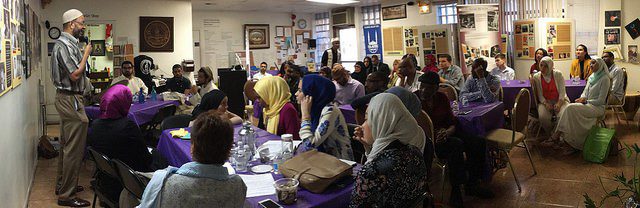
A Quranic Arabic class in session. Photo: Fawakih Institute
Changing Paradigms
A lot of the discussion around mosque reform today suggests that they need to do more than just offer spaces to pray.
“The mosques of the 80s and 90s need to adapt to people’s lifestyles today,” says Saif Omar, a second generation Pakistani-American who founded the Fawakih Institute in Herndon, Va.
Omar founded Fawakih in 2007 to cater to the evolving intellectual needs of Muslim Americans that were not being fulfilled by mosques due to limited resources. Having studied Arabic in the Middle East and public policy at Harvard University, he saw Quranic Arabic as an important tool for modern Muslim adults, one that would counter common misconceptions about Islam.
But since almost all American mosques are volunteer-run, they often find it tough to hire trained teachers for adult Quranic education. Fawakih trains instructors and provides them to mosques across 10 states, making it easier for them to offer the service. Many of its students as well as teachers are young professionals, and at least half of the instructors are women – who typically lack participation in leading roles at Islamic institutions.
“We have a lot of mosques in America. The key is to make them centers of learning instead of empty rooms,” Omar says.
Beyond integrating learning initiatives, Omar sees many other opportunities for reform for mosques. He proposes a mechanism to share best practices and innovations by successful mosques as well as outreach initiatives like MakeSpace or the California-based Ta’leef Collective, both of which are popular with Muslim millennials.
“Anything good happening at one institution, there should be an organization that can help other mosques see it. We need metrics,” he says.
The All Dulles Area Muslim Society (ADAMS) in Sterling, Va., one of the most popular mosques on the East Coast, runs a wide variety of educational programs for children and adults, including Cub Scouts. Omar thinks one big reason behind Adam Center’s success is that it invested early on in dynamic, forward thinking leadership. Its board also includes several younger Muslims.
Shad Imam, 38, is a former board member of ADAMS, and remembers well when “Unmosqued” came out. It immediately fueled discussions in his social circles of 30-something Muslims who had grown up in America and were actively involved in mosques.
“It made us look into whether there was a problem with the way mosques were run.”
One of the biggest issues that came up was leadership, but it turned out to be more complex than a lack of will. Imam told me not all mosques are able to attract younger volunteers the way ADAMS has. While some do have problems at an institutional level, he believes a big hurdle is that younger people are just too busy to get involved.
This is a gripe shared by many mosque leaders, who struggle to find volunteers from groups that feel excluded. Alia Khan, 48, runs several programs at the 25-year old Muslim Community Center of Greater Pittsburgh in Monroeville, Pa., including a popular interfaith women’s book club. She said the community today is larger and more diverse than it was when she was growing up in America, but mosque volunteers don’t always reflect this growth.
Khan says she and her fellow volunteers want to do a lot more, but most have full-time jobs, and “who would run those programs?”
Congregants also have vastly different needs now. While new immigrants still seek emotional comfort and familiarity in mosques, many others, like native-born Muslims, come for learning or intellectual stimulation. There are also groups that weren’t as visible before.
“We have more divorced Muslims, single mothers, LGBT Muslims,” she said.
While her mosque has made efforts to be more welcoming, especially to families by investing into childcare and a playground, Khan thinks it can do more – like divorce support groups, professional development and more interfaith activities. But, while it has a designated volunteer to participate in an inter-faith alliance, he is a physician with limited availability.
“There’s a huge effort required on our part, and we just don’t have enough people to do it.”
**********
A few years ago, ADAMS conducted a survey to find out why some community members were skipping attendance. Many cited childcare issues. The next Ramadan, it organized a large family-friendly event where people were able to attend with kids. It also became more active online, broadcasting services for those who couldn’t attend physically due to long hours at work or other reasons.
But apart from just convenience, another reason mosques likes ADAMS are pursuing greater online engagement is to counter the enormous scale of misinformation about Islam found online. Extremist philosophies propagated by groups like the Islamic State and Al-Qaeda, among others, have always found the internet’s obscure crevices as fertile recruitment grounds.
Imam says that by becoming more inclusive online, mosques can help protect communities from extreme interpretations, and counter competing narratives of what it means to be Muslim.
“Research shows those who go to mosques are far less likely to be radicalized than those who do,” he told me. “When you don’t have community to talk to, people will go online, and they will find someone crazy.”
Madiha Waris Qureshi is a Pakistani-American writer and international development consultant based in the Washington, D.C. area. She is a graduate student of Interactive Journalism at the American University. Qureshi writes at www.amarbail.com and tweets at @MadihaQ.
Next Post

March 6, 2017 #MuslimBan 2.0 Executive Order Goes from Seven to Six Countries
Browse Our Archives
Select a Category 2012 Elections 30 Dayd 30 Writers (2017) 30 Days 30 Writers 30 Days 30 Writers (2015) 30 Days 30 Writers (2016) 30 Days 30 Writers (2018) 30 Days 30 Writers 2017 Ali Asadullah Ali Eteraz Alper Bilgili Arthur Richards Asides Asma Uddin Black History Month Briefings Charles Turner Commentary Cyrus McGoldrick Eman H Aly Fatimah Popal Hajj Hajj and Dhul Hijjah Hesham Hassaballa Hisham Hellyer Ibrahim Abusharif Inas Younis Irfan Yusuf Jalal Baig Junaid Afeef Laila Alawa Laila Alwala Mas'ood Cajee Muqtedar Khan Nakia Jackson Newsmakers Parvez Ahmed Podcasts Rabia Chaudry Rafia Zakaria Ramadan Reviews Safiyyah Ally Saud Inam Shahed Amanullah Svend White The Opinionated Oncologist Visions Wajahat Ali Zahed Amanullah Zahir Janmohamed Zainab Khan
Select a Month November 2018 October 2018 September 2018 August 2018 July 2018 June 2018 May 2018 April 2018 March 2018 February 2018 January 2018 December 2017 November 2017 October 2017 September 2017 August 2017 July 2017 June 2017 May 2017 April 2017 March 2017 February 2017 January 2017 December 2016 November 2016 October 2016 September 2016 August 2016 July 2016 June 2016 May 2016 April 2016 March 2016 February 2016 January 2016 December 2015 November 2015 October 2015 September 2015 August 2015 July 2015 June 2015 May 2015 April 2015 March 2015 February 2015 January 2015 December 2014 November 2014 October 2014 September 2014 August 2014 July 2014 June 2014 May 2014 April 2014 March 2014 February 2014 January 2014 December 2013 November 2013 October 2013 September 2013 August 2013 July 2013 June 2013 May 2013 April 2013 March 2013 February 2013 January 2013 December 2012 November 2012 October 2012 September 2012 August 2012 July 2012 June 2012 May 2012 April 2012 March 2012 February 2012 January 2012 December 2011 November 2011 October 2011 September 2011 August 2011 July 2011 June 2011 May 2011 April 2011 March 2011 February 2011 January 2011 December 2010 November 2010 October 2010 September 2010 August 2010 July 2010 June 2010 May 2010 April 2010 March 2010 February 2010 January 2010 December 2009 November 2009 October 2009 September 2009 August 2009 July 2009 June 2009 May 2009 April 2009 March 2009 February 2009 January 2009 December 2008 November 2008 October 2008 September 2008 August 2008 July 2008 June 2008 May 2008 April 2008 March 2008 February 2008 January 2008 December 2007 November 2007 October 2007 September 2007 August 2007 July 2007 June 2007 May 2007 April 2007 March 2007 February 2007 January 2007 December 2006 November 2006 October 2006 September 2006 August 2006 July 2006 June 2006 May 2006 April 2006 March 2006 February 2006 January 2006 December 2005 November 2005 October 2005 September 2005 August 2005 July 2005 June 2005 May 2005 April 2005 March 2005 February 2005 January 2005 December 2004 November 2004 October 2004 September 2004 August 2004 July 2004 June 2004 May 2004 April 2004 March 2004 February 2004 January 2004 December 2003 November 2003 October 2003 September 2003 August 2003 July 2003 June 2003 May 2003 April 2003 March 2003 February 2003 January 2003 December 2002 November 2002 October 2002 September 2002 August 2002 July 2002 June 2002 May 2002 April 2002 March 2002
Follow Us!
TAKE THE
Religious Wisdom Quiz
What sea did Moses part?
Select your answer to see how you score.
Dead Sea Mediterranean Sea Red Sea Sea of Galilee
Related posts from altmuslim
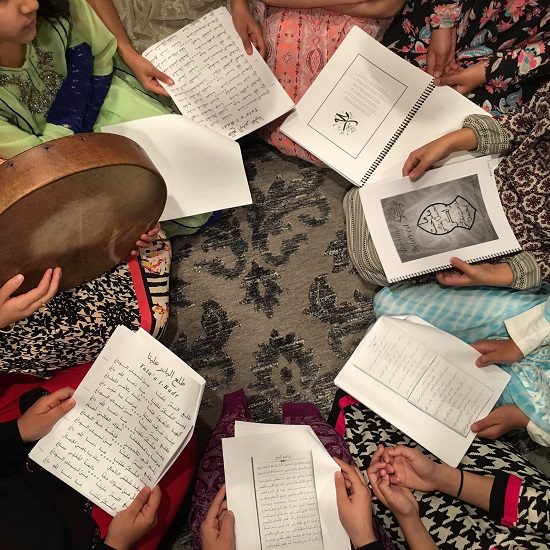
Mawlid 2018: Praise Songs from Around the World

Gaslighting, Anti-Jewish and Anti-Muslim Rhetoric: What to Know
As #TreeofLife Shows, Trump's Mainstreaming of Hate Puts...
Muslims and Voting - What Does Sharia Have...
TRENDING AT PATHEOS Muslim

25 Years Later: How Much Has Changed for...
As we approach the 25th anniversary of September 11th, I’ve found myself...

Podcast: Third Spaces & The Rise of Yemeni...
In the latest episode of The Artistic Foodies Podcast, hosts Abbas...

HalalFest Picks: Best 60 Halal Spots for Super...
Back in 2016, I came up with a list of 29...

Unity Is America’s Strength — Division Is Its...
by Hidayatullah Ahsan When Valentina Gomez, a Republican candidate for Congress in...

Zohran Mamdani and New York’s Fight Against Islamophobia
This past June, against all odds, Zohran Mamdani won the Democratic primary...

What the Fourth of July Means to a...
As we mark another Fourth of July, millions of Americans will celebrate...
view all Muslim blogs
Ad-Free & Subscriber Log-In Subscription Support
- About Us
- 2026 Calendar
- Videos
- Podcasts
- Library of World Religions
- Faith In Media Tracker
- Advertise With Us
- Write for Us
- Privacy Policy
- Terms of Service
- Do Not Sell My Data
- Contact Us
- Radiant Digital
- Manage Newsletter Subscriptions
- Unsubscribe From Notifications
- Sitemap
Copyright 2008-2026, Patheos, part of the Radiant Digital network of media brands. All rights reserved.
Subscription Support Ad-Free & Subscriber Log-In
Follow Patheos