
BuddhistCatholicContemplativeEvangelicalGeneral ChristianHinduJewishLatter-day SaintMuslimNew VisionsProgressive Christian
Beliefs
- Buddhist
- Catholic
- Contemplative
- Evangelical
- General Christian
- Hindu
- Jewish
- Latter-day Saint
- More Voices
- Muslim
- New Visions
- Pagan
- Progressive Christian
Topics
- Religion News
- Food and Religion
- Sports and Religion
- Religious Art
- Religious Music and Entertainment
- Religious Events
- History and Religion
- Style and Religion
- Politics and Religion
- Women in Religion
- Recreation Outdoors and Religion
- Business Finance and Religion
- Careers Workplace and Religion
- Education and Religion
- Family Parenting and Religion
- Health Fitness and Religion
- Home and Religion
- Relationships and Religion
- Technology and Religion
- Travel and Religion
Columnists
- Buddhist Columnists
- Business Finance and Religion Columnists
- Careers Workplace and Religion Columnists
- Catholic Columnists
- Contemplative Columnists
- Education and Religion Columnists
- Evangelists Columnists
- Family Parenting and Religion Columnists
- General Christian Columnists
- Health Fitness and Religion Columnists
- Hindu Columnists
- History and Religion Columnists
- Home and Religion Columnists
- Jewish Columnists
- More Voices Columnists
- Latter Day Columnists
- Muslim Columnists
- New Visions Columnists
- Nonreligious Columnists
- Pagan Columnists
- Politics and Religion Columnists
- Progressive Columnists
- Recreation Outdoors and Religion Columnists
- Relationships and Religion Columnists
- Religion News Columnists
- Religious Art Columnists
- Religious Events Columnists
- Religious Music and Entertainment Columnists
- Sports and Religion Columnists
- Style and Religion Columnists
- Technology and Religion Columnists
- Travel and Religion Columnists
- Women in Religion Columnists
Resource Library
- 2026 Calendar
- Library of World Religions
- The 100 Most Holy Places on Earth
- Patheos Answers
- Podcasts
- Videos
- Faith Leaders Database
- Anglican Episcopalian
- Bahai
- Baptist
- Buddhism
- Christianity
- Confucianism
- Eastern Orthodoxy
- Hinduism
- Holiness and Pentecostal
- ISKCON
- Islam
- Judaism
- Lutheran
- Methodist
- The Church of Jesus Christ of Latter-day Saints
- New Age
- Paganism
- Presbytarian and Reformed
- Protestantism
- Religion Behind the Scenes
- Roman Catholic
- Scientology
- Shia Islam
- Sikhism
- Sufism
- Sunni Islam
- Taoism
- Zen
- See all religions
Research Tools
 Ad-Free & Subscriber Log-In Subscription Support
Ad-Free & Subscriber Log-In Subscription Support
Follow Patheos 

- Trending:
- Forgiveness
- |
- Marriage
- |
- Consciousness
- |
- Death Penalty
- |
- Election
- |
- Halloween
 altmuslim
- Home
- Muslim
- On Malcolm X, Blackness and Muslim-ness Through the Lens of Ta-Nehisi Coates
On Malcolm X, Blackness and Muslim-ness Through the Lens of Ta-Nehisi Coates
Last updated on: February 27, 2017 at 5:22 pm by Guest Contributor
On Malcolm X, Blackness and Muslim-ness Through the Lens of Ta-Nehisi Coates 2017-02-27T17:22:29-04:00 Guest Contributor
Patheos Explore the world's faith through different perspectives on religion and spirituality! Patheos has the views of the prevalent religions and spiritualities of the world.
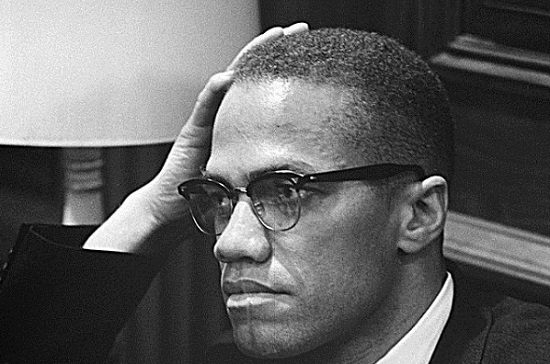
Photo courtesy of WIkimedia Commons
By Will Caldwell
We are still grappling with the life and legacy of Malcolm X now more than fifty years after his martyrdom in the Audubon Ballroom. His lived example ironically inspired both the formation of the Black Panther Party and the Nation of Islam’s gradual move away from black nationalism. Spike Lee canonized him as a black hero in his 1992 film, Malcolm X, and he was referenced at Barack Obama’s 2009 inauguration as a dangerous, militant foil to a sanitized, pacifist rendering of Dr. Martin Luther King, Jr.(1)
He has been both the quintessential black revolutionary for Marxists and a paragon of “post-Hajj” Islamic orthodoxy for many Muslims. Many have attempted to stake a claim in (or denounce) the multitudes that he contained so effortlessly. Yet Malcolm-the-Black-Hero and Malcolm-the-Muslim seem rarely to meet each other in contemporary discourse — despite their emergence from a man for whom these identities walked hand-in-hand.
How, then, are we to understand his legacy at a time when a prominent face of American Islam has spoken out against the movement for Black Lives even as calls for solidarity between Muslims and communities of color in the age of Trump are invoking his name anew? (2)
Ta-Nehisi Coates’ book, Between the World and Me, provides an excellent place to begin a fresh encounter with Malcolm X. Coates writes the book as a letter to his son, discussing the realities of race and racism he will need to navigate growing up in the United States. Malcolm makes an early appearance here as a formative voice for Coates’ own development as a young black man coming up in Baltimore during the eighties and nineties.
This was a time, he explains, in which the “air … was charged with a call for a return, to old things, to something essential, some part of us that had been left behind in the mad dash out of the past and into America.” Malcolm’s voice emerged clearest among these calls, sampled alongside bass lines and drum beats during the early days of hip hop:
I loved Malcolm because Malcolm never lied, unlike the schools and their façade of morality, unlike the streets and their bravado, unlike the world of dreamers. I loved him because he made it plain, never mystical or esoteric, because his science was not rooted in the actions of spooks and mystery gods but in the work of the physical world.
Malcolm recalled a form of blackness that was essential and pure — molded but not ravaged by centuries of enslavement and racial terror. Importantly, for Coates, this also implied a form of blackness untainted by the Christianity that he himself never knew. Malcolm X was someone who “would not turn the other cheek for you … . Malcolm spoke like a man who was free, like a black man above the laws that proscribed our imagination.”
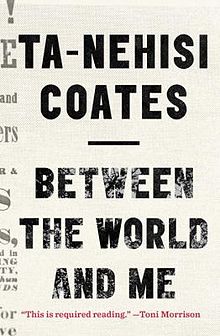 Coates prized Malcolm as a paragon of blackness who was unapologetic, driven by forces unseen, yet thoroughly rooted in this physical world: “He returned [from prison] wielding some old power that made him speak as though his body were his own. ‘If you’re black, you were born in jail,’ Malcolm said…. Perhaps I too might wield the same old power that animated the ancestors.” (3)
Coates’ describes a Malcolm thoroughly cast in the die of a Marxist revolutionary. He is a black hero precisely because he cuts through racist and religious obfuscation to the underlying material conditions of white supremacy. Yet, this description simultaneously captures the complexity of a man whose revolutionary spirit and commitment to justice for black Americans is fully constituted by his Islam. The author’s use of “spooks and mystery gods” to characterize the forces Malcolm fought with his “science” directly quotes Elijah Muhammad’s polemics against Christian theism in favor of Islam as a “natural religion of the black man.”(4)
Islam was also, of course, that “old power” with which Malcolm returned from prison — just as it undoubtedly animated countless ancestors before and after “the mad dash out of the past and into America.”(5) Despite Coates’ own avowed atheism, he cannot seem to praise Malcolm as a black hero without subtly invoking his Islam. For as he faithfully demonstrates, Islam is the black power that animated Malcolm X and his continued legacy.
Between the World and Me provokes us to ponder the full complexity of Malcolm X by thinking about the history that produced him. His power was an “old” one because the potent relationship between Islam and black peoples in the Americas long preceded him. But what is this historical relationship and how are we to think about it? Here, too, Coates provides valuable insight.
Toward the end of the book, he speaks directly to his son about his ancestors and the struggle he inherits from them:
The Struggle is in your name, Samori — you were named for Samori Touré, who struggled against French colonizers for the right to his own black body.
This is, of course, the same Samori Touré who ruled the independent Muslim empire of Wassoulou in what is now Guinea; his aptly-named “struggle” was in fact a jihad against the French that he inherited from al-Hajj Umar Tal and a lineage of anti-colonial mujahideen before him. That “old power” that Coates admires in Malcolm X is thus a tradition of African Muslim struggle that extends across the Atlantic — informing new struggles that we still fight today. (6)
What Coates can point us toward is in fact a new understanding of the history of Islam in the Americas through a fuller account of Malcolm X. The presence of significant numbers of African Muslims enslaved in the Americas is now an established historical fact. (7) Historical research over the past few decades has revealed as many as 30 percent of the Africans enslaved in the United States were Muslims — and that this accounts for only a fraction of the total Muslims stolen from Africa over the course of the Atlantic Slave Trade. (8)
Historians have, so far, written African Muslims into existing narratives about black enslavement — a natural choice reflecting the very real evidence of Muslims on plantations throughout the Americas. Yet, this is not the full story. The line running from Samori Touré to Malcolm X, two Muslim revolutionaries unbent by colonialist racial terror, certainly does not seem to run through the plantation. Indeed, there is ample evidence to suggest that the tradition of African Islam running between them has been transmitted through free communities of Muslims living and engaged in anticolonial struggle in the Americas for centuries.
The “Free Mandingoes” of Trinidad, the Malê Revolt of Bahia, and Fort Musa in Florida are just a few such examples. (9) While the history of enslavement is therefore necessary to tell the full story of Islam in the Americas, it is certainly not sufficient; free African Muslims fighting colonial subordination have been integral to the struggle for black self-determination that Malcolm X and his protégés inherited.
The two Malcolms mentioned above must begin to meet more often in our memories of him. He has been a hero to black revolutionaries and Muslims alike for half a century now because Islam has always been integral to the structure of what Cedric Robinson calls the “Black Radical Tradition” — that “specifically African response to an oppression emergent from the immediate determinants of European development in the modern era and framed by orders of human exploitation.”
The freedom of black peoples in the Americas has likewise been the historical condition for the free and full practice of Islam in this hemisphere. This history can be the basis for meaningful solidarity going forward — one to which our Black Muslim hero has always pointed us.
Will Caldwell is a doctoral candidate in Islam and American Religions at Northwestern University. He specializes in the history of early twentieth-century African American Muslims, with a focus on issues of race, empire, and internationalism. A version of this article originally appeared on SapeloSquare.com.
- Sohail Daulatzai, Black Star, Crescent Moon: The Muslim International and Black Freedom Beyond America (Minneapolis: University of Minnesota Press, 2012), ix-x. ↩︎
2. Sheikh Hamza Yusuf recently stoked controversy as the RIS 2016 conference by claiming that the United States is “one of the least racist societies in the world,” defending police who commit violence against minorities, and broadly dismissing anti-racist movements like Black Lives Matter. ↩︎
3. Ta-Nehisi Coates, Between the World and Me (New York: Spiegel & Grau, 2015), 36-37. ↩︎
4. See the first chapters of Message to the Blackman, entitled “Who Is That Mystery God?” which answers, “some invisible spook somewhere in space.” Elijah Muhammad, Message to the Blackman in America (Phoenix, AZ: Secretarius MEMPS Publications, 1973), 4-5. The original teachings attributed to Fard Muhammad, Teaching for the Lost-Found Nation of Islam in a Mathematical Way, uses the same language. ↩︎
5. Malcolm’s conversion in prison is detailed in The Autobiography of Malcolm X. ↩︎
6. Coates, Between the World and Me, 68. ↩︎
7. See, for example, Allan Austin’s African Muslims in Antebellum America or Sylviane Diouf’s Servants of Allah. ↩︎
8. Henry Louis Gates, Jr., “How Many Slaves Landed in the US?” The Root, January 6, 2014, accessed October 16, 2016, http://www.theroot.com/articles/history/2014/01/how_many_slaves_came_to_america_fact_vs_fiction/. ↩︎
9. See respectively: Carl Campbell, “John Mohammed Bath and the Free Mandingos of Trinidad”; Joao Jose Reis, Slave Resistance in Brazil: Bahia, 1807-1835; Samory Rashid, Black Muslims in the U.S. ↩︎
Previous Post

February 24, 2017
#Activism: How Muslims Became Maryland's Premier Political Force
Browse Our Archives
Select a Category 2012 Elections 30 Dayd 30 Writers (2017) 30 Days 30 Writers 30 Days 30 Writers (2015) 30 Days 30 Writers (2016) 30 Days 30 Writers (2018) 30 Days 30 Writers 2017 Ali Asadullah Ali Eteraz Alper Bilgili Arthur Richards Asides Asma Uddin Black History Month Briefings Charles Turner Commentary Cyrus McGoldrick Eman H Aly Fatimah Popal Hajj Hajj and Dhul Hijjah Hesham Hassaballa Hisham Hellyer Ibrahim Abusharif Inas Younis Irfan Yusuf Jalal Baig Junaid Afeef Laila Alawa Laila Alwala Mas'ood Cajee Muqtedar Khan Nakia Jackson Newsmakers Parvez Ahmed Podcasts Rabia Chaudry Rafia Zakaria Ramadan Reviews Safiyyah Ally Saud Inam Shahed Amanullah Svend White The Opinionated Oncologist Visions Wajahat Ali Zahed Amanullah Zahir Janmohamed Zainab Khan
Select a Month November 2018 October 2018 September 2018 August 2018 July 2018 June 2018 May 2018 April 2018 March 2018 February 2018 January 2018 December 2017 November 2017 October 2017 September 2017 August 2017 July 2017 June 2017 May 2017 April 2017 March 2017 February 2017 January 2017 December 2016 November 2016 October 2016 September 2016 August 2016 July 2016 June 2016 May 2016 April 2016 March 2016 February 2016 January 2016 December 2015 November 2015 October 2015 September 2015 August 2015 July 2015 June 2015 May 2015 April 2015 March 2015 February 2015 January 2015 December 2014 November 2014 October 2014 September 2014 August 2014 July 2014 June 2014 May 2014 April 2014 March 2014 February 2014 January 2014 December 2013 November 2013 October 2013 September 2013 August 2013 July 2013 June 2013 May 2013 April 2013 March 2013 February 2013 January 2013 December 2012 November 2012 October 2012 September 2012 August 2012 July 2012 June 2012 May 2012 April 2012 March 2012 February 2012 January 2012 December 2011 November 2011 October 2011 September 2011 August 2011 July 2011 June 2011 May 2011 April 2011 March 2011 February 2011 January 2011 December 2010 November 2010 October 2010 September 2010 August 2010 July 2010 June 2010 May 2010 April 2010 March 2010 February 2010 January 2010 December 2009 November 2009 October 2009 September 2009 August 2009 July 2009 June 2009 May 2009 April 2009 March 2009 February 2009 January 2009 December 2008 November 2008 October 2008 September 2008 August 2008 July 2008 June 2008 May 2008 April 2008 March 2008 February 2008 January 2008 December 2007 November 2007 October 2007 September 2007 August 2007 July 2007 June 2007 May 2007 April 2007 March 2007 February 2007 January 2007 December 2006 November 2006 October 2006 September 2006 August 2006 July 2006 June 2006 May 2006 April 2006 March 2006 February 2006 January 2006 December 2005 November 2005 October 2005 September 2005 August 2005 July 2005 June 2005 May 2005 April 2005 March 2005 February 2005 January 2005 December 2004 November 2004 October 2004 September 2004 August 2004 July 2004 June 2004 May 2004 April 2004 March 2004 February 2004 January 2004 December 2003 November 2003 October 2003 September 2003 August 2003 July 2003 June 2003 May 2003 April 2003 March 2003 February 2003 January 2003 December 2002 November 2002 October 2002 September 2002 August 2002 July 2002 June 2002 May 2002 April 2002 March 2002
Follow Us!
TAKE THE
Religious Wisdom Quiz
Who predicted the birth of John the Baptist?
Select your answer to see how you score.
Michael Uriel Gabriel Raphael
Related posts from altmuslim

Mawlid 2018: Praise Songs from Around the World

Gaslighting, Anti-Jewish and Anti-Muslim Rhetoric: What to Know

How One Ottoman Reconciled Islamic Teachings with Darwin's...

As #TreeofLife Shows, Trump's Mainstreaming of Hate Puts...
TRENDING AT PATHEOS Muslim

25 Years Later: How Much Has Changed for...
As we approach the 25th anniversary of September 11th, I’ve found myself...

Podcast: Third Spaces & The Rise of Yemeni...
In the latest episode of The Artistic Foodies Podcast, hosts Abbas...

HalalFest Picks: Best 60 Halal Spots for Super...
Back in 2016, I came up with a list of 29...

Unity Is America’s Strength — Division Is Its...
by Hidayatullah Ahsan When Valentina Gomez, a Republican candidate for Congress in...

Zohran Mamdani and New York’s Fight Against Islamophobia
This past June, against all odds, Zohran Mamdani won the Democratic primary...

What the Fourth of July Means to a...
As we mark another Fourth of July, millions of Americans will celebrate...
view all Muslim blogs
Ad-Free & Subscriber Log-In Subscription Support
- About Us
- 2026 Calendar
- Videos
- Podcasts
- Library of World Religions
- Faith In Media Tracker
- Advertise With Us
- Write for Us
- Privacy Policy
- Terms of Service
- Do Not Sell My Data
- Contact Us
- Radiant Digital
- Manage Newsletter Subscriptions
- Unsubscribe From Notifications
- Sitemap
Copyright 2008-2026, Patheos. All rights reserved.
Subscription Support Ad-Free & Subscriber Log-In
Follow Patheos