
BuddhistCatholicContemplativeEvangelicalGeneral ChristianHinduJewishLatter-day SaintMuslimNew VisionsProgressive Christian
Beliefs
- Buddhist
- Catholic
- Contemplative
- Evangelical
- General Christian
- Hindu
- Jewish
- Latter-day Saint
- More Voices
- Muslim
- New Visions
- Pagan
- Progressive Christian
Topics
- Religion News
- Food and Religion
- Sports and Religion
- Religious Art
- Religious Music and Entertainment
- Religious Events
- History and Religion
- Style and Religion
- Politics and Religion
- Women in Religion
- Recreation Outdoors and Religion
- Business Finance and Religion
- Careers Workplace and Religion
- Education and Religion
- Family Parenting and Religion
- Health Fitness and Religion
- Home and Religion
- Relationships and Religion
- Technology and Religion
- Travel and Religion
Columnists
- Buddhist Columnists
- Business Finance and Religion Columnists
- Careers Workplace and Religion Columnists
- Catholic Columnists
- Contemplative Columnists
- Education and Religion Columnists
- Evangelists Columnists
- Family Parenting and Religion Columnists
- General Christian Columnists
- Health Fitness and Religion Columnists
- Hindu Columnists
- History and Religion Columnists
- Home and Religion Columnists
- Jewish Columnists
- More Voices Columnists
- Latter Day Columnists
- Muslim Columnists
- New Visions Columnists
- Nonreligious Columnists
- Pagan Columnists
- Politics and Religion Columnists
- Progressive Columnists
- Recreation Outdoors and Religion Columnists
- Relationships and Religion Columnists
- Religion News Columnists
- Religious Art Columnists
- Religious Events Columnists
- Religious Music and Entertainment Columnists
- Sports and Religion Columnists
- Style and Religion Columnists
- Technology and Religion Columnists
- Travel and Religion Columnists
- Women in Religion Columnists
Resource Library
- 2026 Calendar
- Library of World Religions
- The 100 Most Holy Places on Earth
- Patheos Answers
- Podcasts
- Videos
- Faith Leaders Database
- Anglican Episcopalian
- Bahai
- Baptist
- Buddhism
- Christianity
- Confucianism
- Eastern Orthodoxy
- Hinduism
- Holiness and Pentecostal
- ISKCON
- Islam
- Judaism
- Lutheran
- Methodist
- The Church of Jesus Christ of Latter-day Saints
- New Age
- Paganism
- Presbytarian and Reformed
- Protestantism
- Religion Behind the Scenes
- Roman Catholic
- Scientology
- Shia Islam
- Sikhism
- Sufism
- Sunni Islam
- Taoism
- Zen
- See all religions
Research Tools
 Ad-Free & Subscriber Log-In Subscription Support
Ad-Free & Subscriber Log-In Subscription Support
Follow Patheos 

- Trending:
- Forgiveness
- |
- Marriage
- |
- Consciousness
- |
- Death Penalty
- |
- Election
- |
- Halloween
 altmuslim
- Home
- Muslim
- My Most Memorable Ramadan: An Ode to My Mother
My Most Memorable Ramadan: An Ode to My Mother
Last updated on: June 29, 2016 at 8:09 pm by Guest Contributor
My Most Memorable Ramadan: An Ode to My Mother 2016-06-29T20:09:56-04:00 Guest Contributor
Patheos Explore the world's faith through different perspectives on religion and spirituality! Patheos has the views of the prevalent religions and spiritualities of the world.
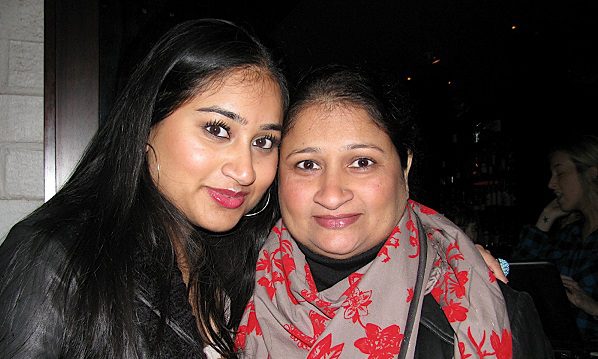
The author and her mother.
This is Day 24 of the #30Days30Writers 2016 Ramadan series.
By Aisha Rahman
Strangely, the most impactful Ramadan of my life was one that I did not live through. Several months ago a friend of mine shared an article with me about how pain, trauma and other strong emotions can be passed along from one generation to the next. While I cannot speak to the science behind it, the concept sits with me.
For those who know me, I often speak about the fact that my story, my sense of self, emanates from my mother. So it’s fitting that the Ramadan story that impacted my life most is the one that impacted my mother the most.
Forty Ramadans ago, my Nana (maternal grandfather) died. It is a story I heard nearly every Ramadan growing up and certainly every Ramadan of my adulthood. My mother and her family had immigrated from Dhaka to Karachi after the 1971 war. My Nana, who had held a high position at the jute mill in Adamjee, expected a good job, a home, and a pension for his family upon his arrival in Karachi.
No such luck.
With six young children and one more born on arrival, both my Nana and Nani were stressed about how their family would survive. They had left most of their worldly possessions behind, had very little money and had seven mouths to feed. My Nana was able to secure a job within a few months, but their situation was dire.
A few short years later, not much had changed. Barely stabilized, my mother and her family ushered in the holiest month of the calendar, Ramadan, and prayed for their situation to get better. My mother was 16 years old. That month my Nana died. My mother remembers every moment of that night.
When she tells the story, my mother recalls what they had for iftar that night. She remembers that my Nana’s stomach started hurting shortly after ‘Isha prayer. He tried to play off the pain – he was a strong and proud man. When it was no longer bearable, he called for the ambulance. All of the younger children were already asleep, but my mother, the eldest, sat by his side and tried to comfort him.
When my mother describes her relationship with her father she talks of the distance between them. My mother grew up in a culture and a generation that respected parents to such a degree that at times there was a chasm between them. While my Nana was not a scary figure, my mother’s desire to please him was so deep that it kept her from having honest, deep conversations with him.
Not that night.
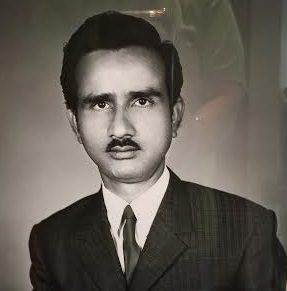
The author’s Nana (maternal grandfather)
In the moments before he was taken to the hospital, my mother describes her last meaningful conversation with her father as transcendent. It was as if Nana knew that he was not going to make it. He told my mother that he was proud of her, that she was his darling daughter, and that he knew her naseeb (fate) would be blessed. With one final hand on her forehead, he gave her that final du’a.
Growing up, my mother taught me that I should always be in a state of God-consciousness. That du’as should be on the tip of my tongue because, after all, you didn’t know which moment was the moment God would grant your prayer. When she tells the story of her father’s passing, she knows that that final moment they shared at home was the moment of God granting Nana’s Ramadan du’a.
Indeed, for years and years after Nana’s death, my mother’s life was in various states of turmoil. She describes those days with a well-known Urdu phrase, which roughly translates to it feeling as if the ground beneath her feet had disappeared. With no financial security, the burden of supporting her family fell on her shoulders.
Perhaps my favorite story of that time was when she announced to her mother and her extended family that she was going to work at Habib Bank Plaza. They looked at her skeptically, not wanting to shatter her dreams but knowing that a job at one of the biggest banks in the city was a near impossible goal for a teenager.
Mom practiced her typing for weeks, her speed steadily increasing. Then, one day the executive vice president presented her with an appointment letter. She ran home to her mother, proudly announcing that she had secured a position. It was one of the happiest moments in her young life.
My Nana’s untimely and tragic death was the defining moment that impacted my mother’s life trajectory. The struggles that she faced during those years, whether it was being harassed on the two buses it took her to get to work, saving each hard earned rupee while her co-workers (other young women for whom this job was just to earn some pocket money) went out to lunch, or helping my Nani around the home taking care of her six siblings — it changed her perspective on life forever.
Like other young Pakistani girls, I was raised to believe that marriage, and the financial security that came with it, was an important part of my life. A goal to aspire to. However, my mother made it very clear to me when I was very young that I was not to be married until I had a professional degree.
I always asked her why, and she always told me that while God is the best of planners and we do not know what He has planned. A woman needs to be reliant on Him first and then on herself. My mother is the epitome of resilience.
She is the strongest person that I know. I know that my Nana’s du’a touched her – with every challenge that God has given her, she has risen to the occasion, knowing that God does not give any person a burden that they cannot bear.
This is my Ramadan lesson, and it’s a lesson I pray to never forget.
Aisha Rahman, Esq. is Executive Director of KARAMAH and also serves as the head of the organization’s Family Law Division. She received her higher education at Emory University and The University of Tennessee College of Law.
Previous Post

June 28, 2016
Ramadan is the Month of Jihad
Next Post
June 30, 2016 A State of Fasting, A Lowering of Our Nafs
Browse Our Archives
Select a Category 2012 Elections 30 Dayd 30 Writers (2017) 30 Days 30 Writers 30 Days 30 Writers (2015) 30 Days 30 Writers (2016) 30 Days 30 Writers (2018) 30 Days 30 Writers 2017 Ali Asadullah Ali Eteraz Alper Bilgili Arthur Richards Asides Asma Uddin Black History Month Briefings Charles Turner Commentary Cyrus McGoldrick Eman H Aly Fatimah Popal Hajj Hajj and Dhul Hijjah Hesham Hassaballa Hisham Hellyer Ibrahim Abusharif Inas Younis Irfan Yusuf Jalal Baig Junaid Afeef Laila Alawa Laila Alwala Mas'ood Cajee Muqtedar Khan Nakia Jackson Newsmakers Parvez Ahmed Podcasts Rabia Chaudry Rafia Zakaria Ramadan Reviews Safiyyah Ally Saud Inam Shahed Amanullah Svend White The Opinionated Oncologist Visions Wajahat Ali Zahed Amanullah Zahir Janmohamed Zainab Khan
Select a Month November 2018 October 2018 September 2018 August 2018 July 2018 June 2018 May 2018 April 2018 March 2018 February 2018 January 2018 December 2017 November 2017 October 2017 September 2017 August 2017 July 2017 June 2017 May 2017 April 2017 March 2017 February 2017 January 2017 December 2016 November 2016 October 2016 September 2016 August 2016 July 2016 June 2016 May 2016 April 2016 March 2016 February 2016 January 2016 December 2015 November 2015 October 2015 September 2015 August 2015 July 2015 June 2015 May 2015 April 2015 March 2015 February 2015 January 2015 December 2014 November 2014 October 2014 September 2014 August 2014 July 2014 June 2014 May 2014 April 2014 March 2014 February 2014 January 2014 December 2013 November 2013 October 2013 September 2013 August 2013 July 2013 June 2013 May 2013 April 2013 March 2013 February 2013 January 2013 December 2012 November 2012 October 2012 September 2012 August 2012 July 2012 June 2012 May 2012 April 2012 March 2012 February 2012 January 2012 December 2011 November 2011 October 2011 September 2011 August 2011 July 2011 June 2011 May 2011 April 2011 March 2011 February 2011 January 2011 December 2010 November 2010 October 2010 September 2010 August 2010 July 2010 June 2010 May 2010 April 2010 March 2010 February 2010 January 2010 December 2009 November 2009 October 2009 September 2009 August 2009 July 2009 June 2009 May 2009 April 2009 March 2009 February 2009 January 2009 December 2008 November 2008 October 2008 September 2008 August 2008 July 2008 June 2008 May 2008 April 2008 March 2008 February 2008 January 2008 December 2007 November 2007 October 2007 September 2007 August 2007 July 2007 June 2007 May 2007 April 2007 March 2007 February 2007 January 2007 December 2006 November 2006 October 2006 September 2006 August 2006 July 2006 June 2006 May 2006 April 2006 March 2006 February 2006 January 2006 December 2005 November 2005 October 2005 September 2005 August 2005 July 2005 June 2005 May 2005 April 2005 March 2005 February 2005 January 2005 December 2004 November 2004 October 2004 September 2004 August 2004 July 2004 June 2004 May 2004 April 2004 March 2004 February 2004 January 2004 December 2003 November 2003 October 2003 September 2003 August 2003 July 2003 June 2003 May 2003 April 2003 March 2003 February 2003 January 2003 December 2002 November 2002 October 2002 September 2002 August 2002 July 2002 June 2002 May 2002 April 2002 March 2002
Follow Us!
TAKE THE
Religious Wisdom Quiz
Ecclesiastes 3:1 says, "To everything there is a ______."
Select your answer to see how you score.
Purpose Season Blessing Time limit
Related posts from altmuslim

Hajj Reflections: 'Come Back to God, Wherever You...
Why Does Allah Allow Human Suffering? For What...
Hajj is a Journey Through Death and Back

How to Press the Reset Button on Faith
TRENDING AT PATHEOS Muslim

25 Years Later: How Much Has Changed for...
As we approach the 25th anniversary of September 11th, I’ve found myself...

Podcast: Third Spaces & The Rise of Yemeni...
In the latest episode of The Artistic Foodies Podcast, hosts Abbas...

HalalFest Picks: Best 60 Halal Spots for Super...
Back in 2016, I came up with a list of 29...

Unity Is America’s Strength — Division Is Its...
by Hidayatullah Ahsan When Valentina Gomez, a Republican candidate for Congress in...

Zohran Mamdani and New York’s Fight Against Islamophobia
This past June, against all odds, Zohran Mamdani won the Democratic primary...

What the Fourth of July Means to a...
As we mark another Fourth of July, millions of Americans will celebrate...
view all Muslim blogs
Ad-Free & Subscriber Log-In Subscription Support
- About Us
- 2026 Calendar
- Videos
- Podcasts
- Library of World Religions
- Faith In Media Tracker
- Advertise With Us
- Write for Us
- Privacy Policy
- Terms of Service
- Do Not Sell My Data
- Contact Us
- Radiant Digital
- Manage Newsletter Subscriptions
- Unsubscribe From Notifications
- Sitemap
Copyright 2008-2026, Patheos. All rights reserved.
Subscription Support Ad-Free & Subscriber Log-In
Follow Patheos