
BuddhistCatholicContemplativeEvangelicalGeneral ChristianHinduJewishLatter-day SaintMuslimNew VisionsProgressive Christian
Beliefs
- Buddhist
- Catholic
- Contemplative
- Evangelical
- General Christian
- Hindu
- Jewish
- Latter-day Saint
- More Voices
- Muslim
- New Visions
- Pagan
- Progressive Christian
Topics
- Religion News
- Food and Religion
- Sports and Religion
- Religious Art
- Religious Music and Entertainment
- Religious Events
- History and Religion
- Style and Religion
- Politics and Religion
- Women in Religion
- Recreation Outdoors and Religion
- Business Finance and Religion
- Careers Workplace and Religion
- Education and Religion
- Family Parenting and Religion
- Health Fitness and Religion
- Home and Religion
- Relationships and Religion
- Technology and Religion
- Travel and Religion
Columnists
- Buddhist Columnists
- Business Finance and Religion Columnists
- Careers Workplace and Religion Columnists
- Catholic Columnists
- Contemplative Columnists
- Education and Religion Columnists
- Evangelists Columnists
- Family Parenting and Religion Columnists
- General Christian Columnists
- Health Fitness and Religion Columnists
- Hindu Columnists
- History and Religion Columnists
- Home and Religion Columnists
- Jewish Columnists
- More Voices Columnists
- Latter Day Columnists
- Muslim Columnists
- New Visions Columnists
- Nonreligious Columnists
- Pagan Columnists
- Politics and Religion Columnists
- Progressive Columnists
- Recreation Outdoors and Religion Columnists
- Relationships and Religion Columnists
- Religion News Columnists
- Religious Art Columnists
- Religious Events Columnists
- Religious Music and Entertainment Columnists
- Sports and Religion Columnists
- Style and Religion Columnists
- Technology and Religion Columnists
- Travel and Religion Columnists
- Women in Religion Columnists
Resource Library
- 2026 Calendar
- Library of World Religions
- The 100 Most Holy Places on Earth
- Patheos Answers
- Podcasts
- Videos
- Faith Leaders Database
- Anglican Episcopalian
- Bahai
- Baptist
- Buddhism
- Christianity
- Confucianism
- Eastern Orthodoxy
- Hinduism
- Holiness and Pentecostal
- ISKCON
- Islam
- Judaism
- Lutheran
- Methodist
- The Church of Jesus Christ of Latter-day Saints
- New Age
- Paganism
- Presbytarian and Reformed
- Protestantism
- Religion Behind the Scenes
- Roman Catholic
- Scientology
- Shia Islam
- Sikhism
- Sufism
- Sunni Islam
- Taoism
- Zen
- See all religions
Research Tools
 Ad-Free & Subscriber Log-In Subscription Support
Ad-Free & Subscriber Log-In Subscription Support
Follow Patheos 

- Trending:
- Forgiveness
- |
- Marriage
- |
- Consciousness
- |
- Death Penalty
- |
- Election
- |
- Halloween
 altmuslim
- Home
- Muslim
- Ramadan Reflection – Bearing Witness for Survivors and Victims of Sexual Abuse/Assault
Ramadan Reflection – Bearing Witness for Survivors and Victims of Sexual Abuse/Assault
Last updated on: July 11, 2015 at 7:50 pm by Guest Contributor
Ramadan Reflection – Bearing Witness for Survivors and Victims of Sexual Abuse/Assault 2015-07-11T19:50:14-04:00 Guest Contributor
Patheos Explore the world's faith through different perspectives on religion and spirituality! Patheos has the views of the prevalent religions and spiritualities of the world.
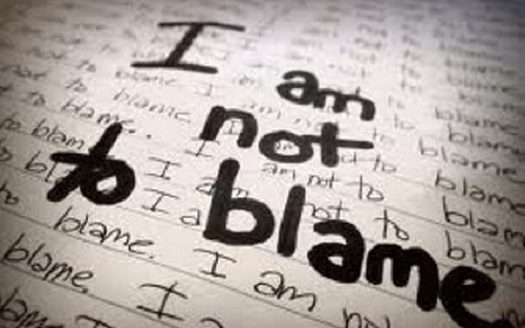 This is Day 24 of Altmuslim’s #30Days30Writers series for Ramadan 2015.
Trigger warning: This essay discusses sexual abuse and the assault of women, men and children, the abuse of power by religious figures and institutions and also discusses of victim-shaming.
By Jenan Mohajir
A few months ago, I found myself in a situation where I had to make a choice. It was one of those moments when as you walk down a difficult but transformative path, you stop and think to yourself: I must be on the right side of this.
I have had many of these moments in the past few months spent across the table or on the phone with survivors and their families who report to have suffered sexual abuse and assault by Abdullah Saleem, a well-respected Chicago scholar, and his institution, the Institute for Islamic Education (IIE). The courage of these survivors, their families, and the work of a handful of volunteer advocates led to criminal charges and a civil lawsuit being filed against Saleem and IIE.
Some of those stories came to be told in a poignant article in the New York Times and were covered by media outlets locally and nationally. In the aftermath of this news, how have we responded as a community, not only to the allegations but to the survivors? Have we stepped up to the plate and supported the survivors? Or have we banished them into further silence?
It would be an understatement to say that the Chicago Muslim community was broken, in many ways, at the disclosure of this news. As was expected, there were varied reactions from all around the city. Some believed that the stories were falsified and slandered a beloved scholar and institution. Some were in shock and denial that a beloved religious figure could be responsible for such disgusting crimes.
Some believed that perhaps the stories were true and privately expressed their disappointment. Some supported survivors from the beginning and responded with compassion and love.
Most remained silent.
This deafening silence was what struck me most as I became involved as a volunteer on this case. As a founding board member of HEART Women and Girls, an organization committed to making healthy reproductive attitudes a norm in faith-based communities, I firmly believed that silencing the narrative of survivors who were just beginning to speak out was never an option.
This case opened with one brave young woman, who stepped forward to seek justice. And, within 48 hours all of us who were volunteers had gotten calls from many other survivors who had experienced abuse at the hands of Saleem and others at IIE. In order to respect the survivors, their identities are protected and not publicized. In the many conversations I’ve had with survivors, one question comes up over and over again: Why has the community not galvanized to hold this person and institution accountable?
The Quran tell us, “O you who have believed, be persistently standing firm in justice, witnesses for Allah, even if it be against yourselves or parents and relatives. (4:135)”
I am not a scholar or an academic, so the only story you will hear from me is about someone who showed up, witnessed and worked behind the scenes. There is no joy in being this witness. There is no pleasure in discovering a deep seeded evil that has taken root within one’s community. There is no happiness in hearing story after story of destruction — the destruction of young souls, of families at the hands of those who are supposedly carrying the banner of our faith community.
There is no satisfaction in feeling this legitimate anger at the injustice experienced by these survivors. But, we must act with this legitimate anger to create safe spaces in our community to deal with the issues of sexual abuse and sexual violence in a healthy way.
There are some community members and organizations that have been motivated to begin having these hard conversations and create safe spaces. Yet, these efforts have fallen short. One example was a recent event that focused on raising awareness against sexual violence, hosted by an organization committed to empowering women in partnership with prominent Chicago Islamic institutions. Among the invited panelist were two male scholars.
These religious scholars had little knowledge about how to support survivors through their healing journey nor did they have even a basic understanding of the nuances and complexities that are associated with the delicate topic of sexual violence. The audience, including myself, pressed for an answer on how the community can hold alleged perpetrators accountable, considering the reality of low reporting rates for sexual abuse crimes.
I personally raised these questions with regards to the statistics: More than 68 percent of sexual crimes go unreported, and of those reported, only two percent of sex offenders ever spend a day behind bars. So, 98 percent of sex offenders walk free. How then is a community supposed to respond when survivors begin to identify perpetrators?
We did not get an answer.
Instead, they told us that an imam or scholar cannot take a public stance against an alleged perpetrator until there is proof, until there are criminal charges and convictions. We were told to listen to survivor stories but not act, not until law enforcement could prove otherwise.
We were told not to witness.
In these last ten days of Ramadan, I reflect on what it means for us to bear witness as a community. What does it look like for us to hold perpetrators accountable alongside an on-going criminal process? With the reality that so many sexual crimes go unreported, what does it look like to have a community response plan that is a holistic, victim-centered approach to justice, support and accountability?
How do we shift the conversation from one centered in fiqh (jurisprudence) and move it towards enacting the values of mercy and compassion towards those who have been harmed? How do we collectively work toward a mentality that the existence of even one victim is too much?
Not long ago, I spoke with the mother of a survivor who had been sexually assaulted by a different perpetrator at IIE. The abuse occurred when he was a bright, young boy, not even having fully reached puberty yet. He did not disclose the abuse to his family until nearly a decade later.
This young man, in effort to comfort his mother, who was struggling with guilt, said, “This wasn’t your fault, mom. You gave them a beautiful box filled with your most precious treasure, with the hopes that they would fashion it into something even more beautiful. And they returned it to you empty.”
This young man is the reason I continue to witness.
I stand witness because of his family’s courage and resilience in coming together to heal with their son. I stand witness because of their unconditional support of their son and their commitment to creating safe spaces free of blame and shame for their son.
I know I do not have all the answers, but I am committed to seeking community-based solutions that will elevate survivor stories and work towards accountability. And this Ramadan, I fill my prayers with names that will most likely never be revealed but have a place etched in my heart forever.
Jenan Mohajir is the Curriculum Consultant at Interfaith Youth Core, where she has served in various leadership roles for nine years. She is also a Founding Board Member at Heart Women & Girls. Jenan also loves crafting and lives with her husband and almost three children. The opinions in this essay are her own.
Institute for Islamic Education
Previous Post

July 10, 2015
Ramadan - The Month of Sincerity - AUDIO
Next Post
July 12, 2015 Ramadan, the Khalifa and an Ahmadi Perspective
Browse Our Archives
Select a Category 2012 Elections 30 Dayd 30 Writers (2017) 30 Days 30 Writers 30 Days 30 Writers (2015) 30 Days 30 Writers (2016) 30 Days 30 Writers (2018) 30 Days 30 Writers 2017 Ali Asadullah Ali Eteraz Alper Bilgili Arthur Richards Asides Asma Uddin Black History Month Briefings Charles Turner Commentary Cyrus McGoldrick Eman H Aly Fatimah Popal Hajj Hajj and Dhul Hijjah Hesham Hassaballa Hisham Hellyer Ibrahim Abusharif Inas Younis Irfan Yusuf Jalal Baig Junaid Afeef Laila Alawa Laila Alwala Mas'ood Cajee Muqtedar Khan Nakia Jackson Newsmakers Parvez Ahmed Podcasts Rabia Chaudry Rafia Zakaria Ramadan Reviews Safiyyah Ally Saud Inam Shahed Amanullah Svend White The Opinionated Oncologist Visions Wajahat Ali Zahed Amanullah Zahir Janmohamed Zainab Khan
Select a Month November 2018 October 2018 September 2018 August 2018 July 2018 June 2018 May 2018 April 2018 March 2018 February 2018 January 2018 December 2017 November 2017 October 2017 September 2017 August 2017 July 2017 June 2017 May 2017 April 2017 March 2017 February 2017 January 2017 December 2016 November 2016 October 2016 September 2016 August 2016 July 2016 June 2016 May 2016 April 2016 March 2016 February 2016 January 2016 December 2015 November 2015 October 2015 September 2015 August 2015 July 2015 June 2015 May 2015 April 2015 March 2015 February 2015 January 2015 December 2014 November 2014 October 2014 September 2014 August 2014 July 2014 June 2014 May 2014 April 2014 March 2014 February 2014 January 2014 December 2013 November 2013 October 2013 September 2013 August 2013 July 2013 June 2013 May 2013 April 2013 March 2013 February 2013 January 2013 December 2012 November 2012 October 2012 September 2012 August 2012 July 2012 June 2012 May 2012 April 2012 March 2012 February 2012 January 2012 December 2011 November 2011 October 2011 September 2011 August 2011 July 2011 June 2011 May 2011 April 2011 March 2011 February 2011 January 2011 December 2010 November 2010 October 2010 September 2010 August 2010 July 2010 June 2010 May 2010 April 2010 March 2010 February 2010 January 2010 December 2009 November 2009 October 2009 September 2009 August 2009 July 2009 June 2009 May 2009 April 2009 March 2009 February 2009 January 2009 December 2008 November 2008 October 2008 September 2008 August 2008 July 2008 June 2008 May 2008 April 2008 March 2008 February 2008 January 2008 December 2007 November 2007 October 2007 September 2007 August 2007 July 2007 June 2007 May 2007 April 2007 March 2007 February 2007 January 2007 December 2006 November 2006 October 2006 September 2006 August 2006 July 2006 June 2006 May 2006 April 2006 March 2006 February 2006 January 2006 December 2005 November 2005 October 2005 September 2005 August 2005 July 2005 June 2005 May 2005 April 2005 March 2005 February 2005 January 2005 December 2004 November 2004 October 2004 September 2004 August 2004 July 2004 June 2004 May 2004 April 2004 March 2004 February 2004 January 2004 December 2003 November 2003 October 2003 September 2003 August 2003 July 2003 June 2003 May 2003 April 2003 March 2003 February 2003 January 2003 December 2002 November 2002 October 2002 September 2002 August 2002 July 2002 June 2002 May 2002 April 2002 March 2002
Follow Us!
TAKE THE
Religious Wisdom Quiz
Who said, "Come to me, all you who are weary and burdened, and I will give you rest"?
Select your answer to see how you score.
Paul David Jesus Moses
Related posts from altmuslim

Mawlid 2018: Praise Songs from Around the World

How One Ottoman Reconciled Islamic Teachings with Darwin's...
Muslims and Voting - What Does Sharia Have...
On Rape/Sexual Assault Tropes in Muslim Communities -...
TRENDING AT PATHEOS Muslim

25 Years Later: How Much Has Changed for...
As we approach the 25th anniversary of September 11th, I’ve found myself...

Podcast: Third Spaces & The Rise of Yemeni...
In the latest episode of The Artistic Foodies Podcast, hosts Abbas...

HalalFest Picks: Best 60 Halal Spots for Super...
Back in 2016, I came up with a list of 29...

Unity Is America’s Strength — Division Is Its...
by Hidayatullah Ahsan When Valentina Gomez, a Republican candidate for Congress in...

Zohran Mamdani and New York’s Fight Against Islamophobia
This past June, against all odds, Zohran Mamdani won the Democratic primary...

What the Fourth of July Means to a...
As we mark another Fourth of July, millions of Americans will celebrate...
view all Muslim blogs
Ad-Free & Subscriber Log-In Subscription Support
- About Us
- 2026 Calendar
- Videos
- Podcasts
- Library of World Religions
- Faith In Media Tracker
- Advertise With Us
- Write for Us
- Privacy Policy
- Terms of Service
- Do Not Sell My Data
- Contact Us
- Radiant Digital
- Manage Newsletter Subscriptions
- Unsubscribe From Notifications
- Sitemap
Copyright 2008-2026, Patheos. All rights reserved.
Subscription Support Ad-Free & Subscriber Log-In
Follow Patheos