
BuddhistCatholicContemplativeEvangelicalGeneral ChristianHinduJewishLatter-day SaintMuslimNew VisionsProgressive Christian
Beliefs
- Buddhist
- Catholic
- Contemplative
- Evangelical
- General Christian
- Hindu
- Jewish
- Latter-day Saint
- More Voices
- Muslim
- New Visions
- Pagan
- Progressive Christian
Topics
- Religion News
- Food and Religion
- Sports and Religion
- Religious Art
- Religious Music and Entertainment
- Religious Events
- History and Religion
- Style and Religion
- Politics and Religion
- Women in Religion
- Recreation Outdoors and Religion
- Business Finance and Religion
- Careers Workplace and Religion
- Education and Religion
- Family Parenting and Religion
- Health Fitness and Religion
- Home and Religion
- Relationships and Religion
- Technology and Religion
- Travel and Religion
Columnists
- Buddhist Columnists
- Business Finance and Religion Columnists
- Careers Workplace and Religion Columnists
- Catholic Columnists
- Contemplative Columnists
- Education and Religion Columnists
- Evangelists Columnists
- Family Parenting and Religion Columnists
- General Christian Columnists
- Health Fitness and Religion Columnists
- Hindu Columnists
- History and Religion Columnists
- Home and Religion Columnists
- Jewish Columnists
- More Voices Columnists
- Latter Day Columnists
- Muslim Columnists
- New Visions Columnists
- Nonreligious Columnists
- Pagan Columnists
- Politics and Religion Columnists
- Progressive Columnists
- Recreation Outdoors and Religion Columnists
- Relationships and Religion Columnists
- Religion News Columnists
- Religious Art Columnists
- Religious Events Columnists
- Religious Music and Entertainment Columnists
- Sports and Religion Columnists
- Style and Religion Columnists
- Technology and Religion Columnists
- Travel and Religion Columnists
- Women in Religion Columnists
Resource Library
- 2026 Calendar
- Library of World Religions
- The 100 Most Holy Places on Earth
- Patheos Answers
- Podcasts
- Videos
- Faith Leaders Database
- Anglican Episcopalian
- Bahai
- Baptist
- Buddhism
- Christianity
- Confucianism
- Eastern Orthodoxy
- Hinduism
- Holiness and Pentecostal
- ISKCON
- Islam
- Judaism
- Lutheran
- Methodist
- The Church of Jesus Christ of Latter-day Saints
- New Age
- Paganism
- Presbytarian and Reformed
- Protestantism
- Religion Behind the Scenes
- Roman Catholic
- Scientology
- Shia Islam
- Sikhism
- Sufism
- Sunni Islam
- Taoism
- Zen
- See all religions
Research Tools
 Ad-Free & Subscriber Log-In Subscription Support
Ad-Free & Subscriber Log-In Subscription Support
Follow Patheos 

- Trending:
- Forgiveness
- |
- Marriage
- |
- Consciousness
- |
- Death Penalty
- |
- Election
- |
- Halloween
 altmuslim
- Home
- Muslim
- Change of Mind: Sole Palestinian Participant in MLI Program Withdraws His Support
Change of Mind: Sole Palestinian Participant in MLI Program Withdraws His Support
Last updated on: May 26, 2015 at 4:53 pm by Guest Contributor
Change of Mind: Sole Palestinian Participant in MLI Program Withdraws His Support 2015-05-26T16:53:43-04:00 Guest Contributor
Patheos Explore the world's faith through different perspectives on religion and spirituality! Patheos has the views of the prevalent religions and spiritualities of the world.

“Jerusalem Dome of the rock BW 13” by Berthold Werner – Own work. Licensed under Public Domain via Wikimedia Commons – http://commons.wikimedia.org/wiki/File:Jerusalem_Dome_of_the_rock_BW_13.JPG#/media/File:Jerusalem_Dome_of_the_rock_BW_13.JPG
The Muslim Leadership Initiative, sponsored by the Shalom Hartman Institute, has been a topic of great controversy in the American Muslim community and beyond. Altmuslim published a few perspectives in late January/early February, for and against the program. The third cohort is readying to leave for Jerusalem this summer. With the recent withdrawl of support from the program’s sole Palestinian participant (thus far), Altmuslim felt it was important to include his essay as part of this series, albeit four months later. We welcome your comments below.
By Kamal Abu-Shamsieh
“I don’t decide to represent anything except myself. But that self is full of collective memory.” – Mahmoud Darwish, Palestinian national poet
I am the only Palestinian-American who participated in the Muslim Leadership Initiative (MLI), a program sponsored by the Jerusalem-based Shalom Hartman Institute, inviting Muslim-Americans to learn about Judaism, Zionism and the Jewish people.
My involvement in MLI is the continuation of a personal journey towards healing that began over 20 years ago, a journey that has forced me to confront layers of trauma, pain, anger, and loss. I lived under Israeli military occupation for 27 years. As a child, I have vivid memories of soldiers lobbing tear gas canisters into my grade-school classroom. I remember roaming the streets of Ramallah collecting empty bullet shell casings in the hour or two of respite after multiple round-the-clock curfews. After graduating from college, I became a journalist to give Palestinians the opportunity to tell our own story. I assisted in the production of several documentaries, most notably Journey to the Occupied Lands, a PBS Frontline film, and People and the Land.
In 1991, Israel imposed a network of barriers that restricted my movement within the West Bank, banning my travel to Jerusalem and Gaza, as well as between Palestine and Israel. The combination of systematic roadblocks and the Israeli army’s refusal to grant me travel permits made it impossible for me to advance my journalism career. In 1993, I decided the time had come for me to move to the United States. The reality of living under occupation sparked an inner paradigm shift: my voice and existence matter as forms of resistance.
In 2001, my late mentor, Dr. Maher Hathout, encouraged me to engage in Muslim-Jewish dialogue. The Los Angeles-based dialogue aimed at fostering better relations between the two communities and resisting the import of the Middle East conflict into our local neighborhoods. Discussion focused on faith, U.S. Muslim-Jewish relations, civil liberties, and the Iraq war, yet I felt frustrated: There was never discussion of the Zionist influences on American Jews, the immorality of the occupation or how to end it.
Last year, I was saddened by the vocal opposition of some Muslim-Americans in response to the launching of the Muslim Leadership Initiative. Some questioned the all-expenses paid program and the intentions of the organizer. Others refused to rationally dialogue to understand the goals of MLI, instead jumping to their own conclusions. It seemed irresponsible to use tactical differences to accuse participants of treason, complicity with the occupation or “faith-washing” without evidence to prove such claims.
I reached out to the Muslim co-coordinator of MLI, Abdullah Antepli, a former seminary colleague. The point of MLI, he explained, was opening the doors to working with Orthodox Jewish leaders. I consulted with prominent Muslim-American and Palestinian leaders, including Palestinian Christians. Although I was aware the majority of Palestinian-Americans’ response to MLI was very negative, I decided to join the program.
My participation was grounded in Islamic theological values. Confronting injustice and seeking benefits have always been integral to the legal and ethical foundation of Islam. My goal was to engage Zionists to learn, address injustice and create partnerships to benefit Muslim-Jewish relations. Those goals were the measure by which I set out to evaluate the effectiveness of my participation. Disengagement would have been a far easier task after all, yet I embraced the challenge.
In January, I traveled to Jerusalem as part of the second MLI cohort. I was intrigued by the broad-based curriculum reflecting Jewish diversity politically, ethnically and religiously, a curriculum also offered to rabbis and Evangelical Christians. Lectures included biblical covenants, Jewish chosenness, Jerusalem and its significance, and political Zionism. Discussion led to challenging Zionist perspectives, which resulted in a better understanding of Zionism. Until then, I had received most of my information on Zionism from my own community, not from its primary sources.
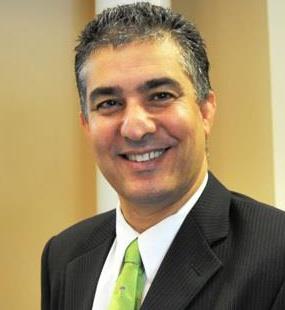
Kamal Abu-Shamsieh
Hardships Faced and Benefits Achieved
Was my participation in MLI worth the sacrifice and hardship? In 2005, Israel denied me entry at the Tel Aviv airport. Since then my access to Jerusalem has been restricted. It was necessary for me to return to the Holy City and experience it in all its dysfunction: The Zionist blindness to the Palestinian existence despite close physical proximity. It was critical for me to challenge and contextualize the Israeli mindset, and examine biblical narratives, political ideologies, and psychological barriers justifying the occupation and rendering my people “non-existent.”
For the first time in my life, I was engaging Zionists personally as an academic. Yet deep inside, still I was an occupied man confronting his occupiers.
My cohort participants, on the other hand, had had no firsthand experience and lacked context for the Palestinians’ suffering. I wondered if they were able to connect the ideology of Zionism introduced by MLI to the Israeli occupation’s systematic policies directed against the Palestinians. The recruitment of participants naïve to the subtleties of the occupation is problematic and the orientation session failed to well acquaint cohort participants with the historical and current realities of the conflict.
Aside from teaching Zionism to its participants, MLI did not yield any benefits to Muslim-Americans that could not be reached independently. In addition, the promises of MLI becoming a gateway to creating Muslim-Jewish partnerships were exaggerated. The sponsors of MLI failed to bring Muslim-Americans and Orthodox Jews in a partnership, despite having organized two cohorts in the past two years.
Addressing the cohorts’ participants at a MLI-sponsored retreat, Nathan Diament, leader of the influential Orthodox Union, ruled out cooperation with anyone that would not condemn terrorism and violence against Israel. In reality, Islamic organizations and scores of Muslim leaders had already condemned terrorism and extremism, especially attacks on innocent civilians.
A Lack of Moral Foundation
In the end, the hardships, risks, and inadequacies of the program far outweighed its benefits. As a result of debating the merits of MLI, the Muslim-American community experienced unnecessary pain, all in the aftermath of the brutal assault on Gaza, which further added insult to injury. In addition, MLI proved incapable of either challenging injustice or changing Israeli/Jewish attitudes towards the Palestinians. I asked Rabbi Donniel Hartman to address the 2014 Gaza war. My cohort listened as he passionately defended and justified Israeli actions, ignoring the slaughter of hundreds of innocent Palestinian civilians.
Furthermore, MLI disappointed Palestinians with its refusal to issue a morally-principled statement against the revocation of residency status of Jerusalemite Palestinians and the appropriation of their properties. Two weeks ago, I spoke with the Jewish co-coordinator of MLI, Yossi Klein Halevi, who stated the only reason for Shalom Hartman’s involvement with MLI was due to Antepli’s insistence. I decided to withdraw as engagement with the Muslim Leadership Initiative became far less genuine.
I have an obligation to share my concerns publicly. The leaders of MLI have vehemently rejected restructuring the program into a non-profit institution, independent of Shalom Hartman, despite Muslim Americans’ pledges to provide financial support. Criticism of current MLI funding sources is legitimate, and ignoring calls for financial independence only undermines the legitimacy of MLI. Like my second cohort participants, I was unaware of the funding sources until a report surfaced while we were in Jerusalem.
Furthermore, MLI co-coordinators have suppressed Palestinian attempts to give voice to an independent educational Palestinian narrative to counterbalance that which is taught at Shalom Hartman Institute. Such reforms may have bridged the gaps that led to the Palestinians’ declaring MLI “a tool of the occupation.” As the third cohort of the Muslim Leadership Initiative gets underway, it has become impossible for MLI to meet with any credible Palestinian. Without a Palestinian narrative, MLI risks becoming a Hasbara program — Israeli-propaganda.
As I disengage from MLI, it does not necessitate an end to my dialogue with Zionists. Dialogue with Zionists is as crucial to Muslim-Jewish understanding as outreach to Evangelicals to advance Christian-Muslim relations. I will continue my journey towards healing that I yearn to achieve. While I am done with MLI, I remain occupied with much deeper wounds inflicted by its thoughtlessness.
Follow Kamal Abu-Shamsieh on Twitter: www.twitter.com/shamsieh. This article originally appeared on Huffington Post.
Muslim Leadership Initiative Muslim-Jewish dialogue

Browse Our Archives
Select a Category 2012 Elections 30 Dayd 30 Writers (2017) 30 Days 30 Writers 30 Days 30 Writers (2015) 30 Days 30 Writers (2016) 30 Days 30 Writers (2018) 30 Days 30 Writers 2017 Ali Asadullah Ali Eteraz Alper Bilgili Arthur Richards Asides Asma Uddin Black History Month Briefings Charles Turner Commentary Cyrus McGoldrick Eman H Aly Fatimah Popal Hajj Hajj and Dhul Hijjah Hesham Hassaballa Hisham Hellyer Ibrahim Abusharif Inas Younis Irfan Yusuf Jalal Baig Junaid Afeef Laila Alawa Laila Alwala Mas'ood Cajee Muqtedar Khan Nakia Jackson Newsmakers Parvez Ahmed Podcasts Rabia Chaudry Rafia Zakaria Ramadan Reviews Safiyyah Ally Saud Inam Shahed Amanullah Svend White The Opinionated Oncologist Visions Wajahat Ali Zahed Amanullah Zahir Janmohamed Zainab Khan
Select a Month November 2018 October 2018 September 2018 August 2018 July 2018 June 2018 May 2018 April 2018 March 2018 February 2018 January 2018 December 2017 November 2017 October 2017 September 2017 August 2017 July 2017 June 2017 May 2017 April 2017 March 2017 February 2017 January 2017 December 2016 November 2016 October 2016 September 2016 August 2016 July 2016 June 2016 May 2016 April 2016 March 2016 February 2016 January 2016 December 2015 November 2015 October 2015 September 2015 August 2015 July 2015 June 2015 May 2015 April 2015 March 2015 February 2015 January 2015 December 2014 November 2014 October 2014 September 2014 August 2014 July 2014 June 2014 May 2014 April 2014 March 2014 February 2014 January 2014 December 2013 November 2013 October 2013 September 2013 August 2013 July 2013 June 2013 May 2013 April 2013 March 2013 February 2013 January 2013 December 2012 November 2012 October 2012 September 2012 August 2012 July 2012 June 2012 May 2012 April 2012 March 2012 February 2012 January 2012 December 2011 November 2011 October 2011 September 2011 August 2011 July 2011 June 2011 May 2011 April 2011 March 2011 February 2011 January 2011 December 2010 November 2010 October 2010 September 2010 August 2010 July 2010 June 2010 May 2010 April 2010 March 2010 February 2010 January 2010 December 2009 November 2009 October 2009 September 2009 August 2009 July 2009 June 2009 May 2009 April 2009 March 2009 February 2009 January 2009 December 2008 November 2008 October 2008 September 2008 August 2008 July 2008 June 2008 May 2008 April 2008 March 2008 February 2008 January 2008 December 2007 November 2007 October 2007 September 2007 August 2007 July 2007 June 2007 May 2007 April 2007 March 2007 February 2007 January 2007 December 2006 November 2006 October 2006 September 2006 August 2006 July 2006 June 2006 May 2006 April 2006 March 2006 February 2006 January 2006 December 2005 November 2005 October 2005 September 2005 August 2005 July 2005 June 2005 May 2005 April 2005 March 2005 February 2005 January 2005 December 2004 November 2004 October 2004 September 2004 August 2004 July 2004 June 2004 May 2004 April 2004 March 2004 February 2004 January 2004 December 2003 November 2003 October 2003 September 2003 August 2003 July 2003 June 2003 May 2003 April 2003 March 2003 February 2003 January 2003 December 2002 November 2002 October 2002 September 2002 August 2002 July 2002 June 2002 May 2002 April 2002 March 2002
Follow Us!
TAKE THE
Religious Wisdom Quiz
How many people did Jesus raise from the dead?
Select your answer to see how you score.
2 4 5 3
Related posts from altmuslim

Mawlid 2018: Praise Songs from Around the World

Gaslighting, Anti-Jewish and Anti-Muslim Rhetoric: What to Know

How One Ottoman Reconciled Islamic Teachings with Darwin's...

As #TreeofLife Shows, Trump's Mainstreaming of Hate Puts...
TRENDING AT PATHEOS Muslim

25 Years Later: How Much Has Changed for...
As we approach the 25th anniversary of September 11th, I’ve found myself...

Podcast: Third Spaces & The Rise of Yemeni...
In the latest episode of The Artistic Foodies Podcast, hosts Abbas...

HalalFest Picks: Best 60 Halal Spots for Super...
Back in 2016, I came up with a list of 29...

Unity Is America’s Strength — Division Is Its...
by Hidayatullah Ahsan When Valentina Gomez, a Republican candidate for Congress in...

Zohran Mamdani and New York’s Fight Against Islamophobia
This past June, against all odds, Zohran Mamdani won the Democratic primary...

What the Fourth of July Means to a...
As we mark another Fourth of July, millions of Americans will celebrate...
view all Muslim blogs
Ad-Free & Subscriber Log-In Subscription Support
- About Us
- 2026 Calendar
- Videos
- Podcasts
- Library of World Religions
- Faith In Media Tracker
- Advertise With Us
- Write for Us
- Privacy Policy
- Terms of Service
- Do Not Sell My Data
- Contact Us
- Radiant Digital
- Manage Newsletter Subscriptions
- Unsubscribe From Notifications
- Sitemap
Copyright 2008-2026, Patheos. All rights reserved.
Subscription Support Ad-Free & Subscriber Log-In
Follow Patheos