
BuddhistCatholicContemplativeEvangelicalGeneral ChristianHinduJewishLatter-day SaintMuslimNew VisionsProgressive Christian
Beliefs
- Buddhist
- Catholic
- Contemplative
- Evangelical
- General Christian
- Hindu
- Jewish
- Latter-day Saint
- More Voices
- Muslim
- New Visions
- Pagan
- Progressive Christian
Topics
- Religion News
- Food and Religion
- Sports and Religion
- Religious Art
- Religious Music and Entertainment
- Religious Events
- History and Religion
- Style and Religion
- Politics and Religion
- Women in Religion
- Recreation Outdoors and Religion
- Business Finance and Religion
- Careers Workplace and Religion
- Education and Religion
- Family Parenting and Religion
- Health Fitness and Religion
- Home and Religion
- Relationships and Religion
- Technology and Religion
- Travel and Religion
Columnists
- Buddhist Columnists
- Business Finance and Religion Columnists
- Careers Workplace and Religion Columnists
- Catholic Columnists
- Contemplative Columnists
- Education and Religion Columnists
- Evangelists Columnists
- Family Parenting and Religion Columnists
- General Christian Columnists
- Health Fitness and Religion Columnists
- Hindu Columnists
- History and Religion Columnists
- Home and Religion Columnists
- Jewish Columnists
- More Voices Columnists
- Latter Day Columnists
- Muslim Columnists
- New Visions Columnists
- Nonreligious Columnists
- Pagan Columnists
- Politics and Religion Columnists
- Progressive Columnists
- Recreation Outdoors and Religion Columnists
- Relationships and Religion Columnists
- Religion News Columnists
- Religious Art Columnists
- Religious Events Columnists
- Religious Music and Entertainment Columnists
- Sports and Religion Columnists
- Style and Religion Columnists
- Technology and Religion Columnists
- Travel and Religion Columnists
- Women in Religion Columnists
Resource Library
- 2026 Calendar
- Library of World Religions
- The 100 Most Holy Places on Earth
- Patheos Answers
- Podcasts
- Videos
- Faith Leaders Database
- Anglican Episcopalian
- Bahai
- Baptist
- Buddhism
- Christianity
- Confucianism
- Eastern Orthodoxy
- Hinduism
- Holiness and Pentecostal
- ISKCON
- Islam
- Judaism
- Lutheran
- Methodist
- The Church of Jesus Christ of Latter-day Saints
- New Age
- Paganism
- Presbytarian and Reformed
- Protestantism
- Religion Behind the Scenes
- Roman Catholic
- Scientology
- Shia Islam
- Sikhism
- Sufism
- Sunni Islam
- Taoism
- Zen
- See all religions
Research Tools
 Ad-Free & Subscriber Log-In Subscription Support
Ad-Free & Subscriber Log-In Subscription Support
Follow Patheos 

- Trending:
- Forgiveness
- |
- Marriage
- |
- Consciousness
- |
- Death Penalty
- |
- Election
- |
- Halloween
 altmuslim
- Home
- Muslim
- Questioning the ‘ISIS Brand’ of Islam
Questioning the ‘ISIS Brand’ of Islam
Last updated on: April 9, 2015 at 3:26 pm by Guest Contributor
Questioning the ‘ISIS Brand’ of Islam 2015-04-09T15:26:47-04:00 Guest Contributor
Patheos Explore the world's faith through different perspectives on religion and spirituality! Patheos has the views of the prevalent religions and spiritualities of the world.
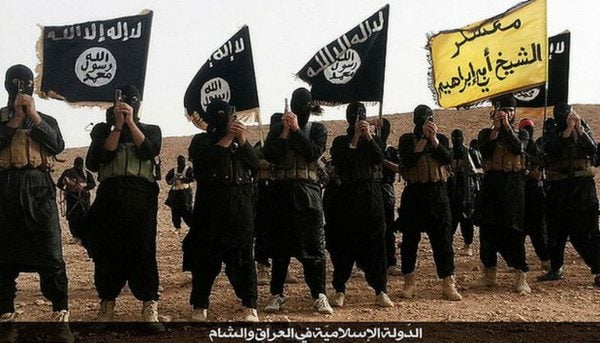
ISIS fighters. Photo courtesy of Wikimedia Commons.
By Madiha Waris Qureshi
Some analysts insist ISIS is a natural and unavoidable product of Islam. They couldn’t be more off-base.
Since the alarming rise of the Islamic State, many political analysts and pundits across the world, especially in the West, have taken it upon themselves to inform more than 1.5 billion Muslims of the world that most of them – millions of them – are wrong about Islam.
These analysts argue that ISIS is the only entity that’s truly honest about Islam. It is free of the hypocrisy of candy-coating moderate Muslims or of the Western leaders eager to forge alliances with them, and that when both denounce ISIS as un-Islamic, they’re not just being silly, but also dishonest.
By casting a majority of Muslims and their leaders into the role of apologists for Islam, New Atheists like Sam Harris and Richard Dawkins, as well as former Muslims like Ayaan Hirsi Ali make the case that it’s impossible to defeat ISIS without recognizing the true barbarity contained within certain Islamic verses. The real enemy then is not one group’s sociopathic interpretation of these verses, but the verses themselves.
So astutely made are these arguments that they succeed in sowing seeds of further mistrust and horror at Islam’s (and the Quran’s) apparent penchant for atrocities into the mind of the average non-Muslim who is regularly bombarded with violent images of Muslims across the world.
However, this narrative of “true Islam” as being literalistic alienates millions of Muslims across the world, who are just as appalled by ISIS’ viciousness as their non-Muslim counterparts. Telling Muslims that their denunciations are not actually reflective of their own religion is not just condescending; it’s also similar to the logic used by hardline and radical extremists themselves, namely:
A) You’re not Muslim if you don’t take every religious text literally; and
B) You’re not Muslim if you challenge a traditionally accepted literal interpretation.
Is it Un-Islamic to Question Tradition?
Journalist Graeme Wood in his recent analysis for The Atlantic wrote, “Muslims can say that slavery is not legitimate now, and that crucifixion is wrong at this historical juncture. Many say precisely this. But they cannot condemn slavery or crucifixion outright without contradicting the Koran and the example of the Prophet.”
Actually, no, Muslims can condemn slavery, crucifixion and many other evils that ISIS claims to be Islamic without contradicting Islam. They can do this by studying the context of the times when verses mentioning slavery (et al) were recorded, and then comparing it to the vastly different world they live in now. They are also full within their Islamic bounds to apply that oft-ignored tenet of Islam that the Prophet himself advised Muslim scholars to use: Ijtehad (independent reasoning), because he, unlike ISIS, believed the world would change, and his teachings could not possibly have all the correct answers for every worldly challenge that would arise after him.
Ijtehad didn’t just materialize out of the blue. It is an Islamic legal term and a principle of the Islamic jurisprudence. It was prescribed to help Muslim theologians and scholars make educated decisions where Quranic verses and the Prophet’s sayings (Ahadith) lacked guidance for complex issues, and to essentially keep Muslim interpretation of Islamic texts up-to-date with the changing times.
To ignore the existence of Ijtehad in Islam is to deny the significant opening for re-interpretation that Prophet Muhammad himself created for Muslim scholars. And this denial is the hallmark of the literalistic ISIS school of thought as well as of those who claim Islam as being hopelessly incompatible with the modern world.
The Importance of Nuance and Context
Understanding the context and time in which Quranic verses and Ahadith on a host of controversial social issues were recorded, ranging from slavery to polygamy, is important for Muslims as well as those who think denouncing ISIS and Islam are the same thing. Here’s why:
More than 1,400 years ago, slavery was a fact of life (just as it was in the American South less than two centuries ago). More than 1,400 years ago, polygamy, savage treatment of women and slaves, incest and many other social ills were also widely accepted traditions. Prophet Muhammad tackled many of those ills in his quest for reform in various ways that were politically sound and strategically far-reaching. He limited the widespread practice of unlimited polygamy to four and laid down strict rules for equal treatment of wives, which was unheard of.
He banned a brutal tradition of burying daughters alive; denounced a norm where men would forcibly marry their fathers’ wives after their death; and included women in inheritance laws for the first time. They were not given equal inheritance rights; but that they received billing in inheritance at all was a revolutionary idea for that time. He also created rules for humane treatment of slaves and freed several of his own, one of whom went on to become a respected scholar – again, an unprecedented occurring.
All these and more acts were groundbreaking reforms for a pre-Islamic Arabian society (Jahiliyyah) that had no civil rights recognition at all. For their time, these reforms were revolutionary. Are they revolutionary for our time? No. And that is exactly why it is reasonable, not hypocritical or un-Islamic, for Muslim scholars to build upon many of those teachings using Ijtehad, in accordance with what they know now.
From advancements in criminal investigative abilities to the vastly different access to education and information available to women and men alike, the justifications and uses for Ijtehad are endless. The only constant that needs to be upheld is the spirit of social reform and humanitarianism reflected in Prophet Mohammad’s approach, set against the backdrop of an astonishingly chaotic society. For its time, Islam was the most modernistic and progressive ideology to hit Arabia. That progressive spirit is the constant Muslim scholars need to embrace.
As Dr. M. A. Muqtedar Khan, Associate Professor in the Department of Political Science and International Relations at University of Delaware writes in his essay on the subject, “A broad vision of Ijtehad ensures that Islam and Muslim communities continue to reform in positive ways without losing the connection to Divine revelation and traditional culture. Muslims must continue to embrace this spirit of inquiry and desire for all forms of knowledge in order to revitalize and restore Islamic civilization.”
In the U.S., Americans accept that their Founding Father Thomas Jefferson could have slaves and still be a revolutionary leader of free thought and expression. They do this because Jefferson was borne out of a time when slavery was a fact of life, and they understand the context in which he operated. They can still accept him as a great man despite his not denouncing one of the most brutal traditions of his time.
Is it so out of ordinary then to give that understanding of context and time to a leader who was borne out of a society so medieval, it buried its daughters alive? Once we have conceded this historical fact, we must also accept that literalistic interpretations of Islamic texts belong to the medieval era they were recorded in. Islam opened the door to modernity to those living in that era; it is time its current guardians start doing the same now.
The version of Islam followed by ISIS does not belong in this world and time, and all of Muslim world is not ISIS. The fight against ISIS is dead on arrival if we don’t forgo that assumption.
Madiha Waris Qureshi is an international development professional and a freelance writer. She is based in Washington, D.C. Madiha tweets at @MadihaQ.
Next Post

April 17, 2015 Why Muslims Must Continue to Stand Up to Anti-Semitism
Browse Our Archives
Select a Category 2012 Elections 30 Dayd 30 Writers (2017) 30 Days 30 Writers 30 Days 30 Writers (2015) 30 Days 30 Writers (2016) 30 Days 30 Writers (2018) 30 Days 30 Writers 2017 Ali Asadullah Ali Eteraz Alper Bilgili Arthur Richards Asides Asma Uddin Black History Month Briefings Charles Turner Commentary Cyrus McGoldrick Eman H Aly Fatimah Popal Hajj Hajj and Dhul Hijjah Hesham Hassaballa Hisham Hellyer Ibrahim Abusharif Inas Younis Irfan Yusuf Jalal Baig Junaid Afeef Laila Alawa Laila Alwala Mas'ood Cajee Muqtedar Khan Nakia Jackson Newsmakers Parvez Ahmed Podcasts Rabia Chaudry Rafia Zakaria Ramadan Reviews Safiyyah Ally Saud Inam Shahed Amanullah Svend White The Opinionated Oncologist Visions Wajahat Ali Zahed Amanullah Zahir Janmohamed Zainab Khan
Select a Month November 2018 October 2018 September 2018 August 2018 July 2018 June 2018 May 2018 April 2018 March 2018 February 2018 January 2018 December 2017 November 2017 October 2017 September 2017 August 2017 July 2017 June 2017 May 2017 April 2017 March 2017 February 2017 January 2017 December 2016 November 2016 October 2016 September 2016 August 2016 July 2016 June 2016 May 2016 April 2016 March 2016 February 2016 January 2016 December 2015 November 2015 October 2015 September 2015 August 2015 July 2015 June 2015 May 2015 April 2015 March 2015 February 2015 January 2015 December 2014 November 2014 October 2014 September 2014 August 2014 July 2014 June 2014 May 2014 April 2014 March 2014 February 2014 January 2014 December 2013 November 2013 October 2013 September 2013 August 2013 July 2013 June 2013 May 2013 April 2013 March 2013 February 2013 January 2013 December 2012 November 2012 October 2012 September 2012 August 2012 July 2012 June 2012 May 2012 April 2012 March 2012 February 2012 January 2012 December 2011 November 2011 October 2011 September 2011 August 2011 July 2011 June 2011 May 2011 April 2011 March 2011 February 2011 January 2011 December 2010 November 2010 October 2010 September 2010 August 2010 July 2010 June 2010 May 2010 April 2010 March 2010 February 2010 January 2010 December 2009 November 2009 October 2009 September 2009 August 2009 July 2009 June 2009 May 2009 April 2009 March 2009 February 2009 January 2009 December 2008 November 2008 October 2008 September 2008 August 2008 July 2008 June 2008 May 2008 April 2008 March 2008 February 2008 January 2008 December 2007 November 2007 October 2007 September 2007 August 2007 July 2007 June 2007 May 2007 April 2007 March 2007 February 2007 January 2007 December 2006 November 2006 October 2006 September 2006 August 2006 July 2006 June 2006 May 2006 April 2006 March 2006 February 2006 January 2006 December 2005 November 2005 October 2005 September 2005 August 2005 July 2005 June 2005 May 2005 April 2005 March 2005 February 2005 January 2005 December 2004 November 2004 October 2004 September 2004 August 2004 July 2004 June 2004 May 2004 April 2004 March 2004 February 2004 January 2004 December 2003 November 2003 October 2003 September 2003 August 2003 July 2003 June 2003 May 2003 April 2003 March 2003 February 2003 January 2003 December 2002 November 2002 October 2002 September 2002 August 2002 July 2002 June 2002 May 2002 April 2002 March 2002
Follow Us!
TAKE THE
Religious Wisdom Quiz
Which Christian group primarily uses icons in worship?
Select your answer to see how you score.
Anglican Baptist Quaker Eastern Orthodox
Related posts from altmuslim

Mawlid 2018: Praise Songs from Around the World

Gaslighting, Anti-Jewish and Anti-Muslim Rhetoric: What to Know

How One Ottoman Reconciled Islamic Teachings with Darwin's...

As #TreeofLife Shows, Trump's Mainstreaming of Hate Puts...
TRENDING AT PATHEOS Muslim

25 Years Later: How Much Has Changed for...
As we approach the 25th anniversary of September 11th, I’ve found myself...

Podcast: Third Spaces & The Rise of Yemeni...
In the latest episode of The Artistic Foodies Podcast, hosts Abbas...

HalalFest Picks: Best 60 Halal Spots for Super...
Back in 2016, I came up with a list of 29...

Unity Is America’s Strength — Division Is Its...
by Hidayatullah Ahsan When Valentina Gomez, a Republican candidate for Congress in...

Zohran Mamdani and New York’s Fight Against Islamophobia
This past June, against all odds, Zohran Mamdani won the Democratic primary...

What the Fourth of July Means to a...
As we mark another Fourth of July, millions of Americans will celebrate...
view all Muslim blogs
Ad-Free & Subscriber Log-In Subscription Support
- About Us
- 2026 Calendar
- Videos
- Podcasts
- Library of World Religions
- Faith In Media Tracker
- Advertise With Us
- Write for Us
- Privacy Policy
- Terms of Service
- Do Not Sell My Data
- Contact Us
- Radiant Digital
- Manage Newsletter Subscriptions
- Unsubscribe From Notifications
- Sitemap
Copyright 2008-2026, Patheos. All rights reserved.
Subscription Support Ad-Free & Subscriber Log-In
Follow Patheos