
BuddhistCatholicContemplativeEvangelicalGeneral ChristianHinduJewishLatter-day SaintMuslimNew VisionsProgressive Christian
Beliefs
- Buddhist
- Catholic
- Contemplative
- Evangelical
- General Christian
- Hindu
- Jewish
- Latter-day Saint
- More Voices
- Muslim
- New Visions
- Pagan
- Progressive Christian
Topics
- Religion News
- Food and Religion
- Sports and Religion
- Religious Art
- Religious Music and Entertainment
- Religious Events
- History and Religion
- Style and Religion
- Politics and Religion
- Women in Religion
- Recreation Outdoors and Religion
- Business Finance and Religion
- Careers Workplace and Religion
- Education and Religion
- Family Parenting and Religion
- Health Fitness and Religion
- Home and Religion
- Relationships and Religion
- Technology and Religion
- Travel and Religion
Columnists
- Buddhist Columnists
- Business Finance and Religion Columnists
- Careers Workplace and Religion Columnists
- Catholic Columnists
- Contemplative Columnists
- Education and Religion Columnists
- Evangelists Columnists
- Family Parenting and Religion Columnists
- General Christian Columnists
- Health Fitness and Religion Columnists
- Hindu Columnists
- History and Religion Columnists
- Home and Religion Columnists
- Jewish Columnists
- More Voices Columnists
- Latter Day Columnists
- Muslim Columnists
- New Visions Columnists
- Nonreligious Columnists
- Pagan Columnists
- Politics and Religion Columnists
- Progressive Columnists
- Recreation Outdoors and Religion Columnists
- Relationships and Religion Columnists
- Religion News Columnists
- Religious Art Columnists
- Religious Events Columnists
- Religious Music and Entertainment Columnists
- Sports and Religion Columnists
- Style and Religion Columnists
- Technology and Religion Columnists
- Travel and Religion Columnists
- Women in Religion Columnists
Resource Library
- 2026 Calendar
- Library of World Religions
- The 100 Most Holy Places on Earth
- Patheos Answers
- Podcasts
- Videos
- Faith Leaders Database
- Anglican Episcopalian
- Bahai
- Baptist
- Buddhism
- Christianity
- Confucianism
- Eastern Orthodoxy
- Hinduism
- Holiness and Pentecostal
- ISKCON
- Islam
- Judaism
- Lutheran
- Methodist
- The Church of Jesus Christ of Latter-day Saints
- New Age
- Paganism
- Presbytarian and Reformed
- Protestantism
- Religion Behind the Scenes
- Roman Catholic
- Scientology
- Shia Islam
- Sikhism
- Sufism
- Sunni Islam
- Taoism
- Zen
- See all religions
Research Tools
 Ad-Free & Subscriber Log-In Subscription Support
Ad-Free & Subscriber Log-In Subscription Support
Follow Patheos 

- Trending:
- Forgiveness
- |
- Marriage
- |
- Consciousness
- |
- Death Penalty
- |
- Election
- |
- Halloween
 altmuslim
- Home
- Muslim
- Can Zionists and Muslims Talk? The Reasons for MLI
Can Zionists and Muslims Talk? The Reasons for MLI
Last updated on: February 9, 2015 at 1:21 am by Guest Contributor
Can Zionists and Muslims Talk? The Reasons for MLI 2015-02-09T01:21:23-04:00 Guest Contributor
Patheos Explore the world's faith through different perspectives on religion and spirituality! Patheos has the views of the prevalent religions and spiritualities of the world.

Photo courtesy of Wikimedia Commons
The Muslim Leadership Initiative, sponsored by the Shalom Hartman Institute, has been a topic of great controversy in the American Muslim community and beyond. Altmuslim is publishing a few perspectives, and we welcome your comments below.
By Donniel Hartman
The Shalom Hartman Institute started the Muslim Leadership Initiative at the request of Imam Abdullah Antepli of Duke University. He believed that the Israeli-Palestinian conflict creates toxicity and mutual distrust between the American Muslim and Jewish communities. The enduring conflict stifles any possibility of a meaningful and healthy engagement between these monotheistic communities that share a rich faith tradition.
Instead of working together to advance shared values, the conflict often inspires casual anti-Semitism and extreme anti-Israel sentiments. Regrettably, I too have witnessed how this conflict has inspired members from my community to engage in anti-Muslim and anti-Palestinian bigotry, which I believe betrays the best of our Jewish values.
It was Imam Abdullah’s belief that the Shalom Hartman Institute, an influential, pluralistic and non-politically aligned center of research and education serving Israel and North American Jewry, would be an ideal partner to help connect American Muslim and Jewish communities.
One of the central goals of the Shalom Hartman Institute is to create an enlightened Judaism, a Judaism open to the world and to the best ideas of modernity. At the Institute we work very hard to recognize, confront and overcome the narrowness, bigotry and moral failings within the Jewish community. In MLI, I saw partners to a similar quest and felt a deep affinity with them.
Imam Abdullah and those who backed him posed the following challenge: Could a Jewish and Zionist institution open its doors, its traditions and its narratives to a group of Muslim leaders interested in thinking in a more nuanced fashion about who they are in relationship to Judaism and Israel? My response was, “If you come, we are ready to try.”
Challenging a Muslim Mantra towards Israel
But what constitutes “a more nuanced fashion,” and what would be the nature of the curriculum and its goals? When it comes to anti-Semitism, the issue is relatively simple. In my opinion, by definition, any North American Muslim who comes to study in a Jewish and Israeli institution is not an anti-Semite. Bigotries of any kind feed on ignorance and isolation.
Our educational goal was to broaden each participant’s familiarity with the core ideas and values of Judaism, in order to expand knowledge and enable them to lead North American Muslims in a deeper engagement with Judaism and the North American Jewish community.
When it comes to engaging participants on Israel, however, the issue is far more complex. SHI’s hope was never to create Muslim Zionists, and we know that Muslims in North America are not going to abandon their strong support for Palestinian rights.
Our challenge at SHI was to see if we could fulfill Imam Abdullah’s charge to jointly create a space with Muslims in which they could work on a more nuanced engagement with the Jewish people. Is the only appropriate Muslim response to Israel to recite the mantra, “Israel is an apartheid, racist, colonialist state engaged in ethnic cleansing and mass murder”? Is there any space between a critical view of Israel and its policies and a rejection of Israel’s right to exist?
I recognized the dangers of this mantra, in part, because for many years, we Jews and Israelis had a self-destructive mantra toward the Palestinians. They are “anti-Semitic, child murdering, corrupt terrorists who want to drive us into the sea.”
This mantra allowed us to avoid the hard and necessary work of negotiations; it blinded us to the Palestinians as a people and to our occupation of them. We were protected by a self-defined narrative which ensured the perpetuation of the status quo, under the guise that “there is no one to talk to.”
It was only with the Oslo negotiations, that most Jews and Israelis came to reject this mantra and began to define themselves as pro-Israel advocates of a Palestinian state within the West Bank and Gaza.
I recognize the dangers of all-encompassing mantras, because they lock us into a self-perpetuating dead end. We become isolated from other voices, intellectually boycott anyone who does not share our views and see everything in stark black and white terms without any space for nuance and complexity.
How Should We Engage with Each Other?
For me, the counter-claim that Muslims have Jewish friends who join them in their one dimensional mantra rings as hollow as Israelis who claim to care for Palestinians rights by virtue of the fact that they employ Palestinian workers. To limit Muslim engagement with the Jewish community to anti-Zionist is to condemn Muslims to perpetual ignorance of Jews and Judaism, and alienation from their Jewish partners in North America.
The Shalom Hartman Institute’s response to the proactive initiative of MLI participants was to offer a study program which opened up our tradition as unmediated and uncensored as possible. The curriculum is based on the one used by RLI, our Rabbinic Leadership Initiative, a program to train an elite cohort of North American Rabbis to respond to the challenges facing contemporary Jewish life.
It is a curriculum that engages with the multiple voices within Judaism with regards to Judaism’s and Israel’s central ideas and principles. It involves a constant and self-critical evaluation of the tradition and its role in modern Jewish life, and a constant and critical evaluation of the Jewish people and Israel.
As such, it is not an introductory course in Judaism and Zionism for Muslims, or an advocacy program for one Israeli position or another. Instead, it is an insider’s view into the way Jews think about themselves and their tradition and to debates around who we are and who we want to be.
Will MLI move its participants to reject Palestinian rights? No.
Will MLI enable its fellows to understand Judaism and the Jewish people better? Will they understand the challenges and opportunities of North American Jewish life better? Will they understand the complexity of modern Jewish life better? Will they understand the aspirations of the Jewish people for Israel better? Will they understand the significance of Israel for Jews worldwide better? Will they understand the complexity of the reality which is Israel, and the Jewish debates around its future, better? Will they be able to engage with Jews in North America better?
I certainly hope so. But I know it is not for me to answer.
In turn, will we get to better know American Muslims, appreciate their unique challenges and struggles, and understand their religious aspirations and identification with the Palestinians? For me the answer is clear – I did learn and I am still learning. I am appreciative of MLI for trusting me with their diverse narratives as SHI entrusted them with theirs.
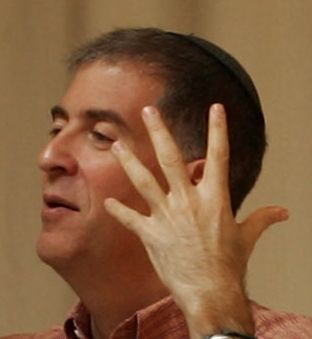
Rabbi Donniel Hartman
Avoiding a Zero-Sum Game
As a Jew, I do not want to live in a zero-sum-game world with Islam. I yearn to live in a world where Jews, Christians and Muslims of good faith reach out to each other, live with each other, disagree respectfully with each other and most importantly, learn from each other. That will only happen when we have the courage to meet and hear each other.
Learning does not mean to agree with each other. It simply means to open oneself up to be exposed to the other, to learn from their world and to embrace the surprises that this journey might entail. The commitment of the participants in MLI to this ideal is inspiring, and I am committed to helping my community do the same.
I am pained by the relationship between Israelis and Palestinians, but MLI is not meant to solve this problem. The participants do not live in the Middle East, none were elected to represent either the Palestinian people or their cause, nor ever claimed as much.
They are, however, Muslim leaders who are living in a different area and a different cultural climate. Can North America be the grounds for the beginning of a new and different relationship between Jews and Muslims? Can the soil of America incubate a culture of respect, friendship and learning between Jews and Muslims? Can an experiment in America serve as a model for the world? I don’t know. But it’s worthwhile exploring the possibility.
As a Jew and as an Israeli, I want to engage with Muslims. I want to, because it is the way that Jews and Muslims ought to relate to each other. Because every time you open yourself up to meet the other, you grow immeasurably. Because it profoundly impacts on my Institute’s understanding of Islam and our commitment to overcome our own bigotry and biases.
I want to engage with Muslims because it feels like the right thing to do, and sometimes you simply have to do the right thing, and believe that even a small act can repair the world.
Rabbi Dr. Donniel Hartman is President of the Shalom Hartman Institute and founder of some the most extensive training programs for Jewish intellectual, educational, religious and lay leadership in Israel and North America. Donniel is a prominent essayist, blogger, and lecturer on issues of Israeli politics, policy, Judaism, and the Jewish community and the author of The Boundaries of Judaism and co-editor of Judaism and the Challenges of Modern Life.His new book, Putting God Second: How to Save Religion from Itself, is scheduled for publication by Beacon Press in February 2016.
Next Post

February 12, 2015 Muslim Response to Chapel Hill: Honoring the Slain and Building Bridges
Browse Our Archives
Select a Category 2012 Elections 30 Dayd 30 Writers (2017) 30 Days 30 Writers 30 Days 30 Writers (2015) 30 Days 30 Writers (2016) 30 Days 30 Writers (2018) 30 Days 30 Writers 2017 Ali Asadullah Ali Eteraz Alper Bilgili Arthur Richards Asides Asma Uddin Black History Month Briefings Charles Turner Commentary Cyrus McGoldrick Eman H Aly Fatimah Popal Hajj Hajj and Dhul Hijjah Hesham Hassaballa Hisham Hellyer Ibrahim Abusharif Inas Younis Irfan Yusuf Jalal Baig Junaid Afeef Laila Alawa Laila Alwala Mas'ood Cajee Muqtedar Khan Nakia Jackson Newsmakers Parvez Ahmed Podcasts Rabia Chaudry Rafia Zakaria Ramadan Reviews Safiyyah Ally Saud Inam Shahed Amanullah Svend White The Opinionated Oncologist Visions Wajahat Ali Zahed Amanullah Zahir Janmohamed Zainab Khan
Select a Month November 2018 October 2018 September 2018 August 2018 July 2018 June 2018 May 2018 April 2018 March 2018 February 2018 January 2018 December 2017 November 2017 October 2017 September 2017 August 2017 July 2017 June 2017 May 2017 April 2017 March 2017 February 2017 January 2017 December 2016 November 2016 October 2016 September 2016 August 2016 July 2016 June 2016 May 2016 April 2016 March 2016 February 2016 January 2016 December 2015 November 2015 October 2015 September 2015 August 2015 July 2015 June 2015 May 2015 April 2015 March 2015 February 2015 January 2015 December 2014 November 2014 October 2014 September 2014 August 2014 July 2014 June 2014 May 2014 April 2014 March 2014 February 2014 January 2014 December 2013 November 2013 October 2013 September 2013 August 2013 July 2013 June 2013 May 2013 April 2013 March 2013 February 2013 January 2013 December 2012 November 2012 October 2012 September 2012 August 2012 July 2012 June 2012 May 2012 April 2012 March 2012 February 2012 January 2012 December 2011 November 2011 October 2011 September 2011 August 2011 July 2011 June 2011 May 2011 April 2011 March 2011 February 2011 January 2011 December 2010 November 2010 October 2010 September 2010 August 2010 July 2010 June 2010 May 2010 April 2010 March 2010 February 2010 January 2010 December 2009 November 2009 October 2009 September 2009 August 2009 July 2009 June 2009 May 2009 April 2009 March 2009 February 2009 January 2009 December 2008 November 2008 October 2008 September 2008 August 2008 July 2008 June 2008 May 2008 April 2008 March 2008 February 2008 January 2008 December 2007 November 2007 October 2007 September 2007 August 2007 July 2007 June 2007 May 2007 April 2007 March 2007 February 2007 January 2007 December 2006 November 2006 October 2006 September 2006 August 2006 July 2006 June 2006 May 2006 April 2006 March 2006 February 2006 January 2006 December 2005 November 2005 October 2005 September 2005 August 2005 July 2005 June 2005 May 2005 April 2005 March 2005 February 2005 January 2005 December 2004 November 2004 October 2004 September 2004 August 2004 July 2004 June 2004 May 2004 April 2004 March 2004 February 2004 January 2004 December 2003 November 2003 October 2003 September 2003 August 2003 July 2003 June 2003 May 2003 April 2003 March 2003 February 2003 January 2003 December 2002 November 2002 October 2002 September 2002 August 2002 July 2002 June 2002 May 2002 April 2002 March 2002
Follow Us!
TAKE THE
Religious Wisdom Quiz
Which woman was the judge and prophetess who led Israel?
Select your answer to see how you score.
Miriam Jael Deborah Esther
Related posts from altmuslim

Mawlid 2018: Praise Songs from Around the World

Gaslighting, Anti-Jewish and Anti-Muslim Rhetoric: What to Know

How One Ottoman Reconciled Islamic Teachings with Darwin's...

As #TreeofLife Shows, Trump's Mainstreaming of Hate Puts...
TRENDING AT PATHEOS Muslim

25 Years Later: How Much Has Changed for...
As we approach the 25th anniversary of September 11th, I’ve found myself...

Podcast: Third Spaces & The Rise of Yemeni...
In the latest episode of The Artistic Foodies Podcast, hosts Abbas...

HalalFest Picks: Best 60 Halal Spots for Super...
Back in 2016, I came up with a list of 29...

Unity Is America’s Strength — Division Is Its...
by Hidayatullah Ahsan When Valentina Gomez, a Republican candidate for Congress in...

Zohran Mamdani and New York’s Fight Against Islamophobia
This past June, against all odds, Zohran Mamdani won the Democratic primary...

What the Fourth of July Means to a...
As we mark another Fourth of July, millions of Americans will celebrate...
view all Muslim blogs
Ad-Free & Subscriber Log-In Subscription Support
- About Us
- 2026 Calendar
- Videos
- Podcasts
- Library of World Religions
- Faith In Media Tracker
- Advertise With Us
- Write for Us
- Privacy Policy
- Terms of Service
- Do Not Sell My Data
- Contact Us
- Radiant Digital
- Manage Newsletter Subscriptions
- Unsubscribe From Notifications
- Sitemap
Copyright 2008-2026, Patheos. All rights reserved.
Subscription Support Ad-Free & Subscriber Log-In
Follow Patheos