
BuddhistCatholicContemplativeEvangelicalGeneral ChristianHinduJewishLatter-day SaintMuslimNew VisionsProgressive Christian
Beliefs
- Buddhist
- Catholic
- Contemplative
- Evangelical
- General Christian
- Hindu
- Jewish
- Latter-day Saint
- More Voices
- Muslim
- New Visions
- Pagan
- Progressive Christian
Topics
- Religion News
- Food and Religion
- Sports and Religion
- Religious Art
- Religious Music and Entertainment
- Religious Events
- History and Religion
- Style and Religion
- Politics and Religion
- Women in Religion
- Recreation Outdoors and Religion
- Business Finance and Religion
- Careers Workplace and Religion
- Education and Religion
- Family Parenting and Religion
- Health Fitness and Religion
- Home and Religion
- Relationships and Religion
- Technology and Religion
- Travel and Religion
Columnists
- Buddhist Columnists
- Business Finance and Religion Columnists
- Careers Workplace and Religion Columnists
- Catholic Columnists
- Contemplative Columnists
- Education and Religion Columnists
- Evangelists Columnists
- Family Parenting and Religion Columnists
- General Christian Columnists
- Health Fitness and Religion Columnists
- Hindu Columnists
- History and Religion Columnists
- Home and Religion Columnists
- Jewish Columnists
- More Voices Columnists
- Latter Day Columnists
- Muslim Columnists
- New Visions Columnists
- Nonreligious Columnists
- Pagan Columnists
- Politics and Religion Columnists
- Progressive Columnists
- Recreation Outdoors and Religion Columnists
- Relationships and Religion Columnists
- Religion News Columnists
- Religious Art Columnists
- Religious Events Columnists
- Religious Music and Entertainment Columnists
- Sports and Religion Columnists
- Style and Religion Columnists
- Technology and Religion Columnists
- Travel and Religion Columnists
- Women in Religion Columnists
Resource Library
- 2026 Calendar
- Library of World Religions
- The 100 Most Holy Places on Earth
- Patheos Answers
- Podcasts
- Videos
- Faith Leaders Database
- Anglican Episcopalian
- Bahai
- Baptist
- Buddhism
- Christianity
- Confucianism
- Eastern Orthodoxy
- Hinduism
- Holiness and Pentecostal
- ISKCON
- Islam
- Judaism
- Lutheran
- Methodist
- The Church of Jesus Christ of Latter-day Saints
- New Age
- Paganism
- Presbytarian and Reformed
- Protestantism
- Religion Behind the Scenes
- Roman Catholic
- Scientology
- Shia Islam
- Sikhism
- Sufism
- Sunni Islam
- Taoism
- Zen
- See all religions
Research Tools
 Ad-Free & Subscriber Log-In Subscription Support
Ad-Free & Subscriber Log-In Subscription Support
Follow Patheos 

- Trending:
- Forgiveness
- |
- Marriage
- |
- Consciousness
- |
- Death Penalty
- |
- Election
- |
- Halloween
 altmuslim
- Home
- Muslim
- Ramadan 2014 – Fasting from Speech
Ramadan 2014 – Fasting from Speech
Last updated on: July 14, 2014 at 6:55 pm by Guest Contributor
Ramadan 2014 – Fasting from Speech 2014-07-14T18:55:53-04:00 Guest Contributor
Patheos Explore the world's faith through different perspectives on religion and spirituality! Patheos has the views of the prevalent religions and spiritualities of the world.
This article comes on Day 17 of our special Altmuslim/Patheos Muslim Ramadan #30Days30Writers blog project, in which we are showcasing the voices of 30 Muslim leaders, activists, scholars, writers, youth and more (one on each day of Ramadan) as part of our commitment to own our own narratives and show how we are one Ummah, many voices. To demonstrate how our Ramadan experiences are shared yet unique to each of us.
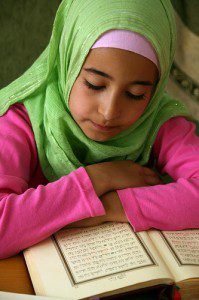 By Hind Makki
“Read, O Prophet, in the name of your Lord who has Created! He has created man from a clinging clot. Read! For your Lord is the Most Gracious One, who has taught by the pen, has taught man what he has known not! [Quran 96 : 1-5]”
According to our tradition, before his Prophethood, Muhammad ibn Abdullah would retreat during the month of Ramadan — spending it in contemplation in Cave Hira, just outside of Makkah. One night, a heavenly vision (the angel Gabriel) came to the Prophet and twice ordered him to “read!” — to which he responded that he did not know how to read. The third time, Gabriel ordered the Prophet to read, he continued and taught the Prophet the above verses, which Muslims believe were the very first to be Divinely revealed to the Prophet Muhammad (PBUH)* by the angel Gabriel (AS)** in the sacred month of Ramadan.
These verses impress upon us that the Quran is not only a text to be recited and heard, but also that reading sacred words and using writing as a tool to learn and teach are divinely interrelated. That words have meaning, indeed, the intellect is what differentiates human beings from beasts. And, our free will to believe or reject God is what differentiates us from the angels. Language is one of the most important components of our very essence as human beings.
Believers are asked to conquer their egos, to put their faith in God and to speak the truth. We read myriad examples of this in the Holy Book. We read of Luqman the Wise (AS) teaching his son the virtues of modesty and humility. We read of Lady Mary (AS) being asked to fast from speech when she returned to her family with a baby in tow, and we read of the words the infant Jesus (AS) spoke, exonerating his mother and giving tidings of his own Prophethood.
We read of Zachariah (AS) being ordered to fast from speech for three days as a sign that God will bestow upon him an heir. We read of Joseph (AS) who refused to bear false witness, and spent years languishing in jail for a crime he did not commit. The Prophet Muhammad (PBUH) himself was described by his wife Aisha, may God be pleased with her, as the personal embodiment of the Holy Quran — a literal “walking Quran.”
Millions of Muslims are spending the better parts of their nights reciting God’s Words throughout Ramadan, which is often referred to as the Month of Quran. We remind ourselves of these prophetic stories, of the critical importance of speech, of the sacred responsibility we have to seek the truth with gentleness and humility.
So what does that mean for us today, when anyone with access to the internet has a platform to tell the world his or her thoughts. What is the responsibility we bear as Muslims to offer the world “good” speech? When we do we speak up and speak the truth, and when do we stay silent and keep the peace? How can we use the power of speech to teach or admonish without hurting others or closing their hearts?
Being Careful in Our Words
“Moses said: My Lord! Open for me my heart, and make easy for me my mission, and release the knot from my tongue, so they understand my words.” [Quran 20:25-28]
We must very careful in selecting our words, so that they are not misunderstood, so that they don’t pierce our sisters’ and brothers’ hearts, so they don’t bear witness against us on the Day we meet our Lord. This Ramadan is bearing witness to a segment of the American Muslim community — mobile, sophisticated and wired — committing their all in social media wars. After enduring Abu Easagate and Alice in Arabia this year, I was hoping for a quiet Ramadan, full of contemplation and connection. Alas, that was not to be.
This weekend has raised the issue — not for the first time — of the controversy over Muslims attending the annual White House Iftar. And much has been written about a group of American Muslim thought influencers, academics and chaplains participating in an interfaith program in Israel and Palestine, hosted by a conservative and Zionist Jewish educational institute.
Palestinians and others who support BDS were profoundly angry and disappointed by the program. Those who participated in the program and their supporters responded that Muslims must understand the place that Zionism has in the hearts of most Jews. A social media war erupted in the first days of Ramadan, with Muslims on both sides attacking each others’ integrity and faith. Professor Omid Safi speaks for many when he urges conscientious truth-telling and healing among all parties involved.
All of this is happening in the shadow of two major events: The latest Israeli assault on Gaza and the World Cup, which ended this weekend. In the weeks before the Israeli assault, three Israeli teenagers, Naftali Fraenkel, Gilad Shaer and Eyal Yifrah, were kidnapped and murdered in the middle of the ongoing occupation. This heinous crime led to the kidnapping and brutal murder of Palestinian teenager Muhammad Abu Khdeir, who was burned to death after being forced to drink gasoline. In this chaos, Muhammad’s teenaged American cousin, Tariq Abu Khdeir, who was visiting Jerusalem for a family wedding, was violently assaulted by Israeli police and thrown in detention. He’s now being held under house arrest as the Israeli assault on Gaza continues.
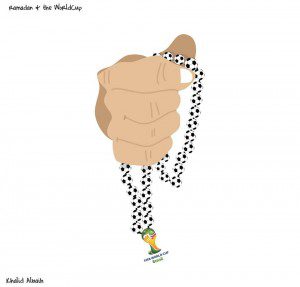 Israel launched “Operation Protective Edge” while much of the world was engrossed in the final matches of the World Cup, which has led to many Palestinian activists to bemoan the fact that the world’s attention is focused on the spectacle of sport as the death toll reaches at least 185 people — all of them Palestinian — at the time of publication.
Which of course, has led to many of other Muslims complaining — or pointing out, depending on your perspective — that the crises Muslims are facing in the Central African Republic, Burma, Syria, Iraq, Libya and elsewhere are not receiving as much traction as the Palestinian crisis. Still others contest those domestic crises, such as systemic racism and the violence in America’s cities must have an equal place in our hearts as foreign crises.
When Does it Behoove Us to Be Silent?
The nature of social media wars means that many of the actors feel compelled to drag the rest of us from our prayers, recitations and worship in order to share their two cents. Fasting from speech as our forbears, Zachariah and Mary (AS) did, does not seem to cut it in the online frenzy that seems to say that if you don’t Tweet your support or update Facebook status with a condemnation, then you are forfeiting your right to ever comment on any issue affecting Muslims anywhere forevermore.
The situation highlights for me the critical importance of challenging racism internally and building interracial relationships, institutionally and individually, among American Muslims. Allegiances and support should be inherent in our relationships with each other, but they’re not. Each ethnic/racial group is focusing on the issue that impacts them narrowly without intentionally reaching out to other racial/ethnic groups, nor even praying for each other. This disunity causes dissonance in the “American Muslim narrative,” where the actions of some are directly detrimental to others in the same community.
The recent chain of events highlights for me the fact that Muslims need a multi-pronged approach, one that both conscientiously engages with and speaks truth to power. That’s the only way we can move the dial on any of the issues that are near to our hearts, both here at home and abroad. It also highlights the profound power of loving our sisters and brothers in faith and respecting our differences. Instead of attacking each other, I pray that we can either publicly support each other or remain silent. And in all cases, pray for each other as we stand, reciting the Revealed words, during in our night prayers in this sacred month.
“We have not sent the Quran down upon you to distress you, Oh Prophet – but rather as a revealed Reminder for whomever would revere God, in awe of a Divine word descending from the One who created the earth and the high heavens. The All Merciful who has settled Himself over the Throne, befittingly. To Him belong all that is in the heavens, and all that is in the earth, and all that is between them, and all that is beneath the soil. And whether you utter words out loud or silently, He indeed knows the secret and what is yet more hidden.” [Quran 20:2-7]
*PBUH = God’s Peace Be Upon Him, a prayer Muslims offer after saying the name of our blessed Prophet
**AS = Alayh Salaam, God’s peace on him, a prayer Muslims offer after saying the names of angels, prophets, and divinely inspired teachers
Hind Makki blogs at “Hindtrospectives” on the Patheos Muslim Channel. She is also the curator of Side Entrance, a tumbr dedicated to chronicling women’s spaces in mosques.
Previous Post

July 13, 2014
Ramadan 2014 - Pick Up Your Broken Heart
Next Post
July 15, 2014 Guantanamo Bay Detainees and the White House Iftar - Not in Our Name
Browse Our Archives
Select a Category 2012 Elections 30 Dayd 30 Writers (2017) 30 Days 30 Writers 30 Days 30 Writers (2015) 30 Days 30 Writers (2016) 30 Days 30 Writers (2018) 30 Days 30 Writers 2017 Ali Asadullah Ali Eteraz Alper Bilgili Arthur Richards Asides Asma Uddin Black History Month Briefings Charles Turner Commentary Cyrus McGoldrick Eman H Aly Fatimah Popal Hajj Hajj and Dhul Hijjah Hesham Hassaballa Hisham Hellyer Ibrahim Abusharif Inas Younis Irfan Yusuf Jalal Baig Junaid Afeef Laila Alawa Laila Alwala Mas'ood Cajee Muqtedar Khan Nakia Jackson Newsmakers Parvez Ahmed Podcasts Rabia Chaudry Rafia Zakaria Ramadan Reviews Safiyyah Ally Saud Inam Shahed Amanullah Svend White The Opinionated Oncologist Visions Wajahat Ali Zahed Amanullah Zahir Janmohamed Zainab Khan
Select a Month November 2018 October 2018 September 2018 August 2018 July 2018 June 2018 May 2018 April 2018 March 2018 February 2018 January 2018 December 2017 November 2017 October 2017 September 2017 August 2017 July 2017 June 2017 May 2017 April 2017 March 2017 February 2017 January 2017 December 2016 November 2016 October 2016 September 2016 August 2016 July 2016 June 2016 May 2016 April 2016 March 2016 February 2016 January 2016 December 2015 November 2015 October 2015 September 2015 August 2015 July 2015 June 2015 May 2015 April 2015 March 2015 February 2015 January 2015 December 2014 November 2014 October 2014 September 2014 August 2014 July 2014 June 2014 May 2014 April 2014 March 2014 February 2014 January 2014 December 2013 November 2013 October 2013 September 2013 August 2013 July 2013 June 2013 May 2013 April 2013 March 2013 February 2013 January 2013 December 2012 November 2012 October 2012 September 2012 August 2012 July 2012 June 2012 May 2012 April 2012 March 2012 February 2012 January 2012 December 2011 November 2011 October 2011 September 2011 August 2011 July 2011 June 2011 May 2011 April 2011 March 2011 February 2011 January 2011 December 2010 November 2010 October 2010 September 2010 August 2010 July 2010 June 2010 May 2010 April 2010 March 2010 February 2010 January 2010 December 2009 November 2009 October 2009 September 2009 August 2009 July 2009 June 2009 May 2009 April 2009 March 2009 February 2009 January 2009 December 2008 November 2008 October 2008 September 2008 August 2008 July 2008 June 2008 May 2008 April 2008 March 2008 February 2008 January 2008 December 2007 November 2007 October 2007 September 2007 August 2007 July 2007 June 2007 May 2007 April 2007 March 2007 February 2007 January 2007 December 2006 November 2006 October 2006 September 2006 August 2006 July 2006 June 2006 May 2006 April 2006 March 2006 February 2006 January 2006 December 2005 November 2005 October 2005 September 2005 August 2005 July 2005 June 2005 May 2005 April 2005 March 2005 February 2005 January 2005 December 2004 November 2004 October 2004 September 2004 August 2004 July 2004 June 2004 May 2004 April 2004 March 2004 February 2004 January 2004 December 2003 November 2003 October 2003 September 2003 August 2003 July 2003 June 2003 May 2003 April 2003 March 2003 February 2003 January 2003 December 2002 November 2002 October 2002 September 2002 August 2002 July 2002 June 2002 May 2002 April 2002 March 2002
Follow Us!
TAKE THE
Religious Wisdom Quiz
How many verses are in Psalm 119?
Select your answer to see how you score.
176 150 200 125
Related posts from altmuslim

Mawlid 2018: Praise Songs from Around the World

Gaslighting, Anti-Jewish and Anti-Muslim Rhetoric: What to Know

How One Ottoman Reconciled Islamic Teachings with Darwin's...

As #TreeofLife Shows, Trump's Mainstreaming of Hate Puts...
TRENDING AT PATHEOS Muslim

25 Years Later: How Much Has Changed for...
As we approach the 25th anniversary of September 11th, I’ve found myself...

Podcast: Third Spaces & The Rise of Yemeni...
In the latest episode of The Artistic Foodies Podcast, hosts Abbas...

HalalFest Picks: Best 60 Halal Spots for Super...
Back in 2016, I came up with a list of 29...

Unity Is America’s Strength — Division Is Its...
by Hidayatullah Ahsan When Valentina Gomez, a Republican candidate for Congress in...

Zohran Mamdani and New York’s Fight Against Islamophobia
This past June, against all odds, Zohran Mamdani won the Democratic primary...

What the Fourth of July Means to a...
As we mark another Fourth of July, millions of Americans will celebrate...
view all Muslim blogs
Ad-Free & Subscriber Log-In Subscription Support
- About Us
- 2026 Calendar
- Videos
- Podcasts
- Library of World Religions
- Faith In Media Tracker
- Advertise With Us
- Write for Us
- Privacy Policy
- Terms of Service
- Do Not Sell My Data
- Contact Us
- Radiant Digital
- Manage Newsletter Subscriptions
- Unsubscribe From Notifications
- Sitemap
Copyright 2008-2026, Patheos. All rights reserved.
Subscription Support Ad-Free & Subscriber Log-In
Follow Patheos