
BuddhistCatholicContemplativeEvangelicalGeneral ChristianHinduJewishLatter-day SaintMuslimNew VisionsProgressive Christian
Beliefs
- Buddhist
- Catholic
- Contemplative
- Evangelical
- General Christian
- Hindu
- Jewish
- Latter-day Saint
- More Voices
- Muslim
- New Visions
- Pagan
- Progressive Christian
Topics
- Religion News
- Food and Religion
- Sports and Religion
- Religious Art
- Religious Music and Entertainment
- Religious Events
- History and Religion
- Style and Religion
- Politics and Religion
- Women in Religion
- Recreation Outdoors and Religion
- Business Finance and Religion
- Careers Workplace and Religion
- Education and Religion
- Family Parenting and Religion
- Health Fitness and Religion
- Home and Religion
- Relationships and Religion
- Technology and Religion
- Travel and Religion
Columnists
- Buddhist Columnists
- Business Finance and Religion Columnists
- Careers Workplace and Religion Columnists
- Catholic Columnists
- Contemplative Columnists
- Education and Religion Columnists
- Evangelists Columnists
- Family Parenting and Religion Columnists
- General Christian Columnists
- Health Fitness and Religion Columnists
- Hindu Columnists
- History and Religion Columnists
- Home and Religion Columnists
- Jewish Columnists
- More Voices Columnists
- Latter Day Columnists
- Muslim Columnists
- New Visions Columnists
- Nonreligious Columnists
- Pagan Columnists
- Politics and Religion Columnists
- Progressive Columnists
- Recreation Outdoors and Religion Columnists
- Relationships and Religion Columnists
- Religion News Columnists
- Religious Art Columnists
- Religious Events Columnists
- Religious Music and Entertainment Columnists
- Sports and Religion Columnists
- Style and Religion Columnists
- Technology and Religion Columnists
- Travel and Religion Columnists
- Women in Religion Columnists
Resource Library
- 2026 Calendar
- Library of World Religions
- The 100 Most Holy Places on Earth
- Patheos Answers
- Podcasts
- Videos
- Faith Leaders Database
- Anglican Episcopalian
- Bahai
- Baptist
- Buddhism
- Christianity
- Confucianism
- Eastern Orthodoxy
- Hinduism
- Holiness and Pentecostal
- ISKCON
- Islam
- Judaism
- Lutheran
- Methodist
- The Church of Jesus Christ of Latter-day Saints
- New Age
- Paganism
- Presbytarian and Reformed
- Protestantism
- Religion Behind the Scenes
- Roman Catholic
- Scientology
- Shia Islam
- Sikhism
- Sufism
- Sunni Islam
- Taoism
- Zen
- See all religions
Research Tools
 Ad-Free & Subscriber Log-In Subscription Support
Ad-Free & Subscriber Log-In Subscription Support
Follow Patheos 

- Trending:
- Forgiveness
- |
- Marriage
- |
- Consciousness
- |
- Death Penalty
- |
- Election
- |
- Halloween
 altmuslim
- Home
- Muslim
- False Equivalencies Between the Oppression of Palestine and Israeli Zionism
False Equivalencies Between the Oppression of Palestine and Israeli Zionism
Last updated on: June 27, 2014 at 8:41 pm by Guest Contributor
False Equivalencies Between the Oppression of Palestine and Israeli Zionism 2014-06-27T20:41:50-04:00 Guest Contributor
Patheos Explore the world's faith through different perspectives on religion and spirituality! Patheos has the views of the prevalent religions and spiritualities of the world.
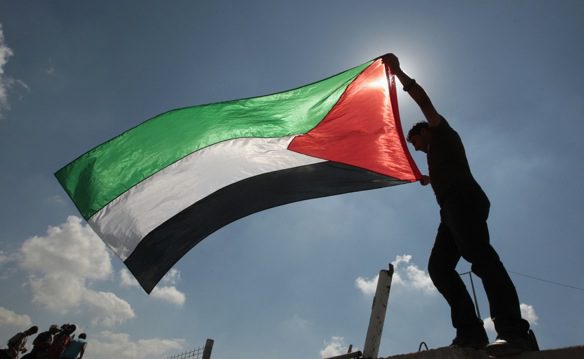
Photo Courtesy of Reuters
By Obaid H. Siddiqui
If George Carlin were Muslim (a statement that is probably causing him to turn in his grave), his list of dirty words would have numbered eight — the last of which being Zionism. For years, the term has been narrowly defined by the militaristic violence and oppression perpetrated upon the Palestinian people. It is viewed through the lens of a military occupation, thereby tainting the word and its meaning for those who don’t abide by its underlying philosophy.
To dispossess the term Zionism from the suffering of the Palestinian people is not an easy task. But it’s one that is possible, according to Patheos Muslim blogger and Time.com contributor Rabia Chaudry.
In her article “What a Muslim American Learned from Zionists,” published by TIME, Chaudry, a highly accomplished lawyer and writer, leads her readers on her enlightening intellectual awakening of Zionism during a fellowship in Israel fostered by what she describes as the “unapologetically Zionist” Shalom Hartman Institute (SHI).
The SHI, which seeks to educate community leaders and change agents in order to revitalize and “elevate the quality of Jewish life in Israel and around the world,” invited Chaudry and other American Muslims to learn about Judaism first-hand in Israel, as a bridge-building initiative.
In a related blog post, Chaudry describes how hard the decision was for her to accept the invite. Israel, as she describes, was “reprehensible” to her, so she initially detested the idea of attending. After discussing with others and a bit of soul-searching, Chaudry courageously accepted the offer. (It’s not an easy choice to go across the world to learn from a group one considers to profess a detestable philosophy.)
Chaudry, like most Muslims, initially understood the term Zionism through the Palestinian perspective, deriving meaning only from the “nakba, a catastrophe for the Palestinian people … ethnic cleansing, a brutal occupation … collective punishment, stolen resources,” she writes.
Despite her hesitations and life-long commitment to the Palestinian cause, Chaudry describes how through the SHI fellowship she grew to understand and appreciate Zionism from the Zionist perspective. “I learned that Zionism means something very different for Jews,” Chaudry writes. “The Jewish people’s longing of thousands of years for a homeland, a return from exile, a sanctuary from being a hated minority in the diaspora, an opportunity to establish Jewish values and honor God, a Biblical promise, a chance for redemption.”
Chaudry’s experience with the SHI fellowship and her new found understanding represents a major step forward in creating much needed dialogue and discussion between two groups that seem to only speak past each other.
This is an imperative approach to building cultural and religious discourse within one of the most animus-driven situations in the world. Even more so, it’s an attempt at empathy; allowing one to understand and appreciate the nuances of another’s experience.
Though, this is where the semantics get a bit tricky.
From Chaudry’s account, it is easy to see that SHI and the Israelis encountered during the fellowship are promoting just another narrow definition of Zionism. They are opting for the spiritual and sympathetic meaning, leaving out the political implications of the philosophy. In doing so, they are redrawing the lines of the discussion – centering it on the historical needs of the Jewish people instead of acknowledging the very real and violent means taken to meet those needs.
It’s unquestionable that the Jewish people deserve their own homeland; an area they will always be safe and comfortable within to freely practice their culture, religion and lifestyle on their terms without fear. However, recognizing this need for a homeland doesn’t justify or acquit Israel for decades of oppressing the Palestinian people and preventing them from their own right to self-determined nationhood.
As a result, what initially reads as admirable empathy begins to devolve into false equivalency – a fallacy in which a logical equivalence between two things is posed, despite none existing. As described on Wikipedia, this fallacy is perpetuated when “one shared trait between two subjects is assumed to show equivalence, especially in order of magnitude, when equivalence is not necessarily the logical result.” Such false equivalence is visible within Chaudry’s descriptions of her evolving thought process.
Throughout her piece, Chaudry equates the suffering of the Palestinians with that of Israelis. “We personally witnessed hundreds of Muslim men denied access to the Al-Aqsa mosque for Friday prayers, and their quiet rage, and even tears, at the young Israeli security personnel who blocked the entrances and themselves seemed scared and unsure,” Chaudry writes.
Chaudry describes “the despair and anger of a burgeoning population of young, unemployed, restricted, dislocated population which carries with it the pain of generations” as portrayed in the Palestinian Muslim men not allowed to freely exercise their religious duties within holy sites on their land and equates it to the “scared and unsure” Israeli soldiers. By positing these two opposites – an oppressed people and an oppressive force – as equivalent, Chaudry implicitly justifies a previous thought which she describes as hearing often in conversation: “Most Israelis want to end the occupation but are afraid to.”
Since no greater context or explanation is given to describe what makes Israelis afraid, it remains a topic open for greater dialogue to understand the nature of that fear – is it based on the Israeli government and people being held accountable for decades of atrocities committed against Palestinians? If not this, then what is it they truly fear?
Further comparing the two sides, Chaudry continues by describing a “monumental” exchange: “The Muslim fellows [at SHI] understood Jewish fear and the Jews’ deep desire for a homeland after thousands of years of being a mistrusted minority. And Israeli Jews affirmed to us the daily devastation of the occupation and the shattering of Palestinians through which Israel was born.” Here, Chaudry juxtaposes the idea of understanding the Zionist perspective by Muslims with the tangible destruction of Palestinian land, people, and culture by Israel, viewing these two disparate thoughts as somehow similar.
Moreover, in a rather ironic metaphor, Chaudry equates the communication divide to that of a wall: “The walls have been built so high that breaching them to reach out to the other side is tantamount to treason.” Yes. The walls have been literally built high by the Zionists; a concrete barrier expected to stretch over 400 miles, reaching heights up to 25 feet, has enclosed Gazans within an open-air prison for two decades now.
What makes this false equivalency so dangerous is that it poses as moderate, conciliatory, and centered, thereby leaving those who disagree with it being branded radical, close-minded or extreme. But such moderation fails as it attempts to give equal weight to two dissimilar sides, whereas a more proportionate comparison would better serve to delineate the obstacles faced by both sides.
The trouble with the equivalency in empathy rests in two primary issues yet to be addressed by Zionist Israelis: accountability for decades of oppression and injustice, and the inherent anti-democratic racism of political Zionism that prejudicially promotes the success and livelihood of the Jewish people over all others, using all tactics — political and violent — to maintain a Jewish majority within Israel.
In his compelling deconstruction of colonialism, Frantz Fanon, the French-African psychiatrist and revolutionary thinker, wrote in the “The Wretched of the Earth”:
“National consciousness is nothing but a crude, empty, fragile shell. The cracks in it explain how easy it is for young independent countries to switch back from nation to ethnic group and from state to tribe – a regression that is so detrimental and prejudicial to the development of the nation and national unity.”
Given that, it’s easier to see how Zionism as a national consciousness can force Israel to view itself as an ethnic group or tribe rather than a democratic state. As a result, this “crude, empty, fragile shell” of thinking will not allow Israel to reconcile its violently oppressive past, present and anti-democratic future with the inclusion of rights for the Palestinian people. To do so is against the underpinnings of political Zionism.
It cannot be doubted that the intentions of Chaudry are driven by an honest attempt to bring understanding of the suffering and plight of the Palestinian people to Zionist Israelis via open dialogue, through a call for empathy to equally understand both sides. However, this is rendered quite difficult as long as the historical suffering of the Jewish people continues to be used as justification for the modern oppression of the Palestinian people.
Diplomacy, dialogue and empathy are noble goals, but fall insultingly short of bridging the divide when the Israeli government continues to kill, attack, imprison and sequester the Palestinian people on what remains of their land.
Until the Israeli government is held accountable for the forced expulsion of the Palestinian people starting in 1947; the refusal to acknowledge the internationally accepted 1967 borders; the continuously growing, illegally built settlements on current Palestinian land against international law; the sequestering and open-air imprisonment of Gaza; the death of countless civilians; illegal use of white phosphorus; refusal to allow Palestinian self-determination and statehood; and the detainment, imprisonment and harassment of nameless others on a daily basis, calls for dialogue and empathy will sadly continue to be viewed as false equivalence.
Despite these beliefs, people like Rabia Chaudry should be commended for their undying efforts to find communal peace by challenging each side’s perspectives through open interaction. In the face of such a colossal task as bringing peace to the Israeli-Palestinian conflict, those who continue to push forward with patient perseverance are fighting the toughest, and what seems like a constantly losing, battle.
Obaid H. Siddiqui is a freelance writer, Altmuslim contributor and journalist based in Philadelphia. He is a contributor to the anthology “All-American: 45 American Men on Being Muslim.” He can be followed on Twitter @OhSiddiqui.
Previous Post

June 27, 2014
Ann Coulter Says Soccer is the Bane of America - Really
Next Post
June 28, 2014 Ramadan 2014 - Reclaiming the Sacred
Browse Our Archives
Select a Category 2012 Elections 30 Dayd 30 Writers (2017) 30 Days 30 Writers 30 Days 30 Writers (2015) 30 Days 30 Writers (2016) 30 Days 30 Writers (2018) 30 Days 30 Writers 2017 Ali Asadullah Ali Eteraz Alper Bilgili Arthur Richards Asides Asma Uddin Black History Month Briefings Charles Turner Commentary Cyrus McGoldrick Eman H Aly Fatimah Popal Hajj Hajj and Dhul Hijjah Hesham Hassaballa Hisham Hellyer Ibrahim Abusharif Inas Younis Irfan Yusuf Jalal Baig Junaid Afeef Laila Alawa Laila Alwala Mas'ood Cajee Muqtedar Khan Nakia Jackson Newsmakers Parvez Ahmed Podcasts Rabia Chaudry Rafia Zakaria Ramadan Reviews Safiyyah Ally Saud Inam Shahed Amanullah Svend White The Opinionated Oncologist Visions Wajahat Ali Zahed Amanullah Zahir Janmohamed Zainab Khan
Select a Month November 2018 October 2018 September 2018 August 2018 July 2018 June 2018 May 2018 April 2018 March 2018 February 2018 January 2018 December 2017 November 2017 October 2017 September 2017 August 2017 July 2017 June 2017 May 2017 April 2017 March 2017 February 2017 January 2017 December 2016 November 2016 October 2016 September 2016 August 2016 July 2016 June 2016 May 2016 April 2016 March 2016 February 2016 January 2016 December 2015 November 2015 October 2015 September 2015 August 2015 July 2015 June 2015 May 2015 April 2015 March 2015 February 2015 January 2015 December 2014 November 2014 October 2014 September 2014 August 2014 July 2014 June 2014 May 2014 April 2014 March 2014 February 2014 January 2014 December 2013 November 2013 October 2013 September 2013 August 2013 July 2013 June 2013 May 2013 April 2013 March 2013 February 2013 January 2013 December 2012 November 2012 October 2012 September 2012 August 2012 July 2012 June 2012 May 2012 April 2012 March 2012 February 2012 January 2012 December 2011 November 2011 October 2011 September 2011 August 2011 July 2011 June 2011 May 2011 April 2011 March 2011 February 2011 January 2011 December 2010 November 2010 October 2010 September 2010 August 2010 July 2010 June 2010 May 2010 April 2010 March 2010 February 2010 January 2010 December 2009 November 2009 October 2009 September 2009 August 2009 July 2009 June 2009 May 2009 April 2009 March 2009 February 2009 January 2009 December 2008 November 2008 October 2008 September 2008 August 2008 July 2008 June 2008 May 2008 April 2008 March 2008 February 2008 January 2008 December 2007 November 2007 October 2007 September 2007 August 2007 July 2007 June 2007 May 2007 April 2007 March 2007 February 2007 January 2007 December 2006 November 2006 October 2006 September 2006 August 2006 July 2006 June 2006 May 2006 April 2006 March 2006 February 2006 January 2006 December 2005 November 2005 October 2005 September 2005 August 2005 July 2005 June 2005 May 2005 April 2005 March 2005 February 2005 January 2005 December 2004 November 2004 October 2004 September 2004 August 2004 July 2004 June 2004 May 2004 April 2004 March 2004 February 2004 January 2004 December 2003 November 2003 October 2003 September 2003 August 2003 July 2003 June 2003 May 2003 April 2003 March 2003 February 2003 January 2003 December 2002 November 2002 October 2002 September 2002 August 2002 July 2002 June 2002 May 2002 April 2002 March 2002
Follow Us!
TAKE THE
Religious Wisdom Quiz
Who said, "Lord, increase our faith!"?
Select your answer to see how you score.
Paul Peter The disciples John
Related posts from altmuslim

Mawlid 2018: Praise Songs from Around the World

Gaslighting, Anti-Jewish and Anti-Muslim Rhetoric: What to Know

How One Ottoman Reconciled Islamic Teachings with Darwin's...

As #TreeofLife Shows, Trump's Mainstreaming of Hate Puts...
TRENDING AT PATHEOS Muslim

25 Years Later: How Much Has Changed for...
As we approach the 25th anniversary of September 11th, I’ve found myself...

Podcast: Third Spaces & The Rise of Yemeni...
In the latest episode of The Artistic Foodies Podcast, hosts Abbas...

HalalFest Picks: Best 60 Halal Spots for Super...
Back in 2016, I came up with a list of 29...

Unity Is America’s Strength — Division Is Its...
by Hidayatullah Ahsan When Valentina Gomez, a Republican candidate for Congress in...

Zohran Mamdani and New York’s Fight Against Islamophobia
This past June, against all odds, Zohran Mamdani won the Democratic primary...

What the Fourth of July Means to a...
As we mark another Fourth of July, millions of Americans will celebrate...
view all Muslim blogs
Ad-Free & Subscriber Log-In Subscription Support
- About Us
- 2026 Calendar
- Videos
- Podcasts
- Library of World Religions
- Faith In Media Tracker
- Advertise With Us
- Write for Us
- Privacy Policy
- Terms of Service
- Do Not Sell My Data
- Contact Us
- Radiant Digital
- Manage Newsletter Subscriptions
- Unsubscribe From Notifications
- Sitemap
Copyright 2008-2026, Patheos. All rights reserved.
Subscription Support Ad-Free & Subscriber Log-In
Follow Patheos