
BuddhistCatholicContemplativeEvangelicalGeneral ChristianHinduJewishLatter-day SaintMuslimNew VisionsProgressive Christian
Beliefs
- Buddhist
- Catholic
- Contemplative
- Evangelical
- General Christian
- Hindu
- Jewish
- Latter-day Saint
- More Voices
- Muslim
- New Visions
- Pagan
- Progressive Christian
Topics
- Religion News
- Food and Religion
- Sports and Religion
- Religious Art
- Religious Music and Entertainment
- Religious Events
- History and Religion
- Style and Religion
- Politics and Religion
- Women in Religion
- Recreation Outdoors and Religion
- Business Finance and Religion
- Careers Workplace and Religion
- Education and Religion
- Family Parenting and Religion
- Health Fitness and Religion
- Home and Religion
- Relationships and Religion
- Technology and Religion
- Travel and Religion
Columnists
- Buddhist Columnists
- Business Finance and Religion Columnists
- Careers Workplace and Religion Columnists
- Catholic Columnists
- Contemplative Columnists
- Education and Religion Columnists
- Evangelists Columnists
- Family Parenting and Religion Columnists
- General Christian Columnists
- Health Fitness and Religion Columnists
- Hindu Columnists
- History and Religion Columnists
- Home and Religion Columnists
- Jewish Columnists
- More Voices Columnists
- Latter Day Columnists
- Muslim Columnists
- New Visions Columnists
- Nonreligious Columnists
- Pagan Columnists
- Politics and Religion Columnists
- Progressive Columnists
- Recreation Outdoors and Religion Columnists
- Relationships and Religion Columnists
- Religion News Columnists
- Religious Art Columnists
- Religious Events Columnists
- Religious Music and Entertainment Columnists
- Sports and Religion Columnists
- Style and Religion Columnists
- Technology and Religion Columnists
- Travel and Religion Columnists
- Women in Religion Columnists
Resource Library
- 2026 Calendar
- Library of World Religions
- The 100 Most Holy Places on Earth
- Patheos Answers
- Podcasts
- Videos
- Faith Leaders Database
- Anglican Episcopalian
- Bahai
- Baptist
- Buddhism
- Christianity
- Confucianism
- Eastern Orthodoxy
- Hinduism
- Holiness and Pentecostal
- ISKCON
- Islam
- Judaism
- Lutheran
- Methodist
- The Church of Jesus Christ of Latter-day Saints
- New Age
- Paganism
- Presbytarian and Reformed
- Protestantism
- Religion Behind the Scenes
- Roman Catholic
- Scientology
- Shia Islam
- Sikhism
- Sufism
- Sunni Islam
- Taoism
- Zen
- See all religions
Research Tools
 Ad-Free & Subscriber Log-In Subscription Support
Follow Patheos 

- Trending:
- Advent
- |
- Forgiveness
- |
- Thanksgiving
- |
- Election
- |
- Seasonal Holidays
- |
- Marriage
 altmuslim
- Home
- Muslim
- What Mother Mary Means to Me
What Mother Mary Means to Me
Last updated on: December 24, 2013 at 7:18 pm by Guest Contributor
What Mother Mary Means to Me 2013-12-24T19:18:20-04:00 Guest Contributor
Patheos Explore the world's faith through different perspectives on religion and spirituality! Patheos has the views of the prevalent religions and spiritualities of the world.

The house in which Mary is purported to have lived her last years, located in Mt. Koressos in the vicinity of Ephesus, near Selçuk in Turkey.
By Afeefa Syeed
At Christmas time I hum along to the Little Drummer Boy song. I always wanted to be that drummer who gave a gift to the new born King and makes Mary smile. And I’m reminded again that the more I learn and reflect about the many manifestations of Mary, mother of Jesus, the more I am in awe of her.
Her story and place in history has been a source of strength for my soul and life, especially as a woman and as a mother. Although my understanding of Mary’s story is based on the Quran’s telling of her role – an entire chapter, Maryam, is named after her — I’ve also gathered inspiration from women I’ve met, who interpret her story for their own lives. I’ve revisited her through various stages of my life and find ways that I might fill the gaps in how much we really know about someone who lived centuries ago.
The story starts with Hanna, Mary’s mother who made a vow while pregnant, dedicating her unborn child to God for the benefit of humanity:
“Oh my Lord! I do dedicate unto You what is in my womb for thy special service. So accept this of me, for You hear and know all things.” (Quran 3:35)
At that time, this dedication would mean sending the child to the temple to live, serve and be raised. Besides a consecration to the physical temple, this conscious act of dedication reminds us as mothers-to-be that the collection of our thoughts, actions and mindfulness during pregnancy has bearing on our wombs and what develops within. We are not just vessels to carry a life into the world, but how we think about the child and how we treat our bodies can have consequences on the emotional, mental and physical development of a fetus.
During each of my three pregnancies, I read Hanna’s prayer and imbibed the notion that what I felt could be transferred to my unborn child. This moved me to write notes to each child somersaulting inside me, become more in tune with how my body was behaving and observe closely what each yet-to-be born little one was exposed to.
When Hanna’s child was born and turned out to be a girl, she did not step away from her vow. She insisted that she had dedicated the child in her womb, not differentiating between a boy or girl. She is told that although the societal norm did not grant females such a ranking, God accepts her dedication. Hanna says:
“…I have named her Mary and I commend her and her offspring to Your protection from any Evil.”…Right graciously did her Lord accept her: He made her grow in purity and beauty.” (3:36-37)
This is the basis for shattering double standards as a practice; that roles for benefit of society or in service of God can be performed by anyone dedicated to doing so. And this also speaks to the responsibility of each to assert this equality either for themselves or to advocate for others who cannot. Working in international development, I’ve heard Hanna’s example resonate in various women’s empowerment programs and efforts embedded with worldviews that respect and honor the role of Mary.
As she grows, Mary spends a great deal of time in a space in the temple called the mihrab, or niche. She passes her time praying and communing with a higher presence regularly, without intermediaries, she has direct connection and contact with the divine. But even more so I imagine her as a student and aspiring scholar who learns independently.
She must also have been cognizant of the temple’s many dimensions of influence and power, which eventually will come to be seen as monopolizing of religious authority in that society. She chooses to separate from politics and social hierarchy and instead create a sanctuary and focus on bettering herself while considering solutions to what may be happening outside her sacred space.
Although she is to be the mother of Jesus, this is the span of time I realize that she herself has importance and value in how she made her own mark in society. To this day, that safe space Mary created for connectivity with God, the mihrab, is honored in mosques. In fact, it is also the spot from where community leaders deliver sermons, which should ideally uphold the call for justice and equality.
After it is revealed to her that she will carry a child, Mary submits to her destiny after hearing from Gabriel that it is the Creator’s will. She has that unshakeable faith. However, when she goes into the throes of labor, she cries out:
“Ah! Would that I had died before this! Would that I had been a thing forgotten and out of sight!” (19-23)
She realizes that that the responsibility of explaining her condition will be great and that the pain she endures is overwhelming. This plea from her reminds me that it is acceptable, even for someone who has received God’s grace and blessings, to not only doubt herself, but wonder if what she is being called for is even possible physically, mentally or emotionally. Of course this well resonates with so many of us who, in the midst of labor, have shouted out all sorts of pleas and heartfelt cries!
In response to her cries of suffering through childbirth, Mary receives revelation telling her to hold fast to the trunk of a nearby palm tree as the pain crescendos and she is alone. She’s told to eat dates and drink from the stream running nearby to keep her strength. This set of directives assures me that while prayer is powerful and important, solutions are linked to our own action and taking responsibility for our condition. Her pain could have been easily eliminated in response to her prayers, or not have even been necessary since she was under divine protection.
But to me, the lesson here is to understand what we can have control over, what is beneficial knowledge for us to have on hand, and how our actions can make a difference. In addition, for both men and women to understand that the experience of childbirth is grounded in the physical realm and needs to be recognized as a difficult process, in this case even for the mother Jesus. In fact, centuries later, Prophet Muhammad would equate the pains of labor with battles to fight injustice – the reward for dying during both are that of being a martyr in the cause of serving God.
Mary’s role does not end with the birth of Jesus. She continues as a devout believer in the greater good and as a dedicated teacher who imparts on her growing son values of quiet empathy, recognizing imbalanced influences of power structures, and the persistent potency of prayer. Some 30 years of learning from his mother and this diligent upbringing, coupled with the Divine’s destiny for him, Jesus becomes the Christ who himself teaches principles of equality and justice – to serve the poor and give voice to the oppressed.
He also came to confront and question the monopoly and hegemony of religious institutions that had taken access to God away from everyday people. He spoke truth to power that was masquerading as religious dogma and authority. In part, it has been argued that the reason Jesus was born without a father was to demonstrate to the religious leaders that their projection of being over protective fathers of the masses was misinformed and against divine precepts.
The Biblical and Quranic stories of Mary are especially moving to me, as I’ve interpreted them to see her as a fellow woman aspiring to spiritual connectivity, who creates her own space and place for understanding of all things Divine and worldly, and finally being able to impart these to others who, for her, included the Prophet of Peace, Jesus Christ.
As my sons grow into themselves and explore spiritual relationships on their own terms, Mary continues to teach me the value of sharing the practice of perseverance and patience. And even more, as I myself continue to evolve as a person, I realize that stories such as Mary’s are much deeper and resonate more when we make them a part of our lives in practice, beyond being frozen on an unreachable pedestal.
Afeefa Syeed is a cultural anthropologist working in international development based in Washington, D.C. and the mother of three boys.
Previous Post

December 16, 2013
A Muslim Son Honors His Mother with Christmas Cheer
Next Post
January 1, 2014 Year in Review - Top Ten Good Muslim News Stories of 2013
Browse Our Archives
Select a Category 2012 Elections 30 Dayd 30 Writers (2017) 30 Days 30 Writers 30 Days 30 Writers (2015) 30 Days 30 Writers (2016) 30 Days 30 Writers (2018) 30 Days 30 Writers 2017 Ali Asadullah Ali Eteraz Alper Bilgili Arthur Richards Asides Asma Uddin Black History Month Briefings Charles Turner Commentary Cyrus McGoldrick Eman H Aly Fatimah Popal Hajj Hajj and Dhul Hijjah Hesham Hassaballa Hisham Hellyer Ibrahim Abusharif Inas Younis Irfan Yusuf Jalal Baig Junaid Afeef Laila Alawa Laila Alwala Mas'ood Cajee Muqtedar Khan Nakia Jackson Newsmakers Parvez Ahmed Podcasts Rabia Chaudry Rafia Zakaria Ramadan Reviews Safiyyah Ally Saud Inam Shahed Amanullah Svend White The Opinionated Oncologist Visions Wajahat Ali Zahed Amanullah Zahir Janmohamed Zainab Khan
Select a Month November 2018 October 2018 September 2018 August 2018 July 2018 June 2018 May 2018 April 2018 March 2018 February 2018 January 2018 December 2017 November 2017 October 2017 September 2017 August 2017 July 2017 June 2017 May 2017 April 2017 March 2017 February 2017 January 2017 December 2016 November 2016 October 2016 September 2016 August 2016 July 2016 June 2016 May 2016 April 2016 March 2016 February 2016 January 2016 December 2015 November 2015 October 2015 September 2015 August 2015 July 2015 June 2015 May 2015 April 2015 March 2015 February 2015 January 2015 December 2014 November 2014 October 2014 September 2014 August 2014 July 2014 June 2014 May 2014 April 2014 March 2014 February 2014 January 2014 December 2013 November 2013 October 2013 September 2013 August 2013 July 2013 June 2013 May 2013 April 2013 March 2013 February 2013 January 2013 December 2012 November 2012 October 2012 September 2012 August 2012 July 2012 June 2012 May 2012 April 2012 March 2012 February 2012 January 2012 December 2011 November 2011 October 2011 September 2011 August 2011 July 2011 June 2011 May 2011 April 2011 March 2011 February 2011 January 2011 December 2010 November 2010 October 2010 September 2010 August 2010 July 2010 June 2010 May 2010 April 2010 March 2010 February 2010 January 2010 December 2009 November 2009 October 2009 September 2009 August 2009 July 2009 June 2009 May 2009 April 2009 March 2009 February 2009 January 2009 December 2008 November 2008 October 2008 September 2008 August 2008 July 2008 June 2008 May 2008 April 2008 March 2008 February 2008 January 2008 December 2007 November 2007 October 2007 September 2007 August 2007 July 2007 June 2007 May 2007 April 2007 March 2007 February 2007 January 2007 December 2006 November 2006 October 2006 September 2006 August 2006 July 2006 June 2006 May 2006 April 2006 March 2006 February 2006 January 2006 December 2005 November 2005 October 2005 September 2005 August 2005 July 2005 June 2005 May 2005 April 2005 March 2005 February 2005 January 2005 December 2004 November 2004 October 2004 September 2004 August 2004 July 2004 June 2004 May 2004 April 2004 March 2004 February 2004 January 2004 December 2003 November 2003 October 2003 September 2003 August 2003 July 2003 June 2003 May 2003 April 2003 March 2003 February 2003 January 2003 December 2002 November 2002 October 2002 September 2002 August 2002 July 2002 June 2002 May 2002 April 2002 March 2002
Follow Us!
TAKE THE
Religious Wisdom Quiz
What does Paul say is the greatest of faith, hope, and love?
Select your answer to see how you score.
Love Faith Hope Strength
Related posts from altmuslim
Mawlid 2018: Praise Songs from Around the World
Gaslighting, Anti-Jewish and Anti-Muslim Rhetoric: What to Know
How One Ottoman Reconciled Islamic Teachings with Darwin's...
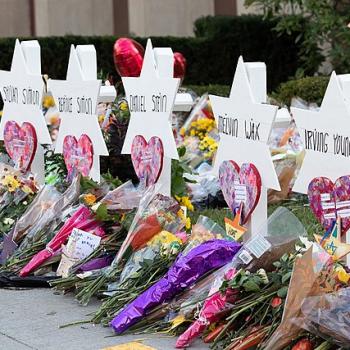
As #TreeofLife Shows, Trump's Mainstreaming of Hate Puts...
TRENDING AT PATHEOS Muslim

25 Years Later: How Much Has Changed for...
As we approach the 25th anniversary of September 11th, I’ve found myself...

Podcast: Third Spaces & The Rise of Yemeni...
In the latest episode of The Artistic Foodies Podcast, hosts Abbas...

HalalFest Picks: Best 60 Halal Spots for Super...
Back in 2016, I came up with a list of 29...

Unity Is America’s Strength — Division Is Its...
by Hidayatullah Ahsan When Valentina Gomez, a Republican candidate for Congress in...

Zohran Mamdani and New York’s Fight Against Islamophobia
This past June, against all odds, Zohran Mamdani won the Democratic primary...

What the Fourth of July Means to a...
As we mark another Fourth of July, millions of Americans will celebrate...
view all Muslim blogs
Ad-Free & Subscriber Log-In Subscription Support
- About Us
- 2026 Calendar
- Videos
- Podcasts
- Library of World Religions
- Faith In Media Tracker
- Advertise With Us
- Write for Us
- Privacy Policy
- Terms of Service
- Do Not Sell My Data
- Contact Us
- Radiant Digital
- Manage Newsletter Subscriptions
- Unsubscribe From Notifications
- Sitemap
Copyright 2008-2026, Patheos, part of the Radiant Digital network of media brands. All rights reserved.
Subscription Support Ad-Free & Subscriber Log-In
Follow Patheos