
BuddhistCatholicContemplativeEvangelicalGeneral ChristianHinduJewishLatter-day SaintMuslimNew VisionsProgressive Christian
Beliefs
- Buddhist
- Catholic
- Contemplative
- Evangelical
- General Christian
- Hindu
- Jewish
- Latter-day Saint
- More Voices
- Muslim
- New Visions
- Pagan
- Progressive Christian
Topics
- Religion News
- Food and Religion
- Sports and Religion
- Religious Art
- Religious Music and Entertainment
- Religious Events
- History and Religion
- Style and Religion
- Politics and Religion
- Women in Religion
- Recreation Outdoors and Religion
- Business Finance and Religion
- Careers Workplace and Religion
- Education and Religion
- Family Parenting and Religion
- Health Fitness and Religion
- Home and Religion
- Relationships and Religion
- Technology and Religion
- Travel and Religion
Columnists
- Buddhist Columnists
- Business Finance and Religion Columnists
- Careers Workplace and Religion Columnists
- Catholic Columnists
- Contemplative Columnists
- Education and Religion Columnists
- Evangelists Columnists
- Family Parenting and Religion Columnists
- General Christian Columnists
- Health Fitness and Religion Columnists
- Hindu Columnists
- History and Religion Columnists
- Home and Religion Columnists
- Jewish Columnists
- More Voices Columnists
- Latter Day Columnists
- Muslim Columnists
- New Visions Columnists
- Nonreligious Columnists
- Pagan Columnists
- Politics and Religion Columnists
- Progressive Columnists
- Recreation Outdoors and Religion Columnists
- Relationships and Religion Columnists
- Religion News Columnists
- Religious Art Columnists
- Religious Events Columnists
- Religious Music and Entertainment Columnists
- Sports and Religion Columnists
- Style and Religion Columnists
- Technology and Religion Columnists
- Travel and Religion Columnists
- Women in Religion Columnists
Resource Library
- 2026 Calendar
- Library of World Religions
- The 100 Most Holy Places on Earth
- Patheos Answers
- Podcasts
- Videos
- Faith Leaders Database
- Anglican Episcopalian
- Bahai
- Baptist
- Buddhism
- Christianity
- Confucianism
- Eastern Orthodoxy
- Hinduism
- Holiness and Pentecostal
- ISKCON
- Islam
- Judaism
- Lutheran
- Methodist
- The Church of Jesus Christ of Latter-day Saints
- New Age
- Paganism
- Presbytarian and Reformed
- Protestantism
- Religion Behind the Scenes
- Roman Catholic
- Scientology
- Shia Islam
- Sikhism
- Sufism
- Sunni Islam
- Taoism
- Zen
- See all religions
Research Tools
 Ad-Free & Subscriber Log-In Subscription Support
Ad-Free & Subscriber Log-In Subscription Support
Follow Patheos 

- Trending:
- Forgiveness
- |
- Marriage
- |
- Consciousness
- |
- Death Penalty
- |
- Election
- |
- Halloween
 altmuslim
- Home
- Muslim
- The History of Ashura – Why We Should Remember
The History of Ashura – Why We Should Remember
Last updated on: November 14, 2013 at 6:55 pm by Guest Contributor
The History of Ashura – Why We Should Remember 2013-11-14T18:55:40-04:00 Guest Contributor
Patheos Explore the world's faith through different perspectives on religion and spirituality! Patheos has the views of the prevalent religions and spiritualities of the world.
 By Safiyyah Surtee
Writing about Muharram, the day of Ashura and the events of Karbala from a non-sectarian perspective is not simple, but I believe there can be reconciliation.
I grew up in a home where Muharram is a time of celebration, as it marks the beginning of the Islamic calendar, as well the hijrah (migration) of the Prophet Muhammad (saw) from Makkah to Medina. The 9th/10th/11th Muharram are days for fasting, and in some cases, people even exchange gifts. I was taught that the day of Ashura (10th Muharram) was the day on which the Prophet Musa (as) and his people were saved from the tyranny of Pharoah – a day from the annals of ancient history, which reaches out to us so we may remember and be thankful.
Some accounts relate that the Prophet (saw), upon hearing that the Jews commemorated the day of Ashura for Nabi Musa (as) by fasting, decided to also adopt this practice (differentiating it by adding an extra day of fasting the day before or after Ashura). This willingness of the Prophet (saw) to learn and embrace from people of other faiths (when he found an important commonality) relates closely to what comes next – that we too should show similar willingness, especially when it comes to the narratives of people from within the Muslim umbrella.
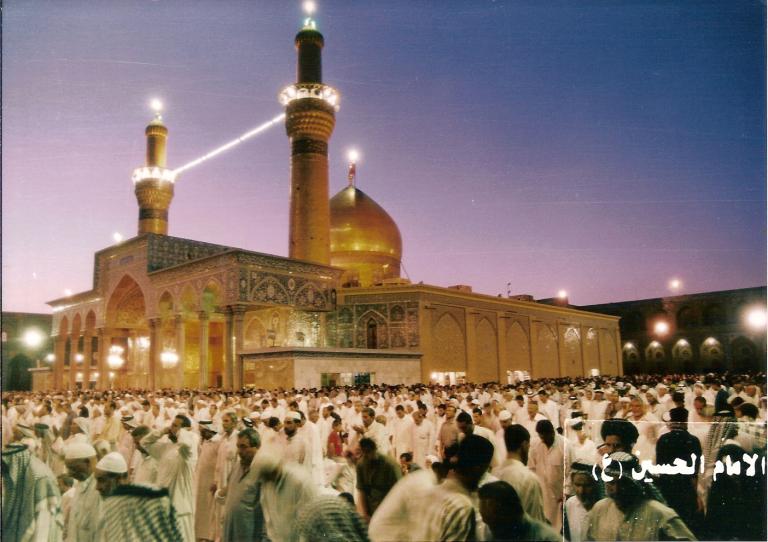
Due to what now seems like deliberate communal amnesia, I was already in my late teens when I learned (by accident) that Ashura is also the day in which many Muslims mourn the tragic events at Karbala, when Imam Husayn (ra), the beloved grandson of the Prophet Muhammad (saw) was martyred by the Umayyad ruler Yazid bin Mu’awiyya.
As I reflect back now, with the day of Ashura immanent, it becomes apparent that seeing things in black and white robs us of the deep spiritual lessons, which Ashura can teach us when we open ourselves to multiple possibilities.
I do not wish to recount historical versions of events – history is often written or rewritten from the vantage point of the victors and those in power, but the events at Karbala defy this. On all accounts Imam Husayn and his small group of mostly members of the Ahl-Bayt were brutally killed by people claiming to be leaders of the Muslim Ummah. Arguments abound on who was responsible – was it Yazid or the people he delegated? Did the army take things into their own hands? Or perhaps the Kufans, who betrayed Imam Husayn, were mostly to blame. Even rather absurdly, I’ve even come across one claim that Imam Husayn himself is to blame for acting naively and without heeding the advice of other companions. But I digress …
I do not see mourning or grieving the day of Karbala as contradictory to commemorating the day of Ashura (as considered to be the day the people of Musa (as) were saved). Both Nabi Musa (as) and Imam Husayn (ra) refused to give allegiance to tyrannical rulers, whilst one (Pharoah) considered himself God while the other (Yazid) claimed to be a khalifa (representative) of God. We learn from both Nabi Musa and Imam Husayn, that speaking truth to power is one of the qualities of people of tawhid, who believe that true power belongs to God alone. This is a lesson we are sorely in need of in a world where military oppression, religious misappropriation, dictatorships and monarchies still reign supreme.
We also learned is that when the desire and greed for material wealth and power corrupted the human soul to such an intense degree (when living on that very base level of Nafs al-Ammarah bi su (the self-inciting ego that urges towards to evil), human beings spilled the blessed blood of the progeny of the Prophet (saw), committed the most heinous of crimes under the illusion of safeguarding their leadership and inflated their status to such heights as to claim divinity.
If we ignore the events of Karbala or prefer to forget them, then we do as the killers of Imam Husayn wanted, which was to wipe out the family of the Prophet that posed a threat. Thus their claim to power and authority could remain unchallenged in order for them to continue along the trajectory of moral debauchery, nepotism, corruption and the establishment of baseless monarchies, as is well documented.
If we deny or try to justify the events at Karbala or downplay the awful magnanimity of what occurred, we commit the same terrible treachery of the people of Kufa, who abandoned the Ahl Bayt after giving them allegiance.
There is another option: We could also adopt the spirit and sunnah of Sayyida Zainab (ra), the granddaughter of Nabi Muhammad (saw) and sister of Imam Husayn (ra), who bravely proclaimed in the streets as she was being led to the court of Yazid:
“You have killed those whom the Holy Prophet (saw) held upon his knee when they were children and whose play filled him with joy. Soon you will stand with them before Allah, and they will demand justice. Beware the day of reckoning.”
And when she stood in front of Yazid, she was not afraid to say, “Those who have made you the head of state and burdened the Muslims with your leadership will soon find out what awaits them. The end of all tyrants is agony.”
Throughout her grief-stricken journey back to Madina, wherever she dismounted, she gathered people together and recounted in detail the tragic events at Karbala. She immortalized the sacrifices of the Ahl Bayt and exposed the despotism of their killers.
If you are not ready to mourn the death of the Ahl Bayt at the hands of the ruling Ummayad, can you at least acknowledge that there are some Muslims who feel very deeply, poignantly and painfully, based on their love for the Prophet (saw) and everything and everyone he loved, about the killing of Imam Husayn (ra) and 72 of his followers, as well as the humiliation and inhumane treatment of the women and children who were left behind?
If you fast the day of Ashura to follow the sunnah, perhaps also spare a thought for the thirsty family of the same Muhammad (saw) whose sunnah you are following, who were deprived of water by the cruel army on the field of Karbala. If you observe extra ibadah (worship) during Muharram because we know from the Quran that it is a sacred month, then perhaps we can also realize how far from the Quran the Ummayad army were when they mercilessly attacked the small defenseless group of Imam Husayn (ra), going against the strict prohibition of war during Muharram, which itself means “sacred.”
For those who mourn, remember also that the Prophet (saw) rejected all extremities, and that expressing emotion at the way in which some of his family (as) were killed should not make us forgetful of his (saw) impeccable adab and dignity at all times. The dignity of Sayyida Zainab (as) when she was so humiliated by being paraded through the streets uncovered has also been documented and is worthy of imitation.
Also realize that it is not so much mourning of “death” per se, because we know that those who die in the path of Allah are not truly dead, as the Quran teaches us, but are alive in the truest sense. Rather we mourn that the very human being created by Allah in “the best of forms” and “ennobled” can also stoop to the “lowest of the low”, that rulers can be void of Rahmah, that people could stand by and watch the family of the Prophet (saw) be slaughtered.
Professor Edward G. Brown of Cambridge reminds us that “the blood-stained field of Karbala, where the grandson of the Apostle of God fell, at length, tortured by thirst, and surround by the bodies of his murdered kinsmen, has been at any time since then, sufficient to evoke, even in the most lukewarm and the heedless, the deepest emotion, the most frantic grief, and an exaltation of spirit before which pain, danger and death shrink to unconsidered trifles.”
We would be mistaken to believe that between Nabi Musa (as) and Imam Husayn (ra), only Nabi Musa (as) was victorious because he and his people were saved from Pharoah. Imam Husayn and his group were also victorious, if only we begin to see with the inner eye, that amidst the sea of blood that Yazid’s army created at Karbala, what Imam Husayn, Sayyida Zainab and others with them set forth and propelled for all of time, was the parting of the oceans of truth and falsehood.
Safiyyah Surtee is a teaching fellow at the University of Johannesburg in the Department of Religious Studies. Follow her on twitter @safiyyahsurtee.
Previous Post

November 11, 2013
How to Help in the Philippines
Next Post

November 21, 2013 The Case for a Modest Wedding in Islam
Browse Our Archives
Select a Category 2012 Elections 30 Dayd 30 Writers (2017) 30 Days 30 Writers 30 Days 30 Writers (2015) 30 Days 30 Writers (2016) 30 Days 30 Writers (2018) 30 Days 30 Writers 2017 Ali Asadullah Ali Eteraz Alper Bilgili Arthur Richards Asides Asma Uddin Black History Month Briefings Charles Turner Commentary Cyrus McGoldrick Eman H Aly Fatimah Popal Hajj Hajj and Dhul Hijjah Hesham Hassaballa Hisham Hellyer Ibrahim Abusharif Inas Younis Irfan Yusuf Jalal Baig Junaid Afeef Laila Alawa Laila Alwala Mas'ood Cajee Muqtedar Khan Nakia Jackson Newsmakers Parvez Ahmed Podcasts Rabia Chaudry Rafia Zakaria Ramadan Reviews Safiyyah Ally Saud Inam Shahed Amanullah Svend White The Opinionated Oncologist Visions Wajahat Ali Zahed Amanullah Zahir Janmohamed Zainab Khan
Select a Month November 2018 October 2018 September 2018 August 2018 July 2018 June 2018 May 2018 April 2018 March 2018 February 2018 January 2018 December 2017 November 2017 October 2017 September 2017 August 2017 July 2017 June 2017 May 2017 April 2017 March 2017 February 2017 January 2017 December 2016 November 2016 October 2016 September 2016 August 2016 July 2016 June 2016 May 2016 April 2016 March 2016 February 2016 January 2016 December 2015 November 2015 October 2015 September 2015 August 2015 July 2015 June 2015 May 2015 April 2015 March 2015 February 2015 January 2015 December 2014 November 2014 October 2014 September 2014 August 2014 July 2014 June 2014 May 2014 April 2014 March 2014 February 2014 January 2014 December 2013 November 2013 October 2013 September 2013 August 2013 July 2013 June 2013 May 2013 April 2013 March 2013 February 2013 January 2013 December 2012 November 2012 October 2012 September 2012 August 2012 July 2012 June 2012 May 2012 April 2012 March 2012 February 2012 January 2012 December 2011 November 2011 October 2011 September 2011 August 2011 July 2011 June 2011 May 2011 April 2011 March 2011 February 2011 January 2011 December 2010 November 2010 October 2010 September 2010 August 2010 July 2010 June 2010 May 2010 April 2010 March 2010 February 2010 January 2010 December 2009 November 2009 October 2009 September 2009 August 2009 July 2009 June 2009 May 2009 April 2009 March 2009 February 2009 January 2009 December 2008 November 2008 October 2008 September 2008 August 2008 July 2008 June 2008 May 2008 April 2008 March 2008 February 2008 January 2008 December 2007 November 2007 October 2007 September 2007 August 2007 July 2007 June 2007 May 2007 April 2007 March 2007 February 2007 January 2007 December 2006 November 2006 October 2006 September 2006 August 2006 July 2006 June 2006 May 2006 April 2006 March 2006 February 2006 January 2006 December 2005 November 2005 October 2005 September 2005 August 2005 July 2005 June 2005 May 2005 April 2005 March 2005 February 2005 January 2005 December 2004 November 2004 October 2004 September 2004 August 2004 July 2004 June 2004 May 2004 April 2004 March 2004 February 2004 January 2004 December 2003 November 2003 October 2003 September 2003 August 2003 July 2003 June 2003 May 2003 April 2003 March 2003 February 2003 January 2003 December 2002 November 2002 October 2002 September 2002 August 2002 July 2002 June 2002 May 2002 April 2002 March 2002
Follow Us!
TAKE THE
Religious Wisdom Quiz
True or False: Saul held the coats of those who stoned Stephen.
Select your answer to see how you score.
TRUE FALSE
Related posts from altmuslim

Mawlid 2018: Praise Songs from Around the World

Gaslighting, Anti-Jewish and Anti-Muslim Rhetoric: What to Know

How One Ottoman Reconciled Islamic Teachings with Darwin's...

As #TreeofLife Shows, Trump's Mainstreaming of Hate Puts...
TRENDING AT PATHEOS Muslim

25 Years Later: How Much Has Changed for...
As we approach the 25th anniversary of September 11th, I’ve found myself...

Podcast: Third Spaces & The Rise of Yemeni...
In the latest episode of The Artistic Foodies Podcast, hosts Abbas...

HalalFest Picks: Best 60 Halal Spots for Super...
Back in 2016, I came up with a list of 29...

Unity Is America’s Strength — Division Is Its...
by Hidayatullah Ahsan When Valentina Gomez, a Republican candidate for Congress in...

Zohran Mamdani and New York’s Fight Against Islamophobia
This past June, against all odds, Zohran Mamdani won the Democratic primary...

What the Fourth of July Means to a...
As we mark another Fourth of July, millions of Americans will celebrate...
view all Muslim blogs
Ad-Free & Subscriber Log-In Subscription Support
- About Us
- 2026 Calendar
- Videos
- Podcasts
- Library of World Religions
- Faith In Media Tracker
- Advertise With Us
- Write for Us
- Privacy Policy
- Terms of Service
- Do Not Sell My Data
- Contact Us
- Radiant Digital
- Manage Newsletter Subscriptions
- Unsubscribe From Notifications
- Sitemap
Copyright 2008-2026, Patheos. All rights reserved.
Subscription Support Ad-Free & Subscriber Log-In
Follow Patheos