
BuddhistCatholicContemplativeEvangelicalGeneral ChristianHinduJewishLatter-day SaintMuslimNew VisionsProgressive Christian
Beliefs
- Buddhist
- Catholic
- Contemplative
- Evangelical
- General Christian
- Hindu
- Jewish
- Latter-day Saint
- More Voices
- Muslim
- New Visions
- Pagan
- Progressive Christian
Topics
- Religion News
- Food and Religion
- Sports and Religion
- Religious Art
- Religious Music and Entertainment
- Religious Events
- History and Religion
- Style and Religion
- Politics and Religion
- Women in Religion
- Recreation Outdoors and Religion
- Business Finance and Religion
- Careers Workplace and Religion
- Education and Religion
- Family Parenting and Religion
- Health Fitness and Religion
- Home and Religion
- Relationships and Religion
- Technology and Religion
- Travel and Religion
Columnists
- Buddhist Columnists
- Business Finance and Religion Columnists
- Careers Workplace and Religion Columnists
- Catholic Columnists
- Contemplative Columnists
- Education and Religion Columnists
- Evangelists Columnists
- Family Parenting and Religion Columnists
- General Christian Columnists
- Health Fitness and Religion Columnists
- Hindu Columnists
- History and Religion Columnists
- Home and Religion Columnists
- Jewish Columnists
- More Voices Columnists
- Latter Day Columnists
- Muslim Columnists
- New Visions Columnists
- Nonreligious Columnists
- Pagan Columnists
- Politics and Religion Columnists
- Progressive Columnists
- Recreation Outdoors and Religion Columnists
- Relationships and Religion Columnists
- Religion News Columnists
- Religious Art Columnists
- Religious Events Columnists
- Religious Music and Entertainment Columnists
- Sports and Religion Columnists
- Style and Religion Columnists
- Technology and Religion Columnists
- Travel and Religion Columnists
- Women in Religion Columnists
Resource Library
- 2026 Calendar
- Library of World Religions
- The 100 Most Holy Places on Earth
- Patheos Answers
- Podcasts
- Videos
- Faith Leaders Database
- Anglican Episcopalian
- Bahai
- Baptist
- Buddhism
- Christianity
- Confucianism
- Eastern Orthodoxy
- Hinduism
- Holiness and Pentecostal
- ISKCON
- Islam
- Judaism
- Lutheran
- Methodist
- The Church of Jesus Christ of Latter-day Saints
- New Age
- Paganism
- Presbytarian and Reformed
- Protestantism
- Religion Behind the Scenes
- Roman Catholic
- Scientology
- Shia Islam
- Sikhism
- Sufism
- Sunni Islam
- Taoism
- Zen
- See all religions
Research Tools
 Ad-Free & Subscriber Log-In Subscription Support
Ad-Free & Subscriber Log-In Subscription Support
Follow Patheos 

- Trending:
- Forgiveness
- |
- Marriage
- |
- Consciousness
- |
- Death Penalty
- |
- Election
- |
- Halloween
 altmuslim
- Home
- Muslim
- How Do We Take Malala’s Dream and Make it a Reality?
How Do We Take Malala’s Dream and Make it a Reality?
Last updated on: November 30, 2012 at 3:41 pm by Guest Contributor
How Do We Take Malala’s Dream and Make it a Reality? 2012-11-30T15:41:35-04:00 Guest Contributor
Patheos Explore the world's faith through different perspectives on religion and spirituality! Patheos has the views of the prevalent religions and spiritualities of the world.
 By Rushdi Siddiqui
“First they ignore you, then they laugh at you, then they fight you, then you win.” — Mahatma Gandhi.
When the first lady of a Muslim country talks about education for girls, it’s not only expected, but, many believe there is an agenda behind it.
When an education minister talks about education for girls, there is a collective yawn, as subsequent important questions on language (English?), budget (decreasing?), etc., are the details rarely discussed at photo-ops.
When a tycoon (or his wife) talks about education for girls, it’s more credible and believable, but some may believe it’s “easing the conscience.”
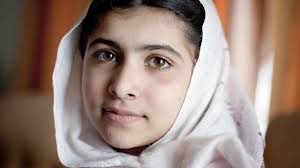
When a poor 15-year-old activist from Pakistan, Malala Yousufzai, preaches and propagates education for girls and women’s rights, well, her message was welcomed on October 9, 2012 with a bullet to the head by a fellow “Muslim.”
(By the grace of the Almighty, she, at time of this writing, is in London and recovering.)
Suddenly, her cause becomes a universal cause:
● UN Secretary-General Ban Ki-Moon declared November 10 Malala Day.
● Gordon Brown, former PM of Britain and now UN Special Envoy for Global Education, launched a slogan, “I am Malala,” with a petition demanding all children worldwide be in school by 2016.
While declarations are incident-time important, are they lasting?
Dark Shame’s Light
The dark shame of the tragedy is that it takes the bang of a “bullet” to get her message heard around the world. It takes a life-threatening context to appreciate the situation of girls and women within provinces of Muslim countries like Pakistan.
At one level, Malala is a civil rights leader, her cause being education. And, she can be mentioned, notwithstanding her tender age, in the same breath as other revered leaders like the Reverend Martin Luther King and Mahatma Gandhi, their cause being equality and dignity.
Their blood has stained our collective conscience, as education and equality are divinely ordained. They are the foundational and fundamental principles linked to dignity, justice, public good and opportunity.
Consider this: The election and re-election of the harvest called President Barack Obama started with the seed sown in the 1960s by King. The election of Mayawati, a Dalit (untouchable), as chief minister of Uttar Pradesh, in caste-bias India, deemed a “miracle of democrac,y” is the eventual byproduct of Gandhi’s message.
Malala’s Message
So, what is the takeaway message of Malala?
First, there are more brain cells than bullets being fired. Hence, Malala represents a journey of enduring enlightenment over engaging violence. The “miracle of youth” is the message that truth rises to the top. And conversely, the propaganda of “misleading truths” sinks to the bottom.
Second, studies by the international lending agencies on the benefits of education for girls to the family, village, county, province and country are indisputable. The educational empowerment of girls means that as, mothers and wives, their off-springs will do better than them, i.e. virtuous cycle on way to having an eventual middle class based on merit. This is the beginning of a knowledge-based economy that governments talk about for 2020 and 2030.
Third, her message (education) is consistent with the proclamation of the Creator and the (carried) message of the beloved Prophet Mohammad (SAW): The first revelation of the Quran, Surah Alaq, says “Read! In the Name of your Lord created. He has created man from clod. Read! And your Lord is the Most Generous. Who has taught by the pen. He has taught man that which he knew not.”
The Creator’s message is for all of humanity, and not just men, to obtain knowledge, be it on the mind, tongue, writing or actions, and, just as important, to disseminate. “And Say: My Lord increase me in knowledge. (20:114)”
The natural inclination of human beings, young or old, is curiosity-cum-learning, including secular and spiritual, from “cradle to the grave.” The knowledge results in wisdom to make informed or good choices.
“Seeking knowledge is obligatory upon every Muslim (male and female).” — Al-Tirmidhi, Hadith 74.
“Who ever seeks a way to acquire knowledge, Allah will make his way to paradise.” — Sahih Muslim, 2699.
Fourth, for those who seek to spread the rotten seeds of a strategy and message built on decline, death and destruction, they have soon realised their own kin and kith have disconnected and distanced themselves from the rhetoric. To the leaders who brainwashing such minds, let’s apply the podium test. Come out from your cracks, and present your evidence and ideology (text in context) of hate and exclusiveness about Islam or any religion to the court of public opinion. See what happens.
It’s well known by (all) Muslims, there are 99 names (attributes) of the Creator, from which 99 Islamic super-heroes were created, and they showcase and highlight the mercy, beneficence and compassionate attributes of the Creator. What happened to man’s mercy, beneficence and compassion towards fellow humans?
Today, there are more Muslims killed and maimed by other Muslims, and usually in the name of religion. The religion of peace is manipulated for self-serving selected wars of, say, gender repression, be it education, driving, etc.
The Education Malala Index
In Qatar, there is an initiative led by Sheika Mozah binti Nasser Al Missned called Education City. It aims “to be the centre of educational excellence in the (GCC) region…” Concurrently, in the spirit of Malala’s education message for girls, it now needs to be translated into a legacy building index, as it’s part of human development.
If we look at the world of indices/indexes, it allows for benchmarking, accountability, and transparency; be it in the capital markets with, say, the Dow Jones Industrial Average (DJIA). Its mere mention conjures up performance and the pulse of the capital markets.
In taking the concept of indices/indexes to another area, education in the Muslim world, can we start the process of capturing the pulse/health of the two most important areas — education and women? The former, education, is the foundation for economic mobility and empowerment of a family; the latter, girls/women, is the foundation of the family.
We can look at different Muslim countries in terms of not human, but humane, capital development as (1) least developed, (2) less developed and (3) emerging.
The methodology for creating The Education Malala Index (TEMI) is to (1) get everyone on the same page and (2) measure the government’s progress/regress with a benchmark. The methodology, customised to above (1 to 3), will avoid the one fits all category, hence, providing insight on what is working and what is not. The weighting schemes, including budgets for schools (emphasis on primary and secondary), classroom content/language, etc, will show the influence of the attributes.
This research will allow development agencies and governments to better allocate resources and direct capital to its most productive uses. Furthermore, some enterprising financial engineer may make the TEMI into an asset class via an investable instrument off of the index.
Malala is in All of Us
There is a bit of Malala in all of us. However, to move out of default inertia, we must have the courage to bring it out and the motivation to do something about it. To be inspired, one must reflect on our mirror reflection, and, ask: “What do you see?”
“You must be the change you want to see in the world.”
“As human beings, our greatness lies not so much in being able to remake the world — that is the myth of the atomic age — as in being able to remake ourselves.” — Mahatma Gandhi.
The Noble Peace Prize was awarded to Obama early in his first term for his accomplishment, being elected as the first black president of the US.
Now, imagine if the same Nobel Committee had similar foresight and awarded Malala Yousufzai the Peace Prize for fighting for girls’ education in the Muslim world. Indeed, it would send a powerful, pioneering and supportive message for girls’ education and those extremists opposed to it!
That is win-win!
A version of this article appeared in The Malaysian Insider. Siddique is the Global Head of Islamic Finance and OIC Countries at Thomson Reuters.
Previous Post

November 28, 2012
The Truth About American Muslims is ...
Next Post
December 5, 2012 Reflections from My Hajj - Activists, Advocates, Quietists
Browse Our Archives
Select a Category 2012 Elections 30 Dayd 30 Writers (2017) 30 Days 30 Writers 30 Days 30 Writers (2015) 30 Days 30 Writers (2016) 30 Days 30 Writers (2018) 30 Days 30 Writers 2017 Ali Asadullah Ali Eteraz Alper Bilgili Arthur Richards Asides Asma Uddin Black History Month Briefings Charles Turner Commentary Cyrus McGoldrick Eman H Aly Fatimah Popal Hajj Hajj and Dhul Hijjah Hesham Hassaballa Hisham Hellyer Ibrahim Abusharif Inas Younis Irfan Yusuf Jalal Baig Junaid Afeef Laila Alawa Laila Alwala Mas'ood Cajee Muqtedar Khan Nakia Jackson Newsmakers Parvez Ahmed Podcasts Rabia Chaudry Rafia Zakaria Ramadan Reviews Safiyyah Ally Saud Inam Shahed Amanullah Svend White The Opinionated Oncologist Visions Wajahat Ali Zahed Amanullah Zahir Janmohamed Zainab Khan
Select a Month November 2018 October 2018 September 2018 August 2018 July 2018 June 2018 May 2018 April 2018 March 2018 February 2018 January 2018 December 2017 November 2017 October 2017 September 2017 August 2017 July 2017 June 2017 May 2017 April 2017 March 2017 February 2017 January 2017 December 2016 November 2016 October 2016 September 2016 August 2016 July 2016 June 2016 May 2016 April 2016 March 2016 February 2016 January 2016 December 2015 November 2015 October 2015 September 2015 August 2015 July 2015 June 2015 May 2015 April 2015 March 2015 February 2015 January 2015 December 2014 November 2014 October 2014 September 2014 August 2014 July 2014 June 2014 May 2014 April 2014 March 2014 February 2014 January 2014 December 2013 November 2013 October 2013 September 2013 August 2013 July 2013 June 2013 May 2013 April 2013 March 2013 February 2013 January 2013 December 2012 November 2012 October 2012 September 2012 August 2012 July 2012 June 2012 May 2012 April 2012 March 2012 February 2012 January 2012 December 2011 November 2011 October 2011 September 2011 August 2011 July 2011 June 2011 May 2011 April 2011 March 2011 February 2011 January 2011 December 2010 November 2010 October 2010 September 2010 August 2010 July 2010 June 2010 May 2010 April 2010 March 2010 February 2010 January 2010 December 2009 November 2009 October 2009 September 2009 August 2009 July 2009 June 2009 May 2009 April 2009 March 2009 February 2009 January 2009 December 2008 November 2008 October 2008 September 2008 August 2008 July 2008 June 2008 May 2008 April 2008 March 2008 February 2008 January 2008 December 2007 November 2007 October 2007 September 2007 August 2007 July 2007 June 2007 May 2007 April 2007 March 2007 February 2007 January 2007 December 2006 November 2006 October 2006 September 2006 August 2006 July 2006 June 2006 May 2006 April 2006 March 2006 February 2006 January 2006 December 2005 November 2005 October 2005 September 2005 August 2005 July 2005 June 2005 May 2005 April 2005 March 2005 February 2005 January 2005 December 2004 November 2004 October 2004 September 2004 August 2004 July 2004 June 2004 May 2004 April 2004 March 2004 February 2004 January 2004 December 2003 November 2003 October 2003 September 2003 August 2003 July 2003 June 2003 May 2003 April 2003 March 2003 February 2003 January 2003 December 2002 November 2002 October 2002 September 2002 August 2002 July 2002 June 2002 May 2002 April 2002 March 2002
Follow Us!
TAKE THE
Religious Wisdom Quiz
True or False: The parable of the Prodigal Son appears only in Luke's Gospel.
Select your answer to see how you score.
FALSE TRUE
Related posts from altmuslim

Mawlid 2018: Praise Songs from Around the World

Gaslighting, Anti-Jewish and Anti-Muslim Rhetoric: What to Know

How One Ottoman Reconciled Islamic Teachings with Darwin's...

As #TreeofLife Shows, Trump's Mainstreaming of Hate Puts...
TRENDING AT PATHEOS Muslim

25 Years Later: How Much Has Changed for...
As we approach the 25th anniversary of September 11th, I’ve found myself...

Podcast: Third Spaces & The Rise of Yemeni...
In the latest episode of The Artistic Foodies Podcast, hosts Abbas...

HalalFest Picks: Best 60 Halal Spots for Super...
Back in 2016, I came up with a list of 29...

Unity Is America’s Strength — Division Is Its...
by Hidayatullah Ahsan When Valentina Gomez, a Republican candidate for Congress in...

Zohran Mamdani and New York’s Fight Against Islamophobia
This past June, against all odds, Zohran Mamdani won the Democratic primary...

What the Fourth of July Means to a...
As we mark another Fourth of July, millions of Americans will celebrate...
view all Muslim blogs
Ad-Free & Subscriber Log-In Subscription Support
- About Us
- 2026 Calendar
- Videos
- Podcasts
- Library of World Religions
- Faith In Media Tracker
- Advertise With Us
- Write for Us
- Privacy Policy
- Terms of Service
- Do Not Sell My Data
- Contact Us
- Radiant Digital
- Manage Newsletter Subscriptions
- Unsubscribe From Notifications
- Sitemap
Copyright 2008-2026, Patheos. All rights reserved.
Subscription Support Ad-Free & Subscriber Log-In
Follow Patheos