
BuddhistCatholicContemplativeEvangelicalGeneral ChristianHinduJewishLatter-day SaintMuslimNew VisionsProgressive Christian
Beliefs
- Buddhist
- Catholic
- Contemplative
- Evangelical
- General Christian
- Hindu
- Jewish
- Latter-day Saint
- More Voices
- Muslim
- New Visions
- Pagan
- Progressive Christian
Topics
- Religion News
- Food and Religion
- Sports and Religion
- Religious Art
- Religious Music and Entertainment
- Religious Events
- History and Religion
- Style and Religion
- Politics and Religion
- Women in Religion
- Recreation Outdoors and Religion
- Business Finance and Religion
- Careers Workplace and Religion
- Education and Religion
- Family Parenting and Religion
- Health Fitness and Religion
- Home and Religion
- Relationships and Religion
- Technology and Religion
- Travel and Religion
Columnists
- Buddhist Columnists
- Business Finance and Religion Columnists
- Careers Workplace and Religion Columnists
- Catholic Columnists
- Contemplative Columnists
- Education and Religion Columnists
- Evangelists Columnists
- Family Parenting and Religion Columnists
- General Christian Columnists
- Health Fitness and Religion Columnists
- Hindu Columnists
- History and Religion Columnists
- Home and Religion Columnists
- Jewish Columnists
- More Voices Columnists
- Latter Day Columnists
- Muslim Columnists
- New Visions Columnists
- Nonreligious Columnists
- Pagan Columnists
- Politics and Religion Columnists
- Progressive Columnists
- Recreation Outdoors and Religion Columnists
- Relationships and Religion Columnists
- Religion News Columnists
- Religious Art Columnists
- Religious Events Columnists
- Religious Music and Entertainment Columnists
- Sports and Religion Columnists
- Style and Religion Columnists
- Technology and Religion Columnists
- Travel and Religion Columnists
- Women in Religion Columnists
Resource Library
- 2026 Calendar
- Library of World Religions
- The 100 Most Holy Places on Earth
- Patheos Answers
- Podcasts
- Videos
- Faith Leaders Database
- Anglican Episcopalian
- Bahai
- Baptist
- Buddhism
- Christianity
- Confucianism
- Eastern Orthodoxy
- Hinduism
- Holiness and Pentecostal
- ISKCON
- Islam
- Judaism
- Lutheran
- Methodist
- The Church of Jesus Christ of Latter-day Saints
- New Age
- Paganism
- Presbytarian and Reformed
- Protestantism
- Religion Behind the Scenes
- Roman Catholic
- Scientology
- Shia Islam
- Sikhism
- Sufism
- Sunni Islam
- Taoism
- Zen
- See all religions
Research Tools
 Ad-Free & Subscriber Log-In Subscription Support
Ad-Free & Subscriber Log-In Subscription Support
Follow Patheos 

- Trending:
- Forgiveness
- |
- Marriage
- |
- Consciousness
- |
- Death Penalty
- |
- Election
- |
- Halloween
 altmuslim
- Home
- Muslim
- The Ramadan No One Wants To Talk About
The Ramadan No One Wants To Talk About
Last updated on: August 13, 2012 at 5:54 pm by Guest Contributor
The Ramadan No One Wants To Talk About 2012-08-13T17:54:38-04:00 Guest Contributor
Patheos Explore the world's faith through different perspectives on religion and spirituality! Patheos has the views of the prevalent religions and spiritualities of the world.
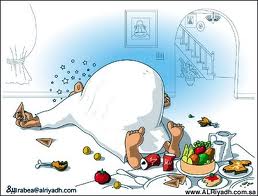 By Obaid H. Siddiqui
Most Muslims, when asked about the month of Ramadan, will usually speak to the spiritual benefits to be attained: getting closer to God, cleansing the soul, sharing time with loved ones, etc. These are all desirable and viable outcomes of observing the holiest month for Muslims. Indeed, Ramadan is about instilling God-consciousness (taqwa in Arabic) in the believer – an annual exercise reminding us to play nice and be good because God is all-aware of what we do.
Muslims throughout the world strive to reach this goal through patient devotion and worship practices. However, the road to enlightenment during this month-long journey isn’t always paved for safe travel. Very few Muslims will discuss the less savory side effects of observing Ramadan. Let me clue you in on a few.
Bad Breath and Hungry Eyes
Not being able to place anything in your mouth for 12 or more hours doesn’t exactly keep your breath fresh. On top of that, imagine the last thing you had in your mouth was some greasy fried amorphous blob, a glass of milk, or an onion stuffed with garlic. (OK, so no one would actually eat the last one, but that’s what most Indo-Pakistani Muslims’ houses smell like.) By not introducing new flavors and scents into the stale warmth of your mouth, a stagnant, toxic stank incubates within your jowls, creating a vapor of lethal toxicity that when released is capable of singeing the eyebrows of innocent bystanders.
If you’re around a fasting Muslim, keep your distance. As for hungry eyes, by no means am I referring to Eric Carmen’s hit from the ‘80’s. (Think Dirty Dancing. Actually, if you’re a fasting Muslim, don’t think of that at all.) I refer to that mile-long, off in the distance, unblinking stare that spontaneously appears on the face of a fasting Muslim. If you witness this, that means the person has stopped listening to you and is longing for the taste of anything – fantasizing about feta cheese and dark chocolate, together. In a bowl of mustard. With pickles.
Zombification
Zombie: A being of the night bent on feeding its most primal hunger. A fasting Muslim: A being of the night heaven-bent on feeding its most primal hunger.
In other words, try not eating all day, stuffing yourself late at night, standing and prostrating in prayer for an hour or so afterward, waking up at 4:15 a.m. to stuff food in your face before the morning prayer, laying down afterward for just enough time to get extremely tired but not to fall asleep, and then getting up and ready for work to do your job without eating or drinking. Now do that for 30 days.
One of the early stages of the zombification process is the morphing into a basic-needs creature. For instance, during Ramadan I give up all of my hopes and aspirations. Forget writing that great movie script, catching up with old friends, negotiating my personal debt ceiling, and planning my future endeavors. All I want to do is eat and sleep. I’m like a grown baby. With a beard. And heightened sexual desires.
I can’t focus on anything. Even the most mundane aspects of life like watching a cow graze, the rain fall, and a woman walk by make me hungry, tired, and horny – and not exactly in that order. Normally, a Muslim man is directed to “lower his gaze” in the presence of women as to not ogle and objectify them. So I lower my gaze. But even a woman’s toes can get me going during Ramadan. I basically am a walking deprivation chamber with my need for food, sleep, and sex amplified.
Even then, sexual drive is in a distant third place. If I were forced to choose between nourishing, mouth-watering food, reenergizing, peaceful sleep and a romp in the bed with the wifey; I’d immediately drop number three as an option every time. (I would like to apologize to my future wife. If you’re reading this, stop retro-stalking me and go make me a sandwich. Kidding. Kidding. No don’t cry. No, I do care about you. I don’t hate your mother. Look, we’ll talk about this later.) In my hierarchy of needs, food and sleep reign supreme!
Praying in Odd Places
Admittedly, this is nothing new. A lot of Muslims will stop what they’re doing at any point in the day to make their prayers on time, wherever they are. But some of us are more inclined to do so, on the spot during Ramadan. Problem is, we don’t always plan accordingly. (We haven’t eaten all day, for God’s sake. No, literally, for God’s sake.)
For example, last Ramadan, my close friend and I prayed Maghreb (the prayer right after sunset) in the concourse of Lincoln Financial Field in Philadelphia before a U.S.-Mexico soccer game. There were at least 20,000 people swarming around us. Nationalistic chants were drowned out by loud club music, cheering fans, and men on microphones trying to coax passersby — in Spanish — to stop at their booth. Add in a handful of people running around in Mexican wrestling masks, various beautiful women who could not afford to buy enough clothing to cover their bodies, and concrete stained by years of spit, beer, and blood — and you have the hardest place to pray this side of a Tea Party swinger’s brothel. (Not that I’ve done that, plan to do that, or that one even exists.)
Social Awkwardness
Most of us (in the U.S.) work and share a large portion of our day with non-Muslims. When it comes to fasting Muslims in the workplace, two particularly annoying types ruin it for the rest of us. On one end of the spectrum, there’s the person who lets all non-Muslims around her know she is fasting at every opportune moment. On the other end is the one who goes to extraordinary lengths to avoid explaining the situation to her co-workers.
The former is a jerk, a Ramadan Nazi. She wants everyone to know the struggle she goes through; mentions that although a sip of this or a taste of that is all she wants, but God won’t let her do so. She uses her arsenal of eye-rolls, impatient sighs, and a host of other nonverbal tactics to enforce a no-food zone in her immediate proximity, sanctioning others from eating lunch or enjoying a drink in comfort.
The latter, usually scared of being judged by others, tries to fast on the down-low — a Ramadan Ninja. This timid, almost-embarrassed-to-be-Muslim faster tends to come up with unrelated reasons for why she’s not eating: I’m not hungry, I don’t have money on me, I’m on a diet, etc.
This person avoids the Ramadan conversation as much as she avoids food during Ramadan. By day 11, she’s run out of good excuses and paints herself into a corner with more intricate, complicated lies. By day 17, she has ringworm. By day 22, she’s trying to make weight for an MMA bout against Cristiane “Cyborg” Santos. By day 29, no one cares that she’s not eating – and although her gums are bleeding, she’s smiling inside for making it through another Ramadan under the radar.
Both types make Ramadan socially awkward for everyone else around them.
 Weight Gain
Not eating all day and having your stomach shrink in size is usually an effective way to shed a few pounds. Yet, many Muslims gain weight during Ramadan. Why? We become fat morons who stuff our faces senseless with the unhealthiest foods possible. There’s no better way to get in touch with your spiritual side then by eating yourself into a carb coma. Everything we consume is fried, breaded, greasy, or abnormally sweet. The craving for empty calories and saturated fats infects your decision-making process.
You start making odd demands: “I want French fries ON my slice of pizza.” You get creative in how you can cram the most food inside of you: “If I let the ice cream melt, I can use it as a drink to wash down my cheesesteak!”
It’s supposed to be a month of simplicity. The traditional food for breaking one’s fast is a date. It’s a sweet, refreshing fruit that is light, yet filling. But when you deep-fry it and cover it in bleu cheese? Now we’re talking!
Dealing With People You Hate, but Must Socialize With
During Ramadan, people look forward to breaking fast with family and members of the community, thereby sharing the blessed month with those around them. Like the six-year-old who keeps running around the masjid like a rabid dog, or that one uncle who drops pieces of his samosa and rice all over the masjid floor that everyone will be praying on and refuses to acknowledge his littering. (Ever had a cold piece of greasy, orange rice embedded in your forehead after getting up from praying? Yeah, it’s not pleasant.)
Don’t forget that aunty with the bad breath who keeps counseling you on why you chose the wrong profession and should have been a doctor, or that one dude who took way too many kebobs and naan from the tray, forcing everyone after him to ration out their dinner. These are the people you avoid like the plague during every other month, yet during Ramadan you are forced to peacefully share the same space as them.
But Here’s the Silver Lining
Of course, in the grand scheme of things, the above inconveniences are miniscule obstacles when compared to the vast gains in spirit, brotherhood, and shared understanding that most Muslims reach at the end of the month. It is a beautiful time for reflection, prayer, and communal outreach. But if you approach a Muslim to ask him about Ramadan, and he explains it as a calming spiritual retreat into one’s self, his bad breath, hungry eyes, zombie posture, and ease of irritability will paint the picture a little more accurately.
And if you’re a woman, for God’s sake, please make sure you’re wearing socks.
Obaid H. Siddiqui is a writer and journalist based in Philadelphia. He is a contributor to the anthology “All-American: 45 American Men on Being Muslim.” Photo courtesy of Alriyadh.com
This piece is part of our ongoing series on Ramadan, featuring reflections, stories, and articles from Muslims and non-Muslims on their Ramadan experiences. Keep checking altmuslim for new pieces throughout Ramadan.

Next Post

August 13, 2012 Ramadan in Solitary
Browse Our Archives
Select a Category 2012 Elections 30 Dayd 30 Writers (2017) 30 Days 30 Writers 30 Days 30 Writers (2015) 30 Days 30 Writers (2016) 30 Days 30 Writers (2018) 30 Days 30 Writers 2017 Ali Asadullah Ali Eteraz Alper Bilgili Arthur Richards Asides Asma Uddin Black History Month Briefings Charles Turner Commentary Cyrus McGoldrick Eman H Aly Fatimah Popal Hajj Hajj and Dhul Hijjah Hesham Hassaballa Hisham Hellyer Ibrahim Abusharif Inas Younis Irfan Yusuf Jalal Baig Junaid Afeef Laila Alawa Laila Alwala Mas'ood Cajee Muqtedar Khan Nakia Jackson Newsmakers Parvez Ahmed Podcasts Rabia Chaudry Rafia Zakaria Ramadan Reviews Safiyyah Ally Saud Inam Shahed Amanullah Svend White The Opinionated Oncologist Visions Wajahat Ali Zahed Amanullah Zahir Janmohamed Zainab Khan
Select a Month November 2018 October 2018 September 2018 August 2018 July 2018 June 2018 May 2018 April 2018 March 2018 February 2018 January 2018 December 2017 November 2017 October 2017 September 2017 August 2017 July 2017 June 2017 May 2017 April 2017 March 2017 February 2017 January 2017 December 2016 November 2016 October 2016 September 2016 August 2016 July 2016 June 2016 May 2016 April 2016 March 2016 February 2016 January 2016 December 2015 November 2015 October 2015 September 2015 August 2015 July 2015 June 2015 May 2015 April 2015 March 2015 February 2015 January 2015 December 2014 November 2014 October 2014 September 2014 August 2014 July 2014 June 2014 May 2014 April 2014 March 2014 February 2014 January 2014 December 2013 November 2013 October 2013 September 2013 August 2013 July 2013 June 2013 May 2013 April 2013 March 2013 February 2013 January 2013 December 2012 November 2012 October 2012 September 2012 August 2012 July 2012 June 2012 May 2012 April 2012 March 2012 February 2012 January 2012 December 2011 November 2011 October 2011 September 2011 August 2011 July 2011 June 2011 May 2011 April 2011 March 2011 February 2011 January 2011 December 2010 November 2010 October 2010 September 2010 August 2010 July 2010 June 2010 May 2010 April 2010 March 2010 February 2010 January 2010 December 2009 November 2009 October 2009 September 2009 August 2009 July 2009 June 2009 May 2009 April 2009 March 2009 February 2009 January 2009 December 2008 November 2008 October 2008 September 2008 August 2008 July 2008 June 2008 May 2008 April 2008 March 2008 February 2008 January 2008 December 2007 November 2007 October 2007 September 2007 August 2007 July 2007 June 2007 May 2007 April 2007 March 2007 February 2007 January 2007 December 2006 November 2006 October 2006 September 2006 August 2006 July 2006 June 2006 May 2006 April 2006 March 2006 February 2006 January 2006 December 2005 November 2005 October 2005 September 2005 August 2005 July 2005 June 2005 May 2005 April 2005 March 2005 February 2005 January 2005 December 2004 November 2004 October 2004 September 2004 August 2004 July 2004 June 2004 May 2004 April 2004 March 2004 February 2004 January 2004 December 2003 November 2003 October 2003 September 2003 August 2003 July 2003 June 2003 May 2003 April 2003 March 2003 February 2003 January 2003 December 2002 November 2002 October 2002 September 2002 August 2002 July 2002 June 2002 May 2002 April 2002 March 2002
Follow Us!
TAKE THE
Religious Wisdom Quiz
Who said, "We ought to obey God rather than men"?
Select your answer to see how you score.
James John Paul Peter
Related posts from altmuslim

Mawlid 2018: Praise Songs from Around the World

Gaslighting, Anti-Jewish and Anti-Muslim Rhetoric: What to Know

How One Ottoman Reconciled Islamic Teachings with Darwin's...

As #TreeofLife Shows, Trump's Mainstreaming of Hate Puts...
TRENDING AT PATHEOS Muslim

25 Years Later: How Much Has Changed for...
As we approach the 25th anniversary of September 11th, I’ve found myself...

Podcast: Third Spaces & The Rise of Yemeni...
In the latest episode of The Artistic Foodies Podcast, hosts Abbas...

HalalFest Picks: Best 60 Halal Spots for Super...
Back in 2016, I came up with a list of 29...

Unity Is America’s Strength — Division Is Its...
by Hidayatullah Ahsan When Valentina Gomez, a Republican candidate for Congress in...

Zohran Mamdani and New York’s Fight Against Islamophobia
This past June, against all odds, Zohran Mamdani won the Democratic primary...

What the Fourth of July Means to a...
As we mark another Fourth of July, millions of Americans will celebrate...
view all Muslim blogs
Ad-Free & Subscriber Log-In Subscription Support
- About Us
- 2026 Calendar
- Videos
- Podcasts
- Library of World Religions
- Faith In Media Tracker
- Advertise With Us
- Write for Us
- Privacy Policy
- Terms of Service
- Do Not Sell My Data
- Contact Us
- Radiant Digital
- Manage Newsletter Subscriptions
- Unsubscribe From Notifications
- Sitemap
Copyright 2008-2026, Patheos. All rights reserved.
Subscription Support Ad-Free & Subscriber Log-In
Follow Patheos