
BuddhistCatholicContemplativeEvangelicalGeneral ChristianHinduJewishLatter-day SaintMuslimNew VisionsProgressive Christian
Beliefs
- Buddhist
- Catholic
- Contemplative
- Evangelical
- General Christian
- Hindu
- Jewish
- Latter-day Saint
- More Voices
- Muslim
- New Visions
- Pagan
- Progressive Christian
Topics
- Religion News
- Food and Religion
- Sports and Religion
- Religious Art
- Religious Music and Entertainment
- Religious Events
- History and Religion
- Style and Religion
- Politics and Religion
- Women in Religion
- Recreation Outdoors and Religion
- Business Finance and Religion
- Careers Workplace and Religion
- Education and Religion
- Family Parenting and Religion
- Health Fitness and Religion
- Home and Religion
- Relationships and Religion
- Technology and Religion
- Travel and Religion
Columnists
- Buddhist Columnists
- Business Finance and Religion Columnists
- Careers Workplace and Religion Columnists
- Catholic Columnists
- Contemplative Columnists
- Education and Religion Columnists
- Evangelists Columnists
- Family Parenting and Religion Columnists
- General Christian Columnists
- Health Fitness and Religion Columnists
- Hindu Columnists
- History and Religion Columnists
- Home and Religion Columnists
- Jewish Columnists
- More Voices Columnists
- Latter Day Columnists
- Muslim Columnists
- New Visions Columnists
- Nonreligious Columnists
- Pagan Columnists
- Politics and Religion Columnists
- Progressive Columnists
- Recreation Outdoors and Religion Columnists
- Relationships and Religion Columnists
- Religion News Columnists
- Religious Art Columnists
- Religious Events Columnists
- Religious Music and Entertainment Columnists
- Sports and Religion Columnists
- Style and Religion Columnists
- Technology and Religion Columnists
- Travel and Religion Columnists
- Women in Religion Columnists
Resource Library
- 2026 Calendar
- Library of World Religions
- The 100 Most Holy Places on Earth
- Patheos Answers
- Podcasts
- Videos
- Faith Leaders Database
- Anglican Episcopalian
- Bahai
- Baptist
- Buddhism
- Christianity
- Confucianism
- Eastern Orthodoxy
- Hinduism
- Holiness and Pentecostal
- ISKCON
- Islam
- Judaism
- Lutheran
- Methodist
- The Church of Jesus Christ of Latter-day Saints
- New Age
- Paganism
- Presbytarian and Reformed
- Protestantism
- Religion Behind the Scenes
- Roman Catholic
- Scientology
- Shia Islam
- Sikhism
- Sufism
- Sunni Islam
- Taoism
- Zen
- See all religions
Research Tools
 Ad-Free & Subscriber Log-In Subscription Support
Ad-Free & Subscriber Log-In Subscription Support
Follow Patheos 

- Trending:
- Forgiveness
- |
- Marriage
- |
- Consciousness
- |
- Death Penalty
- |
- Election
- |
- Halloween
 altmuslim
- Home
- Muslim
- Muslims Cannot Remain Silent on the Issue of Child Abuse
Muslims Cannot Remain Silent on the Issue of Child Abuse
Last updated on: June 1, 2012 at 7:41 pm by Guest Contributor
Muslims Cannot Remain Silent on the Issue of Child Abuse 2012-06-01T19:41:22-04:00 Guest Contributor
Patheos Explore the world's faith through different perspectives on religion and spirituality! Patheos has the views of the prevalent religions and spiritualities of the world.
 By Karla Kellam
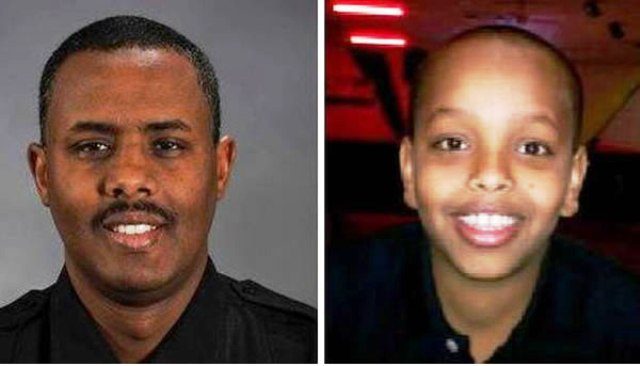
A little over a month ago, on April 17, a ten-year-old Muslim boy named Abdifatah Mohamud was brutally murdered in Buffalo, NY by his stepfather — beaten to death more than 70 times with a rolling pin. The stepfather admitted to ” … binding the boy’s hands, stuffing a sock into his mouth, duct taping the boy’s mouth and beating him to death” Abidifatah himself had made two frantic calls to 911 the year before he died, pleading for help, but no one arrived at his home to investigate or intervene. The day of his death, he ran to a neighbor’s home asking for refuge, but she urged him to return home.
One month prior to Abdifatah’s death, on March 19, six-year-old Khalil Wimes died at the hands of his parents. He was already gone when his parents brought him to Children’s Hospital of Philadelphia. He weighed a meager 29 pounds and bore countless scars across his face and body, markers of the beatings he had suffered for the past two years. Khalil’s two adult sisters admitted that the little boy spent the final months of his life ill, malnourished and in and out of school because his parents would refuse to feed him and would routinely hit him with anything they could use as a weapon — extension cords, belts, books or shoes. Extended family saw the bruised, frail boy and looked the other way.
Khalil had not always had been a terrorized child; he spent the first three years of his life with his loving foster mother who also happened to be his distant cousin. Authorities decided to return Khalil to his addicted parents — six other children had already been removed from the couple’s care because child services had confirmed abuse and neglect — as an attempt at family reunification. His foster mother had been knocking on adoption agencies’ doors for three years in a futile effort to regain custody of Khalil. And now she never will.
We cannot dismiss these stories with a pitying shake of the head because we, the Muslim community, share the burden of guilt. We have remained woefully silent on the issue of child abuse and family violence within our communities. Our Imams and Islamic publications pump out countless sermons and articles advising women on dress and couples on marriage, but there is a conspicuous silence when it comes to addressing child or spousal abuse. Perhaps we don’t know when or how to intervene or we fear that by acknowledging these crimes, we will bring negative attention to our communities and confirm the worst suspicions of non-Muslims — that ours is an inherently violent, harsh faith and society.
We often complain, and rightly so, that non-Muslims limit their examination of Islam to women’s dress, but we are guilty of doing the same. We too have ended the conversation, the self-reflection at issues of modesty or Muslim women’s right to work or choose her spouse, while critical problems, like child abuse, languish on the sidelines of community dialogue.
The first step to jumpstarting the conversation lies in acknowledging that there is, in fact, a problem, and we do this by gathering reliable statistics on child abuse in the Muslim community. We do know that roughly 1 in 58 children is abused in the United States — a far greater incidence than the epidemic autism rates which have made the news in recent years — but we now need equally sharp numbers on abuse in the Muslim community.
Roughly 53 percent of abused children in America are neglected, in other words, the parents fail to provide a minimum standard of care that meets the child’s physical and emotional needs. About 10 percent of abused children are physically abused by their parent/guardian. If we assume that there are 1.5 million Muslim American children — a conservative estimate by most standards — and we then apply the above nation-wide percentages to the Muslim population in America, we find that we have almost 26,000 Khalils and Abdifatahs in our community.
But, in truth, there are far more. If we look at the incidence of child abuse in Muslim-majority countries, our numbers are much higher than those in America, and because our cultural norms immigrate with us, it stands to reason that Muslim American children are abused at a higher rate than non-Muslim children in the U.S. The largest Muslim American community hails from South Asia where, according to a 2007 study carried out in India, two out of three Indian children are physically abused. The next largest group of Muslims to come to America is Arab. UNICEF estimates that at least half of Arab children, in other words, one in two, are the victims of physical abuse.
The third largest group, African-Americans, also suffer abuse at rates greater than the U.S. population as a whole. These three ethnic groups comprise 85 percent of all Muslim Americans and from the above percentages, we can infer that the children belonging to this huge slice of our community experience child abuse at rates far higher than the US average. We don’t have 26,000 Abdifatahs and Khalils in our community. We likely have as many as 750,000 Abdifatahs and Khalils.
With a number so staggeringly high, you can be sure that some of the children in your child’s Islamic school or Sunday school are being abused. To think otherwise, is to put your head in the sand. What can we do as a community? We must begin to re-examine the cultural norms that encourage, or at least sanction, disciplining one’s child to the point of physical abuse.
This conversation can take place via parenting seminars, anger management programs, and accountability/support groups — all of which are currently unavailable in our communities. And of course, while some of these classes can be Islamic in nature, others do not have to be. The bottom line is that we need to set up forums in which to talk frankly about this problem and provide resources that offer a solution or alternative.
The first action you can take after finishing this article is to find out if your Islamic center or mosque has a policy that demands that its members report child abuse in the community. Does your mosque have a plan in place to then help both the parents and the child? If not, it is time to pressure the center’s board for both a policy and an action plan. We all must report, without exception, every instance of suspected child abuse and domestic violence to the police and/or child protective services. Imams and other clergy are mandatory reporters in more than 26 states.
Abdifatah was beaten over 70 times on his head and body with blunt force by his stepfather. For all the potential Abdifatahs in our community, please call your Islamic center and ask the Imam to address child abuse in a sermon or seminar. Let’s see 70 khutbahs (sermons) on child abuse, 70 khutbahs on anger management and 70 khutbahs on family violence before we talk about hijab again.
Karla Kellam is a competitive intelligence and marketing consultant who works for Project Sakinah in social media. She reverted to Islam 15 years ago. Project Sakinah is a national initiative of Dar al Islam to stop family violence. We provide videos, workshops and training materials for both individuals and communities in order to helps them organize their own family violence action teams. In 2011, Project Sakinah spearheaded a national campaign “Gathering Community to Stop Domestic Violence” and reached thousands of Muslims all over the country. They also urged Imams to give sermons on domestic violence. This article originally appeared in Altmuslimah.
Previous Post

May 23, 2012
Expanding The Definition of Muslim Activism
Next Post

June 6, 2012 Conference Reveals Engaged Muslim Youth in America
Browse Our Archives
Select a Category 2012 Elections 30 Dayd 30 Writers (2017) 30 Days 30 Writers 30 Days 30 Writers (2015) 30 Days 30 Writers (2016) 30 Days 30 Writers (2018) 30 Days 30 Writers 2017 Ali Asadullah Ali Eteraz Alper Bilgili Arthur Richards Asides Asma Uddin Black History Month Briefings Charles Turner Commentary Cyrus McGoldrick Eman H Aly Fatimah Popal Hajj Hajj and Dhul Hijjah Hesham Hassaballa Hisham Hellyer Ibrahim Abusharif Inas Younis Irfan Yusuf Jalal Baig Junaid Afeef Laila Alawa Laila Alwala Mas'ood Cajee Muqtedar Khan Nakia Jackson Newsmakers Parvez Ahmed Podcasts Rabia Chaudry Rafia Zakaria Ramadan Reviews Safiyyah Ally Saud Inam Shahed Amanullah Svend White The Opinionated Oncologist Visions Wajahat Ali Zahed Amanullah Zahir Janmohamed Zainab Khan
Select a Month November 2018 October 2018 September 2018 August 2018 July 2018 June 2018 May 2018 April 2018 March 2018 February 2018 January 2018 December 2017 November 2017 October 2017 September 2017 August 2017 July 2017 June 2017 May 2017 April 2017 March 2017 February 2017 January 2017 December 2016 November 2016 October 2016 September 2016 August 2016 July 2016 June 2016 May 2016 April 2016 March 2016 February 2016 January 2016 December 2015 November 2015 October 2015 September 2015 August 2015 July 2015 June 2015 May 2015 April 2015 March 2015 February 2015 January 2015 December 2014 November 2014 October 2014 September 2014 August 2014 July 2014 June 2014 May 2014 April 2014 March 2014 February 2014 January 2014 December 2013 November 2013 October 2013 September 2013 August 2013 July 2013 June 2013 May 2013 April 2013 March 2013 February 2013 January 2013 December 2012 November 2012 October 2012 September 2012 August 2012 July 2012 June 2012 May 2012 April 2012 March 2012 February 2012 January 2012 December 2011 November 2011 October 2011 September 2011 August 2011 July 2011 June 2011 May 2011 April 2011 March 2011 February 2011 January 2011 December 2010 November 2010 October 2010 September 2010 August 2010 July 2010 June 2010 May 2010 April 2010 March 2010 February 2010 January 2010 December 2009 November 2009 October 2009 September 2009 August 2009 July 2009 June 2009 May 2009 April 2009 March 2009 February 2009 January 2009 December 2008 November 2008 October 2008 September 2008 August 2008 July 2008 June 2008 May 2008 April 2008 March 2008 February 2008 January 2008 December 2007 November 2007 October 2007 September 2007 August 2007 July 2007 June 2007 May 2007 April 2007 March 2007 February 2007 January 2007 December 2006 November 2006 October 2006 September 2006 August 2006 July 2006 June 2006 May 2006 April 2006 March 2006 February 2006 January 2006 December 2005 November 2005 October 2005 September 2005 August 2005 July 2005 June 2005 May 2005 April 2005 March 2005 February 2005 January 2005 December 2004 November 2004 October 2004 September 2004 August 2004 July 2004 June 2004 May 2004 April 2004 March 2004 February 2004 January 2004 December 2003 November 2003 October 2003 September 2003 August 2003 July 2003 June 2003 May 2003 April 2003 March 2003 February 2003 January 2003 December 2002 November 2002 October 2002 September 2002 August 2002 July 2002 June 2002 May 2002 April 2002 March 2002
Follow Us!
TAKE THE
Religious Wisdom Quiz
What river did the Israelites cross to enter the Promised Land?
Select your answer to see how you score.
Jordan River Red Sea Euphrates River Nile River
Related posts from altmuslim

Mawlid 2018: Praise Songs from Around the World

Gaslighting, Anti-Jewish and Anti-Muslim Rhetoric: What to Know

How One Ottoman Reconciled Islamic Teachings with Darwin's...

As #TreeofLife Shows, Trump's Mainstreaming of Hate Puts...
TRENDING AT PATHEOS Muslim

25 Years Later: How Much Has Changed for...
As we approach the 25th anniversary of September 11th, I’ve found myself...

Podcast: Third Spaces & The Rise of Yemeni...
In the latest episode of The Artistic Foodies Podcast, hosts Abbas...

HalalFest Picks: Best 60 Halal Spots for Super...
Back in 2016, I came up with a list of 29...

Unity Is America’s Strength — Division Is Its...
by Hidayatullah Ahsan When Valentina Gomez, a Republican candidate for Congress in...

Zohran Mamdani and New York’s Fight Against Islamophobia
This past June, against all odds, Zohran Mamdani won the Democratic primary...

What the Fourth of July Means to a...
As we mark another Fourth of July, millions of Americans will celebrate...
view all Muslim blogs
Ad-Free & Subscriber Log-In Subscription Support
- About Us
- 2026 Calendar
- Videos
- Podcasts
- Library of World Religions
- Faith In Media Tracker
- Advertise With Us
- Write for Us
- Privacy Policy
- Terms of Service
- Do Not Sell My Data
- Contact Us
- Radiant Digital
- Manage Newsletter Subscriptions
- Unsubscribe From Notifications
- Sitemap
Copyright 2008-2026, Patheos. All rights reserved.
Subscription Support Ad-Free & Subscriber Log-In
Follow Patheos