
BuddhistCatholicContemplativeEvangelicalGeneral ChristianHinduJewishLatter-day SaintMuslimNew VisionsProgressive Christian
Beliefs
- Buddhist
- Catholic
- Contemplative
- Evangelical
- General Christian
- Hindu
- Jewish
- Latter-day Saint
- More Voices
- Muslim
- New Visions
- Pagan
- Progressive Christian
Topics
- Religion News
- Food and Religion
- Sports and Religion
- Religious Art
- Religious Music and Entertainment
- Religious Events
- History and Religion
- Style and Religion
- Politics and Religion
- Women in Religion
- Recreation Outdoors and Religion
- Business Finance and Religion
- Careers Workplace and Religion
- Education and Religion
- Family Parenting and Religion
- Health Fitness and Religion
- Home and Religion
- Relationships and Religion
- Technology and Religion
- Travel and Religion
Columnists
- Buddhist Columnists
- Business Finance and Religion Columnists
- Careers Workplace and Religion Columnists
- Catholic Columnists
- Contemplative Columnists
- Education and Religion Columnists
- Evangelists Columnists
- Family Parenting and Religion Columnists
- General Christian Columnists
- Health Fitness and Religion Columnists
- Hindu Columnists
- History and Religion Columnists
- Home and Religion Columnists
- Jewish Columnists
- More Voices Columnists
- Latter Day Columnists
- Muslim Columnists
- New Visions Columnists
- Nonreligious Columnists
- Pagan Columnists
- Politics and Religion Columnists
- Progressive Columnists
- Recreation Outdoors and Religion Columnists
- Relationships and Religion Columnists
- Religion News Columnists
- Religious Art Columnists
- Religious Events Columnists
- Religious Music and Entertainment Columnists
- Sports and Religion Columnists
- Style and Religion Columnists
- Technology and Religion Columnists
- Travel and Religion Columnists
- Women in Religion Columnists
Resource Library
- 2026 Calendar
- Library of World Religions
- The 100 Most Holy Places on Earth
- Patheos Answers
- Podcasts
- Videos
- Faith Leaders Database
- Anglican Episcopalian
- Bahai
- Baptist
- Buddhism
- Christianity
- Confucianism
- Eastern Orthodoxy
- Hinduism
- Holiness and Pentecostal
- ISKCON
- Islam
- Judaism
- Lutheran
- Methodist
- The Church of Jesus Christ of Latter-day Saints
- New Age
- Paganism
- Presbytarian and Reformed
- Protestantism
- Religion Behind the Scenes
- Roman Catholic
- Scientology
- Shia Islam
- Sikhism
- Sufism
- Sunni Islam
- Taoism
- Zen
- See all religions
Research Tools
 Ad-Free & Subscriber Log-In Subscription Support
Follow Patheos 

- Trending:
- Advent
- |
- Forgiveness
- |
- Thanksgiving
- |
- Election
- |
- Seasonal Holidays
- |
- Marriage
 altmuslim
- Home
- Muslim
- Shaima Al-Awadi – Beyond Hoodies and Hijabs
Shaima Al-Awadi – Beyond Hoodies and Hijabs
Last updated on: April 12, 2012 at 5:35 am by Guest Contributor
Shaima Al-Awadi – Beyond Hoodies and Hijabs 2012-04-12T05:35:48-04:00 Guest Contributor
Patheos Explore the world's faith through different perspectives on religion and spirituality! Patheos has the views of the prevalent religions and spiritualities of the world.


The perplexing circumstances surrounding the brutal murder of a young mother, Shaima Alawadi, has had the Muslim American community abuzz recently. As her daughter purportedly found Alawadi’s body with a note stating, “go back to your country, you terrorist,” many rushed to label the incident as a ‘hate crime,’ even attempting to demonstrate a link between her death and that of Trayvon Martin, the 17 year old shot by neighborhood watchman, George Zimmerman.
Those attempting to link both cases claim both deaths were the result of racial or religious bigotry and point to the historical “culture of fear” surrounding African American men in this country that may have impacted Zimmerman’s attitudes and actions towards Martin. Since we also have a developing culture of fear surrounding Middle Eastern American and Muslim men it seems logical to these commentators to assume that Alawadi’s death was the result of someone else’s bigoted attitude towards Muslims.
Though the evidence for the culture of fear surrounding African American and Middle Eastern American men is well documented, attempting to exemplify this theory through linking these cases is potentially faulty on two counts – 1) it neglects to take into consideration Zimmerman’s history of violence as an indicator that he probably would have acted as he did regardless of Martin’s race, and 2) it neglects to take into consideration the questionable nature of Alawadi’s daughter’s claims and actions, as well as the increasingly likely possibility that Alawadi’s death was the result of a familial dispute.
The latter has turned into a major point of contention for the American Muslim community. If we acknowledge the likely possibility that Alawadi’s death was part of a familial dispute does that mean our valid claims of anti-Muslim attacks or hate crimes will not be taken seriously? And moreover, will we be expected, once again, to accept communal responsibility for a person committing violence who happens to share our faith?
The fact is, more than a third of American women murdered each year are killed by a person known intimately. This is regardless of race, ethnicity or religion. According to several governmental and organizational studies these numbers increase, however, to over fifty percent when we examine cases of immigrant women murdered.
On the other hand, according to an FBI report released last year, crimes of anti-Muslim bias account for about 13% of all religiously biased hate crimes. Furthermore, the Council on American Islamic Relations reports that in 2009, under 6% of its total complaints were allegations of verbal and physical threat or violence.
This means that even if we were to double the numbers for Islamophobic violence against Muslims, to account for the cases that may have gone unreported or been misclassified, statistically a Muslim woman of an immigrant family in the United States is more likely to be killed by a member of her family than to be attacked by a stranger for being Muslim.
This is not to correlate such a possibility to her religious beliefs or even to her being an immigrant, as violence on the domestic front can be due to a host of socioeconomic factors, cultural gender expectations, educational and language barriers, or even arbitrary familial disputes. This is not even to claim that such statistics prove that Alawadi’s death was definitively due to a member of her family. But it is to point out there are legitimate alternative possibilities that are more plausible than a random hate crime, so the question arises – why are we solely focused on proving a statistical anomaly, especially when there is increasing case evidence pointing to the contrary? And how will we, as a community, address alternative outcomes?
Larry Wilmore of The Daily Show facetiously pointed out in regards to the controversy surrounding Martin’s death, “Since the court of public opinion is the only one who would take [the case], everyone feels the need to jump in and condemn or defend George Zimmerman. To some, he was a victim of the media, to others, “Elmer Fudd hunting down black people — Somehow the death of a 17 year old got turned into a chance to score ideological points.”
We are doing the same with Alawadi. And we are doing a disservice to both.
Alawadi’s death hit home for a lot of Muslim Americans. The possibility of her death being the result of hatred towards our shared faith represents our worst fear. And in the current political climate of “anti-Shariah” legislations and governmental surveillance programs targeting Muslim communities it is no surprise that so many are on edge. But we need to move beyond catchy campaigns about “hoodies and hijabs” in order to discuss the racial and religious tensions that exist in our country in an appropriate context. There is no shortage of cases to direct those discussions. Exploiting a woman’s death, however, trying to prove a point with only selective evidence is self-defeating.
We need to be prepared to seek justice for Alawadi and Martin regardless of the circumstances surrounding their deaths. With Martin we know the killer and can demand justice be served in accordance with the law. But I fear that with Alawadi, if the theoretical ‘hate crime’ link between her and Martin cannot be maintained she will become just another woman, another statistic abandoned by the Muslim American civil-rights community.
The opinions expressed in this commentary are solely those of Nadia S. Mohammad. Nadia is a graduate of Loyola University Chicago School of Law and is an Associate Editor for AltMuslimah. This essay originally appeared on Altmuslimah.
Previous Post

April 5, 2012
The Golden Calf of Motherhood
Next Post

April 19, 2012 The Typecast Muslim Professional
Browse Our Archives
Select a Category 2012 Elections 30 Dayd 30 Writers (2017) 30 Days 30 Writers 30 Days 30 Writers (2015) 30 Days 30 Writers (2016) 30 Days 30 Writers (2018) 30 Days 30 Writers 2017 Ali Asadullah Ali Eteraz Alper Bilgili Arthur Richards Asides Asma Uddin Black History Month Briefings Charles Turner Commentary Cyrus McGoldrick Eman H Aly Fatimah Popal Hajj Hajj and Dhul Hijjah Hesham Hassaballa Hisham Hellyer Ibrahim Abusharif Inas Younis Irfan Yusuf Jalal Baig Junaid Afeef Laila Alawa Laila Alwala Mas'ood Cajee Muqtedar Khan Nakia Jackson Newsmakers Parvez Ahmed Podcasts Rabia Chaudry Rafia Zakaria Ramadan Reviews Safiyyah Ally Saud Inam Shahed Amanullah Svend White The Opinionated Oncologist Visions Wajahat Ali Zahed Amanullah Zahir Janmohamed Zainab Khan
Select a Month November 2018 October 2018 September 2018 August 2018 July 2018 June 2018 May 2018 April 2018 March 2018 February 2018 January 2018 December 2017 November 2017 October 2017 September 2017 August 2017 July 2017 June 2017 May 2017 April 2017 March 2017 February 2017 January 2017 December 2016 November 2016 October 2016 September 2016 August 2016 July 2016 June 2016 May 2016 April 2016 March 2016 February 2016 January 2016 December 2015 November 2015 October 2015 September 2015 August 2015 July 2015 June 2015 May 2015 April 2015 March 2015 February 2015 January 2015 December 2014 November 2014 October 2014 September 2014 August 2014 July 2014 June 2014 May 2014 April 2014 March 2014 February 2014 January 2014 December 2013 November 2013 October 2013 September 2013 August 2013 July 2013 June 2013 May 2013 April 2013 March 2013 February 2013 January 2013 December 2012 November 2012 October 2012 September 2012 August 2012 July 2012 June 2012 May 2012 April 2012 March 2012 February 2012 January 2012 December 2011 November 2011 October 2011 September 2011 August 2011 July 2011 June 2011 May 2011 April 2011 March 2011 February 2011 January 2011 December 2010 November 2010 October 2010 September 2010 August 2010 July 2010 June 2010 May 2010 April 2010 March 2010 February 2010 January 2010 December 2009 November 2009 October 2009 September 2009 August 2009 July 2009 June 2009 May 2009 April 2009 March 2009 February 2009 January 2009 December 2008 November 2008 October 2008 September 2008 August 2008 July 2008 June 2008 May 2008 April 2008 March 2008 February 2008 January 2008 December 2007 November 2007 October 2007 September 2007 August 2007 July 2007 June 2007 May 2007 April 2007 March 2007 February 2007 January 2007 December 2006 November 2006 October 2006 September 2006 August 2006 July 2006 June 2006 May 2006 April 2006 March 2006 February 2006 January 2006 December 2005 November 2005 October 2005 September 2005 August 2005 July 2005 June 2005 May 2005 April 2005 March 2005 February 2005 January 2005 December 2004 November 2004 October 2004 September 2004 August 2004 July 2004 June 2004 May 2004 April 2004 March 2004 February 2004 January 2004 December 2003 November 2003 October 2003 September 2003 August 2003 July 2003 June 2003 May 2003 April 2003 March 2003 February 2003 January 2003 December 2002 November 2002 October 2002 September 2002 August 2002 July 2002 June 2002 May 2002 April 2002 March 2002
Follow Us!
TAKE THE
Religious Wisdom Quiz
What does Paul say about weakness in 2 Corinthians 12?
Select your answer to see how you score.
"Weakness leads to destruction." "The weak shall perish." "Avoid all weakness." "God’s power is made perfect in weakness."
Related posts from altmuslim
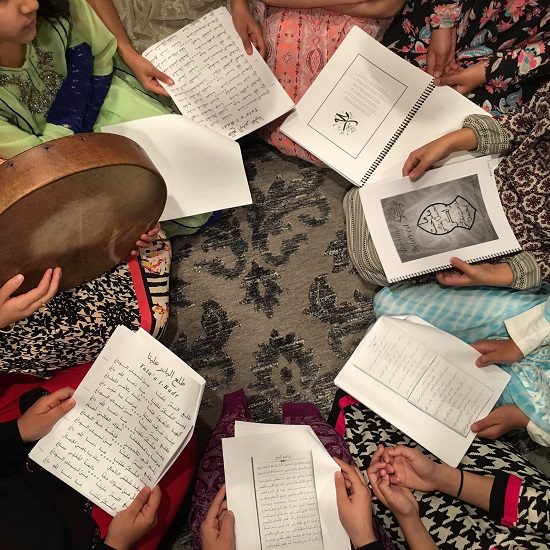
Mawlid 2018: Praise Songs from Around the World

Gaslighting, Anti-Jewish and Anti-Muslim Rhetoric: What to Know

How One Ottoman Reconciled Islamic Teachings with Darwin's...
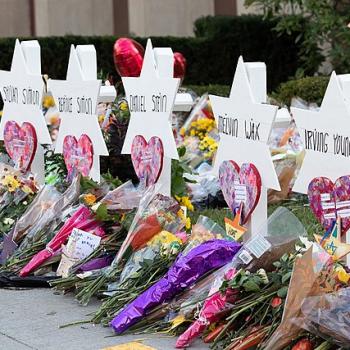
As #TreeofLife Shows, Trump's Mainstreaming of Hate Puts...
TRENDING AT PATHEOS Muslim

25 Years Later: How Much Has Changed for...
As we approach the 25th anniversary of September 11th, I’ve found myself...

Podcast: Third Spaces & The Rise of Yemeni...
In the latest episode of The Artistic Foodies Podcast, hosts Abbas...

HalalFest Picks: Best 60 Halal Spots for Super...
Back in 2016, I came up with a list of 29...

Unity Is America’s Strength — Division Is Its...
by Hidayatullah Ahsan When Valentina Gomez, a Republican candidate for Congress in...

Zohran Mamdani and New York’s Fight Against Islamophobia
This past June, against all odds, Zohran Mamdani won the Democratic primary...

What the Fourth of July Means to a...
As we mark another Fourth of July, millions of Americans will celebrate...
view all Muslim blogs
Ad-Free & Subscriber Log-In Subscription Support
- About Us
- 2026 Calendar
- Videos
- Podcasts
- Library of World Religions
- Faith In Media Tracker
- Advertise With Us
- Write for Us
- Privacy Policy
- Terms of Service
- Do Not Sell My Data
- Contact Us
- Radiant Digital
- Manage Newsletter Subscriptions
- Unsubscribe From Notifications
- Sitemap
Copyright 2008-2026, Patheos, part of the Radiant Digital network of media brands. All rights reserved.
Subscription Support Ad-Free & Subscriber Log-In
Follow Patheos