
BuddhistCatholicContemplativeEvangelicalGeneral ChristianHinduJewishLatter-day SaintMuslimNew VisionsProgressive Christian
Beliefs
- Buddhist
- Catholic
- Contemplative
- Evangelical
- General Christian
- Hindu
- Jewish
- Latter-day Saint
- More Voices
- Muslim
- New Visions
- Pagan
- Progressive Christian
Topics
- Religion News
- Food and Religion
- Sports and Religion
- Religious Art
- Religious Music and Entertainment
- Religious Events
- History and Religion
- Style and Religion
- Politics and Religion
- Women in Religion
- Recreation Outdoors and Religion
- Business Finance and Religion
- Careers Workplace and Religion
- Education and Religion
- Family Parenting and Religion
- Health Fitness and Religion
- Home and Religion
- Relationships and Religion
- Technology and Religion
- Travel and Religion
Columnists
- Buddhist Columnists
- Business Finance and Religion Columnists
- Careers Workplace and Religion Columnists
- Catholic Columnists
- Contemplative Columnists
- Education and Religion Columnists
- Evangelists Columnists
- Family Parenting and Religion Columnists
- General Christian Columnists
- Health Fitness and Religion Columnists
- Hindu Columnists
- History and Religion Columnists
- Home and Religion Columnists
- Jewish Columnists
- More Voices Columnists
- Latter Day Columnists
- Muslim Columnists
- New Visions Columnists
- Nonreligious Columnists
- Pagan Columnists
- Politics and Religion Columnists
- Progressive Columnists
- Recreation Outdoors and Religion Columnists
- Relationships and Religion Columnists
- Religion News Columnists
- Religious Art Columnists
- Religious Events Columnists
- Religious Music and Entertainment Columnists
- Sports and Religion Columnists
- Style and Religion Columnists
- Technology and Religion Columnists
- Travel and Religion Columnists
- Women in Religion Columnists
Resource Library
- 2026 Calendar
- Library of World Religions
- The 100 Most Holy Places on Earth
- Patheos Answers
- Podcasts
- Videos
- Faith Leaders Database
- Anglican Episcopalian
- Bahai
- Baptist
- Buddhism
- Christianity
- Confucianism
- Eastern Orthodoxy
- Hinduism
- Holiness and Pentecostal
- ISKCON
- Islam
- Judaism
- Lutheran
- Methodist
- The Church of Jesus Christ of Latter-day Saints
- New Age
- Paganism
- Presbytarian and Reformed
- Protestantism
- Religion Behind the Scenes
- Roman Catholic
- Scientology
- Shia Islam
- Sikhism
- Sufism
- Sunni Islam
- Taoism
- Zen
- See all religions
Research Tools
 Ad-Free & Subscriber Log-In Subscription Support
Ad-Free & Subscriber Log-In Subscription Support
Follow Patheos 

- Trending:
- Forgiveness
- |
- Marriage
- |
- Consciousness
- |
- Death Penalty
- |
- Election
- |
- Halloween
 altmuslim
- Home
- Muslim
- ‘Homeland,’ Islam and the Battle Within
‘Homeland,’ Islam and the Battle Within
Last updated on: March 28, 2012 at 9:24 pm by Dilshad Ali
‘Homeland,’ Islam and the Battle Within 2012-03-28T21:24:47-04:00 Dilshad Ali
Patheos Explore the world's faith through different perspectives on religion and spirituality! Patheos has the views of the prevalent religions and spiritualities of the world.
 By Daniel Tutt
When television portrays the war on terrorism, more than 67 percent of the time, the enemy is white, according to a recent study by the Norman Lear Center at USC. At first glance this seems odd. Isn’t the war on terror a war against extremist Muslims? Aren’t Muslims mostly brown-skinned?
The war on terrorism, both on television, and in real life, defies our immediate assumptions. The
Washington Post recently revealed that a Muslim convert is heading up the CIA’s counter terrorism unit and that this person (his identity is anonymous) was instrumental in hunting down Osama
bin-Laden.
But, in our popular imagination, we don’t like our enemies to be complex, and the genre of terrorism television knows this all too well.
The grandiose black-and-white good vs. evil plot lines seem to hit a more visceral tone. But the latest hit TV series on terrorism, Showtime’s Homeland, presents a picture of terrorism and the role of Islam within the war on terror that not only feels like it’s lifting from the daily news feed, but it taps into the complexity of our present moment, urging us to look deeply at who our enemy really is.
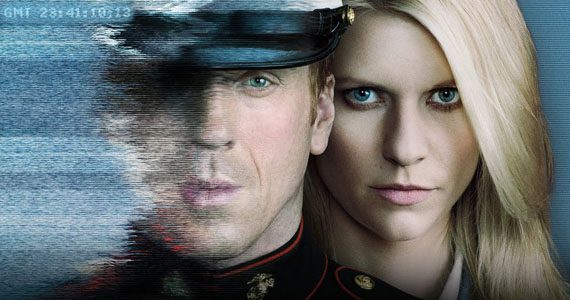
At first glance, the show’s story line seems difficult to base an entire series around: A Marine returns home, traumatized after being held captive for eight years in Iraq by an Al Qaeda cell, only to be faced with the pressure of serving as the poster boy for military heroism. Sargent Nick Brody (played by Damian Lewis) is deeply conflicted about his time in Iraq, and for half the first season he is surveilled by CIA Agent Carrie Matheson (played by Claire Danes) and her mentor at the CIA, Saul Berenson, played by Mandy Patinkin. Following an insider tip and a whole lot of intuition, Mattheson goes to any length to prove that Brody is not the war hero celebrity the media is making him out to be, but has actually been secretly turned to Al Qaeda’s ideology while in captivity in Iraq.
Mattheson suffers from a mental disorder, which she keeps secret to the CIA, and blames herself for 9/11. Since returning from Iraq, where she was also traumatized, her singular obsession is to take down Abu
Nazir, Al Qaeda’s most elusive international terrorist. Like her television predecessor Keifer Sutherland’s Jack Bauer in 24, Mattheson is forced to cross ethical lines frequently. But her superiors support her cowboy ways, earning her the ability to almost mystically predict Abu Nazir’s next move. The implicit message of both Homeland and 24 (which earned its stripes as the quintessential post-9/11 terrorism fighting show) is thus similar: Only through transgressing the institutional inertia of the status quo and going above the law, can the bad guys be brought to justice in the war on terror.
The creators and co-producers of Homeland, Howard Gordon and Alex Gansa, have based the show off of an Israeli series Hatufim (English translation: Abducted), created by Gideon Raff. Gordon also produced “24.” But of course, the genre that Homeland taps into goes back much farther than 24. The real origin of Homeland is in the Cold War era film, The Manchurian Candidate, where an American veteran of the Korean War returns home having been brainwashed and subconsciously lured into serving as a secret puppet of the Communists.
Although, as Lewis points out in a recent interview, Homeland is different than The Manchurian Candidate in one primary way: Sargent Brody is not “brainwashed” by the enemy and is in continuously conflicted and ambivalent about his allegiance to Abu Nazir and Al Qaeda.
Homeland revolves around two points of tension: Has Abu Nazir really turned Brody to his cause while he was in captivity, or are Mattheson’s premonitions totally off base?
 The second point of tension revolves around Brody’s conversion to Islam. Lewis claims that Brody’s conversion to Islam serves as the most important detail of the show. In the same interview as cited above, Lewis commented: “In a time of need, I had actually chosen to be a Muslim. We did discuss the immediate assumptions about that: ‘Oh my God, this guy wants to blow us up. Why else would a Marine have converted?’”
Yet Homeland mostly separates Brody’s conversion to Islam from Abu Nazir’s wicked Al Qaeda ideology. By presenting another religious minority through the lapsed Jewish character of Saul Berenson, the show throws even more grey matter into the religious dimension to terrorism. When Brody admits to Carrie that he has converted to Islam, he says, “Well, they didn’t have many Bibles over there. Don’t you think you’d turn to religion if you had to face what I faced?”
All of this goes to imply that the writers desired to make a clear point: Islam is not necessarily synonymous with terrorism. This nuance defies counter terrorism theories such as the conveyor belt theory of radicalization that argues identification with Islam solidifies ones commitment to the radical cause.
Another major facet of our conventional understanding of the war on terrorism is challenged in Homeland, and this point may be the most significant and radical of all. The ideology of the enemy is not a monochrome, black-and-white view of the world. Abu Nazir is almost made into a human at times. Like bin Laden, Nazir favors large scale attacks and dramatic acts of terror, yet by the end of season one, we are left to assume that part of his strategy with Brody (we learn that Brody is indeed working for Nazir by the end of season one) is to infiltrate the inner halls of power by propping Brody up to serve as a congressman. This represents not simply a desire to extinguish all Americans wherever you find them, but a long term strategy.
Nazir’s character represents a post Osama bin Laden Al Qaeda. He is one part Anwar Awlaki, in his understanding of American culture, and one part Osama bin Laden in his grandiosity of acts and smooth operational leadership. We see him largely through the gaze of Sargent Brody, and we find that Brody’s primary motivation for following Nazir is because he witnessed the murder of Nazir’s son, Iesa (Arabic
for Jesus). Iesa’s murder by secret drone strike serves as the primary motivation for Brody’s allegiance to Nazir. This sounds all too familiar, think the Times Square bomber, Faizal Shahazad, who admitted to being radicalized in large part out of anger and frustration over drone strikes that were killing
Muslims in South Asia.
Brody cites the strike on Iesa’s school, which he witnessed, as the primary motivation for his failed suicide mission in the last episode of season one. His horror over the memory of the attack recurs in nightmares, and Nazir exploits Brody’s anger over the cover up of the attack that killed his son Iesa. No one knows about the attack, and somehow Nazir and Brody know that the vice president is responsible for keeping it secret, which is why he becomes their primary target.
Brody is thus painted more as a political radical than a religious zealot. With this crucial nuance, the writers of Homeland have hit on one of the more neglected truths of radicalization in the name of Islam — that is most often looks more like a political movement than a religious movement. This is a change in the framing of the enemy that challenges us to re-conceptualize the nature of this enemy and the deep
internal motivations behind terrorism.
Beyond Brody’s temptation with the cause of Nazir and the pain over Iesa’s death, we discover an even deeper driver to his radical cause in the second to last episode. In prep for a major act that is revealed in the last episode, Brody brings the family to Gettysburg, where he recounts in passionate detail the heroism of an everyday high school teacher who led his men into a suicide charge on the enemy, which turned the favor of the Union forces in the larger battle. Channeling such an iconic American battle as
Gettysburg for the cause of Al Qaeda seems far-fetched, but the writers are up to something more than that.
The implicit message presented is that the modern warrior lacks access to an authentic cause that he can attach his desire for something greater than himself to. Critics might call this relativistic, as in, how can
one ever find the cause of Al Qaeda just, but I think that misses a more complex point. Brody’s battle is also within. Homeland resonates with all of us because Brody is a lot like all of us, searching for something bigger than ourselves.
Like Plato reminds us, we must be careful out there, because everyone we meet is fighting a hard battle.
A version of this article appeared on Huffington Post.
Daniel Tutt is an activist, writer, and Ph.D. candidate in philosophy and communication at the European Graduate School. His research and activism concentrates on Muslims in America, Islamophobia, and inter-religious dialogue. In philosophy, he works in the continental and psychoanalytic traditions where his work looks at ethics and political theory
Previous Post

March 17, 2012
Wajahat Ali's All-American Khutbah (Sermon)
Next Post

April 5, 2012 The Golden Calf of Motherhood
Browse Our Archives
Select a Category 2012 Elections 30 Dayd 30 Writers (2017) 30 Days 30 Writers 30 Days 30 Writers (2015) 30 Days 30 Writers (2016) 30 Days 30 Writers (2018) 30 Days 30 Writers 2017 Ali Asadullah Ali Eteraz Alper Bilgili Arthur Richards Asides Asma Uddin Black History Month Briefings Charles Turner Commentary Cyrus McGoldrick Eman H Aly Fatimah Popal Hajj Hajj and Dhul Hijjah Hesham Hassaballa Hisham Hellyer Ibrahim Abusharif Inas Younis Irfan Yusuf Jalal Baig Junaid Afeef Laila Alawa Laila Alwala Mas'ood Cajee Muqtedar Khan Nakia Jackson Newsmakers Parvez Ahmed Podcasts Rabia Chaudry Rafia Zakaria Ramadan Reviews Safiyyah Ally Saud Inam Shahed Amanullah Svend White The Opinionated Oncologist Visions Wajahat Ali Zahed Amanullah Zahir Janmohamed Zainab Khan
Select a Month November 2018 October 2018 September 2018 August 2018 July 2018 June 2018 May 2018 April 2018 March 2018 February 2018 January 2018 December 2017 November 2017 October 2017 September 2017 August 2017 July 2017 June 2017 May 2017 April 2017 March 2017 February 2017 January 2017 December 2016 November 2016 October 2016 September 2016 August 2016 July 2016 June 2016 May 2016 April 2016 March 2016 February 2016 January 2016 December 2015 November 2015 October 2015 September 2015 August 2015 July 2015 June 2015 May 2015 April 2015 March 2015 February 2015 January 2015 December 2014 November 2014 October 2014 September 2014 August 2014 July 2014 June 2014 May 2014 April 2014 March 2014 February 2014 January 2014 December 2013 November 2013 October 2013 September 2013 August 2013 July 2013 June 2013 May 2013 April 2013 March 2013 February 2013 January 2013 December 2012 November 2012 October 2012 September 2012 August 2012 July 2012 June 2012 May 2012 April 2012 March 2012 February 2012 January 2012 December 2011 November 2011 October 2011 September 2011 August 2011 July 2011 June 2011 May 2011 April 2011 March 2011 February 2011 January 2011 December 2010 November 2010 October 2010 September 2010 August 2010 July 2010 June 2010 May 2010 April 2010 March 2010 February 2010 January 2010 December 2009 November 2009 October 2009 September 2009 August 2009 July 2009 June 2009 May 2009 April 2009 March 2009 February 2009 January 2009 December 2008 November 2008 October 2008 September 2008 August 2008 July 2008 June 2008 May 2008 April 2008 March 2008 February 2008 January 2008 December 2007 November 2007 October 2007 September 2007 August 2007 July 2007 June 2007 May 2007 April 2007 March 2007 February 2007 January 2007 December 2006 November 2006 October 2006 September 2006 August 2006 July 2006 June 2006 May 2006 April 2006 March 2006 February 2006 January 2006 December 2005 November 2005 October 2005 September 2005 August 2005 July 2005 June 2005 May 2005 April 2005 March 2005 February 2005 January 2005 December 2004 November 2004 October 2004 September 2004 August 2004 July 2004 June 2004 May 2004 April 2004 March 2004 February 2004 January 2004 December 2003 November 2003 October 2003 September 2003 August 2003 July 2003 June 2003 May 2003 April 2003 March 2003 February 2003 January 2003 December 2002 November 2002 October 2002 September 2002 August 2002 July 2002 June 2002 May 2002 April 2002 March 2002
Follow Us!
TAKE THE
Religious Wisdom Quiz
According to Jesus, what defiles a person?
Select your answer to see how you score.
Clothing Food eaten What comes out of the heart Money
Related posts from altmuslim

Mawlid 2018: Praise Songs from Around the World

Gaslighting, Anti-Jewish and Anti-Muslim Rhetoric: What to Know

How One Ottoman Reconciled Islamic Teachings with Darwin's...

As #TreeofLife Shows, Trump's Mainstreaming of Hate Puts...
TRENDING AT PATHEOS Muslim

25 Years Later: How Much Has Changed for...
As we approach the 25th anniversary of September 11th, I’ve found myself...

Podcast: Third Spaces & The Rise of Yemeni...
In the latest episode of The Artistic Foodies Podcast, hosts Abbas...

HalalFest Picks: Best 60 Halal Spots for Super...
Back in 2016, I came up with a list of 29...

Unity Is America’s Strength — Division Is Its...
by Hidayatullah Ahsan When Valentina Gomez, a Republican candidate for Congress in...

Zohran Mamdani and New York’s Fight Against Islamophobia
This past June, against all odds, Zohran Mamdani won the Democratic primary...

What the Fourth of July Means to a...
As we mark another Fourth of July, millions of Americans will celebrate...
view all Muslim blogs
Ad-Free & Subscriber Log-In Subscription Support
- About Us
- 2026 Calendar
- Videos
- Podcasts
- Library of World Religions
- Faith In Media Tracker
- Advertise With Us
- Write for Us
- Privacy Policy
- Terms of Service
- Do Not Sell My Data
- Contact Us
- Radiant Digital
- Manage Newsletter Subscriptions
- Unsubscribe From Notifications
- Sitemap
Copyright 2008-2026, Patheos. All rights reserved.
Subscription Support Ad-Free & Subscriber Log-In
Follow Patheos