
BuddhistCatholicContemplativeEvangelicalGeneral ChristianHinduJewishLatter-day SaintMuslimNew VisionsProgressive Christian
Beliefs
- Buddhist
- Catholic
- Contemplative
- Evangelical
- General Christian
- Hindu
- Jewish
- Latter-day Saint
- More Voices
- Muslim
- New Visions
- Pagan
- Progressive Christian
Topics
- Religion News
- Food and Religion
- Sports and Religion
- Religious Art
- Religious Music and Entertainment
- Religious Events
- History and Religion
- Style and Religion
- Politics and Religion
- Women in Religion
- Recreation Outdoors and Religion
- Business Finance and Religion
- Careers Workplace and Religion
- Education and Religion
- Family Parenting and Religion
- Health Fitness and Religion
- Home and Religion
- Relationships and Religion
- Technology and Religion
- Travel and Religion
Columnists
- Buddhist Columnists
- Business Finance and Religion Columnists
- Careers Workplace and Religion Columnists
- Catholic Columnists
- Contemplative Columnists
- Education and Religion Columnists
- Evangelists Columnists
- Family Parenting and Religion Columnists
- General Christian Columnists
- Health Fitness and Religion Columnists
- Hindu Columnists
- History and Religion Columnists
- Home and Religion Columnists
- Jewish Columnists
- More Voices Columnists
- Latter Day Columnists
- Muslim Columnists
- New Visions Columnists
- Nonreligious Columnists
- Pagan Columnists
- Politics and Religion Columnists
- Progressive Columnists
- Recreation Outdoors and Religion Columnists
- Relationships and Religion Columnists
- Religion News Columnists
- Religious Art Columnists
- Religious Events Columnists
- Religious Music and Entertainment Columnists
- Sports and Religion Columnists
- Style and Religion Columnists
- Technology and Religion Columnists
- Travel and Religion Columnists
- Women in Religion Columnists
Resource Library
- 2026 Calendar
- Library of World Religions
- The 100 Most Holy Places on Earth
- Patheos Answers
- Podcasts
- Videos
- Faith Leaders Database
- Anglican Episcopalian
- Bahai
- Baptist
- Buddhism
- Christianity
- Confucianism
- Eastern Orthodoxy
- Hinduism
- Holiness and Pentecostal
- ISKCON
- Islam
- Judaism
- Lutheran
- Methodist
- The Church of Jesus Christ of Latter-day Saints
- New Age
- Paganism
- Presbytarian and Reformed
- Protestantism
- Religion Behind the Scenes
- Roman Catholic
- Scientology
- Shia Islam
- Sikhism
- Sufism
- Sunni Islam
- Taoism
- Zen
- See all religions
Research Tools
 Ad-Free & Subscriber Log-In Subscription Support
Follow Patheos 

- Trending:
- Advent
- |
- Forgiveness
- |
- Thanksgiving
- |
- Election
- |
- Seasonal Holidays
- |
- Marriage
 altmuslim
- Home
- Muslim
- Pakistan's Hudood Ordinance: Veils and jails
Pakistan's Hudood Ordinance: Veils and jails
Last updated on: September 1, 2006 at 9:50 pm by Rafia Zakaria
Pakistan's Hudood Ordinance: Veils and jails 2006-09-01T21:50:00-04:00 Rafia Zakaria
Patheos Explore the world's faith through different perspectives on religion and spirituality! Patheos has the views of the prevalent religions and spiritualities of the world.

Jailed for what?
On February 22, 1979, the then President of Pakistan General Zia-ul-Haq began his infamous “Islamisation” campaign and promulgated four separate ordinances collectively known as the Hudood Ordinances. The Hudood Ordinances (plural for the singular Hadd, meaning limits), which cover theft, adultery, rape, and bearing false witness, amended Pakistan’s laws to make sexual offences crimes against the state. The number of women in Pakistan’s prisons swelled from 79 on the date of the promulgation to several thousand in the months and years that followed.
In the decades since, the Hudood Ordinances have become convenient tools for law enforcement bodies to intrude in the lives of citizens and intimidate and harass those they want to target. In a patriarchal society rife with misogynistic feudal and tribal practices, the laws have become convenient ways to subjugate an already oppressed female population. Scores of charges have been filed and thousands of women imprisoned on concocted charges of illicit sexual relations. Their lives and reputations are destroyed by the resulting ostracism and stigma.
On July 7 this year, nearly 27 years after that fateful day which so drastically changed the lives of Pakistani women, President Pervez Musharraf, another General, promulgated the “Law Reforms Ordinance 2006” under which women prisoners on trial under the Hudood Ordinances became immediately eligible for bail. In the puffery and promises accompanying the announcement, General Musharraf’s Minister for Women and Youth Affairs declared that the Hudood Ordinances were “going to be done away with”.
Newspapers across the world lauded the General’s move, which promised the release of as many as 1,300 women from Pakistan’s jails. The Los Angeles Times celebrated Musharraf’s moderation in a laudatory piece entitled “Moderate Islam on the March” penned by none other than the otherwise unerringly critical Irshad Manji. The Christian Science Monitor called the General’s move “a progressive step” towards the “enlightened moderation” philosophy the General is so fond of touting as his guiding principle.
Nearly giddy in their attempt to report on a good news story from the Muslim world otherwise so grotesquely rid with wars, destruction and terrorist attacks, few Western reporters questioned the value of a temporary bail provision that left intact the source of the problem; the law itself was almost pristinely untouched. Even fewer questioned the viability of the proposed changes, which require DNA tests of all rape victims and suspects in a country that boasts only one DNA lab for a population of 162 million. Amid the heady talk of reform, it seemed that one General had finally mustered the courage to undo what another had so despotically stuffed down the throats of a subjugated polity. If one believed these optimistic appraisals by the international media, it seemed that the Damocles sword hanging over the heads of Pakistani women was on the verge of being lifted.
The celebrations, however, were premature. On July 17, a mere ten days after the initial announcement of the Law Reforms Act 2006, General Musharraf backtracked and declared that the Hudood Ordinances would be “amended” and not “repealed”. In an uncharacteristically deferential move designed to maintain the political mileage derived from the initial announcement of the release, the General asked the Council of Islamic Ideology to recommend changes that would “Islamise” the Hudood laws. The crafty terminology disguised the reality that a virtual bevy of commissions (Islamic and otherwise) had already declared the Hudood laws un-Islamic and contrary to Article 23 of Pakistan’s Constitution which guarantees each citizen equal rights regardless of gender. Indeed, the Council of Islamic Ideology itself has already recommended complete repeal of the Hudood Ordinances. A recent report issued by the council unequivocally declared that “the Hudood Ordinance does not derive itself from the Koran and Hadith” and that “partial amendments cannot bring it in accord of the Koran and Sunna.” Ultimately, Musharraf’s artful rhetoric and evasive deference aimed to disguise the fact that he who commands enough power unilaterally to add bail provisions to a law without consultation with either the judiciary or the legislature is hardly at the mercy of such councils and commissions if truly motivated to make groundbreaking changes.
Weighed on the scales of political gain, the Hudood Ordinances expose how Generals past and present have managed to use the regulation of female sexuality in the name of Islam to their strategic advantage. General Zia-ul-Haq employed his Islamisation measures to pander to the nation’s Islamists and please Saudi Arabian benefactors who filled the country’s coffers. Similarly, General Musharraf, by adding a bail provision to the Hudood Ordinances, calculatedly brought Western attention to his status as the moderate stalwart bravely battling Pakistan’s Islamists. When The New York Times reported the story under the headline “Pakistan’s Islamists oppose Musharraf’s move to relax Hudood Laws”, it was obvious that President Musharraf’s political spinners had scored a bulls-eye. It was, of course, no accident that General Musharraf’s machinations emerged at a time when the United States Congress was considering a $5.1 billion arms package for Pakistan.
In a testament to the meaninglessness of the bail provision introduced by Musharraf, several women granted bail through the Law Reforms Act 2006 refused to leave the prisons on bail because they feared being killed. As Anis Haroon of the Aurat Foundation, who has been battling the Hudood Ordinances since their inception, aptly summarised, “such half-hearted measures to change the law are not going to benefit anyone, 1,300 more women will go in the prisons unless the laws are changed. Women being released will go out to worse circumstances or to families who put them there in the first place. This law has been amended before and those changes have been useless, this ordinance has to be repealed.”
The plight of these women who refuse freedom rather than risk death exposes the wide and intricate web of discriminatory laws that hold Pakistani women firmly within their suffocating grasp. The most controversial zina (adultery and fornication) laws under the Hudood Ordinances are the zina bil jabr or rape laws which require the testimony of four adult male Muslim witnesses to the act of penetration, and which punish the rape victim for zina if the witnesses cannot be produced. At the same time, equally problematic is the fact that the same zina laws under Hudood also criminalise thousands of women who are merely accused of illicit sexual relations by irate family members, abusive husbands or even intrusive neighbours. Although wrongful accusations of zina are punishable by the qazf provision, human rights lawyers in Pakistan report that this is rarely used and cases are easily registered against women at the behest of family members or other enemies. According to Amna Buttar, president of the Asian American Network Against Abuse, research in Pakistan’s prisons shows that many of the women imprisoned under zina laws are single or widowed women living alone, young brides who invoke the anger of greedy in-laws for not bringing enough dowry or even elderly women whose husbands wish to get rid of them. In several cases, pimps also file zina charges against women who refuse to work for them after being sold into sexual slavery.
In addition to the Hudood laws themselves, the Qanun-e-Shahadat or law of testimony makes a woman’s testimony equal to half of a man and completely excludes female testimony in Hudood cases. Furthermore, the law of Qisas and Diyat privatises violent crimes and allows families to settle even murder cases by paying blood money. In eliminating the possibility of state prosecution, this law allows family members to kill women in the name of honour without any fear of criminal penalty against the fathers, brothers, sons or husbands who no longer want them alive. In the light of such institutionalised discrimination it is hardly surprising that women accused of zina choose to languish in prison rather than risk death.
Stubbornly ignoring the legitimisation of women’s subjugation through this collusion of discriminatory laws, crafty politicians like Musharraf adeptly spew tasty morsels of reformist rhetoric that do little to effect actual change. Beneath the overt political opportunism surrounding both the promulgation and the superficial amendment of the Hudood Ordinances lie unresolved questions regarding Pakistan’s relationship with Islam and Islamic law.
Duped by the artificial comfort of political stability built on oppression, most Pakistanis today remain content to relegate such ideological wrangling to the occasional television show or newspaper article. In a political system where judicial and legislative institutions have been rendered effectively powerless, the intellectual spaces where citizens can wrangle with such questions and use the potency of their vote to invoke change have been obliterated.
In the meantime, Pakistan’s women remain legally condemned to being half humans, their safety predicated on colluding with a system that institutionalises their oppression and their bodies reduced to political pawns in a game played by military generals.
Rafia Zakaria is an attorney and member of the Asian American Network Against Abuse of Women. She teaches courses on constitutional law and political philosophy. This article previously appeared in Frontline Magazine (India).
Previous Post

August 31, 2006
Muslim Stereotypes: War profiteering with the “Infidel” knife
Next Post
September 4, 2006 Vande Mataram: India’s “national song” splits Hindus, Muslims
Browse Our Archives
Select a Category 2012 Elections 30 Dayd 30 Writers (2017) 30 Days 30 Writers 30 Days 30 Writers (2015) 30 Days 30 Writers (2016) 30 Days 30 Writers (2018) 30 Days 30 Writers 2017 Ali Asadullah Ali Eteraz Alper Bilgili Arthur Richards Asides Asma Uddin Black History Month Briefings Charles Turner Commentary Cyrus McGoldrick Eman H Aly Fatimah Popal Hajj Hajj and Dhul Hijjah Hesham Hassaballa Hisham Hellyer Ibrahim Abusharif Inas Younis Irfan Yusuf Jalal Baig Junaid Afeef Laila Alawa Laila Alwala Mas'ood Cajee Muqtedar Khan Nakia Jackson Newsmakers Parvez Ahmed Podcasts Rabia Chaudry Rafia Zakaria Ramadan Reviews Safiyyah Ally Saud Inam Shahed Amanullah Svend White The Opinionated Oncologist Visions Wajahat Ali Zahed Amanullah Zahir Janmohamed Zainab Khan
Select a Month November 2018 October 2018 September 2018 August 2018 July 2018 June 2018 May 2018 April 2018 March 2018 February 2018 January 2018 December 2017 November 2017 October 2017 September 2017 August 2017 July 2017 June 2017 May 2017 April 2017 March 2017 February 2017 January 2017 December 2016 November 2016 October 2016 September 2016 August 2016 July 2016 June 2016 May 2016 April 2016 March 2016 February 2016 January 2016 December 2015 November 2015 October 2015 September 2015 August 2015 July 2015 June 2015 May 2015 April 2015 March 2015 February 2015 January 2015 December 2014 November 2014 October 2014 September 2014 August 2014 July 2014 June 2014 May 2014 April 2014 March 2014 February 2014 January 2014 December 2013 November 2013 October 2013 September 2013 August 2013 July 2013 June 2013 May 2013 April 2013 March 2013 February 2013 January 2013 December 2012 November 2012 October 2012 September 2012 August 2012 July 2012 June 2012 May 2012 April 2012 March 2012 February 2012 January 2012 December 2011 November 2011 October 2011 September 2011 August 2011 July 2011 June 2011 May 2011 April 2011 March 2011 February 2011 January 2011 December 2010 November 2010 October 2010 September 2010 August 2010 July 2010 June 2010 May 2010 April 2010 March 2010 February 2010 January 2010 December 2009 November 2009 October 2009 September 2009 August 2009 July 2009 June 2009 May 2009 April 2009 March 2009 February 2009 January 2009 December 2008 November 2008 October 2008 September 2008 August 2008 July 2008 June 2008 May 2008 April 2008 March 2008 February 2008 January 2008 December 2007 November 2007 October 2007 September 2007 August 2007 July 2007 June 2007 May 2007 April 2007 March 2007 February 2007 January 2007 December 2006 November 2006 October 2006 September 2006 August 2006 July 2006 June 2006 May 2006 April 2006 March 2006 February 2006 January 2006 December 2005 November 2005 October 2005 September 2005 August 2005 July 2005 June 2005 May 2005 April 2005 March 2005 February 2005 January 2005 December 2004 November 2004 October 2004 September 2004 August 2004 July 2004 June 2004 May 2004 April 2004 March 2004 February 2004 January 2004 December 2003 November 2003 October 2003 September 2003 August 2003 July 2003 June 2003 May 2003 April 2003 March 2003 February 2003 January 2003 December 2002 November 2002 October 2002 September 2002 August 2002 July 2002 June 2002 May 2002 April 2002 March 2002
Follow Us!
TAKE THE
Religious Wisdom Quiz
Who dreamed of a ladder reaching to heaven?
Select your answer to see how you score.
Jacob Paul Joseph Daniel
Related posts from altmuslim
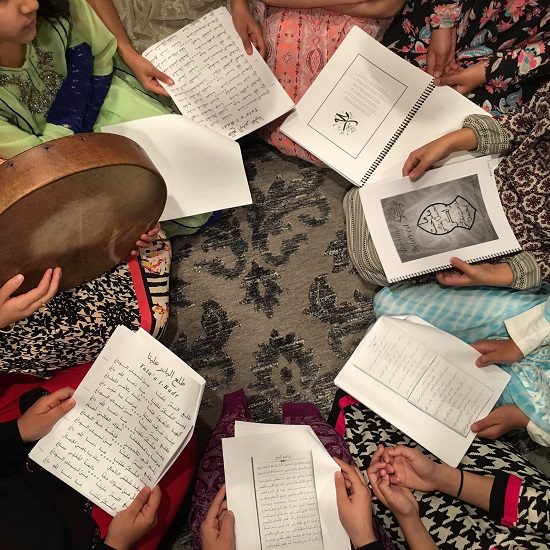
Mawlid 2018: Praise Songs from Around the World

Gaslighting, Anti-Jewish and Anti-Muslim Rhetoric: What to Know

How One Ottoman Reconciled Islamic Teachings with Darwin's...
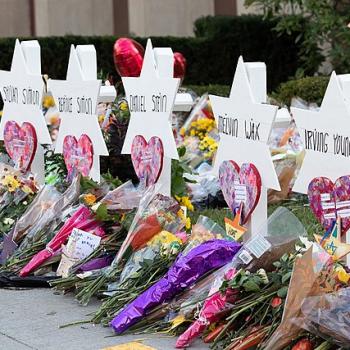
As #TreeofLife Shows, Trump's Mainstreaming of Hate Puts...
TRENDING AT PATHEOS Muslim

25 Years Later: How Much Has Changed for...
As we approach the 25th anniversary of September 11th, I’ve found myself...

Podcast: Third Spaces & The Rise of Yemeni...
In the latest episode of The Artistic Foodies Podcast, hosts Abbas...

HalalFest Picks: Best 60 Halal Spots for Super...
Back in 2016, I came up with a list of 29...

Unity Is America’s Strength — Division Is Its...
by Hidayatullah Ahsan When Valentina Gomez, a Republican candidate for Congress in...

Zohran Mamdani and New York’s Fight Against Islamophobia
This past June, against all odds, Zohran Mamdani won the Democratic primary...

What the Fourth of July Means to a...
As we mark another Fourth of July, millions of Americans will celebrate...
view all Muslim blogs
Ad-Free & Subscriber Log-In Subscription Support
- About Us
- 2026 Calendar
- Videos
- Podcasts
- Library of World Religions
- Faith In Media Tracker
- Advertise With Us
- Write for Us
- Privacy Policy
- Terms of Service
- Do Not Sell My Data
- Contact Us
- Radiant Digital
- Manage Newsletter Subscriptions
- Unsubscribe From Notifications
- Sitemap
Copyright 2008-2026, Patheos. All rights reserved.
Subscription Support Ad-Free & Subscriber Log-In
Follow Patheos