
BuddhistCatholicContemplativeEvangelicalGeneral ChristianHinduJewishLatter-day SaintMuslimNew VisionsProgressive Christian
Beliefs
- Buddhist
- Catholic
- Contemplative
- Evangelical
- General Christian
- Hindu
- Jewish
- Latter-day Saint
- More Voices
- Muslim
- New Visions
- Pagan
- Progressive Christian
Topics
- Religion News
- Food and Religion
- Sports and Religion
- Religious Art
- Religious Music and Entertainment
- Religious Events
- History and Religion
- Style and Religion
- Politics and Religion
- Women in Religion
- Recreation Outdoors and Religion
- Business Finance and Religion
- Careers Workplace and Religion
- Education and Religion
- Family Parenting and Religion
- Health Fitness and Religion
- Home and Religion
- Relationships and Religion
- Technology and Religion
- Travel and Religion
Columnists
- Buddhist Columnists
- Business Finance and Religion Columnists
- Careers Workplace and Religion Columnists
- Catholic Columnists
- Contemplative Columnists
- Education and Religion Columnists
- Evangelists Columnists
- Family Parenting and Religion Columnists
- General Christian Columnists
- Health Fitness and Religion Columnists
- Hindu Columnists
- History and Religion Columnists
- Home and Religion Columnists
- Jewish Columnists
- More Voices Columnists
- Latter Day Columnists
- Muslim Columnists
- New Visions Columnists
- Nonreligious Columnists
- Pagan Columnists
- Politics and Religion Columnists
- Progressive Columnists
- Recreation Outdoors and Religion Columnists
- Relationships and Religion Columnists
- Religion News Columnists
- Religious Art Columnists
- Religious Events Columnists
- Religious Music and Entertainment Columnists
- Sports and Religion Columnists
- Style and Religion Columnists
- Technology and Religion Columnists
- Travel and Religion Columnists
- Women in Religion Columnists
Resource Library
- 2026 Calendar
- Library of World Religions
- The 100 Most Holy Places on Earth
- Patheos Answers
- Podcasts
- Videos
- Faith Leaders Database
- Anglican Episcopalian
- Bahai
- Baptist
- Buddhism
- Christianity
- Confucianism
- Eastern Orthodoxy
- Hinduism
- Holiness and Pentecostal
- ISKCON
- Islam
- Judaism
- Lutheran
- Methodist
- The Church of Jesus Christ of Latter-day Saints
- New Age
- Paganism
- Presbytarian and Reformed
- Protestantism
- Religion Behind the Scenes
- Roman Catholic
- Scientology
- Shia Islam
- Sikhism
- Sufism
- Sunni Islam
- Taoism
- Zen
- See all religions
Research Tools
 Ad-Free & Subscriber Log-In Subscription Support
Ad-Free & Subscriber Log-In Subscription Support
Follow Patheos 

- Trending:
- Forgiveness
- |
- Marriage
- |
- Consciousness
- |
- Death Penalty
- |
- Election
- |
- Halloween

- Home
- Muslim
- Book Review: The Crisis of Islamic Civilization
Book Review: The Crisis of Islamic Civilization
Last updated on: March 13, 2015 at 11:32 am by irfanrydhan
Book Review: The Crisis of Islamic Civilization 2015-03-13T11:32:30-06:00 irfanrydhan
Patheos Explore the world's faith through different perspectives on religion and spirituality! Patheos has the views of the prevalent religions and spiritualities of the world.
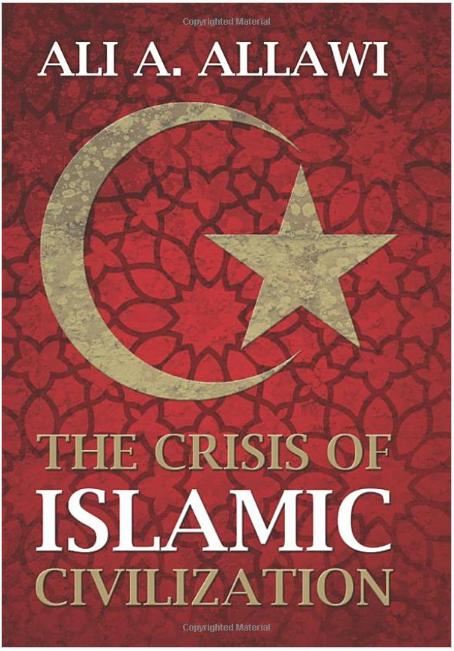
Recently someone recommended I read this book called “The Crisis of Islamic Civilization” by Ali A. Allawi. Mr. Allawi served as the Minister of Defense and Minister of Finance in the Iraqi postwar governments. He is currently a Senior Visiting Fellow at Princeton University.
I must say that I was pleasantly surprised while reading this book, because unlike other books with similar subject matters, this was not just an academic book filled with many footnotes and a few historical facts, but instead is written in an engaging style, which is easy to read, but also includes interesting stories which give a better context about what has happened in the so-called “Islamic World” over the past 100 years.
Almost each chapter begins with a verse of poetry from a famous Muslim poet, such as Rumi and IqbaL, or a quote from an important historical figure, such as Ayatollah Khomeini or Former Malaysian Prime Minister Mahathir bin Muhammad. There are even quotes from several Non-Muslim thinkers and leaders such as Lord Acton, a nineteenth century British Historian. Then of course there are verses from the Holy Quran and the Bible along with sayings of the Prophet Muhammad (S) which relate in some way or another to the subject matter in each chapter.
This diverse and varied citation is one aspect of this book which makes for a very interesting reading. Obviously the author’s experience is in Politics and Socio-Economic development, but Mr. Allawi, who grew up in a secular Iraq, also discusses other important subject matters such as different religious trends in Islam, such as Sufism, Sunni, Shia, Salafism and Wahabism.
He also discusses, while giving important historical context, the many issues facing the Muslim communities in Iraq, Iran, Egypt, Pakistan, Turkey, India, Malaysia, Sudan and Saudi Arabia among other Muslim majority countries and also includes the problems which Muslims in Europe and the United States have to deal with – such as racism, stereotypes and hatred after 9/11 and other acts of violence and terrorism.
But one of my favorite chapters is near the end of the book, Chapter 10, which is called “The Decline of Creativity” which talks about how the great Islamic civilizations of the past excelled in Science, Art, Music, Optics, Medicine, Mechanical Engineering and Architecture – and now we have little or no creativity in our communities and this is one of the major reasons why, according to the author, the Muslim World is in the decline that it is today. With only 1% of the World’s patents being created by Muslims, I would have to agree with Mr. Allawi.
With my educational and professional background being in Architecture, this paragraph of Mr. Allawi really caught my eye:
“But the degradation of Islam’s historical cities is not entirely due to the westernized elites. The ravages wrought by the Wahhabis of Saudi Arabia on the fabric of the two holiest cities in Islam, Mecca and Medina, are well known. The extent of the damage wrought on these two cities has been exposed mainly due to the heroic efforts of the Jeddah-based architect and historian Sami Angawi, who wrote about the wanton destruction of millennium-old buildings, in both Mecca and Medina, under the aegis of the Wahhabi clerical establishment. The clerics had ruled that historical sites such as the Prophet’s birthplace could become virtual shrines and thus potentially objects of worship in themselves. In conclusion, they reasoned, it would be best if these buildings and sites were demolished, lest they give rise to idolatry. Their rulings have been generally welcomed by the political and commercial classes, who saw in the destruction of these buildings new opportunities for commercial profit from land speculation and development. According to Angawi and others, nearly 95 percent of the historical buildings in the two holy cities have been demolished. Whenever a historical site which has any connection with the prophetic period is uncovered by archaeologists, the bulldozers move in to pull it down and pour concrete over the site. Other historical buildings (such as the Ottoman fortress which guarded Mecca) have been demolished in order to make way for high-rise buildings and shopping centers.”
We see a classic example of this with the large Abraj Al Bait Towers aka “The Mecca Royal Hotel Clock Tower” which is large monstrosity right behind the Holiest Site in Islam – the Masjid al Haram, where the Ka’aba is located.
Of course it is easy to blame the Wahhabis on all the problems of the Muslims today – In reality, it is not that simple. Most Muslims today, even here in the United States, have a lack of creativity and don’t really appreciate or understand Islamic Architecture or Art. Many of these Muslims are highly educated and “professionals” in their respective fields, yet they fail to realize the importance of art and culture to the formation and development of a true Islamic identity as well as a civilization.
I will end with this with a final paragraph from Mr. Allawi’s book (also in Chapter 10) where he sums it up pretty nicely:
“The idea that Islamic civilization is based not only on outer forms but on an inner reality that has spiritual, metaphysical and even cosmological aspects to it is lost on many. A huge collective effort is now needed simply to stop the destruction of the vestiges of Islamic civilization, but it is unclear whether this will be forthcoming. In the final analysis, Muslims must understand that the revival of their civilization is not simply about the rediscovery of an outer piety or conduct and behavior. Science and technology are not value-free. Neither is a world built around their demands. One cannot revive traditional building methods if there are powerful commercial interests in the cement industry. Neither can one construct cities and neighborhoods conducive to the community spirit if the cityscape is dominated by modern towers of Babel which aggressively flaunt their disdain or disregard for Islamic norms of life.”

Browse Our Archives
Select a Category Activism Architecture Art Books/Magazines Business Education Event Planning Finance Food HalalEats Unplugged Podcast Interfaith Islam Media Politics Religion Self Help The Artistic Foodies Podcast Travel TV/Film Uncategorized
Select a Month September 2026 June 2026 February 2026 December 2025 July 2025 June 2025 January 2025 November 2024 October 2024 August 2024 May 2024 April 2024 March 2024 November 2023 October 2023 September 2023 June 2023 November 2022 September 2022 April 2022 February 2022 November 2021 October 2021 August 2021 March 2021 February 2021 January 2021 October 2020 September 2020 August 2020 July 2020 January 2020 December 2019 November 2019 October 2019 September 2019 August 2019 April 2019 February 2019 December 2018 September 2018 August 2018 July 2018 June 2018 May 2018 April 2018 March 2018 January 2018 December 2017 June 2017 May 2017 February 2017 January 2017 December 2016 November 2016 October 2016 August 2016 May 2016 March 2016 January 2016 December 2015 November 2015 October 2015 July 2015 May 2015 January 2015 December 2014 September 2014 August 2014 July 2014 March 2014 February 2014 January 2014 September 2013 August 2013 June 2013 May 2013 March 2013 December 2012 October 2012 September 2012 August 2012 July 2012 June 2012 May 2012 April 2012 March 2012 January 2012 December 2011 November 2011 October 2011 September 2011 July 2011 June 2011 May 2011 April 2011 February 2011 January 2011 December 2010 October 2010 August 2010 April 2010 February 2010 January 2010 November 2009 October 2009 September 2009 August 2009 June 2009 May 2009 April 2009 March 2009 February 2009
TAKE THE
Religious Wisdom Quiz
Who climbed a sycamore tree to see Jesus?
Select your answer to see how you score.
Zacchaeus Bartimaeus Simon Nicodemus
Related posts from Al Mihrab
An Amazonian Celebrates Ramadan
Panel Discussion on Ramadan for Amazon Employees


How to Practice the Teachings of Islam in...
TRENDING AT PATHEOS Muslim

25 Years Later: How Much Has Changed for...
As we approach the 25th anniversary of September 11th, I’ve found myself...

Podcast: Third Spaces & The Rise of Yemeni...
In the latest episode of The Artistic Foodies Podcast, hosts Abbas...

HalalFest Picks: Best 60 Halal Spots for Super...
Back in 2016, I came up with a list of 29...

Unity Is America’s Strength — Division Is Its...
by Hidayatullah Ahsan When Valentina Gomez, a Republican candidate for Congress in...

Zohran Mamdani and New York’s Fight Against Islamophobia
This past June, against all odds, Zohran Mamdani won the Democratic primary...

What the Fourth of July Means to a...
As we mark another Fourth of July, millions of Americans will celebrate...
view all Muslim blogs
Ad-Free & Subscriber Log-In Subscription Support
- About Us
- 2026 Calendar
- Videos
- Podcasts
- Library of World Religions
- Faith In Media Tracker
- Advertise With Us
- Write for Us
- Privacy Policy
- Terms of Service
- Do Not Sell My Data
- Contact Us
- Radiant Digital
- Manage Newsletter Subscriptions
- Unsubscribe From Notifications
- Sitemap
Copyright 2008-2026, Patheos. All rights reserved.
Subscription Support Ad-Free & Subscriber Log-In
Follow Patheos