
BuddhistCatholicContemplativeEvangelicalGeneral ChristianHinduJewishLatter-day SaintMuslimNew VisionsProgressive Christian
Beliefs
- Buddhist
- Catholic
- Contemplative
- Evangelical
- General Christian
- Hindu
- Jewish
- Latter-day Saint
- More Voices
- Muslim
- New Visions
- Pagan
- Progressive Christian
Topics
- Religion News
- Food and Religion
- Sports and Religion
- Religious Art
- Religious Music and Entertainment
- Religious Events
- History and Religion
- Style and Religion
- Politics and Religion
- Women in Religion
- Recreation Outdoors and Religion
- Business Finance and Religion
- Careers Workplace and Religion
- Education and Religion
- Family Parenting and Religion
- Health Fitness and Religion
- Home and Religion
- Relationships and Religion
- Technology and Religion
- Travel and Religion
Columnists
- Buddhist Columnists
- Business Finance and Religion Columnists
- Careers Workplace and Religion Columnists
- Catholic Columnists
- Contemplative Columnists
- Education and Religion Columnists
- Evangelists Columnists
- Family Parenting and Religion Columnists
- General Christian Columnists
- Health Fitness and Religion Columnists
- Hindu Columnists
- History and Religion Columnists
- Home and Religion Columnists
- Jewish Columnists
- More Voices Columnists
- Latter Day Columnists
- Muslim Columnists
- New Visions Columnists
- Nonreligious Columnists
- Pagan Columnists
- Politics and Religion Columnists
- Progressive Columnists
- Recreation Outdoors and Religion Columnists
- Relationships and Religion Columnists
- Religion News Columnists
- Religious Art Columnists
- Religious Events Columnists
- Religious Music and Entertainment Columnists
- Sports and Religion Columnists
- Style and Religion Columnists
- Technology and Religion Columnists
- Travel and Religion Columnists
- Women in Religion Columnists
Resource Library
- 2026 Calendar
- Library of World Religions
- The 100 Most Holy Places on Earth
- Patheos Answers
- Podcasts
- Videos
- Faith Leaders Database
- Anglican Episcopalian
- Bahai
- Baptist
- Buddhism
- Christianity
- Confucianism
- Eastern Orthodoxy
- Hinduism
- Holiness and Pentecostal
- ISKCON
- Islam
- Judaism
- Lutheran
- Methodist
- The Church of Jesus Christ of Latter-day Saints
- New Age
- Paganism
- Presbytarian and Reformed
- Protestantism
- Religion Behind the Scenes
- Roman Catholic
- Scientology
- Shia Islam
- Sikhism
- Sufism
- Sunni Islam
- Taoism
- Zen
- See all religions
Research Tools
 Ad-Free & Subscriber Log-In Subscription Support
Ad-Free & Subscriber Log-In Subscription Support
Follow Patheos 

- Trending:
- Forgiveness
- |
- Marriage
- |
- Consciousness
- |
- Death Penalty
- |
- Election
- |
- Halloween

- Home
- Muslim
- 5 Good Books for American Muslims (and everyone else)
5 Good Books for American Muslims (and everyone else)
Last updated on: March 13, 2015 at 11:32 am by irfanrydhan
5 Good Books for American Muslims (and everyone else) 2015-03-13T11:32:53-06:00 irfanrydhan
Patheos Explore the world's faith through different perspectives on religion and spirituality! Patheos has the views of the prevalent religions and spiritualities of the world.


Last year, I did a lot of reading (probably the most since I graduated from college) and I thought it would a good idea to share my top 5 books (for some reason, I like listing things in 5 digit intervals:)).
Some of these I have not fully completed reading yet, but have read enough of them to recommend them all:)! These are not in any particular order, but they are all very good in their own right. They all relate to Islam and Muslims in someway or the other, but most of them would also be of interest to Non-Muslim readers as well. So Pick them up at your local bookstore (or online) and enjoy your reading!
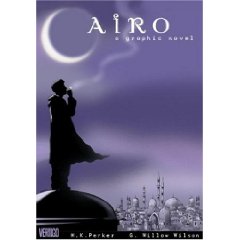
1. CAIRO: A Graphic Novel by G. Willow Wilson. I use to read a lot of comic books when I was younger, so when I found out about this graphic novel written by American-Muslim convert Willow Wilson, I quickly grabbed it from Amazon.com. Willow, a journalist, spent some time in Cairo, so she is very familiar with life there. The story is very unique in that in intertwines reality with fantasy and has some politics and religion mixed in for good measure as well. The cast of characters in the story include a a drug runner, a down-on-his-luck journalist, an American expatriate, a young activist, an Israeli soldier, and a genie (who is actually a Jinn) as they navigate the city’s streets and spiritual underworld to find a stolen hooka sought by a wrathful gangster-magician. The novel is illustrated by Turkish artist M.K. Perker. I enjoyed the story as well as the artwork very much, and my only complaint is that it ended too soon! This may have something to do with the graphic novel format, as Willow also has an award winning comic book series called “AIR” (which I still need to get my hands on)! In any case, CAIRO is definitely worth picking up and would make a good gift for both youth and adult comic book readers! Note: Seattle based Willow has recently completed her first book, “Butterfly Mosque,” and will be doing a book tour with a stop in the Bay Area in the Summer (June/July 2010), InshaAllah.
2. Master of the Jinn: A Sufi Novel by Irving Karchmar. Author Irving Karchmar, a darvishof the Nimatullahi Sufi Order since 1992, has masterfully written an engaging story which combines real Sufi traditions with a fantasy adventure along the lines of “The Lord of the Rings” and “Indiana Jones”! The story involves a great Sufi Master, his darvishs and their anthropologist friends who are in search of King Solomon’s ring – which gave him the power over the Jinn (smokeless spirits of fire). The story can definitely be made into a movie, which I believe a script for is in the works, as it has many interesting characters, a great story and a good message – The path of Love and the infinite mercy of God is all that we need to overcome the difficulties in our lives. The book is very popular across the world and has been translated into many languages including Indonesian, Turkish, German, Russian and Spanish. One aspect of the book which I personally like is the mention of many Islamic and Sufi terminology which are also translated and explained during the story, which shows how the author is trying to educate his readers and explain the beauty of Islam through a fictional story.
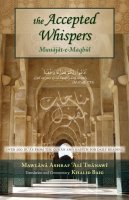
3. The Accepted Whispers by Mawlana Ashraf Ali Thanawi. This is a collection of 200 du’as (supplications to God) from the Qur’an and the Hadith complied by the great Islamic scholar Mawlana Ashraf Ali Thanawi. This great book is well known in the Indian sub-continent as “Munajat-e-Maqbul” and has been translated into the English language by Khalid Baig. It contains du’as one should recite every day of the week. It also gives the history and explanation of each du’a. This is the type of book that one does not “finish” reading, but one in which you keep by your bedside and try to read a du’a or two every night so as to spiritually benefit you and your family. Which is something I’m trying to do.
4. Al’ America: Travels through America’s Arab and Islamic Roots by Jonathan Curiel. This is the perfect book to give to your Non-Muslim friends and neighbors, especially those who believe that Islam and Muslims have not influenced American society in a positive way. Even for those people who are educated and are familiar with many of the contributions to American food, culture, art, music and Architecture that the Arab and Muslim people have made since the beginning of the country would be surprised to read about the many examples that one would never think of. For example: the ice cream cone was invented by Abe Doumar, a Syrian Immigrant, during the St. Louis World’s Fair. Most people are aware that Jazz and Blues music was heavily influenced by Islamic culture and music from Africa, but most people are unaware that one of the most popular bands of the 60’s, “the Doors”, were influenced by Arab and MiddleEastern music as well. In terms of Architecture, there are many buildings both from the past as well as the present that were influenced by Islamic Architecture. Most of the San Jose Missions in the Southwestern United States are direct copies of famous Moorish (Islamic) buildings in Spain such as the Cordoba Mosque and the Alhambra Palace in Granada. One of the most famous buildings in American History – “The Alamo”, is also a Spanish Mission which has direct Islamic Architectural elements such as the rectangular overhang that frames the entire doorway or an “Alfiz” in Arabic. The Alamo also contained geometric frescoes (which were painted over by the military) which featured floral patterns and pomegranates. There are many examples listed in Curiel’s educational book, ranging from the obvious (English words derived from Arabic such as “coffee”, “algebra” and “giraffe”) to the less familiar (such as the “Iranistan” – a Taj Mahal like home built by P.T. Barnum). The one complaint I have about the book is that there are no pictures included alongside the many examples and detailed descriptions listed in it. I have attended two presentations made by Jonathan Curiel in the Bay Area in which he presented a detailed slideshow which included not only pictures but also some songs and music which give another dimension to the words he writes in his book. Jonathan stated that his publisher did not include any pictures in the book to save on costs, but I hope that eventually another printing in the near future will have some images such as the ones he has shown on his website. Note: Jonathan Curiel will be speaking at the “Islam and Authors” series in April 2010 at the Islamic Cultural Center in Northern California (ICCNC). If you are in the Bay Area, I highly recommend people to attend his presentation as it is a great eye opener for both Non-Muslims as well as Muslims in the United States!
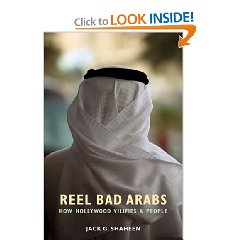
5. Reel Bad Arabs: How Hollywood Vilifes a People by Jack G. Shaheen. This book is a culmination of over 30 years of study by Dr. Jack Shaheen, a former CBS News consultant, on how Arabs and Muslims have been depicted in U.S. Feature Films. I first came across Dr. Shaheen’s work about 15 years ago when my father gave me his book “The TV Arab” which showed how some of the most popular TV shows over the past 30 years (the book was first published in 1984) depicted Arabs and Muslims in a negative and stereotypical light. Ever since reading that book, I have been interested in Media Activism and became more involved in my local Muslim communities media involvement by helping to start a Media Outreach committee at my local masjid, SBIA, in San Jose, CA. Dr. Shaheen’s latest book, “Reel Bad Arabs” was first published in 2001 and updated in 2009 and features over 1,000 feature films which are categorized alphabetically. Each of the films are tagged with labels such as “Villans”, “Sheikhs”, “Maidens”, “Egyptians”, and “Palestinians” – which are related to one of the major stereotypes of Arabs and Muslims in Hollywood movies. This book is great for anyone who is doing a research paper on muslims in the media or other related topics, because you can easily look up movies and read a synopsis of the story and why it is labelled as it is. Of course not all the films are bad, as besides the “Worst” films for Arabs and Muslims, there are also the “Best List” and “Recommended Viewing” films as well. I dont agree with all the tags which Dr. Shaheen and his team have put on each film. For example they tagged: “Worst List” for the 1985 Classic “Back to the Future” (Although I understand why since the movie just throws in some bad guy Libiyans for no apparent reason), but one has to keep in mind that this book is written solely for the purpose of recording how Arabs and Muslims are depicted and not anything else in terms of storytelling, special effects or the other technical aspects of filmmaking.
Of course there are many more books which are out there, but these are some of the best that I have read most recently. I have also personally met and/or interacted with most of the 5 authors that I have listed above and know that they are all good people who are great writers, journalists and authors. We should support them as much as we can by buying their books and telling others about them. For those of you in the Bay Area, please try to attend the great “Islam and Authors” series which is being organized by ILLUME, ING and ICCNC. The next event will be on Sat. Jan. 23rd with Writer and Playwright Wajahat Ali who will discuss his play “The Domestic Crusaders”. You can watch an interview that ILLUME did with Wajahat here:
How Hollywood Vilifies a people
Travels through America's Arab and Islamic Roots
Previous Post

November 19, 2009
Next Post
February 15, 2010 Bollywood King goes back to his Muslim Roots
Browse Our Archives
Select a Category Activism Architecture Art Books/Magazines Business Education Event Planning Finance Food HalalEats Unplugged Podcast Interfaith Islam Media Politics Religion Self Help The Artistic Foodies Podcast Travel TV/Film Uncategorized
Select a Month September 2026 June 2026 February 2026 December 2025 July 2025 June 2025 January 2025 November 2024 October 2024 August 2024 May 2024 April 2024 March 2024 November 2023 October 2023 September 2023 June 2023 November 2022 September 2022 April 2022 February 2022 November 2021 October 2021 August 2021 March 2021 February 2021 January 2021 October 2020 September 2020 August 2020 July 2020 January 2020 December 2019 November 2019 October 2019 September 2019 August 2019 April 2019 February 2019 December 2018 September 2018 August 2018 July 2018 June 2018 May 2018 April 2018 March 2018 January 2018 December 2017 June 2017 May 2017 February 2017 January 2017 December 2016 November 2016 October 2016 August 2016 May 2016 March 2016 January 2016 December 2015 November 2015 October 2015 July 2015 May 2015 January 2015 December 2014 September 2014 August 2014 July 2014 March 2014 February 2014 January 2014 September 2013 August 2013 June 2013 May 2013 March 2013 December 2012 October 2012 September 2012 August 2012 July 2012 June 2012 May 2012 April 2012 March 2012 January 2012 December 2011 November 2011 October 2011 September 2011 July 2011 June 2011 May 2011 April 2011 February 2011 January 2011 December 2010 October 2010 August 2010 April 2010 February 2010 January 2010 November 2009 October 2009 September 2009 August 2009 June 2009 May 2009 April 2009 March 2009 February 2009
TAKE THE
Religious Wisdom Quiz
What does Paul tell the Ephesians not to let the sun go down on?
Select your answer to see how you score.
Your unforgiveness Your disputes Your anger Your sin
Related posts from Al Mihrab

25 Years Later: How Much Has Changed for...
Superman & Squid Game: Stories About Saving Lives

Ertugrul: A Discussion on the popular Turkish TV...
TRENDING AT PATHEOS Muslim

25 Years Later: How Much Has Changed for...
As we approach the 25th anniversary of September 11th, I’ve found myself...

Podcast: Third Spaces & The Rise of Yemeni...
In the latest episode of The Artistic Foodies Podcast, hosts Abbas...

HalalFest Picks: Best 60 Halal Spots for Super...
Back in 2016, I came up with a list of 29...

Unity Is America’s Strength — Division Is Its...
by Hidayatullah Ahsan When Valentina Gomez, a Republican candidate for Congress in...

Zohran Mamdani and New York’s Fight Against Islamophobia
This past June, against all odds, Zohran Mamdani won the Democratic primary...

What the Fourth of July Means to a...
As we mark another Fourth of July, millions of Americans will celebrate...
view all Muslim blogs
Ad-Free & Subscriber Log-In Subscription Support
- About Us
- 2026 Calendar
- Videos
- Podcasts
- Library of World Religions
- Faith In Media Tracker
- Advertise With Us
- Write for Us
- Privacy Policy
- Terms of Service
- Do Not Sell My Data
- Contact Us
- Radiant Digital
- Manage Newsletter Subscriptions
- Unsubscribe From Notifications
- Sitemap
Copyright 2008-2026, Patheos. All rights reserved.
Subscription Support Ad-Free & Subscriber Log-In
Follow Patheos