
BuddhistCatholicContemplativeEvangelicalGeneral ChristianHinduJewishLatter-day SaintMuslimNew VisionsProgressive Christian
Beliefs
- Buddhist
- Catholic
- Contemplative
- Evangelical
- General Christian
- Hindu
- Jewish
- Latter-day Saint
- More Voices
- Muslim
- New Visions
- Pagan
- Progressive Christian
Topics
- Religion News
- Food and Religion
- Sports and Religion
- Religious Art
- Religious Music and Entertainment
- Religious Events
- History and Religion
- Style and Religion
- Politics and Religion
- Women in Religion
- Recreation Outdoors and Religion
- Business Finance and Religion
- Careers Workplace and Religion
- Education and Religion
- Family Parenting and Religion
- Health Fitness and Religion
- Home and Religion
- Relationships and Religion
- Technology and Religion
- Travel and Religion
Columnists
- Buddhist Columnists
- Business Finance and Religion Columnists
- Careers Workplace and Religion Columnists
- Catholic Columnists
- Contemplative Columnists
- Education and Religion Columnists
- Evangelists Columnists
- Family Parenting and Religion Columnists
- General Christian Columnists
- Health Fitness and Religion Columnists
- Hindu Columnists
- History and Religion Columnists
- Home and Religion Columnists
- Jewish Columnists
- More Voices Columnists
- Latter Day Columnists
- Muslim Columnists
- New Visions Columnists
- Nonreligious Columnists
- Pagan Columnists
- Politics and Religion Columnists
- Progressive Columnists
- Recreation Outdoors and Religion Columnists
- Relationships and Religion Columnists
- Religion News Columnists
- Religious Art Columnists
- Religious Events Columnists
- Religious Music and Entertainment Columnists
- Sports and Religion Columnists
- Style and Religion Columnists
- Technology and Religion Columnists
- Travel and Religion Columnists
- Women in Religion Columnists
Resource Library
- 2026 Calendar
- Library of World Religions
- The 100 Most Holy Places on Earth
- Patheos Answers
- Podcasts
- Videos
- Faith Leaders Database
- Anglican Episcopalian
- Bahai
- Baptist
- Buddhism
- Christianity
- Confucianism
- Eastern Orthodoxy
- Hinduism
- Holiness and Pentecostal
- ISKCON
- Islam
- Judaism
- Lutheran
- Methodist
- The Church of Jesus Christ of Latter-day Saints
- New Age
- Paganism
- Presbytarian and Reformed
- Protestantism
- Religion Behind the Scenes
- Roman Catholic
- Scientology
- Shia Islam
- Sikhism
- Sufism
- Sunni Islam
- Taoism
- Zen
- See all religions
Research Tools
 Ad-Free & Subscriber Log-In Subscription Support
Ad-Free & Subscriber Log-In Subscription Support
Follow Patheos 

- Trending:
- Forgiveness
- |
- Marriage
- |
- Consciousness
- |
- Death Penalty
- |
- Election
- |
- Halloween

- Home
- Progressive Christian
- Religion News
- 7 Spiritual Truths from ‘The Lord of the Rings’
7 Spiritual Truths from ‘The Lord of the Rings’
Last updated on: January 9, 2021 at 6:00 am by Matthew Distefano
7 Spiritual Truths from ‘The Lord of the Rings’ 2021-01-08T21:25:15-06:00 Matthew Distefano
Patheos Explore the world's faith through different perspectives on religion and spirituality! Patheos has the views of the prevalent religions and spiritualities of the world.

Anyone who knows me knows I am obsessed with The Lord of the Rings, Middle Earth, and all things Tolkien. I’m such a nerd that I’ve studied the mythopoetic stories found in The Silmarillion and even read through The Unfinished Tales. I use LOTR analogies all throughout my personal writings and if I ever get another dog, will assuredly name him Tom Bombadil (to the annoyance of both my wife and daughter). But, c’mon, isn’t that the coolest name for a dog ever?
Anyway, what I love most about Tolkien’s writings when compared to, let’s say, C.S. Lewis’ “Narnia,” is that they aren’t so obvious. They aren’t so cut and dried. The characters are more archetypal than analogous. In “Narnia,” Aslan is Christ. Peter is, well, Peter. Edmund is pretty much Judas. And so on. But in Middle Earth, it’s more complicated. And I like that.
To that end, while I still like Lewis, I feel as if Tolkien offers much more in the way of spiritual truth. At least for me and the way I approach things. So, without further ado, here are 7 spiritual truths we can glean from The Lord of the Rings.
I. There Aren’t Necessarily Good Guys and Bad Guys
It’s easy to miss this fact, given that Elves, Dwarves, Men, and Hobbits battle Orcs, Uruk-hai, Goblins, and the big, bad Sauron all throughout the books. But this is too simplistic. Men, for instance, are on both sides of the war. Men from the East align with Saruman and Sauron. Men from Rohan and Gondor, however, align with Aragorn and Theoden. And even Sauron was, once upon a time, one of the noble Maiar (primordial spirits who helped shape the world), created by Valar. To complicate matters, even Sauron isn’t the first to fall away. He followed Melkor (Morgoth) who himself wasn’t initially created with malice in his heart. It was only after singing a dissonant melody that he fell away. So, that is all just the nerdy way of saying that both Sauron and Morgoth were created “good.”
II. The Hero of the Story Isn’t Obvious
This may shock people, but I’ll say it anyway: Gollum may be the hero of the story. Think about it. No one can destroy the Ring, not even Frodo. The only way the Ring gets destroyed is because, after Frodo walks away from the precipice, Gollum attacks him and eventually falls to his doom alongside the Ring. This shouldn’t be a surprise, however. Gandalf, being the prophet that he is, reminds Frodo that: “My heart tells me that he has some part to play yet, for good or ill, before the end; and when that comes, the pity of Bilbo may rule the fate of many – yours not least.” This obviously came to pass, for without Gollum, Frodo would have walked back down the side of Mt. Doom, with the Ring on his finger, while the fate of Middle Earth would have been doom and gloom (pardon the pun).
III. Toxic Masculinity Isn’t Championed
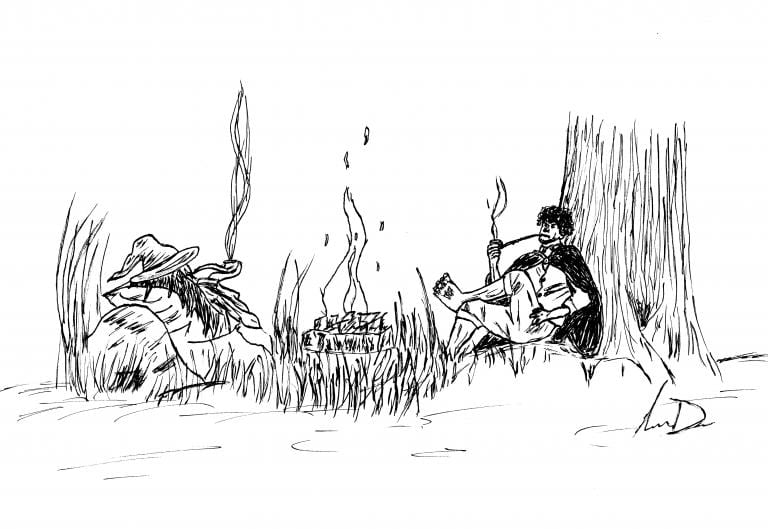
One would think that a trilogy of books which includes epic battles between Men and Orcs would be toxic AF. But it’s not. The men of Middle Earth are softies. They sing. They write poetry. They are sentimental. Some of this is missed in the movies, but all throughout the books, Aragorn, Legolas, and the common, working-man (Hobbit, actually) Sam, are all singing songs and reciting sacred poetry. It’s fabulous. Out and out fabulous!
IV. Middle Earth Is Meant to be Green
Tolkien wasn’t a huge fan of industrialization. In a letter he once penned, he described himself as a Hobbit in all but size, enjoying gardens, trees, and unmechanized farmlands. We see this sacred care for the planet in the battle between the Ents and Saruman. When Saruman attempts to use the powers of industry to lay waste to Fangorn Forest, the Ents fight back and destroy Orthanc. This shouldn’t go unnoticed, especially in the age of extreme climate change.
V. Death is Not the End
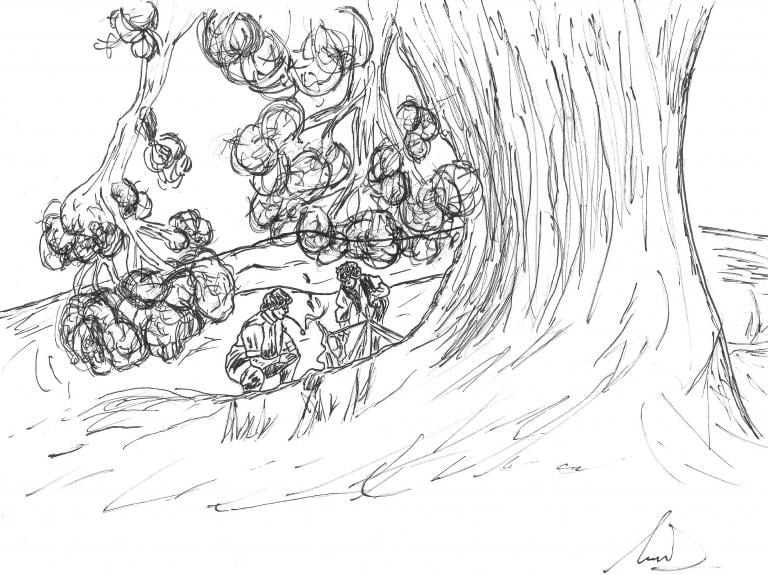
We aren’t exactly sure what happens to beings of Middle Earth after they die. Some of it is ambiguous, and perhaps different things happen to different beings. There are prophesies, but sometimes even these contradict one another. But we do get a glimpse into some things. Gandalf the Grey, for instance, actually dies after battling the Balrog. He basically falls into nothingness, passing out of time altogether, until he is reincarnated as Gandalf the White. What happens at the end of all things, though? We aren’t sure, but there are prophesies about restoration, and even a song by Tom Bombidil about a completely “mended world.”
VI. War is Hell
Tolkien fought in World War I, so it is no surprise that he doesn’t glamorize war in his writings. In Middle Earth, war is hell. Beloved characters die. But more than that. War is never really used as a way to accomplish a grand goal. Helm’s Deep is attacked and defended. Minas Tirith is attacked and defended. And even the final battle in The Return of the King (The Battle of the Morannon) is initiated only to draw out Sauron’s forces so Frodo and Sam could have a clear path to Mt. Doom. In other words, it’s nothing more than a diversion tactic.
VII. Strength in Diversity
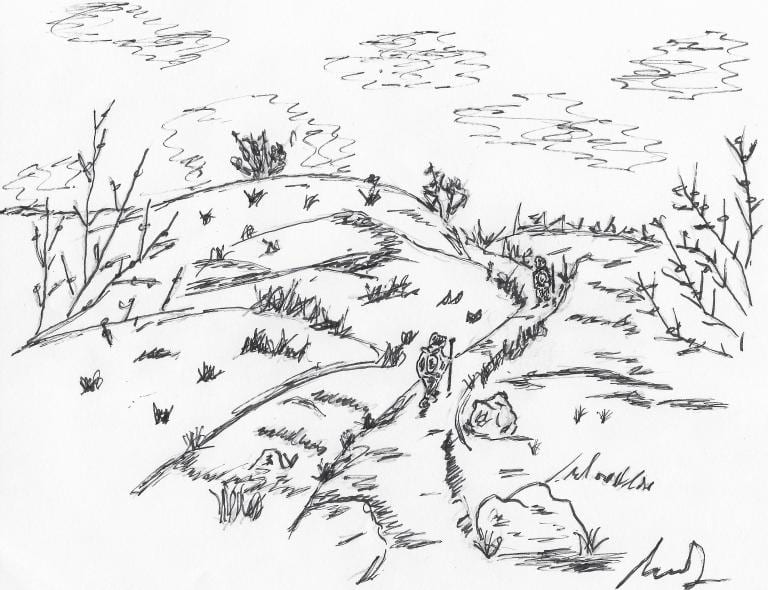
The unified races (Elves, Men, and Dwarves) who defeat Sauron’s forces in the end are not unified when the books begin. They are divided. Elves and Dwarves hate each other. Men aren’t to be trusted. Gondor and Rohan are at odds. If this were to stay the norm throughout the Third Age, Middle Earth would have fallen into shadow. However, it doesn’t. Elves come to the aid of Rohan. Rohan rides to aid Gondor. Gimli and Legolas become best of friends and are heroes of sorts, thwarting darkness and aiding the peoples of Middle Earth throughout the entirety of the trilogy. The take away? Celebrate our diversity. Champion our differences and our unique characteristics. And if we do, we will be much better off. This seems especially apropos at an hour like this.
All that said, if you are a Tolkien nerd like I am, please feel free to comment below. Let me know what spiritual truths you see in the books. And if you are new to Middle Earth, welcome. We hope you enjoy the territory. Let’s grab a drink at the Green Dragon sometime.
If you wanna get to know me better, please follow me on social media. I’m pretty active on all platforms:
Also, if you’ve been digging my work on here, and want to see me be able to continue writing as close to full-time as humanly possible, please take a look at my Patreon page at www.patreon.com/mjdistefano. Even $1 a month helps bigly!!!
Previous Post

January 8, 2021
7 Reasons the Bible is NOT the Inerrant Word of God
Next Post
January 11, 2021 New APOSTATES ANONYMOUS w/Brenda Marie Davies of God is Grey
Browse Our Archives
Select a Category Atonement Book Review Early Church Eschatology eternal torment Hell Hermeneutics LGBTQ+ Mimetic Theory Mysticism News Old Testament Podcast Poetry Politics Prayer Religion Sacrifice Satire Soteriology Theology Uncategorized Violence
Select a Month October 2026 September 2026 August 2026 July 2026 June 2026 May 2026 April 2026 March 2026 February 2026 June 2025 December 2024 November 2024 October 2024 September 2024 August 2024 July 2024 June 2024 May 2024 April 2024 February 2024 January 2024 December 2023 November 2023 October 2023 September 2023 August 2023 June 2023 April 2023 March 2023 February 2023 January 2023 December 2022 November 2022 October 2022 September 2022 August 2022 July 2022 June 2022 May 2022 April 2022 March 2022 February 2022 January 2022 December 2021 November 2021 October 2021 September 2021 August 2021 July 2021 June 2021 May 2021 April 2021 March 2021 February 2021 January 2021 December 2020 November 2020 June 2019 May 2019 April 2019 March 2019 January 2019 December 2018 November 2018 October 2018 September 2018 August 2018 July 2018 June 2018 May 2018 April 2018 March 2018 February 2018 January 2018 December 2017 November 2017 October 2017 July 2017 June 2017 May 2017 April 2017 March 2017 February 2017 January 2017 December 2016 November 2016 October 2016 September 2016 July 2016 June 2016 May 2016 April 2016 March 2016 February 2016 January 2016 December 2015 November 2015 October 2015 September 2015 August 2015 July 2015 June 2015
Follow Us!
TAKE THE
Religious Wisdom Quiz
Who was Timothy's mother?
Select your answer to see how you score.
Priscilla Lois Mary Eunice
Books by This Author Books by All Set Free
Related posts from All Set Free

Frodo and Ellie: Scapegoats in Search of Peace...
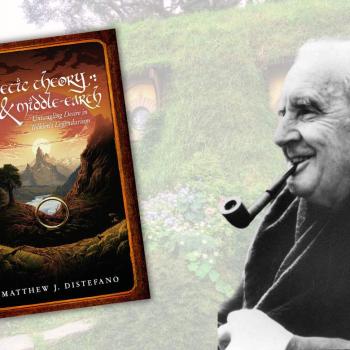
Unlocking Compassion in Middle-earth
How Christians Take The LORD'S Name In Vain

Exploring Middle-earth: Letter 1 (On Theodicy)
TRENDING AT PATHEOS Progressive Christian

Looking at the Largest Orthodox Cathedral on Earth
There is often a considerable amount of anger and, shall we...

The Problem with False Prophets
Miller’s Station UMC| 10/18/26| Anchor Verse: Jeremiah 23: 1, 9-23 I...

Emotion in Early Christianity by Andrew Crislip
Andrew Crislip’s Emotion in Early Christianity examines an often overlooked dimension of...

16 Spiritual Touchstones for a More Grounded Life
After decades of spiritual study, here are 16 principles I try...

Catholic Evangelization: Sharing Your Faith Every Day
Welcome back to the Graceful Awakening mini-series called, “From Faith to Mission.” ...

The Pillar of the Boatmen: the Ancient Monument...
The Pillar of the Boatmen is a Romano-Gaulish sculpture that dates from...
view all Progressive Christian blogs
Ad-Free & Subscriber Log-In Subscription Support
- About Us
- 2026 Calendar
- Videos
- Podcasts
- Library of World Religions
- Faith In Media Tracker
- Advertise With Us
- Write for Us
- Privacy Policy
- Terms of Service
- Do Not Sell My Data
- Contact Us
- Radiant Digital
- Manage Newsletter Subscriptions
- Unsubscribe From Notifications
- Sitemap
Copyright 2008-2026, Patheos. All rights reserved.
Subscription Support Ad-Free & Subscriber Log-In
Follow Patheos