
BuddhistCatholicContemplativeEvangelicalGeneral ChristianHinduJewishLatter-day SaintMuslimNew VisionsProgressive Christian
Beliefs
- Buddhist
- Catholic
- Contemplative
- Evangelical
- General Christian
- Hindu
- Jewish
- Latter-day Saint
- More Voices
- Muslim
- New Visions
- Pagan
- Progressive Christian
Topics
- Religion News
- Food and Religion
- Sports and Religion
- Religious Art
- Religious Music and Entertainment
- Religious Events
- History and Religion
- Style and Religion
- Politics and Religion
- Women in Religion
- Recreation Outdoors and Religion
- Business Finance and Religion
- Careers Workplace and Religion
- Education and Religion
- Family Parenting and Religion
- Health Fitness and Religion
- Home and Religion
- Relationships and Religion
- Technology and Religion
- Travel and Religion
Columnists
- Buddhist Columnists
- Business Finance and Religion Columnists
- Careers Workplace and Religion Columnists
- Catholic Columnists
- Contemplative Columnists
- Education and Religion Columnists
- Evangelists Columnists
- Family Parenting and Religion Columnists
- General Christian Columnists
- Health Fitness and Religion Columnists
- Hindu Columnists
- History and Religion Columnists
- Home and Religion Columnists
- Jewish Columnists
- More Voices Columnists
- Latter Day Columnists
- Muslim Columnists
- New Visions Columnists
- Nonreligious Columnists
- Pagan Columnists
- Politics and Religion Columnists
- Progressive Columnists
- Recreation Outdoors and Religion Columnists
- Relationships and Religion Columnists
- Religion News Columnists
- Religious Art Columnists
- Religious Events Columnists
- Religious Music and Entertainment Columnists
- Sports and Religion Columnists
- Style and Religion Columnists
- Technology and Religion Columnists
- Travel and Religion Columnists
- Women in Religion Columnists
Resource Library
- 2026 Calendar
- Library of World Religions
- The 100 Most Holy Places on Earth
- Patheos Answers
- Podcasts
- Videos
- Faith Leaders Database
- Anglican Episcopalian
- Bahai
- Baptist
- Buddhism
- Christianity
- Confucianism
- Eastern Orthodoxy
- Hinduism
- Holiness and Pentecostal
- ISKCON
- Islam
- Judaism
- Lutheran
- Methodist
- The Church of Jesus Christ of Latter-day Saints
- New Age
- Paganism
- Presbytarian and Reformed
- Protestantism
- Religion Behind the Scenes
- Roman Catholic
- Scientology
- Shia Islam
- Sikhism
- Sufism
- Sunni Islam
- Taoism
- Zen
- See all religions
Research Tools
 Ad-Free & Subscriber Log-In Subscription Support
Ad-Free & Subscriber Log-In Subscription Support
Follow Patheos 

- Trending:
- Forgiveness
- |
- Marriage
- |
- Consciousness
- |
- Death Penalty
- |
- Election
- |
- Halloween

- Home
- Progressive Christian
- Religion News
- My Approach to Evil and Suffering
My Approach to Evil and Suffering
Last updated on: June 27, 2018 at 1:41 pm by Matthew Distefano
My Approach to Evil and Suffering 2018-06-27T13:41:58-06:00 Matthew Distefano
Patheos Explore the world's faith through different perspectives on religion and spirituality! Patheos has the views of the prevalent religions and spiritualities of the world.
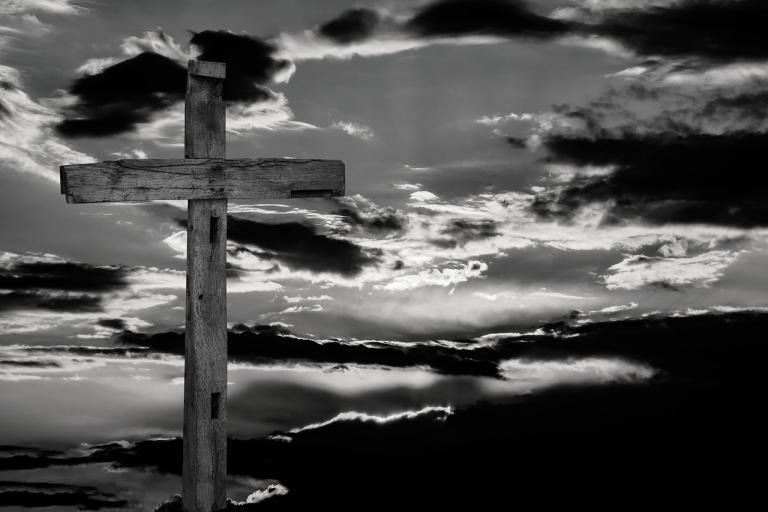
Courtesy of Pixabay
Anyone who affirms God has to deal with the age-old question, “What about evil?” No matter what our theology says about the divine—no matter whether we believe that God is nonviolent or full of violence, full of love or full of wrath, a respecter of human volition or a bigger Calvinist than Calvin himself—the problem of evil and suffering is, well, a problem. Majorly. We should all recognize this.
In fact, when atheists bring up the problem of evil, when they ask, “How can an all-powerful, all-loving God allow evil to exist in the world?” my temptation is always to say, “Right?!” And yet, I’m not an atheist. I was, for a while. But not any longer. So, I obviously have to wrestle with this question—constantly.
And while the following may not satisfy everyone’s curiosities and out-and-out concerns, here’s the best of what I could come up with. It’s no thesis—duh, right?—just a primer on how I tackle the issue.
First off, I can only approach the problem of suffering and evil with a particular ending in mind. To put it in fancy theological terms, I think about suffering eschatologically; more specifically that, in the end, all things will be reconciled to God through Christ, whether things on earth or in heaven (Colossians 1:20). (For those interested, the Greek word for this concept, as it is used in Acts 3:21, is “apokatastasis.”) So, no matter how much suffering I’m enduring, no matter how much evil plagues humanity and, really, the whole of creation, all suffering will one day be transformed and redeemed. This is my starting point. All other options, to my mind at least, distress my heart and soul too great to put into words.
Now, does that mean we should sit idly by and allow for evil to exist in our world? Of course not! Thinking that “all will be well” is not a justification for not making it well now. On the contrary, this line of thinking actually motivates us to make things well in the present moment. You know, “as it is in heaven,” and all that. Plus, as mimetic creatures, it shouldn’t surprise us that we imitate the gods we follow. Hence, if we believe in a divinity that will one day restore the creation and eliminate suffering, we should, in theory, respond in kind by doing what we can over the course of our own lives.
So, I suppose the next question is this: What gives me the justification for making such bold claims? Well, simply put, because of what happened on the cross and, subsequently, what I believe happened three days later. What we learn here is that, not only does God endure his own suffering, but that suffering doesn’t end merely in death. There is a purpose to it—if we want to even call it that—which is that suffering and evil are only present so that they can be transformed and resurrected. To show us this, God suffers and dies, but then rises in glory. One of my favorite theologians, Jürgen Moltmann, has this to say on the matter:
“Every theology of the cross must end in a theology of resurrection. Two remarks of Paul in the letter to the Romans: How much more is grace than sin, and, how much more is the resurrection than the crucifixion. How much more is opening the future where you see no way out. So the joy of God and the joy with God at the end is certainly greater than the long way of suffering and grief before.”
You see, the notion that God could and did die completely subverts the traditional notion of “power.” When we typically think of God’s power, we think it means that God can do whatever God wants simply because he’s the biggest, baddest being in the universe. But the Christian message is that God isn’t any such thing. Rather, it’s that God’s power is revealed from below. It’s revealed in his suffering—his suffering with and as us—and then in his ability to transform death into life. All death, according to the Apostle Paul (see Romans 5:12-19 and 1 Corinthians 15:22-28).
To that end, if we focus our attention back to the question, “How can an all-powerful, all-loving God allow evil to exist in the world?” I would have to initially suggest that A) God is not all-powerful in the ways we might typically think and B) God doesn’t “allow” evil to exist. Instead, God has chosen to incarnate God’s self as less-than-all-powerful human beings and then works with and through us in the power of the Holy Spirit to eradicate evil and suffering wherever and whenever we come across it. That means the evil and suffering in our own lives, in the lives of others, and even throughout the whole of creation. I believe that is what being a child of God means. The Apostle Paul seemed to have the same understanding when he writes:
“I consider that the sufferings of this present age are not worth comparing with the glory about to be revealed to us. For the creation waits with eager longing for the revealing of the children of God; for the creation was subject to futility, not of its own will but by the will of the one who subjected it, in hope that the creation itself will be set free from its bondage to decay and will obtain the freedom of the glory of the children of God.”
Again, however, none of this probably suffices as a complete answer to the problem of evil. That much is obvious. But what it does accomplish for me is that it gives me hope. Not hope in a deus ex machina that will swoop down, capriciously, whenever he damn well pleases, but hope in a God that will experience the same sufferings we experience and then transform our dying and decaying bodies through our own resurrections. Call it a fool’s hope, but call it hope nonetheless.
So, let me know what you think. Am I going too far out on a limb in approaching suffering in such a way? Are their other ways to talk about the issue? I’d love to hear your thoughts.
Until next time. Peace, love, and all that good stuff.
Previous Post

June 15, 2018
A Few Thoughts on Jeff Sessions, the Bible, and Immigration
Next Post

July 4, 2018 Freedom of Religion
Browse Our Archives
Select a Category Atonement Book Review Early Church Eschatology eternal torment Hell Hermeneutics LGBTQ+ Mimetic Theory Mysticism News Old Testament Podcast Poetry Politics Prayer Religion Sacrifice Satire Soteriology Theology Uncategorized Violence
Select a Month October 2026 September 2026 August 2026 July 2026 June 2026 May 2026 April 2026 March 2026 February 2026 June 2025 December 2024 November 2024 October 2024 September 2024 August 2024 July 2024 June 2024 May 2024 April 2024 February 2024 January 2024 December 2023 November 2023 October 2023 September 2023 August 2023 June 2023 April 2023 March 2023 February 2023 January 2023 December 2022 November 2022 October 2022 September 2022 August 2022 July 2022 June 2022 May 2022 April 2022 March 2022 February 2022 January 2022 December 2021 November 2021 October 2021 September 2021 August 2021 July 2021 June 2021 May 2021 April 2021 March 2021 February 2021 January 2021 December 2020 November 2020 June 2019 May 2019 April 2019 March 2019 January 2019 December 2018 November 2018 October 2018 September 2018 August 2018 July 2018 June 2018 May 2018 April 2018 March 2018 February 2018 January 2018 December 2017 November 2017 October 2017 July 2017 June 2017 May 2017 April 2017 March 2017 February 2017 January 2017 December 2016 November 2016 October 2016 September 2016 July 2016 June 2016 May 2016 April 2016 March 2016 February 2016 January 2016 December 2015 November 2015 October 2015 September 2015 August 2015 July 2015 June 2015
Follow Us!
TAKE THE
Religious Wisdom Quiz
Which companion of Paul was also a physician and wrote Acts?
Select your answer to see how you score.
Barnabas Luke Silas Mark
Books by This Author Books by All Set Free
Related posts from All Set Free

Addressing the Recent Heretic Happy Hour Podcast Episode

I Debated Andrew Wilson, Here's What I Learned


An Evangelical Case for Trump as the Antichrist
TRENDING AT PATHEOS Progressive Christian

A new article, written by Jeff Lindsay and Gale L. Pooley,...

Swimfan: Forgotten Aughts Pleasures
This is a recovery effort. In 2002, My Big Fat Greek Wedding...

Top Three Anti-Catholic Lies About Catholicism
This is my initial transcript for the video, "THE 3 WORST...

Pope Leo Celebrates Mass for Nurses & Docs...
I don't have any idea how he did it, but Pope Leo...

The Sermon on the Mount, Part I: Matthew...
The Sermon on the Mount, Part I (Matthew 4:12-5:12) St. Matthew moves...

What's up from Crossway: Reviewing some of their latest A few weeks...
view all Progressive Christian blogs
Ad-Free & Subscriber Log-In Subscription Support
- About Us
- 2026 Calendar
- Videos
- Podcasts
- Library of World Religions
- Faith In Media Tracker
- Advertise With Us
- Write for Us
- Privacy Policy
- Terms of Service
- Do Not Sell My Data
- Contact Us
- Radiant Digital
- Manage Newsletter Subscriptions
- Unsubscribe From Notifications
- Sitemap
Copyright 2008-2026, Patheos. All rights reserved.
Subscription Support Ad-Free & Subscriber Log-In
Follow Patheos