
BuddhistCatholicContemplativeEvangelicalGeneral ChristianHinduJewishLatter-day SaintMuslimNew VisionsProgressive Christian
Beliefs
- Buddhist
- Catholic
- Contemplative
- Evangelical
- General Christian
- Hindu
- Jewish
- Latter-day Saint
- More Voices
- Muslim
- New Visions
- Pagan
- Progressive Christian
Topics
- Religion News
- Food and Religion
- Sports and Religion
- Religious Art
- Religious Music and Entertainment
- Religious Events
- History and Religion
- Style and Religion
- Politics and Religion
- Women in Religion
- Recreation Outdoors and Religion
- Business Finance and Religion
- Careers Workplace and Religion
- Education and Religion
- Family Parenting and Religion
- Health Fitness and Religion
- Home and Religion
- Relationships and Religion
- Technology and Religion
- Travel and Religion
Columnists
- Buddhist Columnists
- Business Finance and Religion Columnists
- Careers Workplace and Religion Columnists
- Catholic Columnists
- Contemplative Columnists
- Education and Religion Columnists
- Evangelists Columnists
- Family Parenting and Religion Columnists
- General Christian Columnists
- Health Fitness and Religion Columnists
- Hindu Columnists
- History and Religion Columnists
- Home and Religion Columnists
- Jewish Columnists
- More Voices Columnists
- Latter Day Columnists
- Muslim Columnists
- New Visions Columnists
- Nonreligious Columnists
- Pagan Columnists
- Politics and Religion Columnists
- Progressive Columnists
- Recreation Outdoors and Religion Columnists
- Relationships and Religion Columnists
- Religion News Columnists
- Religious Art Columnists
- Religious Events Columnists
- Religious Music and Entertainment Columnists
- Sports and Religion Columnists
- Style and Religion Columnists
- Technology and Religion Columnists
- Travel and Religion Columnists
- Women in Religion Columnists
Resource Library
- 2026 Calendar
- Library of World Religions
- The 100 Most Holy Places on Earth
- Patheos Answers
- Podcasts
- Videos
- Faith Leaders Database
- Anglican Episcopalian
- Bahai
- Baptist
- Buddhism
- Christianity
- Confucianism
- Eastern Orthodoxy
- Hinduism
- Holiness and Pentecostal
- ISKCON
- Islam
- Judaism
- Lutheran
- Methodist
- The Church of Jesus Christ of Latter-day Saints
- New Age
- Paganism
- Presbytarian and Reformed
- Protestantism
- Religion Behind the Scenes
- Roman Catholic
- Scientology
- Shia Islam
- Sikhism
- Sufism
- Sunni Islam
- Taoism
- Zen
- See all religions
Research Tools
 Ad-Free & Subscriber Log-In Subscription Support
Ad-Free & Subscriber Log-In Subscription Support
Follow Patheos 

- Trending:
- Forgiveness
- |
- Marriage
- |
- Consciousness
- |
- Death Penalty
- |
- Election
- |
- Halloween

- Home
- Progressive Christian
- Religion News
- 3 Questions for Annihilationists
3 Questions for Annihilationists
Last updated on: March 21, 2018 at 8:45 am by Matthew Distefano
3 Questions for Annihilationists 2018-03-21T08:45:08-06:00 Matthew Distefano
Patheos Explore the world's faith through different perspectives on religion and spirituality! Patheos has the views of the prevalent religions and spiritualities of the world.

Courtesy of Pixabay
As filmmaker Kevin Miller so poignantly points out in his documentary “Hellbound?” there are basically 3 positions Christians can take when it comes to eschatological matters: Infernalism, Annihilationism/Conditional Immortality, and Universalism. The reason for this is that the Bible, on the surface at least, includes passages that argue for all 3. In other words, there are passages that seem to suggest some humans will be tortured for time-everlasting (Infernalism), that some will perish entirely (Conditional Immortality), and that all will one day be redeemed (Universalism).
Obviously, however, not all 3 positions can be true. So, what all of us essentially do is read the passages that don’t fit within out eschatological system in light of those that do. Infernalists do it. Annihilationists do it. And Universalists like myself do it.
That being said, I didn’t want to spend any time arguing for my position over and against the other 2. Not only has enough of that been done over the millennia by whole hosts of great thinkers, but I’ve already done it in multiple places as well. And, if I’m being perfectly honest, I’m sort of done arguing. Instead, what I wanted to do is simply ask my Annihilationist brothers and sisters 3 questions that have been on my mind as of late, not to prove or disprove anything, but simply because I’m really curious as to what they will say.
So, without further ado, here they are:
-
Does God’s Love Endure Forever?
In the Bible, there is this striking claim that “God is love” (1 John 4:8); not that “God is loving” or that “God has love,” but that God is love itself. Because of this, it seems fairly safe, then, to conclude the following: if God is eternal, so is love. This New Testament claim is not really anything new, however, for in the Old Testament there is an entire chapter in the Psalms about God’s mercy enduring forever. In fact, in Psalm 136, this claim is made in each of the 26 verses. So, with that in mind, my question is this: If God’s love and mercy endure forever, does God love those who are one day annihilated? If so, how would this work?
I don’t ask this to push annihilationists into a corner. I’m honestly curious. Is it possible for God to everlastingly love something that no longer exists? And if so, could God even handle such a thing? Wouldn’t it cause God great suffering to know that in spite of her best efforts, there was simply nothing that could be done to save the lost? In spite of mercy that endures forever, in spite of love that endures forever, isn’t hopelessness for the salvation of some really what endures forever?
-
Should Our Love Endure Forever?
What I love about the Bible—and, more specifically, passages like the Sermon on the Mount—is that the anthropological is often attached to the theological. What I mean by this is simply that we as human beings are to act in certain way because that is how God acts. Jesus makes this fairly clear. We are to love and bless our enemies and persecutors because God loves his enemies and persecutors (Matthew 5:48). We are to show them mercy because God shows them mercy (Luke 6:36).
To that end, if some are utterly lost forever, should we still continue to love them? If we are chillin’ up in heaven, eating bread and sipping wine, and some of those whom we were called to love are not, should we just party on and forget about them, or should we still long for their presence? And what would it mean to love them? What would it mean to bless them? Or, does this cease to be Jesus’ command once this age passes on into the next?
-
What Exactly is “Annihilation?”
For me, this is where the rubber meets the road. What exactly are we talking about when we talk about annihilation? I’m fairly certain most mean that some human beings will be utterly destroyed, either by their own volition or by God. However, how does that play out in real time? For instance, does that mean our memories of them are annihilated as well? Does it mean that the impact they had on others—either for good or for ill—is wiped clear?
I’ll be honest, if this is the case, then I’m not sure I want to live forever in heaven. If, for instance, my daughter one day heads down the road to perdition—if she chooses a life of wickedness over a life of peace, love, and grace—and is utterly destroyed, could there ever truly be a heaven for me? What would it take for this to happen? Surely, the memory of gazing into her eyes for the first time would have to be taken away. The memory of watching her dance in her first ballet would have to be taken away. The memory of taking her to Kindergarten for the first time, gone. The memories of all our walks, all our conversations, all our snuggle-times, all our kisses, all our hugs, all the times I bandaged her wounds, all the times she bandaged mine, gone. Either that, or it seems heaven, for me at least, would be a hell unto itself.
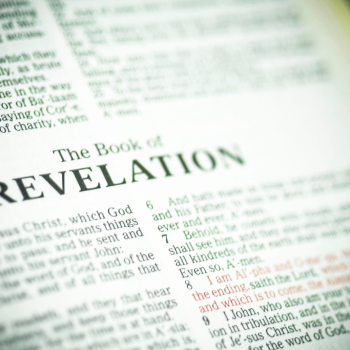
I’m sorry, but I can’t believe that. Even as I write this, the thought of such a horror brings tears to my eyes. And if I have hope for anything, it’s that one day God will wipe every tear from our eyes and that there will be no more death or mourning or crying or pain (Revelation 21:4). Not because God erases my memories a la Men in Black, but because all those I love—which, per Jesus, includes my enemies—are one day reconciled and redeemed.
And so, that is one reason I can’t affirm anything but universal reconciliation. For without it, I’m left with too many questions that I’m simply unable to answer. But if you can, then wonderful. I’d be curious to hear how you go about answering such inquiries.
Until next time. Peace.
Previous Post

March 17, 2018
The Myth of a Violent Jesus: Part 3, The Return
Next Post

March 23, 2018 The Power of Palm Sunday
Browse Our Archives
Select a Category Atonement Book Review Early Church Eschatology eternal torment Hell Hermeneutics LGBTQ+ Mimetic Theory Mysticism News Old Testament Podcast Poetry Politics Prayer Religion Sacrifice Satire Soteriology Theology Uncategorized Violence
Select a Month October 2026 September 2026 August 2026 July 2026 June 2026 May 2026 April 2026 March 2026 February 2026 June 2025 December 2024 November 2024 October 2024 September 2024 August 2024 July 2024 June 2024 May 2024 April 2024 February 2024 January 2024 December 2023 November 2023 October 2023 September 2023 August 2023 June 2023 April 2023 March 2023 February 2023 January 2023 December 2022 November 2022 October 2022 September 2022 August 2022 July 2022 June 2022 May 2022 April 2022 March 2022 February 2022 January 2022 December 2021 November 2021 October 2021 September 2021 August 2021 July 2021 June 2021 May 2021 April 2021 March 2021 February 2021 January 2021 December 2020 November 2020 June 2019 May 2019 April 2019 March 2019 January 2019 December 2018 November 2018 October 2018 September 2018 August 2018 July 2018 June 2018 May 2018 April 2018 March 2018 February 2018 January 2018 December 2017 November 2017 October 2017 July 2017 June 2017 May 2017 April 2017 March 2017 February 2017 January 2017 December 2016 November 2016 October 2016 September 2016 July 2016 June 2016 May 2016 April 2016 March 2016 February 2016 January 2016 December 2015 November 2015 October 2015 September 2015 August 2015 July 2015 June 2015
Follow Us!
TAKE THE
Religious Wisdom Quiz
Who killed Goliath the giant?
Select your answer to see how you score.
Moses David Joseph Adam
Books by This Author Books by All Set Free
Related posts from All Set Free



An Evangelical Case for Trump as the Antichrist
A Second Coming That Undoes the First
TRENDING AT PATHEOS Progressive Christian

Methodist Central Hall and Westminster Abbey
Situated on the same square is Methodist Central Hall and Westminster Abbey. ...

57th Dove Awards Honor Dolly Parton, Crown New...
On gospel music’s biggest night, the 57th annual GMA Dove Awards honored...

The First Eucharistic Controversy: Christ’s Real Presence
For Catholics, the Eucharist is the source and summit of the Christian...

What a Stop Sign Can Teach Us About...
How to Make a Decision When You Can't Hear God Main point:...

Archdiocese Hosts Military Marriage Retreat in Germany
RASTATT, Germany — The transient military lifestyle, with its frequent deployments and...

Nearly every morning, I make the drive to Detroit with my high-school-age...
view all Progressive Christian blogs
Ad-Free & Subscriber Log-In Subscription Support
- About Us
- 2026 Calendar
- Videos
- Podcasts
- Library of World Religions
- Faith In Media Tracker
- Advertise With Us
- Write for Us
- Privacy Policy
- Terms of Service
- Do Not Sell My Data
- Contact Us
- Radiant Digital
- Manage Newsletter Subscriptions
- Unsubscribe From Notifications
- Sitemap
Copyright 2008-2026, Patheos. All rights reserved.
Subscription Support Ad-Free & Subscriber Log-In
Follow Patheos