
BuddhistCatholicContemplativeEvangelicalGeneral ChristianHinduJewishLatter-day SaintMuslimNew VisionsProgressive Christian
Beliefs
- Buddhist
- Catholic
- Contemplative
- Evangelical
- General Christian
- Hindu
- Jewish
- Latter-day Saint
- More Voices
- Muslim
- New Visions
- Pagan
- Progressive Christian
Topics
- Religion News
- Food and Religion
- Sports and Religion
- Religious Art
- Religious Music and Entertainment
- Religious Events
- History and Religion
- Style and Religion
- Politics and Religion
- Women in Religion
- Recreation Outdoors and Religion
- Business Finance and Religion
- Careers Workplace and Religion
- Education and Religion
- Family Parenting and Religion
- Health Fitness and Religion
- Home and Religion
- Relationships and Religion
- Technology and Religion
- Travel and Religion
Columnists
- Buddhist Columnists
- Business Finance and Religion Columnists
- Careers Workplace and Religion Columnists
- Catholic Columnists
- Contemplative Columnists
- Education and Religion Columnists
- Evangelists Columnists
- Family Parenting and Religion Columnists
- General Christian Columnists
- Health Fitness and Religion Columnists
- Hindu Columnists
- History and Religion Columnists
- Home and Religion Columnists
- Jewish Columnists
- More Voices Columnists
- Latter Day Columnists
- Muslim Columnists
- New Visions Columnists
- Nonreligious Columnists
- Pagan Columnists
- Politics and Religion Columnists
- Progressive Columnists
- Recreation Outdoors and Religion Columnists
- Relationships and Religion Columnists
- Religion News Columnists
- Religious Art Columnists
- Religious Events Columnists
- Religious Music and Entertainment Columnists
- Sports and Religion Columnists
- Style and Religion Columnists
- Technology and Religion Columnists
- Travel and Religion Columnists
- Women in Religion Columnists
Resource Library
- 2026 Calendar
- Library of World Religions
- The 100 Most Holy Places on Earth
- Patheos Answers
- Podcasts
- Videos
- Faith Leaders Database
- Anglican Episcopalian
- Bahai
- Baptist
- Buddhism
- Christianity
- Confucianism
- Eastern Orthodoxy
- Hinduism
- Holiness and Pentecostal
- ISKCON
- Islam
- Judaism
- Lutheran
- Methodist
- The Church of Jesus Christ of Latter-day Saints
- New Age
- Paganism
- Presbytarian and Reformed
- Protestantism
- Religion Behind the Scenes
- Roman Catholic
- Scientology
- Shia Islam
- Sikhism
- Sufism
- Sunni Islam
- Taoism
- Zen
- See all religions
Research Tools
 Ad-Free & Subscriber Log-In Subscription Support
Ad-Free & Subscriber Log-In Subscription Support
Follow Patheos 

- Trending:
- Forgiveness
- |
- Marriage
- |
- Consciousness
- |
- Death Penalty
- |
- Election
- |
- Halloween

- Home
- Progressive Christian
- Religion News
- A Response to One of My Detractors (Re: ‘What My Universalism Is and Is Not’)
A Response to One of My Detractors (Re: ‘What My Universalism Is and Is Not’)
Last updated on: December 12, 2017 at 1:08 pm by Matthew Distefano
A Response to One of My Detractors (Re: ‘What My Universalism Is and Is Not’) 2017-12-12T13:08:03-06:00 Matthew Distefano
Patheos Explore the world's faith through different perspectives on religion and spirituality! Patheos has the views of the prevalent religions and spiritualities of the world.

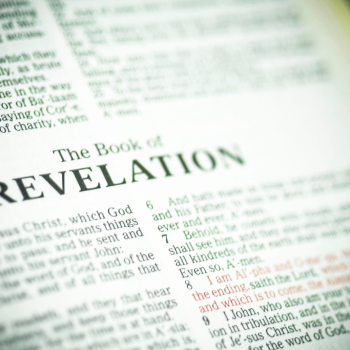
Courtesy of Pixabay
On October 1, 2016, I published an article entitled “What My Universalism Is and Is Not.” I did this as a way to explain, among other things, what I truly believe about the end, because it seems that more often than not, people don’t actually understand what universalism (in the Christian sense) actually entails. So, I wanted to clear the air so to speak.
Now, a growing number of people have been sharing this piece (to which I’m super grateful), but not all because they like what I have to say. In fact, some are quite worried for my soul and the souls of those I’m leading astray with my “bad theology.” In this piece, I wanted to respond to 5 concerns one particular detractor had.
Here they are, in the order they were received:
- The scriptures plainly teach the eternality of hell and impossibility of repentance after death and judgment (Luke 16:19–31).
When it comes to eschatological matters, the Bible doesn’t plainly teach anything. Indeed, a plain reading of the Bible can easily lead one toward one of three positions, namely eternal conscious torment (ECT), conditional immortality/annihilationism (CI), or universal reconciliation/redemption (UR). That said, let me tackle the passage this person uses as “proof” for the correctness of their infernalist view.
First, I believe Luke 16:19–31 is a parable, a tale meant for pedagogy. However, let’s assume I’m wrong and that it is an historical account of how a rich man goes to hell. Indeed, many Christians use it as such, in my mind simply because a prima facie reading of the text can certainly leave open that possibility. As verses 22–23 tell us, “The rich man also died and was buried. In Hades, where he was being tormented, he looked up and saw Abraham far away with Lazarus by his side.” Sounds like hell, doesn’t it? But then it gets worse. Abraham tells the rich man that “between you and us a great chasm has been fixed, so that those who might want to pass from here to you cannot do so, and no one can cross from there to us.” Game. Set. Match. Amiright?
Well, not so fast.
Doesn’t this raise the question: What of the cross? Is the cross of Christ not the means by which the great chasm is defeated for all of us? A high Christology certainly says it is. Moreover, when Jesus preached the gospel to the dead (1 Peter 3:19; 4:6), what exactly do we think he was doing? Was he not emptying out Hades so that, in the end, both death and Hades could be done away with forever so that God may be “all in all” (1 Corinthians 15:20–28)? I believe he was.
Now, I could delve deeper into this passage, but I don’t really have the space for that. But what I want to emphasize is that nowhere does this story say that the rich man will be tormented in Hades forever. Indeed, there is a great chasm that no one (at least not at the time) could cross. For my money, however, the cross fixes that.
*For a deeper look into this parable, please see Thomas Talbott’s The Inescapable Love of God, pp. 86–88.
- The patristics overwhelmingly taught the eternality of hell http://www.bible.ca/H-hell.htm.**
Um, no they didn’t; as even Augustine admitted that “indeed very many” affirmed universal reconciliation. A quick snapshot of the most influential early Christian Universalists, from Patristics scholar Ilaria Ramelli, certainly reinforces this notion:
“The main Patristic supporters of the apokatastasis theory, such as Bardaisan, Clement, Origen, Didymus, St. Anthony, St. Pamphilus Martyr, Methodius, St. Macrina, St. Gregory of Nyssa (and probably the two other Cappadocians), St. Evagrius Ponticus, Diodore of Tarsus, Theodore of Mopsuestia, St. John of Jerusalem, Rufinus, St. Jerome and St. Augustine (at least initially) . . . Cassian, St. Issac of Nineveh, St. John of Dalyatha, Ps. Dionysius the Areopagite, probably St. Maximus the Confessor, up to John the Scot Eriugena, and many others, grounded their Christian doctrine of apokatastasis first of all in the Bible.” (Ramelli, The Christian Doctrine of Apokatastasis: A Critical Assessment from the New Testament to Eriugena, 11.)
To remain ignorant to this is no excuse.
- The effect of such universalism is not a spur to the pursuit of repentance from sin, holiness, and reconciliation with God.
A statement like this really piss me off because it completely diminishes my directed experiences. When I was an infernalist—for 25 years in fact—I never felt free from sin. Indeed, fear was not a great motivator. However, to now know I’m wholly forgiven, no matter what?! Are you kidding me? What liberation! I’ve never felt so free from sin, which in turn makes me free to love, to forgive, to show compassion and mercy and grace to those I used to sin against.
And I know I’m not the only one. In fact, a year or so ago I received the most touching card in the mail, in which one of my Facebook friends told me how, prior to reading my universalistic material, she was “damn near an atheist.” Now, however, she was joyously walking again in the Way of Jesus.
- It makes light of sin and it does in fact misunderstand the justice of the holy and eternal God as described in the scripture [sic].
No, it doesn’t make light of sin. It just elevates the work of Christ. As the apostle Paul taught, where grace abounds, sin abounds all the more. Oh wait, that’s not what he taught. He taught that where sin abounds, grace abounds all the more.
Now, regarding my supposed misunderstanding of the justice of God, I’ll simply leave you with this quote from a recent blog entry:
“If we are going to make the claim that God IS love—not that God is merely loving, but that God is the very essence of love—then we are going to have to be really careful not to talk about God’s other attributes outside of this context. Indeed, justice and mercy are two sides of the same coin we call love. In the same way that we wouldn’t choose which attributes to evoke when reprimanding our kids—that is to say we should always reprimand in love—God doesn’t choose which attributes to evoke when chastising us. It’s always in the context that God is love. Hence, God’s justice is loving. God’s wrath is loving. God’s holiness is loving. And God is always seeking to restore us, to reconcile with us. All of us, all the time.”
- It robs the cross of its meaning and power to actually save men from the wrath of God and hell and turns it into a good example of good behavior, good will, and forgiveness rather than the propitiatory, substitutionary once for all sacrifice for the salvation of the elect, which it is.
What I take this final point to mean is that my view of the atonement—which is a sort of mish-mash of Christus Victor, moral influence, and Girardian theory (I’ll discuss all this in my forthcoming book, Heretic!)—is wrong, while the 16th century Calvinistic view is correct. Now, if one wants to affirm this, then that is fine. That is their prerogative. But are we really content to say that purpose of the cross is to save us from God? Really? Is that how Jesus viewed it? Is that how the writer of Luke-Acts talks about it? Is that how Paul talked about it? I don’t think so (but again, I’ll discuss this in my forthcoming book). In the meantime, for those interested in learning more about a more Christlike atonement theology, I recommend the following:
Stricken by God? Edited by Brad Jersak and Michael Hardin
The Slavery of Death by Richard Beck
Christus Victor by Gustaf Aulen
Saved from Sacrifice by Mark Heim
A More Christlike God by Brad Jersak
Previous Post

December 4, 2017
Christians, We're Focused on the Wrong Things
Next Post

December 13, 2017 Hell Believers, Please Consider the Following
Browse Our Archives
Select a Category Atonement Book Review Early Church Eschatology eternal torment Hell Hermeneutics LGBTQ+ Mimetic Theory Mysticism News Old Testament Podcast Poetry Politics Prayer Religion Sacrifice Satire Soteriology Theology Uncategorized Violence
Select a Month October 2026 September 2026 August 2026 July 2026 June 2026 May 2026 April 2026 March 2026 February 2026 June 2025 December 2024 November 2024 October 2024 September 2024 August 2024 July 2024 June 2024 May 2024 April 2024 February 2024 January 2024 December 2023 November 2023 October 2023 September 2023 August 2023 June 2023 April 2023 March 2023 February 2023 January 2023 December 2022 November 2022 October 2022 September 2022 August 2022 July 2022 June 2022 May 2022 April 2022 March 2022 February 2022 January 2022 December 2021 November 2021 October 2021 September 2021 August 2021 July 2021 June 2021 May 2021 April 2021 March 2021 February 2021 January 2021 December 2020 November 2020 June 2019 May 2019 April 2019 March 2019 January 2019 December 2018 November 2018 October 2018 September 2018 August 2018 July 2018 June 2018 May 2018 April 2018 March 2018 February 2018 January 2018 December 2017 November 2017 October 2017 July 2017 June 2017 May 2017 April 2017 March 2017 February 2017 January 2017 December 2016 November 2016 October 2016 September 2016 July 2016 June 2016 May 2016 April 2016 March 2016 February 2016 January 2016 December 2015 November 2015 October 2015 September 2015 August 2015 July 2015 June 2015
Follow Us!
TAKE THE
Religious Wisdom Quiz
What did Moses do after breaking the tablets?
Select your answer to see how you score.
Left the camp Fasted for 30 days Returned to Sinai for new tablets Destroyed the calf
Books by This Author Books by All Set Free
Related posts from All Set Free



An Evangelical Case for Trump as the Antichrist
A Second Coming That Undoes the First
TRENDING AT PATHEOS Progressive Christian

57th Dove Awards Honor Dolly Parton, Crown New...
On gospel music’s biggest night, the 57th annual GMA Dove Awards honored...

The First Eucharistic Controversy: Christ’s Real Presence
For Catholics, the Eucharist is the source and summit of the Christian...

What a Stop Sign Can Teach Us About...
How to Make a Decision When You Can't Hear God Main point:...

Archdiocese Hosts Military Marriage Retreat in Germany
RASTATT, Germany — The transient military lifestyle, with its frequent deployments and...

Nearly every morning, I make the drive to Detroit with my high-school-age...

The Real AI Story Is Adoption Without Trust
Artificial intelligence has crossed a political threshold. It is no longer a...
view all Progressive Christian blogs
Ad-Free & Subscriber Log-In Subscription Support
- About Us
- 2026 Calendar
- Videos
- Podcasts
- Library of World Religions
- Faith In Media Tracker
- Advertise With Us
- Write for Us
- Privacy Policy
- Terms of Service
- Do Not Sell My Data
- Contact Us
- Radiant Digital
- Manage Newsletter Subscriptions
- Unsubscribe From Notifications
- Sitemap
Copyright 2008-2026, Patheos. All rights reserved.
Subscription Support Ad-Free & Subscriber Log-In
Follow Patheos