
BuddhistCatholicContemplativeEvangelicalGeneral ChristianHinduJewishLatter-day SaintMuslimNew VisionsProgressive Christian
Beliefs
- Buddhist
- Catholic
- Contemplative
- Evangelical
- General Christian
- Hindu
- Jewish
- Latter-day Saint
- More Voices
- Muslim
- New Visions
- Pagan
- Progressive Christian
Topics
- Religion News
- Food and Religion
- Sports and Religion
- Religious Art
- Religious Music and Entertainment
- Religious Events
- History and Religion
- Style and Religion
- Politics and Religion
- Women in Religion
- Recreation Outdoors and Religion
- Business Finance and Religion
- Careers Workplace and Religion
- Education and Religion
- Family Parenting and Religion
- Health Fitness and Religion
- Home and Religion
- Relationships and Religion
- Technology and Religion
- Travel and Religion
Columnists
- Buddhist Columnists
- Business Finance and Religion Columnists
- Careers Workplace and Religion Columnists
- Catholic Columnists
- Contemplative Columnists
- Education and Religion Columnists
- Evangelists Columnists
- Family Parenting and Religion Columnists
- General Christian Columnists
- Health Fitness and Religion Columnists
- Hindu Columnists
- History and Religion Columnists
- Home and Religion Columnists
- Jewish Columnists
- More Voices Columnists
- Latter Day Columnists
- Muslim Columnists
- New Visions Columnists
- Nonreligious Columnists
- Pagan Columnists
- Politics and Religion Columnists
- Progressive Columnists
- Recreation Outdoors and Religion Columnists
- Relationships and Religion Columnists
- Religion News Columnists
- Religious Art Columnists
- Religious Events Columnists
- Religious Music and Entertainment Columnists
- Sports and Religion Columnists
- Style and Religion Columnists
- Technology and Religion Columnists
- Travel and Religion Columnists
- Women in Religion Columnists
Resource Library
- 2026 Calendar
- Library of World Religions
- The 100 Most Holy Places on Earth
- Patheos Answers
- Podcasts
- Videos
- Faith Leaders Database
- Anglican Episcopalian
- Bahai
- Baptist
- Buddhism
- Christianity
- Confucianism
- Eastern Orthodoxy
- Hinduism
- Holiness and Pentecostal
- ISKCON
- Islam
- Judaism
- Lutheran
- Methodist
- The Church of Jesus Christ of Latter-day Saints
- New Age
- Paganism
- Presbytarian and Reformed
- Protestantism
- Religion Behind the Scenes
- Roman Catholic
- Scientology
- Shia Islam
- Sikhism
- Sufism
- Sunni Islam
- Taoism
- Zen
- See all religions
Research Tools
 Ad-Free & Subscriber Log-In Subscription Support
Ad-Free & Subscriber Log-In Subscription Support
Follow Patheos 

- Trending:
- Forgiveness
- |
- Marriage
- |
- Consciousness
- |
- Death Penalty
- |
- Election
- |
- Halloween

- Home
- Progressive Christian
- Religion News
- Problematizing Biblical Inerrancy
Problematizing Biblical Inerrancy
Last updated on: November 6, 2017 at 12:45 pm by Matthew Distefano
Problematizing Biblical Inerrancy 2017-11-06T12:45:22-06:00 Matthew Distefano
Patheos Explore the world's faith through different perspectives on religion and spirituality! Patheos has the views of the prevalent religions and spiritualities of the world.

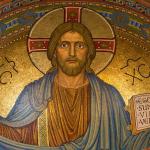
Courtesy of Pixabay
It seems safe to say that most Christians — whether Catholic, Protestant, Orthodox, Anabaptist, or something else entirely — believe they are generally correct in their doctrinal views. Otherwise, why would they have them? This is not necessarily a bad thing, since there is nothing wrong with loosely holding onto beliefs we find credible. However, many of these folks — mainly Protestants who affirm an inerrant Bible — are not simply convinced about their beliefs, but are certain they are correct. Which makes those who differ wrong. Dead wrong.
In this piece, while I am not going to put forth a particular way to approach Scripture (I’ve done that here, here, and here), I am going to be a bit of a rabble-rouser and simply problematize things for folks who consider themselves inerrantists. After all, the first step to solving a problem is to admit there is one. And Houston, inerrancy has and is a problem.
Problem I: Jesus Takes a Back Seat to Scripture
If we begin our theological pilgrimage (as Karl Barth might call it) with an inerrant Bible, then we aren’t beginning with Jesus. And if we fail to start with Jesus, instead opting to start with a certain view of the book — or rather, books — that testify about him, how can we ever know the way in which Jesus himself approached his Scriptures? Is it enough to say that “because he quotes from Scripture, he therefore affirms it all?” Well, that would be highly irresponsible of us, as it assumes far too much and fails to lead us in asking some crucial questions, such as: How did he interpret Scripture? Did he follow a certain pattern? What did he even consider “Scripture?”
Furthermore, if we begin with the view that everything said in the Bible — even all the whacky stuff — testifies to the true nature of God, then we would be more than hard-pressed in saying, as Paul did, that Jesus is the fullness of God in bodily form (Col 2:9). In other words, with inerrancy, any theological truths that Jesus reveals become papered over by the whole of Scripture, instead of the whole of Scripture being read through the lens of the life, death, resurrection, and ascension of Christ.
This seems bass-ackwards!
Problem II: Sociological Problems Abound
When every jot and tittle of Scripture is assumed to be inerrant, real world problems arise. Turn your attention to John 9. In this story, Jesus and his disciples come across a societal outcast who was born blind. The disciples ask “Rabbi, who sinned, this man or his parents, that he was born blind?” But why do they assume this?
Well, this thinking comes straight from Deuteronomy 5 and 28. The Bible is clear:
- Deut 5:9: You shall not bow down to them or worship them; for I the Lord your God am a jealous God, punishing children for the iniquity of parents, to the third and fourth generation of those who reject me.
- Deut 28:18: Cursed shall be the fruit of your womb.
- Deut 28:22: The Lord will afflict you with consumption, fever, inflammation.
- Deut 28:27: The Lord will afflict you with the boils of Egypt; with ulcers, scurvy, and itch, of which you cannot be healed.
- Deut 28:37: You shall become an object of horror.
Needless to say, when we take for granted that everything in Scripture is from God himself, we certainly run the risk of looking around at those in need and concluding that they are cursed — just like Job’s “friends” did all throughout the book of Job. And just like many of the folks did in Jesus’ day. Sadly, and since we are living post-Jesus, ironically, we still do this today.
Problem III: You Can’t Shed Your Subjectivity
No matter what objective truths are out there, we can never approach them objectively ourselves. We are always in first-person mode, bringing our own subjectivity to the table. Even if the Bible were written by God and contained zero historical, anthropological, psychological, or theological errors, we would still never be able to approach it objectively. We will always bring our presuppositions to our interpretation.
For one example of what I’m talking about, let’s think about Paul’s phrase pistis Christou. Is it the “faithfulness of Christ” or “faith in Christ” that saves us? Some scholars affirm the former, others the latter. What are we non-scholars to say? It makes a difference, because if it is the faithfulness of Christ that “reconciles the world to God,” then salvation is, first and foremost, an act of God. If, on the other hand, it is our faith in Christ that saves us, then salvation is, first and foremost, offered by God, but actualized by our faith. Our answer likely depends upon a whole host of factors, including any assumptions and presuppositions we may currently have.
Piggybacking on this, what is the “correct” biblical way of thinking about our “belief” in Jesus? As the Lord says in John’s Gospel, he is “the way” to the Father (John 14:6). But how are we to interpret this? As Michael Machuga points out in our book, A Journey with Two Mystics, this can mean a whole host of things. First, it could mean we simply must acknowledge that Jesus exists, that he is who he says he is — sort of like believing in Santa Claus. Or, it could mean believing that his way of living — his ethics, politics, and philosophy — is our model for living. And third, it could mean believing he accomplished what he set out to accomplish, namely, that he indeed conquered death and was victorious over sin and the devil.
At the end of the day, all these issues (and many more) are open for interpretation, whether we call our Bible inerrant or not.
Problem IV: Which Bible Are We Even Talking About?
When we make the claim that “the Bible is inerrant,” which canon are we referring to? Is it only the 66 book Protestant Bible? Or should we add some deuterocanonical books? Why? Why not? How would it change things if, for example, we had 1 Enoch in our canon (Jude probably did)? That instead of the Bible being 66 books, it was 80? Or 81, as the Ethiopian Orthodox Church suggests?
Furthermore, are only the original manuscripts (which we don’t have) inerrant or did the translations also stand the test of time? All of them? Even the ones that contradict each other? Even the ones with missing verses (the NIV doesn’t include John 5:4, Acts 8:37, and a few others)?
Problem V: The Bible Never Makes this Claim
The Bible simply never makes the claim that it is inerrant. (And even if it did, the logic would be entirely circular. And it still wouldn’t address our fourth problem.) Sure, there is that funky verse in 2 Timothy, but using it as some proof-text for inerrancy seems rather dubious.
First, there is no “is” in the Greek text. The writer simply begins the sentence with “Pasa graphe theopneustos kai,” which literally translates to “Every writing God-breathed and.” So, translators have to make a decision. Should it read: “All Scripture is inspired by God…” or “Every Scripture inspired by God is…” or “Every writing God-breathed is…” or something else entirely? Our answer makes a lot of difference here.
Second, given that the writer of 2 Timothy could not have possessed what we moderns call “the Bible,” one would have to conclude that what they meant by “Scripture/writing” was in relation to the Hebrew Scriptures. Forcing our canon of Scripture back into this text is anachronistic and fallacious.
All that said, even if we take what we call “the Bible” and determine it is all “God-breathed,” that hardly means it is inerrant (or infallible for that matter). Heck, the Bible clearly states that humanity is “God-breathed” — God breathes the ruach into the adama to create a living nefesh — but no one I know is clamoring on about how humanity is inerrant. Far from it, in fact! And I would agree with them.
In Closing
If you don’t happen to see the same problems with inerrancy that I do, then that is understandable. These are just the issues I was confronted with that forced me, after 25 years of living the Evangelical lifestyle, into the desert of deconstruction. Sure, when I “came out the other side,” Jesus was there, with the Scriptures in-hand, so that I could sit at his feet. But I didn’t always know this, so I empathize with those who think I am trying to “take away their Bibles.” I am not — I am just verbalizing the problems I, and others, have faced in our journey out of inerrancy. Do with it as you see fit.
Peace.
old testamentprogressive christian newsletter
Previous Post
June 22, 2017
Jesus is the Reason the Bible is Not Innerant
Next Post

October 3, 2017 5 Things We’ll Miss if We Take the Bible Too Literally
Browse Our Archives
Select a Category Atonement Book Review Early Church Eschatology eternal torment Hell Hermeneutics LGBTQ+ Mimetic Theory Mysticism News Old Testament Podcast Poetry Politics Prayer Religion Sacrifice Satire Soteriology Theology Uncategorized Violence
Select a Month October 2026 September 2026 August 2026 July 2026 June 2026 May 2026 April 2026 March 2026 February 2026 June 2025 December 2024 November 2024 October 2024 September 2024 August 2024 July 2024 June 2024 May 2024 April 2024 February 2024 January 2024 December 2023 November 2023 October 2023 September 2023 August 2023 June 2023 April 2023 March 2023 February 2023 January 2023 December 2022 November 2022 October 2022 September 2022 August 2022 July 2022 June 2022 May 2022 April 2022 March 2022 February 2022 January 2022 December 2021 November 2021 October 2021 September 2021 August 2021 July 2021 June 2021 May 2021 April 2021 March 2021 February 2021 January 2021 December 2020 November 2020 June 2019 May 2019 April 2019 March 2019 January 2019 December 2018 November 2018 October 2018 September 2018 August 2018 July 2018 June 2018 May 2018 April 2018 March 2018 February 2018 January 2018 December 2017 November 2017 October 2017 July 2017 June 2017 May 2017 April 2017 March 2017 February 2017 January 2017 December 2016 November 2016 October 2016 September 2016 July 2016 June 2016 May 2016 April 2016 March 2016 February 2016 January 2016 December 2015 November 2015 October 2015 September 2015 August 2015 July 2015 June 2015
Follow Us!
TAKE THE
Religious Wisdom Quiz
What does Paul say in Colossians has been nailed to the cross?
Select your answer to see how you score.
The written code with its regulations The old covenant Satan's authority Our sins
Books by This Author Books by All Set Free
Related posts from All Set Free

A Second Coming That Undoes the First


Trading Curiosity for Certainty
TRENDING AT PATHEOS Progressive Christian

57th Dove Awards Honor Dolly Parton, Crown New...
On gospel music’s biggest night, the 57th annual GMA Dove Awards honored...

The First Eucharistic Controversy: Christ’s Real Presence
For Catholics, the Eucharist is the source and summit of the Christian...

What a Stop Sign Can Teach Us About...
How to Make a Decision When You Can't Hear God Main point:...

Archdiocese Hosts Military Marriage Retreat in Germany
RASTATT, Germany — The transient military lifestyle, with its frequent deployments and...

Nearly every morning, I make the drive to Detroit with my high-school-age...

The Real AI Story Is Adoption Without Trust
Artificial intelligence has crossed a political threshold. It is no longer a...
view all Progressive Christian blogs
Ad-Free & Subscriber Log-In Subscription Support
- About Us
- 2026 Calendar
- Videos
- Podcasts
- Library of World Religions
- Faith In Media Tracker
- Advertise With Us
- Write for Us
- Privacy Policy
- Terms of Service
- Do Not Sell My Data
- Contact Us
- Radiant Digital
- Manage Newsletter Subscriptions
- Unsubscribe From Notifications
- Sitemap
Copyright 2008-2026, Patheos. All rights reserved.
Subscription Support Ad-Free & Subscriber Log-In
Follow Patheos