
BuddhistCatholicContemplativeEvangelicalGeneral ChristianHinduJewishLatter-day SaintMuslimNew VisionsProgressive Christian
Beliefs
- Buddhist
- Catholic
- Contemplative
- Evangelical
- General Christian
- Hindu
- Jewish
- Latter-day Saint
- More Voices
- Muslim
- New Visions
- Pagan
- Progressive Christian
Topics
- Religion News
- Food and Religion
- Sports and Religion
- Religious Art
- Religious Music and Entertainment
- Religious Events
- History and Religion
- Style and Religion
- Politics and Religion
- Women in Religion
- Recreation Outdoors and Religion
- Business Finance and Religion
- Careers Workplace and Religion
- Education and Religion
- Family Parenting and Religion
- Health Fitness and Religion
- Home and Religion
- Relationships and Religion
- Technology and Religion
- Travel and Religion
Columnists
- Buddhist Columnists
- Business Finance and Religion Columnists
- Careers Workplace and Religion Columnists
- Catholic Columnists
- Contemplative Columnists
- Education and Religion Columnists
- Evangelists Columnists
- Family Parenting and Religion Columnists
- General Christian Columnists
- Health Fitness and Religion Columnists
- Hindu Columnists
- History and Religion Columnists
- Home and Religion Columnists
- Jewish Columnists
- More Voices Columnists
- Latter Day Columnists
- Muslim Columnists
- New Visions Columnists
- Nonreligious Columnists
- Pagan Columnists
- Politics and Religion Columnists
- Progressive Columnists
- Recreation Outdoors and Religion Columnists
- Relationships and Religion Columnists
- Religion News Columnists
- Religious Art Columnists
- Religious Events Columnists
- Religious Music and Entertainment Columnists
- Sports and Religion Columnists
- Style and Religion Columnists
- Technology and Religion Columnists
- Travel and Religion Columnists
- Women in Religion Columnists
Resource Library
- 2026 Calendar
- Library of World Religions
- The 100 Most Holy Places on Earth
- Patheos Answers
- Podcasts
- Videos
- Faith Leaders Database
- Anglican Episcopalian
- Bahai
- Baptist
- Buddhism
- Christianity
- Confucianism
- Eastern Orthodoxy
- Hinduism
- Holiness and Pentecostal
- ISKCON
- Islam
- Judaism
- Lutheran
- Methodist
- The Church of Jesus Christ of Latter-day Saints
- New Age
- Paganism
- Presbytarian and Reformed
- Protestantism
- Religion Behind the Scenes
- Roman Catholic
- Scientology
- Shia Islam
- Sikhism
- Sufism
- Sunni Islam
- Taoism
- Zen
- See all religions
Research Tools
 Ad-Free & Subscriber Log-In Subscription Support
Ad-Free & Subscriber Log-In Subscription Support
Follow Patheos 

- Trending:
- Forgiveness
- |
- Marriage
- |
- Consciousness
- |
- Death Penalty
- |
- Election
- |
- Halloween

- Home
- Progressive Christian
- Religion News
- Jesus is the Reason the Bible is Not Innerant
Jesus is the Reason the Bible is Not Innerant
Last updated on: November 6, 2017 at 12:44 pm by Matthew Distefano
Jesus is the Reason the Bible is Not Innerant 2017-11-06T12:44:32-06:00 Matthew Distefano
Patheos Explore the world's faith through different perspectives on religion and spirituality! Patheos has the views of the prevalent religions and spiritualities of the world.
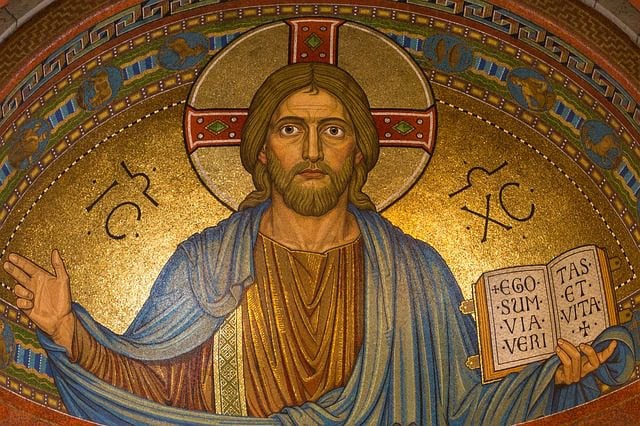
Growing up, I was always told that the Bible was the inerrant Word of God. What is meant by this is that it is without error or fault in all of its teaching (see The Chicago Statement on Biblical Inerrancy). Without even getting into what is considered “correct” canon—as that is not even agreed upon—if something in Scripture says “God said,” then that means “God said.” And if something says “God did,” then that means “God did.” So, for instance, in Numbers 25, when the writer says that God said to Moses, “Take all the chiefs of the people, and impale them in the sun,” then that means this conversation happened just as it is written. God literally, at one point in history, commanded murder so that his anger can be assuaged. And then, when Phinehas does just as God commanded, he is given a peace covenant.
Just let that sink in for a moment.
But this is just one of many stories like this contained throughout the Scriptures—where God commands others to spill blood in his name. And in theory, I guess it is possible that God is like this. It is possible that all of the stories in the Bible, where God is depicted as a bloodthirsty deity, are true. But then what do we do with the first-century pacifist name Jesus, who lived his life in servitude for others, never once committing an act of violence? Is his Gospel not a gospel of peace (Eph 6:15)? And is he not what God is like as a human? And did Paul—taking for granted he wrote Colossians—not describe him as the fullness of God in bodily form (paraphrasing Col 2:9)? And did Jesus himself not say that no one has ever seen God except for him (John 1:18)?
So what do we do with this?
Well, we could do what most Christians in the West do, namely create a Janus-faced God. We could say that Jesus reveals one side of God (i.e. his merciful side), while failing to reveal his wrathful side. Or, we could say that during one epoch of history (the Old Testament), God is vengeful, and then in another epoch (the first century) he is merciful—and then per the book of Revelation, he will return to vengeful.
But answers like these fail to get to the heart of my questions above.
Moreover, they fail to do us any good if we are supposed to think of God as a Father, or as Jesus so affectionately called him, Abba. And they fail to do us any good if God is to be thought of as the same yesterday, today, and forever, just as Christ is described by the writer of Hebrews (Heb 13:8). Because these answers don’t do a damn bit of good for us at all, we need to rethink our approach. We need to start with Jesus and work backward, so to speak.
Let’s start with John 1.
The writer begins, “In the beginning was the Word, and the Word was with God, and the Word was God” (John 1:1). Now, to state what should be the obvious: the Word here is not the Bible. It is the Christ. It is not a book. It is a human.
John 1:1 is also a “rewrite” of Genesis 1:1, where “in the beginning” God created something. Now, in the beginning was already a something, the Word—Jesus Christ. The writer is telling us where to begin, not with an authority of Scripture, or a hermeneutical approach, or any doctrine or dogma, but with a person, a walking, talking, breathing person.
When we start here, then, we have the correct foundation for when we approach something like the authority of Scripture. We have the cornerstone, if you will (Matt 21:42). And this cornerstone has a very specific way of interpreting things. Let me point to just a few passages so that you see what I mean.
First, Luke 4 has an interesting story about Jesus’ initial teaching after his testing in the wilderness. After Jesus enters the synagogue, it eventually comes time for him to read, so he is given the scroll from the prophet Isaiah. He turns to what is now Isa 61:1–2, and reads, “The Spirit of the Lord is upon me, because he has anointed me to bring good news to the poor. He has sent me to proclaim release from the captives and recovery of sight to the blind, to let the oppressed go free, to proclaim the year of the Lord’s favor.” Then he stops, and rolls up the scroll—midsentence. What he “should have” read was the phrase “And the day of vengeance of our God.” But he doesn’t. And this is not taken in kind by the once eager listeners. In fact, his interpretive method nearly gets him tossed off a cliff, because for God’s vengeance to be omitted is for the enemies of Israel to not suffer what is promised them.
But the wrath of God of course had to befall those oppressing God’s people. This was a theological given.
But not according to Jesus.
One other theological given—based on clear Scriptural truths—was that those who were afflicted with illnesses were in such a state due to their sin. Thinking like this comes from places like Deut 28:15, 20–24, 59–61. But what Jesus teaches in John 9:3 is that things don’t work like this. Jesus, instead of likening blindness to sin, says that blindness is a part of life so that God can show God’s self to be a healer, a reconciler, a peacemaker. After all, God sends his rain on the righteous and the wicked, and blesses sinners and saints alike (Matt 5:45). He doesn’t, as the Proverb clearly states, reserve curses for the house of the wicked and blessings for the house of the righteous (Prov 3:33).
Not according to Jesus.
He was not bound to some presupposed authority of Scripture, no matter what his interlocutors thought and said. Sure, the Scriptures taught certain things about God as if they were objective truths, but Jesus often countered these with his own teachings. The Sermon on the Mount is notorious for this.
“You have heard that it was said . . . but I say unto you.”
Over and over he does this, where he replaces one set of teachings with new, progressive ones. And he can do this because he speaks on behalf of the Father. In fact, he only says and does what he sees the Father doing (John 5:19). And what he sees the Father doing is showing mercy to all (Luke 6:36).
That is why Jesus goes to the cross speaking the message of peace and grace (Luke 23:34). His Father is doing the same. In fact, his Father has always been doing that because his Father never changes. That is the theological reorientation Christ gave us, and it is also the reason I cannot believe, for one damn second, everything said about the Father in what we call the Bible is true. Or, quoting the prophet Jeremiah, “the lying pen of the scribes has surely distorted it” (Jer 8:8).
So if we are going to say Christians are to be followers of Jesus, then we need to follow his scriptural teachings. When we do, we will find that he had a specific and unique approach. And it was far from “God said it, I believe it, and that settles it.” Sorry, it’s not that easy folks. It actually takes diligent work to “rightly explain the word of truth” (2 Tim 2:15).
Peace.
Previous Post
June 11, 2017
God Made Adam, Eve, and Steve
Next Post

July 26, 2017 Problematizing Biblical Inerrancy
Browse Our Archives
Select a Category Atonement Book Review Early Church Eschatology eternal torment Hell Hermeneutics LGBTQ+ Mimetic Theory Mysticism News Old Testament Podcast Poetry Politics Prayer Religion Sacrifice Satire Soteriology Theology Uncategorized Violence
Select a Month October 2026 September 2026 August 2026 July 2026 June 2026 May 2026 April 2026 March 2026 February 2026 June 2025 December 2024 November 2024 October 2024 September 2024 August 2024 July 2024 June 2024 May 2024 April 2024 February 2024 January 2024 December 2023 November 2023 October 2023 September 2023 August 2023 June 2023 April 2023 March 2023 February 2023 January 2023 December 2022 November 2022 October 2022 September 2022 August 2022 July 2022 June 2022 May 2022 April 2022 March 2022 February 2022 January 2022 December 2021 November 2021 October 2021 September 2021 August 2021 July 2021 June 2021 May 2021 April 2021 March 2021 February 2021 January 2021 December 2020 November 2020 June 2019 May 2019 April 2019 March 2019 January 2019 December 2018 November 2018 October 2018 September 2018 August 2018 July 2018 June 2018 May 2018 April 2018 March 2018 February 2018 January 2018 December 2017 November 2017 October 2017 July 2017 June 2017 May 2017 April 2017 March 2017 February 2017 January 2017 December 2016 November 2016 October 2016 September 2016 July 2016 June 2016 May 2016 April 2016 March 2016 February 2016 January 2016 December 2015 November 2015 October 2015 September 2015 August 2015 July 2015 June 2015
Follow Us!
TAKE THE
Religious Wisdom Quiz
Who was Timothy's mother?
Select your answer to see how you score.
Priscilla Mary Eunice Lois
Books by This Author Books by All Set Free
Related posts from All Set Free

A Second Coming That Undoes the First

Trading Curiosity for Certainty
TRENDING AT PATHEOS Progressive Christian

A new article, written by Jeff Lindsay and Gale L. Pooley,...

Swimfan: Forgotten Aughts Pleasures
This is a recovery effort. In 2002, My Big Fat Greek Wedding...

Top Three Anti-Catholic Lies About Catholicism
This is my initial transcript for the video, "THE 3 WORST...

Pope Leo Celebrates Mass for Nurses & Docs...
I don't have any idea how he did it, but Pope Leo...

The Sermon on the Mount, Part I: Matthew...
The Sermon on the Mount, Part I (Matthew 4:12-5:12) St. Matthew moves...

What's up from Crossway: Reviewing some of their latest A few weeks...
view all Progressive Christian blogs
Ad-Free & Subscriber Log-In Subscription Support
- About Us
- 2026 Calendar
- Videos
- Podcasts
- Library of World Religions
- Faith In Media Tracker
- Advertise With Us
- Write for Us
- Privacy Policy
- Terms of Service
- Do Not Sell My Data
- Contact Us
- Radiant Digital
- Manage Newsletter Subscriptions
- Unsubscribe From Notifications
- Sitemap
Copyright 2008-2026, Patheos. All rights reserved.
Subscription Support Ad-Free & Subscriber Log-In
Follow Patheos