
BuddhistCatholicContemplativeEvangelicalGeneral ChristianHinduJewishLatter-day SaintMuslimNew VisionsProgressive Christian
Beliefs
- Buddhist
- Catholic
- Contemplative
- Evangelical
- General Christian
- Hindu
- Jewish
- Latter-day Saint
- More Voices
- Muslim
- New Visions
- Pagan
- Progressive Christian
Topics
- Religion News
- Food and Religion
- Sports and Religion
- Religious Art
- Religious Music and Entertainment
- Religious Events
- History and Religion
- Style and Religion
- Politics and Religion
- Women in Religion
- Recreation Outdoors and Religion
- Business Finance and Religion
- Careers Workplace and Religion
- Education and Religion
- Family Parenting and Religion
- Health Fitness and Religion
- Home and Religion
- Relationships and Religion
- Technology and Religion
- Travel and Religion
Columnists
- Buddhist Columnists
- Business Finance and Religion Columnists
- Careers Workplace and Religion Columnists
- Catholic Columnists
- Contemplative Columnists
- Education and Religion Columnists
- Evangelists Columnists
- Family Parenting and Religion Columnists
- General Christian Columnists
- Health Fitness and Religion Columnists
- Hindu Columnists
- History and Religion Columnists
- Home and Religion Columnists
- Jewish Columnists
- More Voices Columnists
- Latter Day Columnists
- Muslim Columnists
- New Visions Columnists
- Nonreligious Columnists
- Pagan Columnists
- Politics and Religion Columnists
- Progressive Columnists
- Recreation Outdoors and Religion Columnists
- Relationships and Religion Columnists
- Religion News Columnists
- Religious Art Columnists
- Religious Events Columnists
- Religious Music and Entertainment Columnists
- Sports and Religion Columnists
- Style and Religion Columnists
- Technology and Religion Columnists
- Travel and Religion Columnists
- Women in Religion Columnists
Resource Library
- 2026 Calendar
- Library of World Religions
- The 100 Most Holy Places on Earth
- Patheos Answers
- Podcasts
- Videos
- Faith Leaders Database
- Anglican Episcopalian
- Bahai
- Baptist
- Buddhism
- Christianity
- Confucianism
- Eastern Orthodoxy
- Hinduism
- Holiness and Pentecostal
- ISKCON
- Islam
- Judaism
- Lutheran
- Methodist
- The Church of Jesus Christ of Latter-day Saints
- New Age
- Paganism
- Presbytarian and Reformed
- Protestantism
- Religion Behind the Scenes
- Roman Catholic
- Scientology
- Shia Islam
- Sikhism
- Sufism
- Sunni Islam
- Taoism
- Zen
- See all religions
Research Tools
 Ad-Free & Subscriber Log-In Subscription Support
Ad-Free & Subscriber Log-In Subscription Support
Follow Patheos 

- Trending:
- Forgiveness
- |
- Marriage
- |
- Consciousness
- |
- Death Penalty
- |
- Election
- |
- Halloween

- Home
- Progressive Christian
- Religion News
- The God We Follow
The God We Follow
Last updated on: November 18, 2017 at 10:03 pm by Matthew Distefano
The God We Follow 2017-11-18T22:03:43-06:00 Matthew Distefano
Patheos Explore the world's faith through different perspectives on religion and spirituality! Patheos has the views of the prevalent religions and spiritualities of the world.

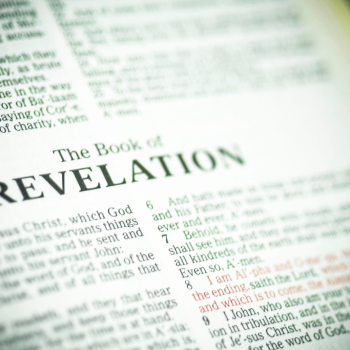
Courtesy of Pixabay
*Note: This was originally published at sojo.net.
I was recently asked the question: “Why do you care so much about others’ belief about God?” As a Christian, I am sure the stock answer should have been, “So they can be saved.” And sure, “being saved” is of eternal importance — but I knew that is not the direction the question was coming from. What this gentleman wanted to know was why I confronted others about their belief in a retributive God — an understanding of God that includes violence. Had he given me the chance to answer (which he did not), I would have hopefully come up with something similar to the remainder of this article.
I believe when the Bible is approached with the mindset that “God said it, I believe it, that settles it,” you are going to run into a litany of troubling issues. The specific issue that triggered the question at the top was my insistence that the violence attributed to God in the Old Testament is not an accurate portrayal of the God revealed in Jesus. Because the particular Christians I was engaging believed everything attributed to God literally was enacted by God, their conclusion was that God can, at times, be violent. “Yes, he is merciful, but he is also vengeful. It plainly says that all throughout the Hebrew Scriptures.”
This is what theologian Michael Hardin calls the Janus-faced (two-faced) god.
What is the problem with this?
Mimetic theory teaches us that human beings will imitate the God they worship. If that god is believed to be violent, then violence, broadly speaking, will be more tolerated by his/her adherents.
For an extreme example, one could look at Pastor Steven Anderson of Faithful Word Baptist Church, who is quoted in USA Today as saying:
“Here’s what the Bible says, Leviticus 20:13, ‘If a man also lie with mankind, as he lieth with a woman, both of them have committed an abomination. They shall surely be put to death. Their blood shall be upon them.’ And that, my friend, is the cure for AIDS. It was right there in the Bible all along [ . . . ] Because if you executed the homos, like God recommends, you wouldn’t have all this AIDS running rampant.”
I am not for labeling others, but I am not sure how Pastor Anderson’s comments could ever be compatible with Jesus—whether in action or in lesson.
Then, on the extreme end of Islam, you have ISIS, whose members believe they are doing the will of god. The Raven Foundation’s Adam Ericksen aptly points out that not only is ISIS gravely mistaken, they are not even to be labeled “Muslim.”
I realize both ISIS and Pastor Anderson are extreme examples, but my point is that it is their shared belief in a violent God, as well as their probable shared exegesis of their respective scriptures, that leads to such violence.
“God said it, they believe it, and that settles it.”
Well, not so fast. What can Jesus, as our Rabbi, teach us?
First, doesn’t Jesus show us how to interpret Hebrew Scriptures in places like Matthew 5? He says on multiple occasions, “You have heard that it was said,” yet follows that up with, “but I say to you.”
In verses 38-39, he even makes a direct contradiction of Leviticus 24:20 when he states: “You have heard it was said, ‘an eye for an eye and a tooth for a tooth.’ But I say to you, do not resist an evildoer. But if anyone strikes you on the right cheek, turn the other also.”
Using the same interpretive lens — a bit of midrash — couldn’t we imagine Jesus interpreting Leviticus 20:13 in the following way?
“You have heard that it was said, ‘a man that lieth with a man shall be put to death,’ but I say to you, ‘love your neighbor as yourself.’”
One should simply not read Scriptures without using Jesus as one’s lens. In the Sermon on the Mount, Jesus gives us clues into his hermeneutics: Quote Hebrew Scripture, then exegete with mercy and grace as the lens. In Luke 7:18 – 23, he does the same thing.
Jesus, in talking to John’s disciples, is talking to the disciples of a man who believed in a vengeful God. Luke 3:7 gives us insight into this. When Jesus says to John’s disciples, “Blessed is he who does not take offense at me,” I believe he does so because it is Jesus’ commitment to non-violence and mercy that would cause a scandal — a stumbling block if you will.
For further evidence of this, look also at how Jesus references the Hebrew Scriptures in Luke 7.
Verse 22 reads (with OT references): “Go and tell John what you have seen and heard: the blind receive their sight (Isaiah 29:28, 35:5, 61:1-2), the lame walk (Isaiah 35:6), the lepers are cleansed (1 Kings 17:24, 2 Kings 5:1-27), the deaf hear (Isaiah 29:18, 35:5), the dead are raised (1 Kings 17-24, 2 Kings 5:1-27), the poor have good news brought to them (Isaiah 29:19).”
In every reference Jesus makes to the book of Isaiah, there is an associated Isianic verse that includes divine vengeance. Yet, when Jesus quotes from it, he leaves off such vengeance. For John, this would have been a great offense. Thus, Jesus concludes his message with, “And blessed is anyone who takes no offense at me.”
Jesus is the fullness of God in bodily form. Too often this point is missed. Not only do Christians overlook Jesus’ hermeneutics, but so too do we miss just how merciful he is. It seems as if his mercy is tempered by our presupposed understanding of God’s wrath and vengeance. A “theology of the cross,” as Martin Luther introduced us to, is rarely considered by many of us in the West. That is tragic.
So what do I say to those who hold to a theology that includes violence?
Start everything with Jesus. Read your Bible with Jesus. Approach the Father in the same way Jesus did — as Abba. Stop “searching the scriptures” prior to coming to Jesus. He is our model in all things — in how we engage the world with grace and mercy and compassion, and in how we read our Bibles.
I hope my answer to the gentleman who posed the original question would have resembled something like this article.
Grace be with you.
Previous Post

August 20, 2015
The Bible Clearly States (What Exactly?)
Next Post

August 31, 2015 The Theology that Set me Free
Browse Our Archives
Select a Category Atonement Book Review Early Church Eschatology eternal torment Hell Hermeneutics LGBTQ+ Mimetic Theory Mysticism News Old Testament Podcast Poetry Politics Prayer Religion Sacrifice Satire Soteriology Theology Uncategorized Violence
Select a Month October 2026 September 2026 August 2026 July 2026 June 2026 May 2026 April 2026 March 2026 February 2026 June 2025 December 2024 November 2024 October 2024 September 2024 August 2024 July 2024 June 2024 May 2024 April 2024 February 2024 January 2024 December 2023 November 2023 October 2023 September 2023 August 2023 June 2023 April 2023 March 2023 February 2023 January 2023 December 2022 November 2022 October 2022 September 2022 August 2022 July 2022 June 2022 May 2022 April 2022 March 2022 February 2022 January 2022 December 2021 November 2021 October 2021 September 2021 August 2021 July 2021 June 2021 May 2021 April 2021 March 2021 February 2021 January 2021 December 2020 November 2020 June 2019 May 2019 April 2019 March 2019 January 2019 December 2018 November 2018 October 2018 September 2018 August 2018 July 2018 June 2018 May 2018 April 2018 March 2018 February 2018 January 2018 December 2017 November 2017 October 2017 July 2017 June 2017 May 2017 April 2017 March 2017 February 2017 January 2017 December 2016 November 2016 October 2016 September 2016 July 2016 June 2016 May 2016 April 2016 March 2016 February 2016 January 2016 December 2015 November 2015 October 2015 September 2015 August 2015 July 2015 June 2015
Follow Us!
TAKE THE
Religious Wisdom Quiz
In Isaiah 40, what voice cries out to prepare the way for the Lord?
Select your answer to see how you score.
A lion roaring A child singing A trumpet blasting A voice in the wilderness
Books by This Author Books by All Set Free
Related posts from All Set Free

A Second Coming That Undoes the First


Trading Curiosity for Certainty
TRENDING AT PATHEOS Progressive Christian

Nearly every morning, I make the drive to Detroit with my high-school-age...

The Real AI Story Is Adoption Without Trust
Artificial intelligence has crossed a political threshold. It is no longer a...

A new article, written by Jeff Lindsay and Gale L. Pooley,...

Swimfan: Forgotten Aughts Pleasures
This is a recovery effort. In 2002, My Big Fat Greek Wedding...

Top Three Anti-Catholic Lies About Catholicism
This is my initial transcript for the video, "THE 3 WORST...

Pope Leo Celebrates Mass for Nurses & Docs...
I don't have any idea how he did it, but Pope Leo...
view all Progressive Christian blogs
Ad-Free & Subscriber Log-In Subscription Support
- About Us
- 2026 Calendar
- Videos
- Podcasts
- Library of World Religions
- Faith In Media Tracker
- Advertise With Us
- Write for Us
- Privacy Policy
- Terms of Service
- Do Not Sell My Data
- Contact Us
- Radiant Digital
- Manage Newsletter Subscriptions
- Unsubscribe From Notifications
- Sitemap
Copyright 2008-2026, Patheos. All rights reserved.
Subscription Support Ad-Free & Subscriber Log-In
Follow Patheos