
BuddhistCatholicContemplativeEvangelicalGeneral ChristianHinduJewishLatter-day SaintMuslimNew VisionsProgressive Christian
Beliefs
- Buddhist
- Catholic
- Contemplative
- Evangelical
- General Christian
- Hindu
- Jewish
- Latter-day Saint
- More Voices
- Muslim
- New Visions
- Pagan
- Progressive Christian
Topics
- Religion News
- Food and Religion
- Sports and Religion
- Religious Art
- Religious Music and Entertainment
- Religious Events
- History and Religion
- Style and Religion
- Politics and Religion
- Women in Religion
- Recreation Outdoors and Religion
- Business Finance and Religion
- Careers Workplace and Religion
- Education and Religion
- Family Parenting and Religion
- Health Fitness and Religion
- Home and Religion
- Relationships and Religion
- Technology and Religion
- Travel and Religion
Columnists
- Buddhist Columnists
- Business Finance and Religion Columnists
- Careers Workplace and Religion Columnists
- Catholic Columnists
- Contemplative Columnists
- Education and Religion Columnists
- Evangelists Columnists
- Family Parenting and Religion Columnists
- General Christian Columnists
- Health Fitness and Religion Columnists
- Hindu Columnists
- History and Religion Columnists
- Home and Religion Columnists
- Jewish Columnists
- More Voices Columnists
- Latter Day Columnists
- Muslim Columnists
- New Visions Columnists
- Nonreligious Columnists
- Pagan Columnists
- Politics and Religion Columnists
- Progressive Columnists
- Recreation Outdoors and Religion Columnists
- Relationships and Religion Columnists
- Religion News Columnists
- Religious Art Columnists
- Religious Events Columnists
- Religious Music and Entertainment Columnists
- Sports and Religion Columnists
- Style and Religion Columnists
- Technology and Religion Columnists
- Travel and Religion Columnists
- Women in Religion Columnists
Resource Library
- 2026 Calendar
- Library of World Religions
- The 100 Most Holy Places on Earth
- Patheos Answers
- Podcasts
- Videos
- Faith Leaders Database
- Anglican Episcopalian
- Bahai
- Baptist
- Buddhism
- Christianity
- Confucianism
- Eastern Orthodoxy
- Hinduism
- Holiness and Pentecostal
- ISKCON
- Islam
- Judaism
- Lutheran
- Methodist
- The Church of Jesus Christ of Latter-day Saints
- New Age
- Paganism
- Presbytarian and Reformed
- Protestantism
- Religion Behind the Scenes
- Roman Catholic
- Scientology
- Shia Islam
- Sikhism
- Sufism
- Sunni Islam
- Taoism
- Zen
- See all religions
Research Tools
 Ad-Free & Subscriber Log-In Subscription Support
Ad-Free & Subscriber Log-In Subscription Support
Follow Patheos 

- Trending:
- Forgiveness
- |
- Marriage
- |
- Consciousness
- |
- Death Penalty
- |
- Election
- |
- Halloween

- Home
- Progressive Christian
- Religion News
- Jesus Christ: The Fullness of God in Bodily Form
Jesus Christ: The Fullness of God in Bodily Form
Last updated on: November 19, 2017 at 12:02 am by Matthew Distefano
Jesus Christ: The Fullness of God in Bodily Form 2017-11-19T00:02:03-06:00 Matthew Distefano
Patheos Explore the world's faith through different perspectives on religion and spirituality! Patheos has the views of the prevalent religions and spiritualities of the world.

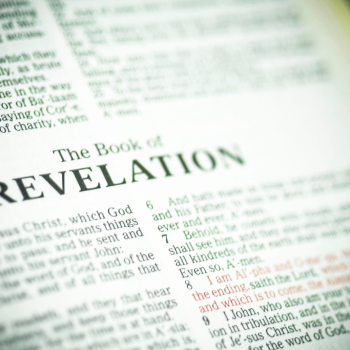
Courtesy of Pixabay
During a recent conversation, I was told that “Jesus reveals a part of God, but there are still aspects of God that remain hidden.” Based on the state of American Christianity, I should not be surprised by that statement. I suppose what takes me aback then is actually hearing it uttered from a Christian’s lips. It truly feels as if most believers conclude that God the Father is described in the Old Testament and Jesus the Son is described in the New and not that Jesus fully reveals God. I would like to provide evidence that the former view should be forever forgotten in favor of the latter.
If we are going to talk about the Christian God, we must, as Martin Luther argued, begin at the cross.[1] With Jesus, for the first time in human history, humanity has the opportunity to witness who God was in full human form. On multiple occasions, Jesus talks about this.
If you know me, you will know my Father also. From now on you do know him and have seen him. John 14:7
The Father and I are one. John 10:30
. . . That they may all be one. As you, Father, are in me and I am in you, may they also be in us, so that the world may believe that you have sent me. John 17:21
Paul, in his letter to the Colossians, states the same concept in perfect harmony. He writes: “For in him the whole fullness of deity dwells bodily.” (2:9—emphasis mine)
The importance of this is great. Human beings simply don’t believe in gods, we follow them. We imitate them—their behavior, their nature . . . everything! I harp on this all the time. So, with that in mind, who is Jesus, as fully human himself, imitating? If he only does what he sees the Father doing (John 5:19)—if he only imitates the Father perfectly—what is the Father doing exactly?
Well, based on the end of Matthew 5—perhaps only theoretically as the cross is yet to come—he is behaving perfectly (5:48)—loving his enemies (5:44), blessing even the unrighteous (5:45), and of utmost importance, refusing to retaliate against violence (5:39). This is new territory for people as they had “heard that it was said” that God hates his enemies (Psalm 139:22), curses the wicked (Proverbs 3:33), and instructs an “eye for an eye” (Leviticus 24:20).
This sermon is Jesus’ magnum opus—his most quoted teachings. Christian ethics are derived from Matthew 5–7. Even Gandhi’s ethics were derived from this sermon, as he claimed to have read the Sermon on the Mount daily. So, according to this most famous of teachings, our ethical Model teaches of a love for all by remaining non-retributive and unfathomably forgiving. So the question is: did Jesus’ actions demonstrate this?
To answer that question, I would like to begin in the Garden of Gethsemane. Prior to his death, Jesus has a chance to obliterate his eventual captors. Matthew 26:53 reads: “Do you think that I cannot appeal to my Father, and he will at once send me more than twelve legions of angels?” The implied answer is “yes.” However, he does not do such a thing! If we fast-forward to the cross, in the midst of his own death, Jesus states over and over: “Father forgive them, for they know not what they are doing.” (Luke 23:34) Even after Jesus’ death and resurrection, Jesus only brings words of peace. John 20:19b – 21 states: “’Peace be with you.’ After he said this, he showed them his hands and his side. Then the disciples rejoiced when they saw the Lord. Jesus said to them again, ‘Peace be with you. As the Father has sent me, so I send you.’” Jesus does not speak on his own when he says these things! (John 12:49) He only says what the Father commands.
It seems, then, that Jesus backs up his claim that the Father is perfect by taking a non-violent stance to the cross, through the cross, and after the cross. In doing this, he reveals who the Father is—one who died for us while we were yet sinners (Romans 5:8). Is it any wonder Paul describes his judgments as “unsearchable” (Romans 11:33)?
Where the countless Western Christians get the notion that Jesus does not fully reveal the nature of the Father resides in the Old Testament. Let me rephrase—that idea comes from how the Old Testament is interpreted. Many Christians take a “literalist” approach to Scripture. Of literalism in literature, theologian Richard Rohr has little praise. He states: “Literalism is usually the lowest and least level of meaning.” (Rohr, Falling Upward) It is hardly compelling that the most meaningful collection of books in history should be interpreted at their lowest level of meaning. Plus, shouldn’t one simply ask, “How did Jesus read Scripture?” Seems like an obvious question doesn’t it? However, I find that it is rarely if ever asked.
Allow me to point to one instance where a specific hermeneutic is employed by Jesus.[2] In Luke 4:18 – 19, Jesus omits a certain phrase from the text in Isaiah he is quoting from (Isaiah 61: 1 – 2). Jesus states: “The Spirit of the Lord is upon me, because he has anointed me to bring good news to the poor. He has sent me to proclaim release to the captives and recovery of sight to the blind, to let the oppressed go free, to proclaim the year of the Lord’s favor.” What nearly gets him killed (4:29) is, in part, due to Jesus’ omission of the phrase “and the day of vengeance of our God.” (Isaiah 61:2) These prophetic statements about the coming Messiah better include vengeance! How else was Israel going to be saved from her oppressors—from Rome!?
Whether in lesson, in action, or even in hermeneutics, Jesus is constantly redefining our understanding of God. Violence and retribution was always a projection onto the Divine. It can be a way of justifying “our” violence. My tribe’s violence is sacred—yours is wicked. When we finally witness who God really is, however—when we “taste and see that the Lord is good” (Psalm 34:8)—we discover what has been true all along. Recognition of that could change everything. “Thy kingdom come. Thy will be done on earth as it is in heaven (Matthew 6:10—KJV)” could become a reality. Of course it can! If the Church started following Jesus in all aspects of life, his kingdom most certainly would come.
[1] Luther, Heidelberg Disputation, Thesis #21.
[2] In my forthcoming book, All Set Free: How God is Revealed in Jesus and Why that is Really Good News, I point to multiple instances throughout the New Testament in which Hebrew Scripture is interpreted “creatively” by both Jesus and the Apostle Paul. In multiple instances, any “vengeance” associated to God is omitted (see Luke 7:18 – 23, Matthew 22:42 – 45, Mark 12:35 – 40, Luke 20:41 – 47, Galatians 3:10 – 11, & Romans 15:8 – 9.)
Previous Post

August 1, 2015
A Christ-Centered Case for 'Drug' Use
Next Post
August 17, 2015 American Christianity's Great Scapegoat (Part II)
Browse Our Archives
Select a Category Atonement Book Review Early Church Eschatology eternal torment Hell Hermeneutics LGBTQ+ Mimetic Theory Mysticism News Old Testament Podcast Poetry Politics Prayer Religion Sacrifice Satire Soteriology Theology Uncategorized Violence
Select a Month October 2026 September 2026 August 2026 July 2026 June 2026 May 2026 April 2026 March 2026 February 2026 June 2025 December 2024 November 2024 October 2024 September 2024 August 2024 July 2024 June 2024 May 2024 April 2024 February 2024 January 2024 December 2023 November 2023 October 2023 September 2023 August 2023 June 2023 April 2023 March 2023 February 2023 January 2023 December 2022 November 2022 October 2022 September 2022 August 2022 July 2022 June 2022 May 2022 April 2022 March 2022 February 2022 January 2022 December 2021 November 2021 October 2021 September 2021 August 2021 July 2021 June 2021 May 2021 April 2021 March 2021 February 2021 January 2021 December 2020 November 2020 June 2019 May 2019 April 2019 March 2019 January 2019 December 2018 November 2018 October 2018 September 2018 August 2018 July 2018 June 2018 May 2018 April 2018 March 2018 February 2018 January 2018 December 2017 November 2017 October 2017 July 2017 June 2017 May 2017 April 2017 March 2017 February 2017 January 2017 December 2016 November 2016 October 2016 September 2016 July 2016 June 2016 May 2016 April 2016 March 2016 February 2016 January 2016 December 2015 November 2015 October 2015 September 2015 August 2015 July 2015 June 2015
Follow Us!
TAKE THE
Religious Wisdom Quiz
I am the vine; you are the branches. If you remain in me and I in you, you will bear much ____; apart from me you can do nothing.
Select your answer to see how you score.
Joy Peace Faith Fruit
Books by This Author Books by All Set Free
Related posts from All Set Free

A Second Coming That Undoes the First


Trading Curiosity for Certainty
TRENDING AT PATHEOS Progressive Christian

How to Make a Decision When You Can't...
Main point: It’s much more valuable to stay close to God so...

Archdiocese Hosts Military Marriage Retreat in Germany
RASTATT, Germany — The transient military lifestyle, with its frequent deployments and...

Nearly every morning, I make the drive to Detroit with my high-school-age...

The Real AI Story Is Adoption Without Trust
Artificial intelligence has crossed a political threshold. It is no longer a...

A new article, written by Jeff Lindsay and Gale L. Pooley,...

Swimfan: Forgotten Aughts Pleasures
This is a recovery effort. In 2002, My Big Fat Greek Wedding...
view all Progressive Christian blogs
Ad-Free & Subscriber Log-In Subscription Support
- About Us
- 2026 Calendar
- Videos
- Podcasts
- Library of World Religions
- Faith In Media Tracker
- Advertise With Us
- Write for Us
- Privacy Policy
- Terms of Service
- Do Not Sell My Data
- Contact Us
- Radiant Digital
- Manage Newsletter Subscriptions
- Unsubscribe From Notifications
- Sitemap
Copyright 2008-2026, Patheos. All rights reserved.
Subscription Support Ad-Free & Subscriber Log-In
Follow Patheos