
BuddhistCatholicContemplativeEvangelicalGeneral ChristianHinduJewishLatter-day SaintMuslimNew VisionsProgressive Christian
Beliefs
- Buddhist
- Catholic
- Contemplative
- Evangelical
- General Christian
- Hindu
- Jewish
- Latter-day Saint
- More Voices
- Muslim
- New Visions
- Pagan
- Progressive Christian
Topics
- Religion News
- Food and Religion
- Sports and Religion
- Religious Art
- Religious Music and Entertainment
- Religious Events
- History and Religion
- Style and Religion
- Politics and Religion
- Women in Religion
- Recreation Outdoors and Religion
- Business Finance and Religion
- Careers Workplace and Religion
- Education and Religion
- Family Parenting and Religion
- Health Fitness and Religion
- Home and Religion
- Relationships and Religion
- Technology and Religion
- Travel and Religion
Columnists
- Buddhist Columnists
- Business Finance and Religion Columnists
- Careers Workplace and Religion Columnists
- Catholic Columnists
- Contemplative Columnists
- Education and Religion Columnists
- Evangelists Columnists
- Family Parenting and Religion Columnists
- General Christian Columnists
- Health Fitness and Religion Columnists
- Hindu Columnists
- History and Religion Columnists
- Home and Religion Columnists
- Jewish Columnists
- More Voices Columnists
- Latter Day Columnists
- Muslim Columnists
- New Visions Columnists
- Nonreligious Columnists
- Pagan Columnists
- Politics and Religion Columnists
- Progressive Columnists
- Recreation Outdoors and Religion Columnists
- Relationships and Religion Columnists
- Religion News Columnists
- Religious Art Columnists
- Religious Events Columnists
- Religious Music and Entertainment Columnists
- Sports and Religion Columnists
- Style and Religion Columnists
- Technology and Religion Columnists
- Travel and Religion Columnists
- Women in Religion Columnists
Resource Library
- 2026 Calendar
- Library of World Religions
- The 100 Most Holy Places on Earth
- Patheos Answers
- Podcasts
- Videos
- Faith Leaders Database
- Anglican Episcopalian
- Bahai
- Baptist
- Buddhism
- Christianity
- Confucianism
- Eastern Orthodoxy
- Hinduism
- Holiness and Pentecostal
- ISKCON
- Islam
- Judaism
- Lutheran
- Methodist
- The Church of Jesus Christ of Latter-day Saints
- New Age
- Paganism
- Presbytarian and Reformed
- Protestantism
- Religion Behind the Scenes
- Roman Catholic
- Scientology
- Shia Islam
- Sikhism
- Sufism
- Sunni Islam
- Taoism
- Zen
- See all religions
Research Tools
 Ad-Free & Subscriber Log-In Subscription Support
Ad-Free & Subscriber Log-In Subscription Support
Follow Patheos 

- Trending:
- Forgiveness
- |
- Marriage
- |
- Consciousness
- |
- Death Penalty
- |
- Election
- |
- Halloween

- Home
- Muslim
- The Rhythms of Ramadan
The Rhythms of Ramadan
Last updated on: April 21, 2021 at 5:06 pm by Deseret News
The Rhythms of Ramadan 2021-04-21T17:06:28+00:00 Deseret News
Patheos Explore the world's faith through different perspectives on religion and spirituality! Patheos has the views of the prevalent religions and spiritualities of the world.
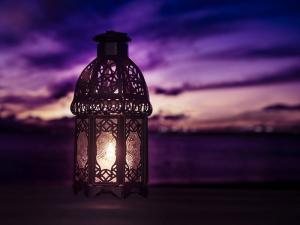 Ramadan, the Islamic holy month, begins this week. While many Americans know that it involves fasting, what most don’t know is that the holiday also essentially flips day into night.
During Ramadan — which commemorates the Prophet Muhammad’s receiving of the Quran — Muslims stay up late praying more than usual, reading the Quran, eating and socializing. Together, all of these disrupted routines create a physical shift — and, ideally, spiritual shift — that helps them transcend the self and align with God.
“There’s a transformation that happens in the person when that shift takes place,” said Imam Mustafa Umar, religious director of the Islamic Institute of Orange County, California, and director of California Islamic University. “It might be that something about the nighttime and switching these rhythms makes us understand the world in a different way.”
Though Ramadan is entirely special, it’s not the only religious holiday or practice that places unique demands on the body that manifest in the soul. Believers in myriad other faith groups also use their bodies to induce spiritual experiences, whether they realize it or not.
Even something as simple as a daily prayer practice can send cues to the brain and create feelings of transcendence and oneness, scientists say. Approached with the right intent, religious rituals can unite practitioners with the people around them and with the divine.
“Fasting, sleep deprivation, sensory deprivation, meditating in a very quiet room — none of these practices in and of themselves are religious experiences but they elicit these experiences in people by quieting the brain down so whatever does happen becomes more meaningful,” said Dr. Andrew Newberg, research director at the Marcus Institute of Integrative Health and a pioneer in the field of neurotheology — that is, the study of the neuroscience behind religion.
The science of Ramadan
Muslims who fast during Ramadan abstain from food, drinks and even taking medication from sunrise to sundown. The month shakes up people’s routines and helps teach them self-discipline, Imam Umar said.
“It’s hard. It’s uncomfortable,” he said. “That’s exactly the problem — we’re too comfortable in life. You’re supposed to experience some discomfort.”
During Ramadan, things that are normally halal, or permitted, like eating or smoking, become haram, forbidden, except at night, Imam Umar pointed out. That explains why many Muslims are night owls for at least one month each year.
At sundown, Muslims break their fast with a light meal called iftar. Then comes evening prayers, which are longer than usual during Ramadan and often last one and a half to two hours. That’s more than double the time a Muslim usually spends on his or her five daily prayers, according to Imam Umar.
After evening prayers, a heavier meal is typically served. Many Muslims then stay up late into the night studying the Quran and socializing before snoozing a bit and rising again in the early morning hours, before the sun comes up, to have a third meal, called suhoor.
In other words, the three meals that would normally be consumed during the day all come at night during Ramadan, and that affects the quality of sleep that Muslims get throughout the month, according to Rachida Roky, a biology professor at the University of Hassan II in Casablanca, Morocco.
Eating raises your body temperature and your body temperature affects how you sleep, she said. Using EEGs, she’s been able to show that, during Ramadan, Muslims have less REM sleep, meaning they dream less and spend more time in lighter sleep.
In Muslim countries, many people also sleep in later during Ramadan and throw their biological clock out of sync with the sun’s cycles, said Dr. Ahmed BaHammam, a professor of medicine at King Saud University in Saudi Arabia and the director of the university’s Sleep Disorders Center.
All of these factors combine to make Ramadan an unusual, disorienting time. Fasting during the day and eating and socializing at night throws off the brain’s sense of whether it’s day or night, a period of wake or sleep, scientists said.
The science of spirituality
Some Muslims’ brains may also be affected by the time they spend in prayer during Ramadan. Using scans, Newberg’s shown that the frontal lobes, which humans use when we’re concentrating or purposefully doing something, “tended to deactivate” during intensive Islamic prayer.
The scans showed that praying Muslims “lose sense of purposefulness and surrender to the experience,” he said, noting that Islam calls on them to do exactly that.
Newberg adds that he found the same result when he studied the brains of Pentecostal Christians speaking in tongues. “They surrender themselves to this vocalization,” he said.
Newberg emphasizes that these changes in the brain don’t happen for everyone. His research has shown that a practitioner’s intention matters. A lot.
He points to an experiment he did on himself and the rabbi who is co-author of Newberg’s latest book, “The Rabbi’s Brain: Mystics, Moderns and the Science of Jewish Thinking,” as an example. They both underwent brain scans while saying the shma, a short but quintessential Jewish prayer, to compare how the brain of a secular Jew — Newberg has a sentimental attachment to the prayer but little more — differs from the brain of a committed believer.
“My brain didn’t do much at all during the shma,” Newberg said, “But his brain did something really interesting. Part of his frontal lobe went up and part of his frontal lobe went down — part went up because he was concentrating on saying the prayer but the other part down because he was submitting.”
So while our physical states can facilitate religious experiences, the intention with which one approaches worship is key, he concluded.
Imam Umar feels that, because Muslims are a minority in America, intentionality is naturally built into their Ramadan practices.
“In a Muslim majority country, you do it because everyone is doing it,” Imam Umar said. “Here, you have to go out of your way and there’s more intentionality.”
This article originally appeared on DeseretNews.com.

Next Post

January 6, 2022 Revolutionary and Scientific Foundation of Islam: One Other Way to Explain
Browse Our Archives
Select a Category Answers Uncategorized
Select a Month February 2025 May 2022 April 2022 March 2022 January 2022 April 2021 July 2020 April 2020 August 2019 May 2019 April 2019 March 2019
TAKE THE
Religious Wisdom Quiz
Which Psalm begins, "The Lord is my light and my salvation; whom shall I fear?"
Select your answer to see how you score.
Psalm 139 Psalm 14 Psalm 91 Psalm 27
Related posts from All Muslim
Islam Growing Fast In America And World
Islamic Exotheology: Viewpoints on Extraterrestrial Intelligence

Unbeaching Midwestern History With Muslim Stories

HBO Max’s Swimsuit Recycles Orientalist Clichés
TRENDING AT PATHEOS Muslim

25 Years Later: How Much Has Changed for...
As we approach the 25th anniversary of September 11th, I’ve found myself...

Podcast: Third Spaces & The Rise of Yemeni...
In the latest episode of The Artistic Foodies Podcast, hosts Abbas...

HalalFest Picks: Best 60 Halal Spots for Super...
Back in 2016, I came up with a list of 29...

Unity Is America’s Strength — Division Is Its...
by Hidayatullah Ahsan When Valentina Gomez, a Republican candidate for Congress in...

Zohran Mamdani and New York’s Fight Against Islamophobia
This past June, against all odds, Zohran Mamdani won the Democratic primary...

What the Fourth of July Means to a...
As we mark another Fourth of July, millions of Americans will celebrate...
view all Muslim blogs
Ad-Free & Subscriber Log-In Subscription Support
- About Us
- 2026 Calendar
- Videos
- Podcasts
- Library of World Religions
- Faith In Media Tracker
- Advertise With Us
- Write for Us
- Privacy Policy
- Terms of Service
- Do Not Sell My Data
- Contact Us
- Radiant Digital
- Manage Newsletter Subscriptions
- Unsubscribe From Notifications
- Sitemap
Copyright 2008-2026, Patheos. All rights reserved.
Subscription Support Ad-Free & Subscriber Log-In
Follow Patheos