
BuddhistCatholicContemplativeEvangelicalGeneral ChristianHinduJewishLatter-day SaintMuslimNew VisionsProgressive Christian
Beliefs
- Buddhist
- Catholic
- Contemplative
- Evangelical
- General Christian
- Hindu
- Jewish
- Latter-day Saint
- More Voices
- Muslim
- New Visions
- Pagan
- Progressive Christian
Topics
- Religion News
- Food and Religion
- Sports and Religion
- Religious Art
- Religious Music and Entertainment
- Religious Events
- History and Religion
- Style and Religion
- Politics and Religion
- Women in Religion
- Recreation Outdoors and Religion
- Business Finance and Religion
- Careers Workplace and Religion
- Education and Religion
- Family Parenting and Religion
- Health Fitness and Religion
- Home and Religion
- Relationships and Religion
- Technology and Religion
- Travel and Religion
Columnists
- Buddhist Columnists
- Business Finance and Religion Columnists
- Careers Workplace and Religion Columnists
- Catholic Columnists
- Contemplative Columnists
- Education and Religion Columnists
- Evangelists Columnists
- Family Parenting and Religion Columnists
- General Christian Columnists
- Health Fitness and Religion Columnists
- Hindu Columnists
- History and Religion Columnists
- Home and Religion Columnists
- Jewish Columnists
- More Voices Columnists
- Latter Day Columnists
- Muslim Columnists
- New Visions Columnists
- Nonreligious Columnists
- Pagan Columnists
- Politics and Religion Columnists
- Progressive Columnists
- Recreation Outdoors and Religion Columnists
- Relationships and Religion Columnists
- Religion News Columnists
- Religious Art Columnists
- Religious Events Columnists
- Religious Music and Entertainment Columnists
- Sports and Religion Columnists
- Style and Religion Columnists
- Technology and Religion Columnists
- Travel and Religion Columnists
- Women in Religion Columnists
Resource Library
- 2026 Calendar
- Library of World Religions
- The 100 Most Holy Places on Earth
- Patheos Answers
- Podcasts
- Videos
- Faith Leaders Database
- Anglican Episcopalian
- Bahai
- Baptist
- Buddhism
- Christianity
- Confucianism
- Eastern Orthodoxy
- Hinduism
- Holiness and Pentecostal
- ISKCON
- Islam
- Judaism
- Lutheran
- Methodist
- The Church of Jesus Christ of Latter-day Saints
- New Age
- Paganism
- Presbytarian and Reformed
- Protestantism
- Religion Behind the Scenes
- Roman Catholic
- Scientology
- Shia Islam
- Sikhism
- Sufism
- Sunni Islam
- Taoism
- Zen
- See all religions
Research Tools
 Ad-Free & Subscriber Log-In Subscription Support
Ad-Free & Subscriber Log-In Subscription Support
Follow Patheos 

- Trending:
- Forgiveness
- |
- Marriage
- |
- Consciousness
- |
- Death Penalty
- |
- Election
- |
- Halloween
 The Allergic Pagan
- Home
- Pagan
- Sharing Our Stories, Sharing Our Gods
Sharing Our Stories, Sharing Our Gods
Last updated on: April 13, 2016 at 2:20 pm by John Halstead
Sharing Our Stories, Sharing Our Gods 2016-04-13T14:20:59-05:00 John Halstead
Patheos Explore the world's faith through different perspectives on religion and spirituality! Patheos has the views of the prevalent religions and spiritualities of the world.
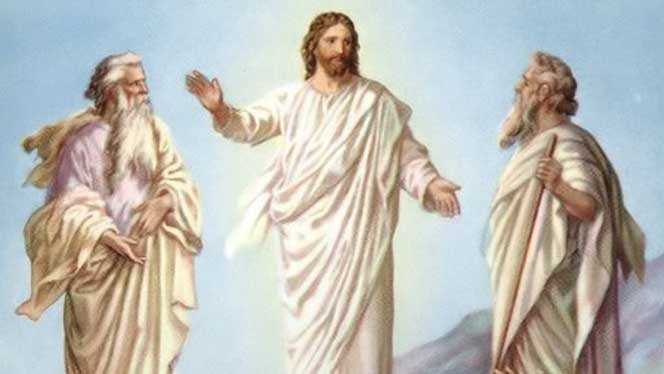
Elijah (left) to Moses (right): Hey, who invited this guy?!
It’s going to take me a minute to get to the Pagan analogy … but bear with me.
A Trip Into the Bible Belt
Over Easter weekend, my family and I went to visit my mother in Missouri. She really wanted to see a production of the musical “Moses” at the Sight & Sound Theatre in Branson. Having never been to Branson, I really had no idea what to expect. The production was spectacular. Some of the music was really moving. The sets were gorgeous. And the special effects were awesome. When Moses’ staff turned into a snake, it looked so real, people around me literally jumped. We were really close to the stage, so when Moses parted the sea, I felt like I was there.
But there were a few moments during the production when something seemed … off.
First, the play was introduced by a young man who advised that, although the production based in true events, it took creative license with the Biblical text. “That’s strange,” I thought, “Why would he need to say that?” Having lived most of my life on the periphery of the Bible belt, I didn’t realize I had entered new cultural territory.
The second moment was when the angel of death comes to take the first born sons of Egypt. It was a really cool scene with a balletic angel flying through the air on cables. I was so distracted by the angel, I almost missed the conspicuously placed cross which was worked into the scenery. “A cross?” I thought, “Isn’t this a Jewish story, as well as a Christian one?”
And then came the finale. The Israelites cross the Red Sea. Moses is given the tablets. And then … wait … what is that? Jesus standing silently on a rock amid the people of Israel! WTF?! Where am I?!
Whose Story Is This?
I must have seen the Exodus story dozens of times in a dozen forms, from Cecile B. DeMille’s The Ten Commandments to the DreamWorks Prince of Egypt. As far as I can remember, the story was always told from a Jewish perspective. Christians could read their own meanings into it, but there was no overt Christian symbolism. This was something else entirely.
Then when the play was over, we were advised by the announcer that individuals were stationed around the theater to pray with us if we wanted. No one was pushy about. It was just an invitation. But the reality of where I was finally began to sink in. I had thought I was in a secular space — in spite of seeing a presentation of a sacred story — only to discover that I was in a very specifically Christian space.
Of course, to a Christian, there would be nothing odd about any of this. But I imagined a Jew in the audience being quite offended by the appropriation of their sacred myth. And I felt quite a bit of vicarious outrage as I left the theater with my family.
But it took me a while to work through my feelings. On the one hand, Christians do share the basic Exodus story with Jews, although it means different things to the two groups. On the other hand, the Exodus story is more central to the Jewish mythos than the Christian one. So who has the right to it?
Sharing Our Gods
I found myself thinking about how we Pagans and Polytheists share many myths and symbols … and how we sometimes feel like each others are appropriating our gods and their myths.
I’ve actually been on both ends of this at different times in my life. When I was Mormon, I experienced the feeling of someone else appropriating my own religion when talking to a Bah’ai who said she believed Joseph Smith was a prophet, but not the prophet I thought he was. Since then, as an eclectic Pagan, I’ve been accused of appropriating other people’s sacred imagery and disrespecting a couple of the most popular polytheist gods. And I you should see some of the ire that I provoke when I talk about my (Nietzchean) Apollo and Dionysos as part of my personal pantheon.
It is an unavoidable fact that we have to share our most sacred symbols with others. I think all we can do is to acknowledge it … to acknowledge that there are other people for whom our gods and our symbols are sacred … but sacred in a different way. Where I think the production of “Moses” went wrong was not that they told the Exodus story from a Christian perspective, but that they didn’t acknowledge that there is another perspective as well. There was a presumptuousness about the production that a simple nod to the Jewish narrative would have gone a long way to ameliorate.
We don’t own our myths … or our gods … or their images. And we shouldn’t act like we do. There will always be other people will understand them differently. The way they understand them may not be sacred to us, but we still have got to respect that they are sacred to them.
Now, mind you, I’m not endorsing commercialization of the sacred. Not every appropriation of sacred imagery is sacred. But we should be able to recognize the sacred dimension in other people’s lives … and respect it … even when it overlaps uncomfortably with our own.
For my part, I’m going to make an effort from now on to refer to my gods as my gods — i.e., my Apollo and my Dionysos — rather than speaking about them as if my understanding of them is the whole of their meaning. I know there will still be polytheistic devotees of Apollo and Dionysos who will find my “appropriation” of “their” gods and their symbolism to be off-putting. But I hope that they will nevertheless recognize the sacredness of my intent, as I do theirs.
Previous Post
April 13, 2016
Countdown to Earth Day 2016: #9 Ground Your Rituals

Browse Our Archives
Select a Category Ritual Scripts Theology Uncategorized
Select a Month January 2017 December 2016 November 2016 October 2016 September 2016 August 2016 July 2016 June 2016 May 2016 April 2016 March 2016 February 2016 January 2016 December 2015 November 2015 October 2015 September 2015 August 2015 July 2015 June 2015 May 2015 April 2015 March 2015 February 2015 January 2015 December 2014 November 2014 October 2014 September 2014 August 2014 July 2014 June 2014 May 2014 April 2014 March 2014 February 2014 January 2014 December 2013 November 2013 October 2013 September 2013 August 2013 July 2013 June 2013 May 2013 April 2013 March 2013 February 2013 January 2013 December 2012 November 2012 October 2012 September 2012 August 2012 July 2012 June 2012 May 2012 April 2012 March 2012 February 2012 January 2012 December 2011 November 2011 October 2011 September 2011 August 2011
TAKE THE
Religious Wisdom Quiz
Which Jewish festival commemorates the defeat of Haman?
Select your answer to see how you score.
Booths Passover Pentecost Purim
Related posts from The Allergic Pagan

A Guide to Politics at Patheos Pagan

Call to Chicago Area Pagans: Come to Hammond...
Four "Godless Pagan" Authors on Pagan Musing Podcast...

Lowered Expectations Is Not the Answer to Bad...
TRENDING AT PATHEOS Pagan

I was recently chatting with someone on Instagram. She asked me what...

While there are many people who share their results, the end of...

On July 23, I saw Christopher Nolan's The Odyssey which is Homer’s...

As I write this two big events have just finished up. One...

Restoring the Watershed of Divine Love
Perhaps cooperation is not something we manufacture through legislation, ideology, or moral...

Many UUs don’t pray because of bad experiences in a previous religion,...
view all Pagan blogs
Ad-Free & Subscriber Log-In Subscription Support
- About Us
- 2026 Calendar
- Videos
- Podcasts
- Library of World Religions
- Faith In Media Tracker
- Advertise With Us
- Write for Us
- Privacy Policy
- Terms of Service
- Do Not Sell My Data
- Contact Us
- Radiant Digital
- Manage Newsletter Subscriptions
- Unsubscribe From Notifications
- Sitemap
Copyright 2008-2026, Patheos. All rights reserved.
Subscription Support Ad-Free & Subscriber Log-In
Follow Patheos