
BuddhistCatholicContemplativeEvangelicalGeneral ChristianHinduJewishLatter-day SaintMuslimNew VisionsProgressive Christian
Beliefs
- Buddhist
- Catholic
- Contemplative
- Evangelical
- General Christian
- Hindu
- Jewish
- Latter-day Saint
- More Voices
- Muslim
- New Visions
- Pagan
- Progressive Christian
Topics
- Religion News
- Food and Religion
- Sports and Religion
- Religious Art
- Religious Music and Entertainment
- Religious Events
- History and Religion
- Style and Religion
- Politics and Religion
- Women in Religion
- Recreation Outdoors and Religion
- Business Finance and Religion
- Careers Workplace and Religion
- Education and Religion
- Family Parenting and Religion
- Health Fitness and Religion
- Home and Religion
- Relationships and Religion
- Technology and Religion
- Travel and Religion
Columnists
- Buddhist Columnists
- Business Finance and Religion Columnists
- Careers Workplace and Religion Columnists
- Catholic Columnists
- Contemplative Columnists
- Education and Religion Columnists
- Evangelists Columnists
- Family Parenting and Religion Columnists
- General Christian Columnists
- Health Fitness and Religion Columnists
- Hindu Columnists
- History and Religion Columnists
- Home and Religion Columnists
- Jewish Columnists
- More Voices Columnists
- Latter Day Columnists
- Muslim Columnists
- New Visions Columnists
- Nonreligious Columnists
- Pagan Columnists
- Politics and Religion Columnists
- Progressive Columnists
- Recreation Outdoors and Religion Columnists
- Relationships and Religion Columnists
- Religion News Columnists
- Religious Art Columnists
- Religious Events Columnists
- Religious Music and Entertainment Columnists
- Sports and Religion Columnists
- Style and Religion Columnists
- Technology and Religion Columnists
- Travel and Religion Columnists
- Women in Religion Columnists
Resource Library
- 2026 Calendar
- Library of World Religions
- The 100 Most Holy Places on Earth
- Patheos Answers
- Podcasts
- Videos
- Faith Leaders Database
- Anglican Episcopalian
- Bahai
- Baptist
- Buddhism
- Christianity
- Confucianism
- Eastern Orthodoxy
- Hinduism
- Holiness and Pentecostal
- ISKCON
- Islam
- Judaism
- Lutheran
- Methodist
- The Church of Jesus Christ of Latter-day Saints
- New Age
- Paganism
- Presbytarian and Reformed
- Protestantism
- Religion Behind the Scenes
- Roman Catholic
- Scientology
- Shia Islam
- Sikhism
- Sufism
- Sunni Islam
- Taoism
- Zen
- See all religions
Research Tools
 Ad-Free & Subscriber Log-In Subscription Support
Ad-Free & Subscriber Log-In Subscription Support
Follow Patheos 

- Trending:
- Forgiveness
- |
- Marriage
- |
- Consciousness
- |
- Death Penalty
- |
- Election
- |
- Halloween
 The Allergic Pagan
- Home
- Pagan
- “Celebrate Wildness: Magic, Mirth and Love on the Feraferia Path”
“Celebrate Wildness: Magic, Mirth and Love on the Feraferia Path”
Last updated on: June 25, 2015 at 4:27 am by John Halstead
“Celebrate Wildness: Magic, Mirth and Love on the Feraferia Path” 2015-06-25T04:27:37-05:00 John Halstead
Patheos Explore the world's faith through different perspectives on religion and spirituality! Patheos has the views of the prevalent religions and spiritualities of the world.
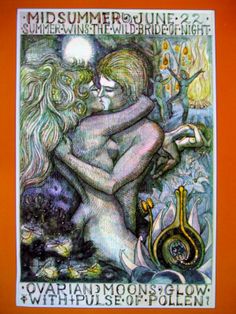
A few years ago, I had the pleasure of participating in a Feraferian ritual at Pantheacon. I was deeply impressed by it. The ritual was a sensory immersion (or as close as you can get in a hotel conference room). There were statues of the god and the goddess and poles decorated with colored pennants and the artwork of Feraferia’s founder, Fred Adams. There was music, dance, and poetry. There was a communion of berries and water, an anointing with scented oil and aspersion with water, and an offering of candles.
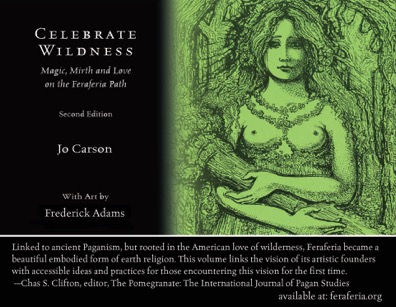
 Jo Carson’s book, Celebrate Wildness: Magic, Mirth and Love on the Feraferia Path, is like that ritual. It is a work of magic. It is as close to an immersive experience as you can get with paper and ink. Celebrate Wildness is a luscious book. It may seem strange to use a word like “luscious” to describe a book — unless it is perhaps a book about food — but luscious it is nonetheless. Reading it is like eating a sumptuous meal. In fact, to say that one “reads” this book does not do justice to experience that is Celebrate Wildness. “The first pages are an initiation in themselves,” writes Carson. And indeed, Celebrate Wildness felt a little like an initiation. And for those wanting more, there is actually a self-initiation offered at the end of the book.
The author, Jo Carson, is the keeper of the Feraferian tradition. She offers an insider’s perspective on Feraferia and the vision of Fred Adams which inspired it. The book begins with an introduction to the tradition. For those who are unfamiliar, Feraferia was one of the earliest Neo-Pagan groups. The word feraferia means “celebration of wildness.” The tradition grew out of a visionary experience which its founder, Fred Adams, had of the Divine Feminine: “Fred had a conversion experience one day in 1956 where suddenly he felt a profound certainty streaming throughout his body that ‘God, the divine, is female and is alive everywhere around us!'” While Feraferia remained small in numbers, it had a disproportionately large influence on the young Neo-Pagan movement, due undoubtedly to the charisma of its founder and the appeal of his vision. Fred Adams, summed up the purpose of Feraferia in 1967 with these words: “Our goal is the unification of ecology, artistry, mythology and liturgy. In such love-play-work humanity may achieve reunion with Great Nature, ourselves, and our own souls …”
 Celebrating Wildness explores the Feraferian mythology, like the figure of the maiden Kore, “who identifies kindness and sacredness with sensuality, prayer with pleasure, sexual surrender with service; and who presents cosmic energy as the precocious erotic exuberance of an irrepressible nymph.” It then explains Feraferian practices, like how to make a Faerie Ring Henge, a central sacred space which is connected to remote wilderness locations in each of the eight cardinal directions. It also describes the sacred Feraferian year, about which Admas wrote:
“Our crying need is for re-immersion in those great cyclic rhythms of the sorely threatened earth which soul-replenishingly unite us with nature and cosmos. The foundation of all sensitive, religious devotion to Life, and the basic measure of a people’s spiritual potency, is the seasonal celebration. Through enthusiastic communal celebration of each seasonal tide at its titanic full, the rudimentary communion of humanity with all nature may be restored and maintained. Without this communion, we may never regain our instinctive sense of natural enjoyments, proportions and balances.”
The book then discusses the roots of the Feraferian tradition in ancient Crete and Eleusis, and in the Dionysian mysteries, and closes with a vision of the Feraferian paradisal sanctuary.
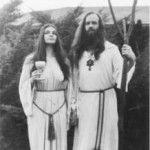
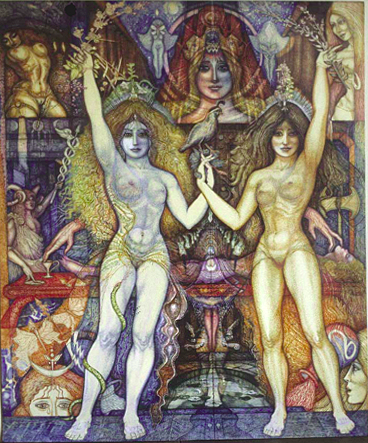 But what makes Celebrating Wildness a true treasure is the collection of Fred Adams art, over 50 illustrations, in addition to dozens of photographs depicting early Feraferians and their sanctuaries. As Carson says in the introduction:
“… on the right, each page is filled with an image for wonder and contemplation. On the left, glimpses of the path. These glimpses include, for example: discovering the heart of the earth, and appreciating her for the all important, multi-faceted Goddess she is; opening to her role as sacred Daughter, a long-neglected function of the Divine Family; realizing the possibility that she is joyful, that pleasure and beauty are our basic rights as humans, and that we can live lives of cele- bration rather than grim toil and competition. The laughter of the Gods pervades this book.”
Indeed it does. Evoe Kore!
My only criticism of the book is that I would have liked for it to have included some more of Fred Adams’ own lyrical writing. But I expect that will be forthcoming in the next volume about the ritual practices of Feraferia.
You can purchase Celebrate Wildness at Feraferia’s website.
Previous Post

June 24, 2015
A Radical Pagan Pope?
Next Post

June 26, 2015 Global Eco-Paganism: Czech Republic
Browse Our Archives
Select a Category Ritual Scripts Theology Uncategorized
Select a Month January 2017 December 2016 November 2016 October 2016 September 2016 August 2016 July 2016 June 2016 May 2016 April 2016 March 2016 February 2016 January 2016 December 2015 November 2015 October 2015 September 2015 August 2015 July 2015 June 2015 May 2015 April 2015 March 2015 February 2015 January 2015 December 2014 November 2014 October 2014 September 2014 August 2014 July 2014 June 2014 May 2014 April 2014 March 2014 February 2014 January 2014 December 2013 November 2013 October 2013 September 2013 August 2013 July 2013 June 2013 May 2013 April 2013 March 2013 February 2013 January 2013 December 2012 November 2012 October 2012 September 2012 August 2012 July 2012 June 2012 May 2012 April 2012 March 2012 February 2012 January 2012 December 2011 November 2011 October 2011 September 2011 August 2011
TAKE THE
Religious Wisdom Quiz
Where did the Pentecostal movement begin in the early 1900s?
Select your answer to see how you score.
London Berlin Rome Azusa Street, Los Angeles
Related posts from The Allergic Pagan
Where would we be without Wicca? (Part 2)

Roots of the Deep Ecology Tree: Neo-Pagans, "The...

A Guide to Politics at Patheos Pagan

A Pagan Dad Goes to Washington: 10 Things...
TRENDING AT PATHEOS Pagan

When we talk about Greek religion, we often begin with the dodekatheion—the...

I was recently chatting with someone on Instagram. She asked me what...

While there are many people who share their results, the end of...

On July 23, I saw Christopher Nolan's The Odyssey which is Homer’s...

As I write this two big events have just finished up. One...

Restoring the Watershed of Divine Love
Perhaps cooperation is not something we manufacture through legislation, ideology, or moral...
view all Pagan blogs
Ad-Free & Subscriber Log-In Subscription Support
- About Us
- 2026 Calendar
- Videos
- Podcasts
- Library of World Religions
- Faith In Media Tracker
- Advertise With Us
- Write for Us
- Privacy Policy
- Terms of Service
- Do Not Sell My Data
- Contact Us
- Radiant Digital
- Manage Newsletter Subscriptions
- Unsubscribe From Notifications
- Sitemap
Copyright 2008-2026, Patheos. All rights reserved.
Subscription Support Ad-Free & Subscriber Log-In
Follow Patheos