
BuddhistCatholicContemplativeEvangelicalGeneral ChristianHinduJewishLatter-day SaintMuslimNew VisionsProgressive Christian
Beliefs
- Buddhist
- Catholic
- Contemplative
- Evangelical
- General Christian
- Hindu
- Jewish
- Latter-day Saint
- More Voices
- Muslim
- New Visions
- Pagan
- Progressive Christian
Topics
- Religion News
- Food and Religion
- Sports and Religion
- Religious Art
- Religious Music and Entertainment
- Religious Events
- History and Religion
- Style and Religion
- Politics and Religion
- Women in Religion
- Recreation Outdoors and Religion
- Business Finance and Religion
- Careers Workplace and Religion
- Education and Religion
- Family Parenting and Religion
- Health Fitness and Religion
- Home and Religion
- Relationships and Religion
- Technology and Religion
- Travel and Religion
Columnists
- Buddhist Columnists
- Business Finance and Religion Columnists
- Careers Workplace and Religion Columnists
- Catholic Columnists
- Contemplative Columnists
- Education and Religion Columnists
- Evangelists Columnists
- Family Parenting and Religion Columnists
- General Christian Columnists
- Health Fitness and Religion Columnists
- Hindu Columnists
- History and Religion Columnists
- Home and Religion Columnists
- Jewish Columnists
- More Voices Columnists
- Latter Day Columnists
- Muslim Columnists
- New Visions Columnists
- Nonreligious Columnists
- Pagan Columnists
- Politics and Religion Columnists
- Progressive Columnists
- Recreation Outdoors and Religion Columnists
- Relationships and Religion Columnists
- Religion News Columnists
- Religious Art Columnists
- Religious Events Columnists
- Religious Music and Entertainment Columnists
- Sports and Religion Columnists
- Style and Religion Columnists
- Technology and Religion Columnists
- Travel and Religion Columnists
- Women in Religion Columnists
Resource Library
- 2026 Calendar
- Library of World Religions
- The 100 Most Holy Places on Earth
- Patheos Answers
- Podcasts
- Videos
- Faith Leaders Database
- Anglican Episcopalian
- Bahai
- Baptist
- Buddhism
- Christianity
- Confucianism
- Eastern Orthodoxy
- Hinduism
- Holiness and Pentecostal
- ISKCON
- Islam
- Judaism
- Lutheran
- Methodist
- The Church of Jesus Christ of Latter-day Saints
- New Age
- Paganism
- Presbytarian and Reformed
- Protestantism
- Religion Behind the Scenes
- Roman Catholic
- Scientology
- Shia Islam
- Sikhism
- Sufism
- Sunni Islam
- Taoism
- Zen
- See all religions
Research Tools
 Ad-Free & Subscriber Log-In Subscription Support
Ad-Free & Subscriber Log-In Subscription Support
Follow Patheos 

- Trending:
- Forgiveness
- |
- Marriage
- |
- Consciousness
- |
- Death Penalty
- |
- Election
- |
- Halloween
 The Allergic Pagan
- Home
- Pagan
- 12 Reasons You Can’t (only) Call God “Father”
12 Reasons You Can’t (only) Call God “Father”
Last updated on: June 4, 2015 at 2:02 pm by John Halstead
12 Reasons You Can’t (only) Call God “Father” 2015-06-04T14:02:51-05:00 John Halstead
Patheos Explore the world's faith through different perspectives on religion and spirituality! Patheos has the views of the prevalent religions and spiritualities of the world.
Fellow Patheos blogger, Fr. Dwight Longenecker, is at it again. His target this time: feminist Christians. Longenecker’s latest rant is in response to news that the Church of England may be moving to gender-inclusive language in its liturgy. In other words, God being referred to as “Mother”. This news follows the first ordinations of women bishops in the Church of England. You may ask, “Why does a Pagan care?” Longenecker writes:
“Do you think the Church of England and Episcopal church and mainline Protestant churches have stopped going down the path of destruction? Not a chance. They will continue with the radical feminist agenda until they are actually holding hands with witchcraft and worshipping devils. If anyone is skeptical about feminist Christianity’s links with witchcraft they only have to read the feminist texts themselves.”
Whoa! Now he’s stepped on my turf. “Devil-worshiping” feminist and consorter-with-witches that I am.
In honor of Father’s Day, Longenecker offers his “12 reasons why you can’t call God ‘Mother'”. Several of my fellow Patheos Pagan bloggers have already responded to Longenecker, including Jason Mankey, Niki Whiting, Yvonne Aburrow, and Sara Amis. But I would like to do something a little different, and meet Fr. Longenecker on his own ground. I used to be Christian and my wife is still Christian, so I can still carry on a conversation within that framework. And what I find shocking about Longenecker’s article is not so much the conclusions he reaches, but the circularity of his reasoning. I actually agree with some of what Longenecker says, but it just leads me to the opposite conclusion.
So here’s my “12 reasons why you can’t (only) call God ‘Father'”:
1. Because “the Bible says it’s so” isn’t good enough any more: The New Testament is a first century document which was “conditioned by the patriarchal culture of its time.” Those who wrote the Gospels and the Espistles were born in a particular historical and cultural context and conditioned by that context. And any text must be interpreted — and this is especially true of the Bible. As James Madison wrote, “When the Almighty himself condescends to address mankind in their own language, his meaning, luminous as it must be, is rendered dim and doubtful, by the cloudy medium through which it is communicated.” The Word of God is rendered dim by the historically and culturally contingent nature of human language. That is why the Word of God needs to be reinterepreted in each succeeding generation — to keep it alive and vital. Otherwise, it becomes a dead idol.
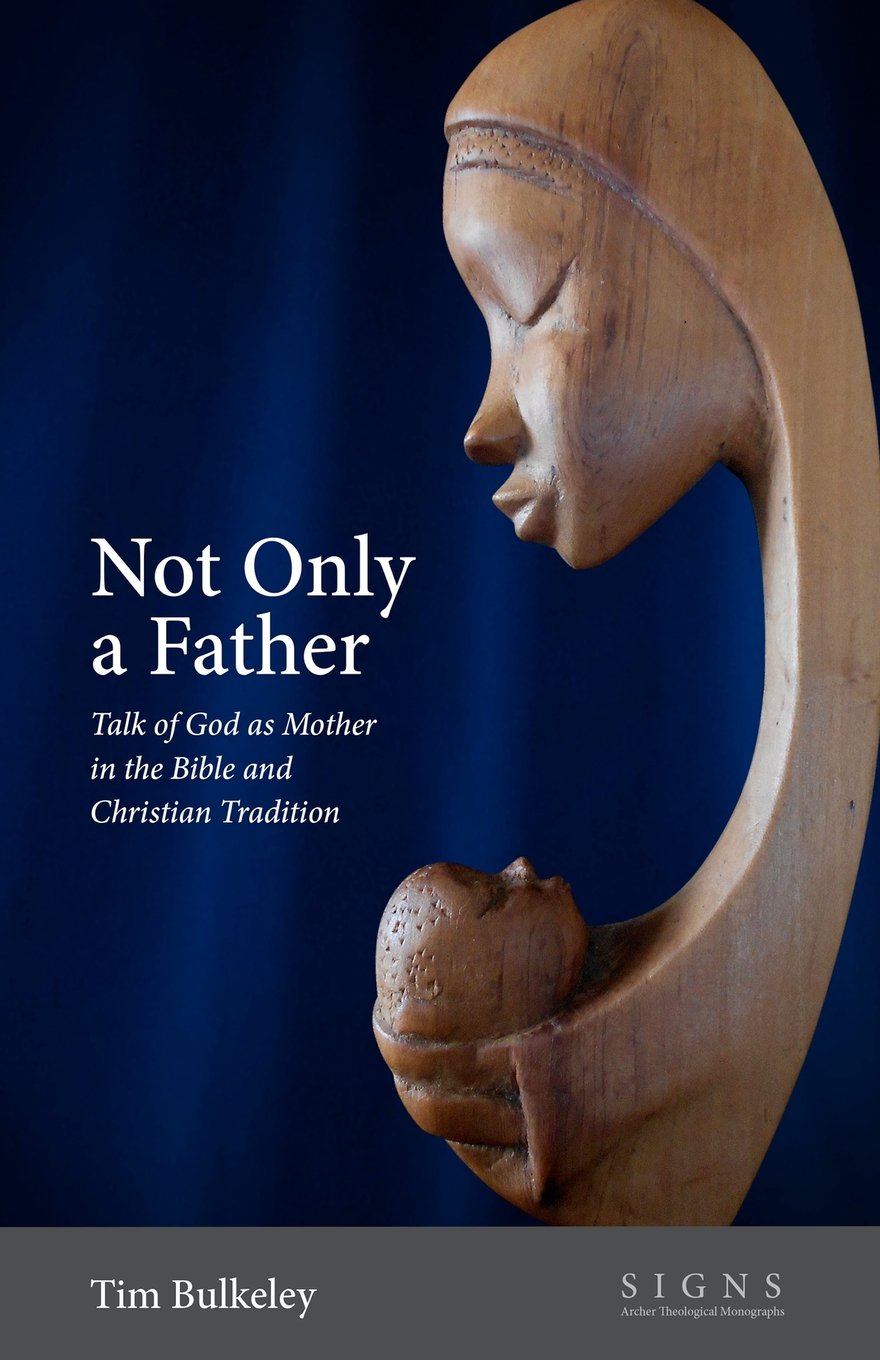 2. Because fathers are not “creators” without mothers: I remember a time when people like Longenecker were chanting “Adam and Eve, not Adam and Steve.” You need a male and female to create a baby, they argued. By that logic, God the Creator must be both male and female. Fr. Longenecker says that parental language is used in Christian and Jewish scriptures to describe God because of God’s function as creator and as a protector of the covenant people. But there is nothing about either of these roles that is exclusively masculine. In fact, creator and protector are often seen (rightly or wrongly) as more feminine roles in our culture.
3. Liturgy matters: “We believe what we pray. We pray what we believe. To tinker with the liturgy is always to tinker with what we actually believe,” says Fr. Longenecker. He goes on, “When we start calling God ‘Mother’ people will start believing God is their Mother …” Uh, yeah. That’s right!
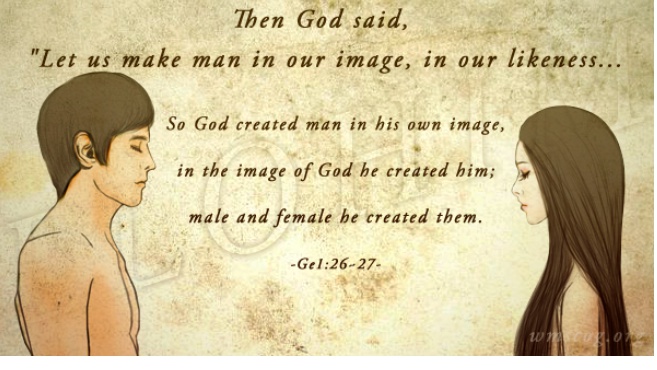 4. “Father” does not “include” mother: Longenecker says that Christian scriptures draw on our experience of human parents “who are in a way the first representatives of God for [humans]”. According to Longenecker, “Father” language emphasizes God’s transcendence and authority over us, and “mother” language emphasizes God’s immanence and intimacy with us. Let’s just set aside how Longenecker reproduces cultural stereotypes here. Because then he goes on to claim that “father” language somehow includes “mother” language, rendering the latter superfluous. I know some people still (wrongly) use “man” when they mean “human” and “mankind” when they mean “humankind” (Longenecker actually does this in his article), but I have never heard anyone suggest that “father” is inclusive of “mother”!
5. Calling God “Father” is confusing: Longenecker says “our world is confused enough about gender right now.” But read the following quote by Fr. Longenecker and tell me who you think is really confused in this situation:
“We ought therefore to recall that God transcends the human distinction between the sexes. He is neither man nor woman: he is God. He also transcends human fatherhood and motherhood, although he is their origin and standard: no one is father as God is Father. …. Calling God both Mother and Father makes God some kind of transgendered being. Nope.” (emphasis added)
First of all, if God is “nether man nor woman”, why is God “he”?! And calling God both “Mother” and “Father” does not make God “transgendered”. It makes God a being that, in Fr. Longenecker’s own words, “transcends the human distinction between the sexes”. Insisting on exclusively masculine language to describe a being that is beyond gender is what is confusing.
6. Mothering God helps us relate to Her: Longenecker argues that we can only relate to other beings who are gendered and that gender must be male or female. He writes, “I cannot have a true relationship with someone who is neither male nor female. I can’t relate to an ‘it’.” First of all, this just highlights the limitations of our language, which objectifies anything we don’t gender. But in any case, Longenecker has already said that God transcends gender. So if we need gendered language to relate to God, then why not employ all the gendered language we have at our disposal? Why handicap ourselves with only male-gendered language to understand God?
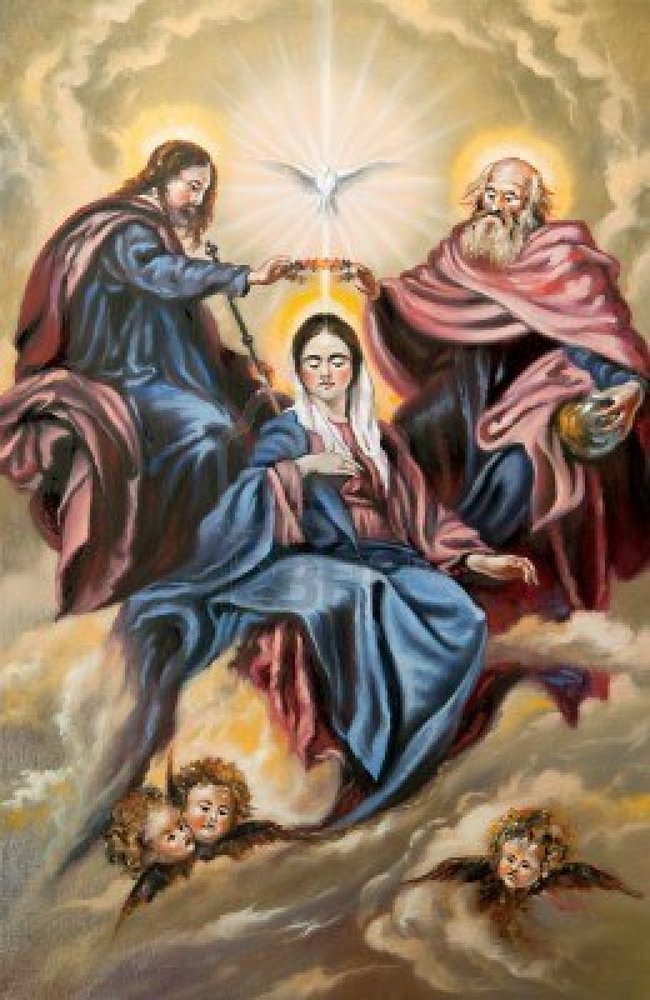 7. Calling God “Mother” helps to heal the ” mother wound”: Longenecker says that we all have a “father wound” because our relationships with our earthly fathers fall short. God helps fill this space. If that’s true, though, then we also all have “mother wounds” that likewise need to be healed and filled by God the Mother.
8. Second-class citizenship doesn’t cut it in heaven any more than it does on earth: Longenecker argues that Christians don’t need A Mother God, because they have Mary. That’s like saying, “We already have Jesus, so why do we need another male God?” I’m down with mariolatry, especially if you place Mary on par with Jesus as the co-redemtrix of humankind. But Mary’s divinity really does not have anything to do with the gendering of God, unless you want to say Mary is God.
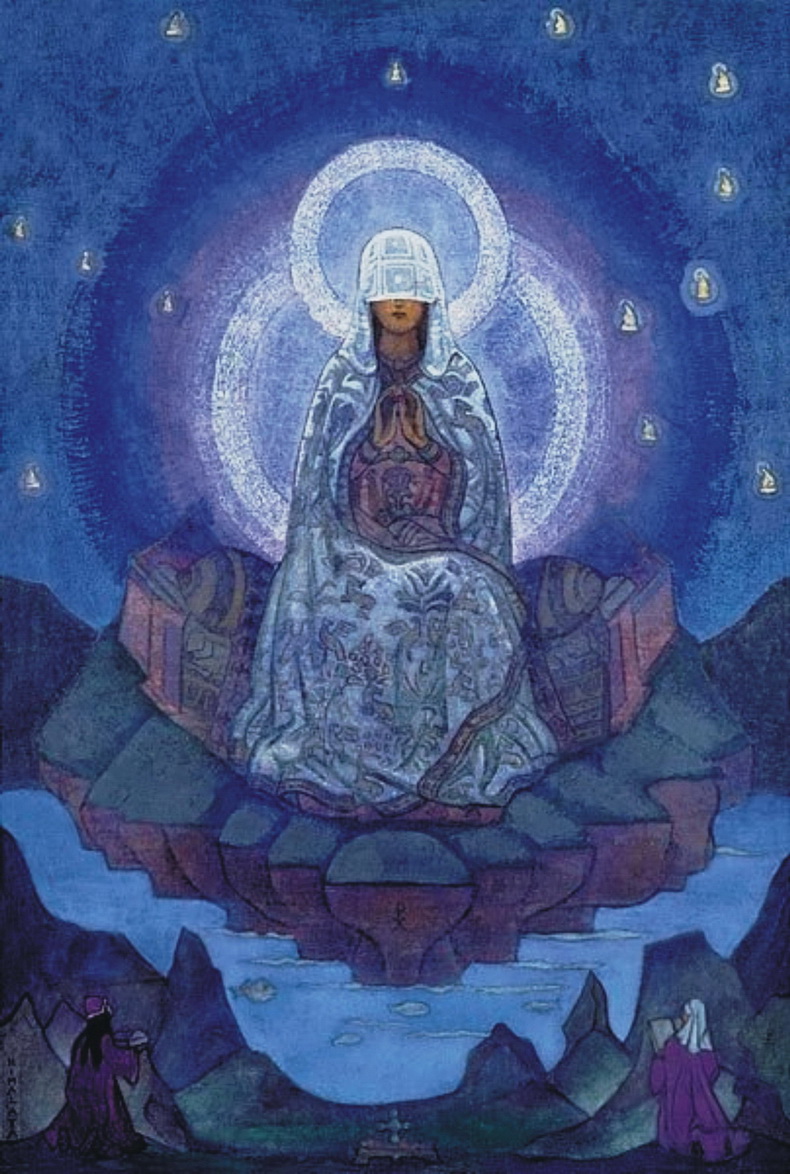 9. The Bible does speak of the Feminine Divine: Given the patriarchal context in which it was written, it’s not surprising that masculine language for God predominates in the Bible. Monarchic and military language also predominates, but that doesn’t stop us from relating the God in other ways. In any case, what is interesting is not the predominance of masculine language for God, but the fact that any feminine language made it through at all. The Bible does use feminine language to describe God. For example, Isaiah 49:15: “Can a woman forget her nursing child, or show no compassion for the child of her womb? Even these may forget, yet I will not forget you.” Longenecker says this is just the “symbolic language of mystics”. But isn’t that also true of masculine language as well? Else what does it mean to say that a god “without body [or] parts” is male? Proverbs 8 describes the goddess Sophia (Wisdom) as co-existing with God the Creator. And the Bible is replete with references to Asherah, who is now known (from both textual and archeological sources) to have been recognized as the wife of Yahweh. And let’s not forget that, in the Beginning, God created man and woman “in our image.”
10. “Referring to God as ‘Mother’ is part of an overall plan to eradicate any sign of patriarchy from Christianity”: Yep.
11. You can worship God the Mother and be Christian: Longenecker argues that calling God “Mother” is “p-p-p-p-pagan”. Associating an idea with “paganism” is a classic method of condemning what are perceived to be Christian heresies. But even if you accept that paganism is a bad thing, worshiping God as Mother does not make you “pagan”. There is, I think, an important difference between Christianity (and other transcendental monotheisms) and Paganism. The former worships a God which is transcendent of nature, while the latter worships a God (or Goddess, or gods and goddesses) that are part of or identical with nature. Mothering God does not deny God’s transcendent nature. It just balances the transcendence of God with the immanence of God (in whom “we live and move and have our being.”) One need not cancel the other out, and the two can be held in creative tension.
12. Calling God “Mother” opens the door to gender equality here on earth: Longenecker says that calling God Mother “opens the door to New Age Witchcraft.” This is just more fearmongering, like the last item. What calling God “Mother” really opens the door to is recognizing that women are people too. As Sara Amis explains:
“You start letting people…especially women…realize that there’s a different way to think about things, that men and women aren’t separate species with first and second class citizen status respectively as ordered and enforced by a heavenly dudebro, that there’s such a thing as the Feminine Divine? Buddy, those ideas are dangerous. They lead to terrible things, like equal pay for equal work, ordination of women, dancing around bonfires, and drumming. The next thing you know women will get so above themselves they’ll be expecting to run countries and walk down the street in peace.”
I would urge you to go on over to Longernecker’s post and leave a comment, but alas he does not allow comments. I wonder why?
Previous Post
June 2, 2015
Global Eco-Paganism Series: Poland
Next Post
June 7, 2015 A Brief History of Neo-Paganism
Browse Our Archives
Select a Category Ritual Scripts Theology Uncategorized
Select a Month January 2017 December 2016 November 2016 October 2016 September 2016 August 2016 July 2016 June 2016 May 2016 April 2016 March 2016 February 2016 January 2016 December 2015 November 2015 October 2015 September 2015 August 2015 July 2015 June 2015 May 2015 April 2015 March 2015 February 2015 January 2015 December 2014 November 2014 October 2014 September 2014 August 2014 July 2014 June 2014 May 2014 April 2014 March 2014 February 2014 January 2014 December 2013 November 2013 October 2013 September 2013 August 2013 July 2013 June 2013 May 2013 April 2013 March 2013 February 2013 January 2013 December 2012 November 2012 October 2012 September 2012 August 2012 July 2012 June 2012 May 2012 April 2012 March 2012 February 2012 January 2012 December 2011 November 2011 October 2011 September 2011 August 2011
TAKE THE
Religious Wisdom Quiz
Where did the Pentecostal movement begin in the early 1900s?
Select your answer to see how you score.
London Berlin Rome Azusa Street, Los Angeles
Related posts from The Allergic Pagan

A Guide to Politics at Patheos Pagan

A Pagan Dad Goes to Washington: 10 Things...

Call to Chicago Area Pagans: Come to Hammond...

Autumn Equinox: God is Climate Change
TRENDING AT PATHEOS Pagan

When we talk about Greek religion, we often begin with the dodekatheion—the...

I was recently chatting with someone on Instagram. She asked me what...

While there are many people who share their results, the end of...

On July 23, I saw Christopher Nolan's The Odyssey which is Homer’s...

As I write this two big events have just finished up. One...

Restoring the Watershed of Divine Love
Perhaps cooperation is not something we manufacture through legislation, ideology, or moral...
view all Pagan blogs
Ad-Free & Subscriber Log-In Subscription Support
- About Us
- 2026 Calendar
- Videos
- Podcasts
- Library of World Religions
- Faith In Media Tracker
- Advertise With Us
- Write for Us
- Privacy Policy
- Terms of Service
- Do Not Sell My Data
- Contact Us
- Radiant Digital
- Manage Newsletter Subscriptions
- Unsubscribe From Notifications
- Sitemap
Copyright 2008-2026, Patheos. All rights reserved.
Subscription Support Ad-Free & Subscriber Log-In
Follow Patheos