
BuddhistCatholicContemplativeEvangelicalGeneral ChristianHinduJewishLatter-day SaintMuslimNew VisionsProgressive Christian
Beliefs
- Buddhist
- Catholic
- Contemplative
- Evangelical
- General Christian
- Hindu
- Jewish
- Latter-day Saint
- More Voices
- Muslim
- New Visions
- Pagan
- Progressive Christian
Topics
- Religion News
- Food and Religion
- Sports and Religion
- Religious Art
- Religious Music and Entertainment
- Religious Events
- History and Religion
- Style and Religion
- Politics and Religion
- Women in Religion
- Recreation Outdoors and Religion
- Business Finance and Religion
- Careers Workplace and Religion
- Education and Religion
- Family Parenting and Religion
- Health Fitness and Religion
- Home and Religion
- Relationships and Religion
- Technology and Religion
- Travel and Religion
Columnists
- Buddhist Columnists
- Business Finance and Religion Columnists
- Careers Workplace and Religion Columnists
- Catholic Columnists
- Contemplative Columnists
- Education and Religion Columnists
- Evangelists Columnists
- Family Parenting and Religion Columnists
- General Christian Columnists
- Health Fitness and Religion Columnists
- Hindu Columnists
- History and Religion Columnists
- Home and Religion Columnists
- Jewish Columnists
- More Voices Columnists
- Latter Day Columnists
- Muslim Columnists
- New Visions Columnists
- Nonreligious Columnists
- Pagan Columnists
- Politics and Religion Columnists
- Progressive Columnists
- Recreation Outdoors and Religion Columnists
- Relationships and Religion Columnists
- Religion News Columnists
- Religious Art Columnists
- Religious Events Columnists
- Religious Music and Entertainment Columnists
- Sports and Religion Columnists
- Style and Religion Columnists
- Technology and Religion Columnists
- Travel and Religion Columnists
- Women in Religion Columnists
Resource Library
- 2026 Calendar
- Library of World Religions
- The 100 Most Holy Places on Earth
- Patheos Answers
- Podcasts
- Videos
- Faith Leaders Database
- Anglican Episcopalian
- Bahai
- Baptist
- Buddhism
- Christianity
- Confucianism
- Eastern Orthodoxy
- Hinduism
- Holiness and Pentecostal
- ISKCON
- Islam
- Judaism
- Lutheran
- Methodist
- The Church of Jesus Christ of Latter-day Saints
- New Age
- Paganism
- Presbytarian and Reformed
- Protestantism
- Religion Behind the Scenes
- Roman Catholic
- Scientology
- Shia Islam
- Sikhism
- Sufism
- Sunni Islam
- Taoism
- Zen
- See all religions
Research Tools
 Ad-Free & Subscriber Log-In Subscription Support
Ad-Free & Subscriber Log-In Subscription Support
Follow Patheos 

- Trending:
- Forgiveness
- |
- Marriage
- |
- Consciousness
- |
- Death Penalty
- |
- Election
- |
- Halloween
 The Allergic Pagan
- Home
- Pagan
- We are the Earth … aren’t we? (The power of the preposition)
We are the Earth … aren’t we? (The power of the preposition)
Last updated on: April 1, 2015 at 4:32 pm by John Halstead
We are the Earth … aren’t we? (The power of the preposition) 2015-04-01T16:32:23-05:00 John Halstead
Patheos Explore the world's faith through different perspectives on religion and spirituality! Patheos has the views of the prevalent religions and spiritualities of the world.
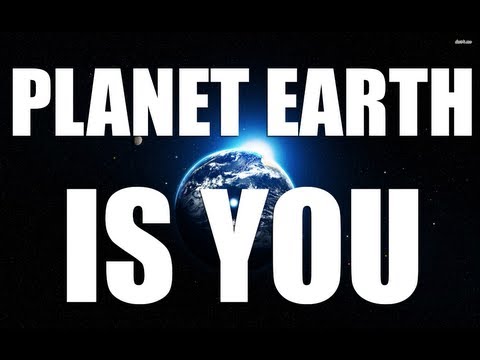
The public comment period for the Draft Pagan Community Statement on the Environment began this week (and will end April 21). One of the points under discussion is the use of a preposition.
The sentence in question is: “We are the Earth, the Earth is us.”
The proposed change is: “We are of the Earth, and the Earth is part of us.”
For context, here’s the section of the Statement which the sentence can be found in.
We are part of the web of life
In recent decades, since the revival of what has been termed “Neo-Paganism” and the “Back to the Land” movement of the 1960s, many contemporary Pagan religious traditions have stressed humanity’s interconnectivity with the rest of the natural world. The ancient realizations of many of our ancestors, that the Earth is itself a living organism and that all life on Earth is interconnected, have been supported now by the scientific method and our expanding knowledge of the universe.
The very atoms we are made of connect us to the entire universe. Our hydrogen was produced in the Big Bang, and the other atoms essential for life were forged in the scorching furnaces of ancient stars. Beyond atoms, the molecules of life connect us to Earth, showing that we don’t live “on Earth” like some alien visitor, but rather that we are Earth, just as a volcano or river is part of Earth and her cycles.
We are earth, with carbon, nitrogen and phosphorus making up our bodies one day, and incorporated into mountains the next. We are air, giving food to the trees and grasses when we exhale, and breathing in their gift of free oxygen with each breath. We are fire, burning the energy of the Sun, captured and given to us by plants. We are water, with the oceans flowing in our veins and the same water that nourished the dinosaurs within our cells.
We are connected to our families, through links of love, to their relatives, and so on to the entire human species. Our family tree goes back further than the rise of humans, including all mammals, all animals, and all life on Earth. The entire Earth is our immense and joyous family reunion.
We feel these connections in a spiritual way. The web of life includes strands that tug on our hearts, thread through our essential nature, and weave us into a spiritual whole. As part of the body of life on Earth, we care about the health of all parts of the body. Many human activities destroy parts of the body, and we recoil at them. Cutting down a rainforest is no different than cutting off a healthy leg or arm. In fact, these are even more vital than our arms and legs, because these forests are part of our planetary lungs. Similarly, we care about our waters, our land, our air, and our diverse biosphere. We do so out of respect for our ancestors, out of care for all life today, and out of love for future generations. Anything that harms the body of life on Earth, including global warming, pollution and extinction, is thus a spiritual and moral issue.
We are the Earth, the Earth is us.

There’s several issues here.
One complaint is that the existing language is not accurate. We might say that, “Leaves are a Tree, a Tree is Leaves,” which might be true in one sense, but not in another. John Seed has expressed a common sentiment among deep ecologists: rather than saying “I am defending the rainforest,” we should say, “I am the forest, recently emerged into consciousness, defending myself.” But some have expressed concern that the existing language, “We are the Earth, the Earth is us.”, might be taken over-literally and misunderstood. Others feel it is a completely accurate statement that is literally true. While still others feel that the statement is a poetic “shorthand” which serves to remind us humans of our interconnectedness with the Earth. Unlike leaves in relation to a tree, human beings have a unique ability, even tendency, to forget that connection. The existing language arguably derives its power from its over-generalization. Something may be lost by adding the prepositions, in fact, that very quality which engages the emotions and moves us to change our behavior. Set off as it is and position near the middle of the Statement, the sentence “We are the Earth, the Earth is us.” acts structurally as a kind of keystone for the entire Statement, encapsulating the thesis in a concise and powerful expression.
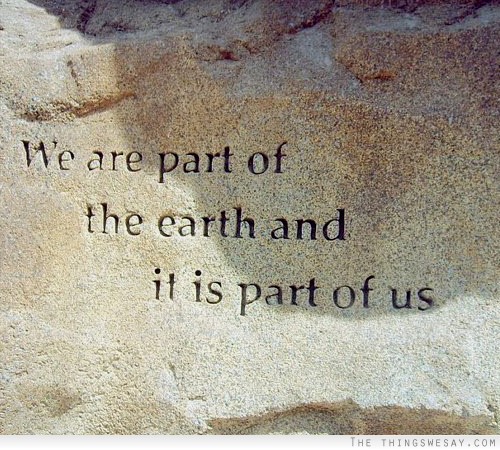 Underlying this discussion is a difference of opinion over role of metaphor. For some, metaphor is merely a clever literary construct, a rhetorical flourish, one that is confusing and potentially misleading. For others, metaphor — including metaphorical language like poetry and metaphorical action like ritual — isn’t just a pretty way of saying something that could be said more directly. Rather, metaphor points to something that cannot be fully expressed in representational language. Or rather, instead of pointing to something, it invites us to experience something, something which transcends language. The sentence, “We are the Earth, the Earth is us.” may be better inviting such an experience.
At the risk of making an unfavorable comparison, this discussion reminds me a little of the centuries-long debate about the use of a certain pronoun in the Nicene Creed. The pronoun — actually the clause including the pronoun — has its own name: the “Filioque” [Latin: (from) the son]. Here it is in context: “And in the Holy Spirit, the Lord, the giver of life, who proceeds from the Father and (from) the Son.“ Apparently, whether the phrase is included and how it is translated has important implications for understanding the doctrine of the Trinity. From what I understand, the phrase itself has become symbolic of conflict between the Eastern (Greek) Orthodox and Western (Latin) Catholic churches.
In the same way, the debate about the absence of pronouns in the sentence, “We are the Earth, the Earth is us.”, may be symbolic of the divide in the Pagan community between those who employ theistic language (either literally or metaphorically) and those who do not. Perhaps there are also theological assumptions involved as well. On the one hand, adding the clause “part of” implies that there is part of us that is not terrestrial, while its omission does not. The phrase may privilege a pantheistic perspective which is not shared by many Pagans. But one can be a polytheist and believe the gods are separate from us, while also believing that “we (the gods and us) are the Earth” — something that I’ve heard many times from polytheists.
In any case, the purpose of the Pagan Community Statement on the Environment is not to create some kind of Pagan Creed, but to make a statement about what being Pagan means for our relationship to the Earth and to offer our unique perspective on the causes of the environmental disaster we are facing. It is a political statement as much as a religious statement. Which phrasing better accomplishes that purpose?
What do you think? Which is better? “We are the Earth, the Earth is us.” OR “We are of the Earth, and the Earth is part of us.”?
Pagan Community Statement on the Environment
Next Post

April 5, 2015 A Christo-Pagan Eucharist
Browse Our Archives
Select a Category Ritual Scripts Theology Uncategorized
Select a Month January 2017 December 2016 November 2016 October 2016 September 2016 August 2016 July 2016 June 2016 May 2016 April 2016 March 2016 February 2016 January 2016 December 2015 November 2015 October 2015 September 2015 August 2015 July 2015 June 2015 May 2015 April 2015 March 2015 February 2015 January 2015 December 2014 November 2014 October 2014 September 2014 August 2014 July 2014 June 2014 May 2014 April 2014 March 2014 February 2014 January 2014 December 2013 November 2013 October 2013 September 2013 August 2013 July 2013 June 2013 May 2013 April 2013 March 2013 February 2013 January 2013 December 2012 November 2012 October 2012 September 2012 August 2012 July 2012 June 2012 May 2012 April 2012 March 2012 February 2012 January 2012 December 2011 November 2011 October 2011 September 2011 August 2011
TAKE THE
Religious Wisdom Quiz
Who built the Ark of the Covenant?
Select your answer to see how you score.
Joshua Moses Bezalel Aaron
Related posts from The Allergic Pagan

Call to Chicago Area Pagans: Come to Hammond...

Who Do You Vote For at the (Beginning...
Autumn Equinox: God is Climate Change

What’s A Nice Atheist Like Me Doing At...
TRENDING AT PATHEOS Pagan

When we talk about Greek religion, we often begin with the dodekatheion—the...

I was recently chatting with someone on Instagram. She asked me what...

While there are many people who share their results, the end of...

On July 23, I saw Christopher Nolan's The Odyssey which is Homer’s...

As I write this two big events have just finished up. One...

Restoring the Watershed of Divine Love
Perhaps cooperation is not something we manufacture through legislation, ideology, or moral...
view all Pagan blogs
Ad-Free & Subscriber Log-In Subscription Support
- About Us
- 2026 Calendar
- Videos
- Podcasts
- Library of World Religions
- Faith In Media Tracker
- Advertise With Us
- Write for Us
- Privacy Policy
- Terms of Service
- Do Not Sell My Data
- Contact Us
- Radiant Digital
- Manage Newsletter Subscriptions
- Unsubscribe From Notifications
- Sitemap
Copyright 2008-2026, Patheos. All rights reserved.
Subscription Support Ad-Free & Subscriber Log-In
Follow Patheos