
BuddhistCatholicContemplativeEvangelicalGeneral ChristianHinduJewishLatter-day SaintMuslimNew VisionsProgressive Christian
Beliefs
- Buddhist
- Catholic
- Contemplative
- Evangelical
- General Christian
- Hindu
- Jewish
- Latter-day Saint
- More Voices
- Muslim
- New Visions
- Pagan
- Progressive Christian
Topics
- Religion News
- Food and Religion
- Sports and Religion
- Religious Art
- Religious Music and Entertainment
- Religious Events
- History and Religion
- Style and Religion
- Politics and Religion
- Women in Religion
- Recreation Outdoors and Religion
- Business Finance and Religion
- Careers Workplace and Religion
- Education and Religion
- Family Parenting and Religion
- Health Fitness and Religion
- Home and Religion
- Relationships and Religion
- Technology and Religion
- Travel and Religion
Columnists
- Buddhist Columnists
- Business Finance and Religion Columnists
- Careers Workplace and Religion Columnists
- Catholic Columnists
- Contemplative Columnists
- Education and Religion Columnists
- Evangelists Columnists
- Family Parenting and Religion Columnists
- General Christian Columnists
- Health Fitness and Religion Columnists
- Hindu Columnists
- History and Religion Columnists
- Home and Religion Columnists
- Jewish Columnists
- More Voices Columnists
- Latter Day Columnists
- Muslim Columnists
- New Visions Columnists
- Nonreligious Columnists
- Pagan Columnists
- Politics and Religion Columnists
- Progressive Columnists
- Recreation Outdoors and Religion Columnists
- Relationships and Religion Columnists
- Religion News Columnists
- Religious Art Columnists
- Religious Events Columnists
- Religious Music and Entertainment Columnists
- Sports and Religion Columnists
- Style and Religion Columnists
- Technology and Religion Columnists
- Travel and Religion Columnists
- Women in Religion Columnists
Resource Library
- 2026 Calendar
- Library of World Religions
- The 100 Most Holy Places on Earth
- Patheos Answers
- Podcasts
- Videos
- Faith Leaders Database
- Anglican Episcopalian
- Bahai
- Baptist
- Buddhism
- Christianity
- Confucianism
- Eastern Orthodoxy
- Hinduism
- Holiness and Pentecostal
- ISKCON
- Islam
- Judaism
- Lutheran
- Methodist
- The Church of Jesus Christ of Latter-day Saints
- New Age
- Paganism
- Presbytarian and Reformed
- Protestantism
- Religion Behind the Scenes
- Roman Catholic
- Scientology
- Shia Islam
- Sikhism
- Sufism
- Sunni Islam
- Taoism
- Zen
- See all religions
Research Tools
 Ad-Free & Subscriber Log-In Subscription Support
Ad-Free & Subscriber Log-In Subscription Support
Follow Patheos 

- Trending:
- Forgiveness
- |
- Marriage
- |
- Consciousness
- |
- Death Penalty
- |
- Election
- |
- Halloween
 The Allergic Pagan
- Home
- Pagan
- Naming the Whirlwind: speaking of “God”
Naming the Whirlwind: speaking of “God”
Last updated on: November 14, 2013 at 4:56 pm by John Halstead
Naming the Whirlwind: speaking of “God” 2013-11-14T16:56:46-05:00 John Halstead
Patheos Explore the world's faith through different perspectives on religion and spirituality! Patheos has the views of the prevalent religions and spiritualities of the world.
God is not
The voice in the whirlwind
God is the whirlwind.
— Margaret Atwood, “Resurrection”
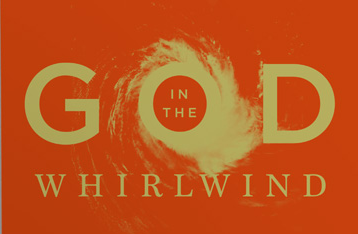 After writing my last post about atheism and belief in “God” and exchanging thoughts with several people in the comments, it occurred to me that “God” is not a word we hear a lot of in Paganism. We hear about gods (plural), and Goddess (feminine), and the god (definite article and often lower case), consort of the Goddess. The reason for this is that Paganism is an intentional challenge to or critique of the traditional Western conception of divinity as singular and masculine. For many, if not most, people who have been raised in Western civilization, the word “God” invokes images and qualities associated with the monotheistic god of the Abrahamic faiths, including transcendence, masculinity, dominance, power-over, etc. The gods and Goddess of Paganism are a needed corrective to this imbalanced picture of the divine.
In my last post, I suggested that the word “God” could be understood apophatically — not as a description, but as a question. “God”, in this sense, is not the answer to our questions about the meaning of our lives. “God” is the name for the question itself. After giving this some thought and reading some comments, it occurred to me why this approach must seem impossible for some people and relatively easy for others. For many people, the word “God” is content-laden. Far from being devoid of content, the word is filled with meaning, usually meaning derived from the the Judeo-Christian-Islamic (JCI) tradition. And, as stated above, Pagan conceptions of the divine generally are a reaction against the JCI tradition.
I certainly felt this way when I left my faith of origin, Mormonism. For a long time, I could not even bring myself to say “God” unless it was prefaced by the definite article “the” and preferably only after “the Goddess”. The word itself had such strong negative emotional associations for me that I avoided its use altogether for years. Just saying the word “Goddess” was a powerful experience. It opened up, not only realms of intellectual possibility theretofore unexplored by me, but also to realms of emotional possibility. “Goddess” opened up the possibility of a deity that cared nothing about traditional notions of purity and obedience. And it also opened up the possibility of experiencing divinity immanently, in relation to the material world around and through my very own body.
But after many years of avoiding “God”, I recently started being able to talk about “God” again. I didn’t realize this until I wrote my last post. There, the “God” that I was talking about was not a masculine counterpart to the Goddess. Nor was it the God of my Christian upbringing. It was, rather, the name that I gave to an almost inarticulate intuition of something, or perhaps a longing for something. I think sometimes that I experience God mostly as the presence of an absence (as opposed to the absence of a presence). I don’t know when exactly it happened, when the word “God” was largely stripped of its JCI associations for me. Perhaps I was aided by the fact that, in the religion of my youth, Mormonism, we spoke less of “God” per se, and more of “Heavenly Father”. Or perhaps this shift was facilitated by my need to be able to converse with my Mormon wife and with my son who was, until recently, Mormon, without getting tangled up in terminology.
I’m sure, though, that the word “God” remains a stumbling block for many of my readers: Pagans, and atheists, and Atheist Pagans (and even for Christians who think I am talking about their God). Whether I like it or not, the word “God” commonly connotes an implied “he” and also an implied exclusive singularity. This is overcome in part by using feminine pronouns with the word “God” (“When God spoke, She said …”), but this has its own problems. As does the awkward hybrid designation “God/dess”. I’ve used the term myself, but there is something ungraceful about it, linguistically speaking. If we can’t use “God”, because of its associations with Yahweh/Jehovah/Allah, we should have another term that evokes the same sense of the numinous, a term that invokes both the mystery and the emotional power that “God” invokes for others.
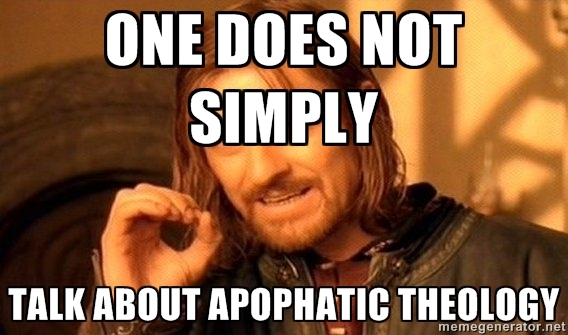 Why use any terms at all? Why not just remain silent, as many atheists prefer to do. I think silence is a valid option. “The name that can be named is not the eternal name.” (Tao Te Ching) But there are other valid responses: singing, dancing, ritual. And speaking is another option. The tricky thing about language is that it both opens up horizons of possibility and it also delimits or forecloses other possibilities, and it does this simultaneously. The experience I described above of speaking “Goddess” is a good example. Saying the word out “Goddess” loud opened up possibilities for me, i.e., of experiencing the divine immanently, but it also foreclosed other possibilities. At best, “Goddess” is ambiguous as to the place of masculinity. Ann Ulanov writes, “it is very much a human impulse to try to picture God and God does come to find us in those very pictures as well as in the smashing of them”. We have to try to “picture” God with our language, but we have to be continually smashing those linguistic idols as well.
One of the commenters to my last post said they like to use the term “The Sacred Spirit”. “Spirit” is a common choice, it seems. Unitarians often speak or sing about “The Spirit of Life”. But unfortunately, “spirit” is often juxtaposed with “matter” or “body” in Western culture, and these are qualities that many Pagans would include, not exclude, from what is being described as “Spirit”. “Universe” is another common choice, especially among non-theists and philosophical naturalists. I think, though, that the word suffers from the same difficulty as “God”. Where “God” is commonly associated with the transcendent or supernatural, “Universe” is sometimes understood reductively. I prefer “Cosmos”, which is more poetic. In any case, we need a word that makes room for the experience that we associate with these terms. Rather than a “God-in-the-gaps“, we need a “God-who-makes-gaps”.
“The divine” is a catch-all that I often use. But I really have no idea what it means. “Mystery” is a term that I like. And also “the Holy”. I like the imagery of the “Pregnant Abyss” which can be found in Milton, Jacob Boehme, Schelling, and others. I like Brian Swimme’s phrase, the “All Nourishing Abyss”. And Emerson’s “Wise Silence”. These are all phrases which seem to make room for the experience that I associate with “God”. Other terms I like are “the Dream Dreaming the Dreamer” (which is like a mini-koan) and “the Cosmic Dance”.
What words or phrases do you use to name that experience of mystery and wonder which many people call “God”?
Previous Post

November 4, 2013
Being an atheist just ain't what it used to be
Browse Our Archives
Select a Category Ritual Scripts Theology Uncategorized
Select a Month January 2017 December 2016 November 2016 October 2016 September 2016 August 2016 July 2016 June 2016 May 2016 April 2016 March 2016 February 2016 January 2016 December 2015 November 2015 October 2015 September 2015 August 2015 July 2015 June 2015 May 2015 April 2015 March 2015 February 2015 January 2015 December 2014 November 2014 October 2014 September 2014 August 2014 July 2014 June 2014 May 2014 April 2014 March 2014 February 2014 January 2014 December 2013 November 2013 October 2013 September 2013 August 2013 July 2013 June 2013 May 2013 April 2013 March 2013 February 2013 January 2013 December 2012 November 2012 October 2012 September 2012 August 2012 July 2012 June 2012 May 2012 April 2012 March 2012 February 2012 January 2012 December 2011 November 2011 October 2011 September 2011 August 2011
TAKE THE
Religious Wisdom Quiz
I challenged 450 prophets to call down fire from heaven, and theirs failed while mine consumed everything. Who am I?
Select your answer to see how you score.
Elisha Moses Elijah Samuel
Related posts from The Allergic Pagan

Autumn Equinox: God is Climate Change

How "Gods Before Politics" Perpetuates Privilege

Why We Need A God/dess Who Does Not...
TRENDING AT PATHEOS Pagan

When we talk about Greek religion, we often begin with the dodekatheion—the...

I was recently chatting with someone on Instagram. She asked me what...

While there are many people who share their results, the end of...

On July 23, I saw Christopher Nolan's The Odyssey which is Homer’s...

As I write this two big events have just finished up. One...

Restoring the Watershed of Divine Love
Perhaps cooperation is not something we manufacture through legislation, ideology, or moral...
view all Pagan blogs
Ad-Free & Subscriber Log-In Subscription Support
- About Us
- 2026 Calendar
- Videos
- Podcasts
- Library of World Religions
- Faith In Media Tracker
- Advertise With Us
- Write for Us
- Privacy Policy
- Terms of Service
- Do Not Sell My Data
- Contact Us
- Radiant Digital
- Manage Newsletter Subscriptions
- Unsubscribe From Notifications
- Sitemap
Copyright 2008-2026, Patheos. All rights reserved.
Subscription Support Ad-Free & Subscriber Log-In
Follow Patheos