
BuddhistCatholicContemplativeEvangelicalGeneral ChristianHinduJewishLatter-day SaintMuslimNew VisionsProgressive Christian
Beliefs
- Buddhist
- Catholic
- Contemplative
- Evangelical
- General Christian
- Hindu
- Jewish
- Latter-day Saint
- More Voices
- Muslim
- New Visions
- Pagan
- Progressive Christian
Topics
- Religion News
- Food and Religion
- Sports and Religion
- Religious Art
- Religious Music and Entertainment
- Religious Events
- History and Religion
- Style and Religion
- Politics and Religion
- Women in Religion
- Recreation Outdoors and Religion
- Business Finance and Religion
- Careers Workplace and Religion
- Education and Religion
- Family Parenting and Religion
- Health Fitness and Religion
- Home and Religion
- Relationships and Religion
- Technology and Religion
- Travel and Religion
Columnists
- Buddhist Columnists
- Business Finance and Religion Columnists
- Careers Workplace and Religion Columnists
- Catholic Columnists
- Contemplative Columnists
- Education and Religion Columnists
- Evangelists Columnists
- Family Parenting and Religion Columnists
- General Christian Columnists
- Health Fitness and Religion Columnists
- Hindu Columnists
- History and Religion Columnists
- Home and Religion Columnists
- Jewish Columnists
- More Voices Columnists
- Latter Day Columnists
- Muslim Columnists
- New Visions Columnists
- Nonreligious Columnists
- Pagan Columnists
- Politics and Religion Columnists
- Progressive Columnists
- Recreation Outdoors and Religion Columnists
- Relationships and Religion Columnists
- Religion News Columnists
- Religious Art Columnists
- Religious Events Columnists
- Religious Music and Entertainment Columnists
- Sports and Religion Columnists
- Style and Religion Columnists
- Technology and Religion Columnists
- Travel and Religion Columnists
- Women in Religion Columnists
Resource Library
- 2026 Calendar
- Library of World Religions
- The 100 Most Holy Places on Earth
- Patheos Answers
- Podcasts
- Videos
- Faith Leaders Database
- Anglican Episcopalian
- Bahai
- Baptist
- Buddhism
- Christianity
- Confucianism
- Eastern Orthodoxy
- Hinduism
- Holiness and Pentecostal
- ISKCON
- Islam
- Judaism
- Lutheran
- Methodist
- The Church of Jesus Christ of Latter-day Saints
- New Age
- Paganism
- Presbytarian and Reformed
- Protestantism
- Religion Behind the Scenes
- Roman Catholic
- Scientology
- Shia Islam
- Sikhism
- Sufism
- Sunni Islam
- Taoism
- Zen
- See all religions
Research Tools
 Ad-Free & Subscriber Log-In Subscription Support
Ad-Free & Subscriber Log-In Subscription Support
Follow Patheos 

- Trending:
- Forgiveness
- |
- Marriage
- |
- Consciousness
- |
- Death Penalty
- |
- Election
- |
- Halloween
 The Allergic Pagan
- Home
- Pagan
- Who are we talking to anyway?: Humanistic Paganism and the gods
Who are we talking to anyway?: Humanistic Paganism and the gods
Last updated on: August 22, 2012 at 10:04 am by John Halstead
Who are we talking to anyway?: Humanistic Paganism and the gods 2012-08-22T10:04:46-05:00 John Halstead
Patheos Explore the world's faith through different perspectives on religion and spirituality! Patheos has the views of the prevalent religions and spiritualities of the world.
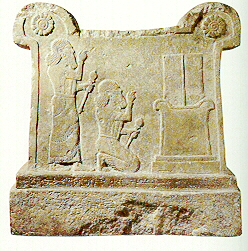
Over at The Wild Hunt, Brendan Myers has posted a guest article about whether Humanist Paganism is on the rise. It has stirred up some controversy in the comments section.
Old Gods and New Orthodoxy
What was most interesting to me were the comments of several polytheists that Paganism and atheism are incompatible because Paganism is necessarily theistic. “Raksha”, for example, argued that being atheist is “okay”, but it is disingenuous to call oneself Pagan also, because Paganism is the worship of “the Old Gods”:
In our current society, “Pagan” refers to a variety of religions that worship the Old Gods in some manner or another. […] claiming that NOW it doesn’t primarily mean “worships the Old Gods” is disingenuous. It doesn’t matter how much you like the pageantry or holidays or the general outlook on the world, if you don’t believe in the Gods in some form, you are an atheist. […]
And that’s okay! Really! It doesn’t mean you can’t be a part of the community or participate in ritual or whatever. Calling yourself a Pagan is inaccurate and could lead to confusion and anger, just like a straight woman calling herself a lesbian would. Just be honest, and we can all avoid that!
Similarly, Leoht Sceadusawol argued that
to dismiss the gods is to dismiss the central aspect of Paganism. Paganism is not about the parties/festivals/just having fun with friends. It is a (collection of )belief system(s) – religion(s).
I was a surprised to hear this kind of insistence on orthodoxy from Pagans, since contemporary Paganism has traditionally eschewed orthodoxy. “Northern_Light_27” echoed my feelings:
”The comments to this post surprise me, […] In the past, the majority of what I’d read is that sincere participation is sincere participation, and it doesn’t matter whether the participant’s belief in the gods is “I believe fully in them but haven’t met them”, “I’ve been devoted to Her for 20 years and we commune together regularly”, or “I believe they are important archetypes of the collective consciousness” as long as the person isn’t obnoxious about shoving their ideas into someone else’s face and insisting that everyone has to believe as they do. For years, I’d hear from hard polytheists frustrated that the Wicca-focused people around them are shoving their “archetypes but not literal beings” ideas or “facets of a singular jewel” monism into their face and sneering at the idea of sincerely held hard polytheist beliefs. Now it looks like the tides have shifted and the hard polytheists are the ones on the dominant end insisting on like belief.
Where does pantheism fit in?
I appreciated the response of “Obsidia” response that Pagan is a broader term than “Raksha” suggested, citing Starhawk’s pantheism as an example. Starhawk wrote:
“People often ask me if I believe in the Goddess. I reply ‘Do you believe in rocks?’ It is extremely difficult for most Westerners to grasp the concept of a manifest deity. The phrase ‘believe in’ itself implies that we cannot know the Goddess, that She is somehow intangible, incomprehensible. But we do not believe in rocks we may see them, touch them, […] In the Craft, we do not believe in the Goddess we connect with Her; through the moon, the stars, the ocean, the earth, through trees, animals, through other human beings, through ourselves.”
Starhawk’s view is pantheistic. And my own interaction with nature resembles Starhawk’s in this way. I do not personify nature exactly. I might speak to nature as “you”, as I did during a recent trip to Pike’s Peak where I felt compelled by the experience to say “thank you” over and over, but I do not think nature hears me or will respond.
While I do not personify nature, I do mythologize it — by which I mean that I associate natural phenomena with mythological figures in myth. In the morning, I greet the sun with a hymn to Indra, but I do not believe that Indra is literally the sun. Both Indra and the sun are symbols of the light and warmth that I experience and enjoy. At the fall equinox, my family celebrates harvest season with a dramatization of the Osiris myth, but I do not believe that Osiris is the grain. Both Osiris and the grain are symbols of the experience of sacrifice which precedes transformation.
I wonder if polytheists would consider these practices to be atheistic or theistic. I don’t “believe” in Indra or Osiris or any of the “Old Gods”. And I do not exactly “believe” in the sun or in grain, since their existence is physical and evident.
Where do archetypes fit in?
But that’s only one half of my interaction with the gods. I am a Jungian Pagan, so I also find the gods in my deep self. These are the parts of me of which I am only partially conscious. And I do tend to personify these aspects of my self in a sense. They are not full personalities. Their very nature is their incompleteness. But they are parts of a personality. And so I do personify them. I give them names and can talk to them and listen to them if I choose.
I wonder if polytheists would consider these practices to be atheistic or theistic. The archetypes of my unconscious are not evident in the way that the sun and grain are. They can only be experienced by me in my imagination and observed through interpretations of my words and actions when they manifest in that way. I don’t know if I would say I “believe” in the archetypes. I believe in my experiences and I find the names and images of archetypes to be useful interpretations of my experience. But I don’t believe they “exist” “out there” independent of my psyche.
There was an interesting exchange in the comments between Leoht Sceadusawol and Baruch Dreamstalker, in which Leoht suggested that whether ritual is theistic or atheistic depends on whether it is a monologue or a dialogue:
Leoht Sceadusawol: I am unsure why they would bother with religious ritual if they do not believe in the deities involved.
Baruch Dreamstalker: Because sometimes one wants communion with a part of the Earth, like the sea or the woods, and our social-primate brain does that most often in conversation. The Gods are the other end of the conversation.
Leoht Sceadusawol: So, without the gods, it isn’t a conversation, it is a monologue.
Baruch Dreamstalker: A dialogue even with an archetype arising from one’s own copy of the collective unconscious is still a dialogue. Only if we know every word in advance do we have a monologue.
Leoht Sceadusawol: I agree. But you have to accept the existence of the archetype, which is still a belief in that god, albeit from a different nature that most would consider ‘godhood’. A wise man once said ” I don’t care what you believe in, just believe in it.”
The notion of ritual as a conversation is an interesting one. When I interact with nature, it is more of a monologue. I can listen to nature and I can speak to it, but nature is deaf to me. On the other hand, I can have two way conversations with the archetypes. However, in some sense I am talking to my “self”, albeit a part of my self with which I do not identify with my waking consciousness. It is strange to think that I monologue with a divine that is separate from me, but dialogue with a divine that is part of me.
Are we playing pretend?
In another comment, Eric Devries accused Humanistic Pagans of playing pretend in ritual:
I guess it’s based on the way I practice Paganism(which involves faith heavily) that I don’t see Atheism and Paganism being any more compatible than Chistianity and Atheism, it doesn’t make sense to me. Mind you i’m not one of those to go around telling Pagans they aren’t real Pagans because they do/don’t whatever, but if you show up to Pagan rituals to have a role playing type experience that doesn’t make you a Pagan in my eyes. I have more in common with a Christian than with the people you describe, which isn’t a problem for me it just makes me wonder what makes a person a Pagan. […]
I’m not playing at my faith, it’s a very serious matter to me and if someone is showing up for a group ritual to in effect LARP [Live Action Role Play] while the others around them believe they are sharing an experience with someone like minded I think that’s dishonest and offensive.
Leoht echoed this sentiment in response to a comment that belief in the existence of the gods is not important:
If you don’t believe, why bother pretending? It’s not LARP [live action role play].
This same accusation came up in a previous “challenge post” by Jake Diebolt on the Humanistic Paganism blog entitled “Ritual — why bother?”. Jake, an atheist, asked why humanistic pagans bother with ritual if they don’t believe in gods. And he accused humanistic Pagans of being hypocritical. It is interesting that the same accusation comes from both theistic Pagans and an atheistic non-Pagan. This reminds me of something Aldous Huxley wrote:
“Religion, it seems to me, can survive only as a consciously accepted system of make-believe. People will accept certain theological statements about life and the world, will elect to perform certain rites and to follow certain rules of conduct, not because they imagine the statements to be true or the rules and rites to be divinely dictated, but simply because they have discovered experimentally that to live in a certain ritual rhythm, under certain ethical restraints, and as if certain metaphysical doctrines were true, is to live nobly, with style.”
I suppose that there may be some Pagans who act “as if” the gods are real when they participate in ritual. And there may be some psychological value in “pretending”. But I agree with polytheists that there is something disingenuous about pretending.
I for one do not pretend when I participate in ritual. My (Humanist) Paganism is not a “consciously accepted system of make-believe.” I do not believe in the gods the way that many polytheists do, but neither do I pretend that I believe in them when I participate in ritual. I think Eric and Leoht’s comments are based on a false dichotomy, or else a very narrow definition of what Pagan ritual is. I am realizing in writing this that strict atheism and literal theism are two ends of a long spectrum, and my own beliefs and practices fall at different places along that spectrum.
Humanistic Pagan ritual
I’ve written before about “Why I bother with ritual”. And I had a similar discussion with Rua Lupa following her post on Humanistic Paganism where we went back and forth about personification. It may seem strange to atheists and (poly)theists alike that I would recite a hymn to Indra while raising my arms to the sun, and yet claim that I neither believe in Indra nor am I pretending to believe in Indra. It’s simply that I find the myth of Indra and Vritra in the Rig Veda to be evocative, evocative in a way that I associate with the experience of light and warmth from the morning sun. And taking a moment in the morning to honor that experience with ritual gestures and words from an ancient Indian text is the essence of what Paganism is for me.
I may even make offerings. I regularly pour libations outdoors. Polytheists and theists would probably find this equally strange. Who am I making offerings to? I don’t think I am making them to anyone. I pour libations because I find the act of ritualized giving to be evocative. It draws a feeling from me that I call “sacred”. It is part of a process of sacralizing my experience of the world which has been called the re-enchantment or the “re-godding” the world.
I agree with “Lailahart” comment that
It’s not pretending, it’s about how one defines the idea of deity (which is always different, especially with Pagans!) and the importance one places on that concept. Perhaps they exist, perhaps they don’t, but if the commune with them enriches this life (the only thing we truly know) they serve a valuable purpose.
Sannion responded to Lailahart:
And that’s exactly what’s wrong with this situation. My rituals are done to please the gods. Therefore, if you do not acknowledge the existence of those gods then there is absolutely no reason to be in attendance at the rites because — and I know this will come as a shock to some — true worship isn’t about us and what we get out of the experience however much one may, indeed, get out of it.
And here we get to the very heart of the matter, I think. Sannion (who does not identify as Pagan) worships in a truly deity-centered fashion. The focus is on the gods, so the reality of the gods matters. But from a human-centered perspective, the focus is not on the deity, but on the experience of the human being. The justification for the ritual comes, not from the gods, but from human beings. This is what makes ritual “humanistic” in my mind.
Previous Post

August 20, 2012
Pike's Peak
Next Post
August 23, 2012 A Mormon therapist takes on masturbation
Browse Our Archives
Select a Category Ritual Scripts Theology Uncategorized
Select a Month January 2017 December 2016 November 2016 October 2016 September 2016 August 2016 July 2016 June 2016 May 2016 April 2016 March 2016 February 2016 January 2016 December 2015 November 2015 October 2015 September 2015 August 2015 July 2015 June 2015 May 2015 April 2015 March 2015 February 2015 January 2015 December 2014 November 2014 October 2014 September 2014 August 2014 July 2014 June 2014 May 2014 April 2014 March 2014 February 2014 January 2014 December 2013 November 2013 October 2013 September 2013 August 2013 July 2013 June 2013 May 2013 April 2013 March 2013 February 2013 January 2013 December 2012 November 2012 October 2012 September 2012 August 2012 July 2012 June 2012 May 2012 April 2012 March 2012 February 2012 January 2012 December 2011 November 2011 October 2011 September 2011 August 2011
TAKE THE
Religious Wisdom Quiz
Who follows the rider of the Pale Horse in Revelation?
Select your answer to see how you score.
The Saints Hades The Four Winds The Angel Gabriel
Related posts from The Allergic Pagan

A Guide to Politics at Patheos Pagan

Call to Chicago Area Pagans: Come to Hammond...

Size Doesn't Matter: 5 Pieces of Advice for...

What’s A Nice Atheist Like Me Doing At...
TRENDING AT PATHEOS Pagan

When we talk about Greek religion, we often begin with the dodekatheion—the...

I was recently chatting with someone on Instagram. She asked me what...

While there are many people who share their results, the end of...

On July 23, I saw Christopher Nolan's The Odyssey which is Homer’s...

As I write this two big events have just finished up. One...

Restoring the Watershed of Divine Love
Perhaps cooperation is not something we manufacture through legislation, ideology, or moral...
view all Pagan blogs
Ad-Free & Subscriber Log-In Subscription Support
- About Us
- 2026 Calendar
- Videos
- Podcasts
- Library of World Religions
- Faith In Media Tracker
- Advertise With Us
- Write for Us
- Privacy Policy
- Terms of Service
- Do Not Sell My Data
- Contact Us
- Radiant Digital
- Manage Newsletter Subscriptions
- Unsubscribe From Notifications
- Sitemap
Copyright 2008-2026, Patheos. All rights reserved.
Subscription Support Ad-Free & Subscriber Log-In
Follow Patheos