
BuddhistCatholicContemplativeEvangelicalGeneral ChristianHinduJewishLatter-day SaintMuslimNew VisionsProgressive Christian
Beliefs
- Buddhist
- Catholic
- Contemplative
- Evangelical
- General Christian
- Hindu
- Jewish
- Latter-day Saint
- More Voices
- Muslim
- New Visions
- Pagan
- Progressive Christian
Topics
- Religion News
- Food and Religion
- Sports and Religion
- Religious Art
- Religious Music and Entertainment
- Religious Events
- History and Religion
- Style and Religion
- Politics and Religion
- Women in Religion
- Recreation Outdoors and Religion
- Business Finance and Religion
- Careers Workplace and Religion
- Education and Religion
- Family Parenting and Religion
- Health Fitness and Religion
- Home and Religion
- Relationships and Religion
- Technology and Religion
- Travel and Religion
Columnists
- Buddhist Columnists
- Business Finance and Religion Columnists
- Careers Workplace and Religion Columnists
- Catholic Columnists
- Contemplative Columnists
- Education and Religion Columnists
- Evangelists Columnists
- Family Parenting and Religion Columnists
- General Christian Columnists
- Health Fitness and Religion Columnists
- Hindu Columnists
- History and Religion Columnists
- Home and Religion Columnists
- Jewish Columnists
- More Voices Columnists
- Latter Day Columnists
- Muslim Columnists
- New Visions Columnists
- Nonreligious Columnists
- Pagan Columnists
- Politics and Religion Columnists
- Progressive Columnists
- Recreation Outdoors and Religion Columnists
- Relationships and Religion Columnists
- Religion News Columnists
- Religious Art Columnists
- Religious Events Columnists
- Religious Music and Entertainment Columnists
- Sports and Religion Columnists
- Style and Religion Columnists
- Technology and Religion Columnists
- Travel and Religion Columnists
- Women in Religion Columnists
Resource Library
- 2026 Calendar
- Library of World Religions
- The 100 Most Holy Places on Earth
- Patheos Answers
- Podcasts
- Videos
- Faith Leaders Database
- Anglican Episcopalian
- Bahai
- Baptist
- Buddhism
- Christianity
- Confucianism
- Eastern Orthodoxy
- Hinduism
- Holiness and Pentecostal
- ISKCON
- Islam
- Judaism
- Lutheran
- Methodist
- The Church of Jesus Christ of Latter-day Saints
- New Age
- Paganism
- Presbytarian and Reformed
- Protestantism
- Religion Behind the Scenes
- Roman Catholic
- Scientology
- Shia Islam
- Sikhism
- Sufism
- Sunni Islam
- Taoism
- Zen
- See all religions
Research Tools
 Ad-Free & Subscriber Log-In Subscription Support
Ad-Free & Subscriber Log-In Subscription Support
Follow Patheos 

- Trending:
- Forgiveness
- |
- Marriage
- |
- Consciousness
- |
- Death Penalty
- |
- Election
- |
- Halloween
 The Allergic Pagan
- Home
- Pagan
- Finding Joe
Finding Joe
Last updated on: January 19, 2012 at 2:43 pm by John Halstead
Finding Joe 2012-01-19T14:43:28-05:00 John Halstead
Patheos Explore the world's faith through different perspectives on religion and spirituality! Patheos has the views of the prevalent religions and spiritualities of the world.
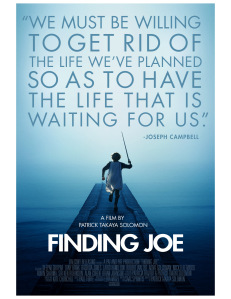
Finding Joe, the movie
You should really check out this movie: Finding Joe. It is about Joseph Campbell’s monomyth or “Journey of the Hero” as they call it in the movie. I bought it and didn’t regret it. It presents the monomyth in terms that a layperson unfamiliar with Campbell can understand. If you’re looking for a biography of Campbell or a study of ancient myth, this is not it. The movie tells the story of the monomyth in very general terms and only tangentially and infrequently mentions ancient myth. Instead, it presents the theory in terms that people who are not interested in mythology, but are interested in personal development, can appreciate. The imagery is beautiful and the soundtrack is moving, if somewhat monotonous. The movie has children playing various parts in the monomyth and it is beautifully filmed.

The Hero
I showed it to my wife and my 12 year old son, and they loved it. I was a little disappointed that it did not discuss ancient myth more, but this makes it more accessible to a general audience.
Campbell’s monomyth has always been a powerful influence on me. I first picked up The Hero With a Thousand Faces in a train station bookstore on my way to college. Later I read the Masks of God trilogy and other books by Campbell. When I started exploring Paganism and my wife was wondering what the hell I was involved with, I drew on Campbell’s Hero to explain it:
Everybody has a ‘secret life’ or a secret part of themselves. If somebody doesn’t think they do, it’s just because that secret part is secret even from them. And not everything that is in the secret place is pretty, nor is everything in that place ugly just because it is secret. That is what Joseph Campbell meant when he wrote: The unconscious is that
“realm we enter in sleep. We carry it within ourselves forever. All the ogres and secret helpers of the nursery are there, all the magic of childhood. And more importantly, all the life-potentialities that we never managed to bring to adult realisation, those other portions of ourselves, are there; for such golden seeds do not die. If only a portion of that lost totality could be dredged up into the light of day, we should experience a marvelous expansion of our powers, a vivid renewal of life. We would tower in stature.”
What I’m involved in now is an exploration of that place (of the “ogres” and “secret helpers”), through myth and symbol and ritual. This exploration, this journey, is what is sacred to me. […]
In addition to the myths of the seasonal cycle, cultures across time have told stories of a symbolic hero who journeys to the underworld to accomplish some task, and returns bringing light or enlightenment to the world. Joseph Campbell calls this the “monomyth”, because, while the stories vary in their details, they all have the same structure. […]
This “hero’s journey”, as Campbell points out, is reflective of a psychological journey that leads to the reconciliation of our divided psyche and spiritual wholeness. He draws on Jung heavily. Campbell and Jung and others like him were concerned that, as many people experience a loss of meaning of traditional religious symbols and rituals, that they are left without “guides” to help them in their journey. Their world becomes overly rational, devoid of the richness that symbol and myth bring to one’s life. They attributed the pandemic of “soul-sickness” that they saw to this rootlessness. Jung suggested that we needed new myths, but only began to hint at an outline of one. Campbell, on the other hand, offered his readers the myths of myriad cultures as substitute guides. This is what he meant when he wrote: We do not have
“to risk the adventure alone, for the heroes of all time have gone before us — the labyrinth [the path to the unconscious] is thoroughly known. We have only to follow the thread of the hero path [the myths], and where we had thought to find an abomination [the “ogres”], we shall find a god; where we had thought to slay another, we shall slay ourselves; where we had thought to travel outward, we shall come to the center of our own existence. And where we had thought to be alone, we shall be with all the world.”
I am researching these myths, studying them, picking and choosing, part-deliberately and part-intuitively, integrating them, and creating myths for myself and rituals to accompany them.
I have seen reviews of the film that said it was like an infomercial, filled with talking heads, redundant and platitudinous. I can certainly understand those reactions. But I love Campbell and his message too much not to love this movie.
As I watched Finding Joe with my family, the word that kept coming to mind, strangely enough, was “gospel”, as in “good news”. I thought, “This is my gospel!” Perhaps it was because the movie had an almost missionary-like atmosphere to it that reminded me of movies produced by the the Mormon church for their missionary efforts. In any case, although this no one featured in this movie was Neopagan, I felt that it truly captured the reason for my interest in Neopaganism.
Previous Post

January 16, 2012
Brendan Meyers Interview
Next Post
January 19, 2012 My Son Confronts Existential Despair
Browse Our Archives
Select a Category Ritual Scripts Theology Uncategorized
Select a Month January 2017 December 2016 November 2016 October 2016 September 2016 August 2016 July 2016 June 2016 May 2016 April 2016 March 2016 February 2016 January 2016 December 2015 November 2015 October 2015 September 2015 August 2015 July 2015 June 2015 May 2015 April 2015 March 2015 February 2015 January 2015 December 2014 November 2014 October 2014 September 2014 August 2014 July 2014 June 2014 May 2014 April 2014 March 2014 February 2014 January 2014 December 2013 November 2013 October 2013 September 2013 August 2013 July 2013 June 2013 May 2013 April 2013 March 2013 February 2013 January 2013 December 2012 November 2012 October 2012 September 2012 August 2012 July 2012 June 2012 May 2012 April 2012 March 2012 February 2012 January 2012 December 2011 November 2011 October 2011 September 2011 August 2011
TAKE THE
Religious Wisdom Quiz
What year was the Council of Nicea?
Select your answer to see how you score.
1054 AD 1517 AD 500 AD 325 AD
Related posts from The Allergic Pagan

The Neo-Pagan Mysteries, Part 6: Descent to the...

The Neo-Pagan Mysteries, Part 4: Sacrifice
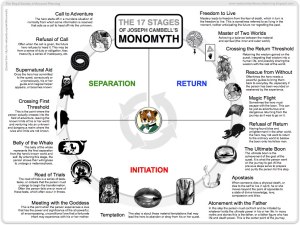
Navel gazing versus the journey to the World...
These are my gods: or my biography told...
TRENDING AT PATHEOS Pagan

I was recently chatting with someone on Instagram. She asked me what...

While there are many people who share their results, the end of...

On July 23, I saw Christopher Nolan's The Odyssey which is Homer’s...

As I write this two big events have just finished up. One...

Restoring the Watershed of Divine Love
Perhaps cooperation is not something we manufacture through legislation, ideology, or moral...

Many UUs don’t pray because of bad experiences in a previous religion,...
view all Pagan blogs
Ad-Free & Subscriber Log-In Subscription Support
- About Us
- 2026 Calendar
- Videos
- Podcasts
- Library of World Religions
- Faith In Media Tracker
- Advertise With Us
- Write for Us
- Privacy Policy
- Terms of Service
- Do Not Sell My Data
- Contact Us
- Radiant Digital
- Manage Newsletter Subscriptions
- Unsubscribe From Notifications
- Sitemap
Copyright 2008-2026, Patheos. All rights reserved.
Subscription Support Ad-Free & Subscriber Log-In
Follow Patheos