
BuddhistCatholicContemplativeEvangelicalGeneral ChristianHinduJewishLatter-day SaintMuslimNew VisionsProgressive Christian
Beliefs
- Buddhist
- Catholic
- Contemplative
- Evangelical
- General Christian
- Hindu
- Jewish
- Latter-day Saint
- More Voices
- Muslim
- New Visions
- Pagan
- Progressive Christian
Topics
- Religion News
- Food and Religion
- Sports and Religion
- Religious Art
- Religious Music and Entertainment
- Religious Events
- History and Religion
- Style and Religion
- Politics and Religion
- Women in Religion
- Recreation Outdoors and Religion
- Business Finance and Religion
- Careers Workplace and Religion
- Education and Religion
- Family Parenting and Religion
- Health Fitness and Religion
- Home and Religion
- Relationships and Religion
- Technology and Religion
- Travel and Religion
Columnists
- Buddhist Columnists
- Business Finance and Religion Columnists
- Careers Workplace and Religion Columnists
- Catholic Columnists
- Contemplative Columnists
- Education and Religion Columnists
- Evangelists Columnists
- Family Parenting and Religion Columnists
- General Christian Columnists
- Health Fitness and Religion Columnists
- Hindu Columnists
- History and Religion Columnists
- Home and Religion Columnists
- Jewish Columnists
- More Voices Columnists
- Latter Day Columnists
- Muslim Columnists
- New Visions Columnists
- Nonreligious Columnists
- Pagan Columnists
- Politics and Religion Columnists
- Progressive Columnists
- Recreation Outdoors and Religion Columnists
- Relationships and Religion Columnists
- Religion News Columnists
- Religious Art Columnists
- Religious Events Columnists
- Religious Music and Entertainment Columnists
- Sports and Religion Columnists
- Style and Religion Columnists
- Technology and Religion Columnists
- Travel and Religion Columnists
- Women in Religion Columnists
Resource Library
- 2026 Calendar
- Library of World Religions
- The 100 Most Holy Places on Earth
- Patheos Answers
- Podcasts
- Videos
- Faith Leaders Database
- Anglican Episcopalian
- Bahai
- Baptist
- Buddhism
- Christianity
- Confucianism
- Eastern Orthodoxy
- Hinduism
- Holiness and Pentecostal
- ISKCON
- Islam
- Judaism
- Lutheran
- Methodist
- The Church of Jesus Christ of Latter-day Saints
- New Age
- Paganism
- Presbytarian and Reformed
- Protestantism
- Religion Behind the Scenes
- Roman Catholic
- Scientology
- Shia Islam
- Sikhism
- Sufism
- Sunni Islam
- Taoism
- Zen
- See all religions
Research Tools
 Ad-Free & Subscriber Log-In Subscription Support
Ad-Free & Subscriber Log-In Subscription Support
Follow Patheos 

- Trending:
- Forgiveness
- |
- Marriage
- |
- Consciousness
- |
- Death Penalty
- |
- Election
- |
- Halloween
 The Allergic Pagan
- Home
- Pagan
- Perfection, Regret, and Starting Over
Perfection, Regret, and Starting Over
Last updated on: November 14, 2011 at 10:42 am by John Halstead
Perfection, Regret, and Starting Over 2011-11-14T10:42:08-05:00 John Halstead
Patheos Explore the world's faith through different perspectives on religion and spirituality! Patheos has the views of the prevalent religions and spiritualities of the world.
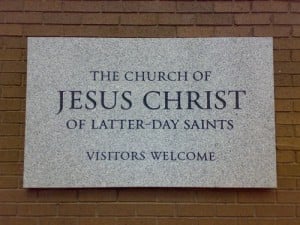
When I was young, I developed an unhealthy perfectionist mentality. This was a product of a combination of my own obsessive personality, the unreasonable and unpredictable expectations of a bipolar mother, and a religion (Mormonism) which took the ideal of perfection seriously [“Be ye therefore perfect, even as your Father which is in heaven is perfect” (Matt. 5:48)].
Looking back on my youth with some objectivity, I can now appreciate that I was a great kid: well-behaved, respectful to adults, successful in school, responsible at home. But I didn’t feel that way at the time, and so I developed the practice of “starting over”. Every night I would look back on my day and, feeling like a failure, decide that I would “start over” the next day. Rilke wrote: “I love the outsets, despite the fear and uncertainty that attach to all beginnings…begin to what? I begin – period. I have already begun a thousand lives this way.” I’m not sure what Rilke had in mind, but by the age of twelve I had begun a thousand lives myself. It was years before I would come to understand that this is not living.
Adrienne Rich wrote:
“No one ever told us we had to study our lives, make of our lives a study, as if learning natural history or music, that we should begin with simple exercises first and slowly go on trying the hard ones, practicing till strength and accuracy become one with the daring to leap into transcendence. And in fact we can’t live like that: we take on everything at once before we’ve even begun to read or mark time, we’re forced to begin in the midst of the hardest movement, the one already sounding as we are born.”
I understand now that life is what happens while we are making plans to begin living. I understand that there is no erasing the past. That the only redemption of the past comes from integrating it into the present. And the only perfection is a kind of wholeness that comes when one can accept the past for what it is: both constitutive of the present and beyond our control.
When I left the Mormon church, I felt acutely that I had lost years of my life to a lie. I particularly resented the two years that I had spent as a Mormon missionary proselytizing in northeast Brazil. But I eventually came to understand that I perhaps could not have arrived where I did were it not for that investment of time. The mission was for me a period of heightened religious intensity. If I had not spent those two years intensely trying to live out my Mormonism, I might instead have spent twenty years doing it more slowly.
While in Brazil, I bought a copy of Paulo Coelho’s Diary of a Mage. (The English title is The Pilgrimage.) In it, the author has an encounter with death, which he experiences as a friend who will help him live his life more fully. And he says that death tells him that he should “leave behind the greatest sin of all: regret”. Those were powerful words then, but it took years for their full meaning to settle in my soul. Of course, everyone regrets certain unwise choices in their life. But regret can become a way of life, as it had for me — one that kept me from truly living. For me, the Christian life of regret of “sin”, repentance (“starting over”), and striving for “perfection” had become a real impediment to living as a whole human being.
Now whenever I feel regret for having made certain choices, I remind myself of a quote from John Osborne’s play “Look Back in Anger”:
“It’s no good trying to fool yourself about love [or life]. You can’t fall into it like a soft job without dirtying up your hands. It takes muscle and guts. And if you can’t bear the thought of messing up your nice, clean soul, you better give up the whole idea of life, and become a saint, because you’ll never make it as a human being. It’s either this life or the next.”
This quote has given me a new vision of life, one radically different from that of my childhood. Getting my hands dirty, making unwise decisions, living with the consequences: this is the point of human life as I understand it. There is no perfection to be achieved. There is only this life and the choice whether to live it to the fullest or not. And, in a sense, the only sin that I have to worry about is the “sin” of regret.
Previous Post

November 8, 2011
Confessions of a solipsist
Next Post
November 18, 2011 Why I Bother With Ritual: Poetry and Eikonic Atheism
Browse Our Archives
Select a Category Ritual Scripts Theology Uncategorized
Select a Month January 2017 December 2016 November 2016 October 2016 September 2016 August 2016 July 2016 June 2016 May 2016 April 2016 March 2016 February 2016 January 2016 December 2015 November 2015 October 2015 September 2015 August 2015 July 2015 June 2015 May 2015 April 2015 March 2015 February 2015 January 2015 December 2014 November 2014 October 2014 September 2014 August 2014 July 2014 June 2014 May 2014 April 2014 March 2014 February 2014 January 2014 December 2013 November 2013 October 2013 September 2013 August 2013 July 2013 June 2013 May 2013 April 2013 March 2013 February 2013 January 2013 December 2012 November 2012 October 2012 September 2012 August 2012 July 2012 June 2012 May 2012 April 2012 March 2012 February 2012 January 2012 December 2011 November 2011 October 2011 September 2011 August 2011
TAKE THE
Religious Wisdom Quiz
In 2 Timothy, what does Paul say about everyone who wants to live a godly life?
Select your answer to see how you score.
They will be blessed They will receive a crown They will be persecuted They will face trials
Related posts from The Allergic Pagan

I'm a spy for the Mormon Church

The Travails of a Pagan in a Dual...
What a Pagan can tell you about whether...

Losing My Religion: The illusion of choice in...
TRENDING AT PATHEOS Pagan

I was recently chatting with someone on Instagram. She asked me what...

While there are many people who share their results, the end of...

On July 23, I saw Christopher Nolan's The Odyssey which is Homer’s...

As I write this two big events have just finished up. One...

Restoring the Watershed of Divine Love
Perhaps cooperation is not something we manufacture through legislation, ideology, or moral...

Many UUs don’t pray because of bad experiences in a previous religion,...
view all Pagan blogs
Ad-Free & Subscriber Log-In Subscription Support
- About Us
- 2026 Calendar
- Videos
- Podcasts
- Library of World Religions
- Faith In Media Tracker
- Advertise With Us
- Write for Us
- Privacy Policy
- Terms of Service
- Do Not Sell My Data
- Contact Us
- Radiant Digital
- Manage Newsletter Subscriptions
- Unsubscribe From Notifications
- Sitemap
Copyright 2008-2026, Patheos. All rights reserved.
Subscription Support Ad-Free & Subscriber Log-In
Follow Patheos