
BuddhistCatholicContemplativeEvangelicalGeneral ChristianHinduJewishLatter-day SaintMuslimNew VisionsProgressive Christian
Beliefs
- Buddhist
- Catholic
- Contemplative
- Evangelical
- General Christian
- Hindu
- Jewish
- Latter-day Saint
- More Voices
- Muslim
- New Visions
- Pagan
- Progressive Christian
Topics
- Religion News
- Food and Religion
- Sports and Religion
- Religious Art
- Religious Music and Entertainment
- Religious Events
- History and Religion
- Style and Religion
- Politics and Religion
- Women in Religion
- Recreation Outdoors and Religion
- Business Finance and Religion
- Careers Workplace and Religion
- Education and Religion
- Family Parenting and Religion
- Health Fitness and Religion
- Home and Religion
- Relationships and Religion
- Technology and Religion
- Travel and Religion
Columnists
- Buddhist Columnists
- Business Finance and Religion Columnists
- Careers Workplace and Religion Columnists
- Catholic Columnists
- Contemplative Columnists
- Education and Religion Columnists
- Evangelists Columnists
- Family Parenting and Religion Columnists
- General Christian Columnists
- Health Fitness and Religion Columnists
- Hindu Columnists
- History and Religion Columnists
- Home and Religion Columnists
- Jewish Columnists
- More Voices Columnists
- Latter Day Columnists
- Muslim Columnists
- New Visions Columnists
- Nonreligious Columnists
- Pagan Columnists
- Politics and Religion Columnists
- Progressive Columnists
- Recreation Outdoors and Religion Columnists
- Relationships and Religion Columnists
- Religion News Columnists
- Religious Art Columnists
- Religious Events Columnists
- Religious Music and Entertainment Columnists
- Sports and Religion Columnists
- Style and Religion Columnists
- Technology and Religion Columnists
- Travel and Religion Columnists
- Women in Religion Columnists
Resource Library
- 2026 Calendar
- Library of World Religions
- The 100 Most Holy Places on Earth
- Patheos Answers
- Podcasts
- Videos
- Faith Leaders Database
- Anglican Episcopalian
- Bahai
- Baptist
- Buddhism
- Christianity
- Confucianism
- Eastern Orthodoxy
- Hinduism
- Holiness and Pentecostal
- ISKCON
- Islam
- Judaism
- Lutheran
- Methodist
- The Church of Jesus Christ of Latter-day Saints
- New Age
- Paganism
- Presbytarian and Reformed
- Protestantism
- Religion Behind the Scenes
- Roman Catholic
- Scientology
- Shia Islam
- Sikhism
- Sufism
- Sunni Islam
- Taoism
- Zen
- See all religions
Research Tools
 Ad-Free & Subscriber Log-In Subscription Support
Ad-Free & Subscriber Log-In Subscription Support
Follow Patheos 

- Trending:
- Forgiveness
- |
- Marriage
- |
- Consciousness
- |
- Death Penalty
- |
- Election
- |
- Halloween

- Home
- General Christian
- Religious Music & Entertainment
- Great Songs About Jesus by Atheists, Pt. 2b
Great Songs About Jesus by Atheists, Pt. 2b
Last updated on: August 4, 2020 at 6:39 pm by Delvyn Case
Great Songs About Jesus by Atheists, Pt. 2b 2020-08-04T18:39:20-04:00 Delvyn Case
Patheos Explore the world's faith through different perspectives on religion and spirituality! Patheos has the views of the prevalent religions and spiritualities of the world.
This is second half of an article about George Michael’s powerful song “Jesus to a Child“, written after the AIDS-related death of his lover, Anselmo Feleppa. If you haven’t read the first part, you can find it here. This article is part of a new series that discusses songs written by non-Christians that nonetheless have much to teach us. You can find the first article in the series here.
PART 2
We ended the first part of this article with this anecdote, told by George Michael nine years after Anselmo’s death:
One of the most heartbreaking things I ever saw was when I went into Anselmo’s room one afternoon and he was sitting there in bed with his prayer cards. I just thought to myself, ‘Please don’t tell me you think you’re going to hell.’ It makes me so angry and I sincerely hope he didn’t fear that.”
*–*from a 2004, GQ Magazine article, available here.
These are angry words. They are words which – let’s be clear – those of us who have not lived the life of a gay person cannot understand. Yet, despite them, Michael chose to eulogize the love of his life by writing a song called “Jesus to a Child.”
Wait. Just let that sink in.
How is that possible? Here is a gay man who has been told by Christian society his entire life that he is a sinner. His lover has just died, taken from him by a disease that many Christians thought was sent by God as judgement on the gay community. That lover — who according to the account above still practiced a degree of Catholic piety – quite possibly died in terror that his soul was in danger of eternal damnation. And then the man writes a song that doesn’t just accurately describe agape, but name-checks Jesus as it does.
This is a singular feat of perspective, forgiveness, and open-heartedness. How was he able to do it?
“A New Creation”
I think the answer has to do with agape itself. You see, a key characteristic of agape is that the experience of it leaves you changed. When you encounter agape, when you embrace its paradigm of faithfulness, commitment, and sacrifice, then the scales fall off your eyes. Once you embrace that new way of being in the world, you are a new person.
This is the way of Jesus. In the words of Paul,
Therefore, if anyone is in Christ, he is a new creation. The old has passed away; behold, the new has come. (2 Corinthians 5:17, ESV)

Image by Giani Pralea from Pixabay
I think that George Michael’s ability to embrace Jesus as the exemplar of Anselmo’s love is evidence of a heart that had experienced agape. It’s a heart that was not holding a grudge. It’s a heart that was no longer consumed by anger, but is instead focused on love. Now, I’m not saying Michael was a Christian. But agape helped turn him into a new person – a person who had gotten a glimpse of what a life in Christ was like.
That’s what allowed him to distinguish between real Christ-like love and the brokenness of humans’ attempts to follow it. In an interview quoted in World Religion News, Michael says:
“I know for a fact that many devout Christians. . . are truly wonderful, kind-hearted men and women who take the best parts of that religion and live admirable, generous and loving lives. . . But in my opinion. . . there are others who use their twisted interpretations of ancient scriptures as a pathetic excuse. . .”
Clearly, we Christians could learn from George Michael’s open-heartedness to Jesus, despite the ways that Christian society had traumatized him and his lover. This is a singularly powerful way that this song can help us become better Christians: it can motivate us to better follow Christ’s command to forgive those who have hurt us and to approach the world with humility and grace.
In this way alone the song is valuable for us Christians. But there’s another way.
Pay it Forward
Later in the song, Michael sings:
And the love we would have made
I’ll make it for twoFor every single memory
Has become a part of me
You will always be my loveWell, I’ve been loved
So I know just what love is
Image by Jill Wellington from Pixabay

Michael is saying that, though Anselmo is gone, his love is not. It exists in his own heart, and he knows that – should he ever love again – the love he offers will be fundamentally different because of his experience of Anselmo’s love. It will be agape: faithful, committed, and sacrificial, not focused on satisfying his own desires, but instead based on kindness and empathy. It will be love that is not based on greed, but on generosity.
It is heartening to think about the message of agape to spread from person to person, from love to love. The originator of the Great Commission would be proud.
But as the Bible tells us again and again, true love is about more than just showing kindness and empathy for others. It’s about serving others. Agape and love of neighbor are indistinguishable.
And George Michael certainly loved his neighbor. He was one of the most generous and dedicated global citizens the pop music world has ever produced. Throughout his career he leveraged his fame to raise millions for the poor, sick, and hungry. Though his commitment to charity predated his relationship with Anselmo, for the twenty-five years after his death, George Michael modeled agape in his faithfulness, his commitment, and his sacrifice.
The Secret
Which brings us to the final way that “Jesus to a Child” shows us the true meaning of agape:
Hel donated all proceeds from this number-one song to the British children’s charity Childline, totaling two million pounds.
And he did so unbeknownst to the public. The secret was only revealed on his death.
George Michael knew that real Christ-like love was not just a feeling of kindness, humility, or selflessness, but the actual act of loving one’s neighbor. This was not even a song about children. But Michael seemed to instinctively know that he could not possibly sing about the love of Jesus without actually following his commands.

Image by Sasin Tipchai from Pixabay
By donating the proceeds from the song to Childline, George Michael manifested the kindness, generosity, and faithfulness that is central to agape. By doing so in secret he demonstrated the selflessness that is at its heart. In my opinion, it was his experience of agape from his lover, a Brazilian Catholic, that allowed him to see the true message of Jesus despite the pain the institutional church had caused him and his lover.
Faithful. Committed. Selfless. Humble. Forgiving.
And they will know we are Christians by our agape.
Previous Post

August 2, 2020
Great Songs About Jesus by Atheists, Pt. 2a
Next Post

August 4, 2020 The Hole in the Heart of Church Music, Pt. 1
Browse Our Archives
Select a Category Advent bells ccm choir Christmas civil rights classical music country music Easter faith fourth of july Good Friday gospel music hip-hop Holy Week Jesus Lent Mary Maundy Thursday Messiah music Passion politics Popular Music psalms race rock secular music song Trinity Sunday Uncategorized Worship worship music
Select a Month May 2026 April 2026 April 2025 March 2025 October 2024 August 2024 March 2024 January 2024 July 2023 March 2023 June 2022 April 2022 December 2021 August 2021 March 2021 December 2020 November 2020 October 2020 August 2020 July 2020
Follow Us!
TAKE THE
Religious Wisdom Quiz
True or False: Jacob deceived his father Isaac by pretending to be Esau to receive the blessing.
Select your answer to see how you score.
FALSE TRUE
Related posts from Alleluia! Music and the Christian Life

The Trinity in Sound and Motion
Alleluia! Music and the Christian Life
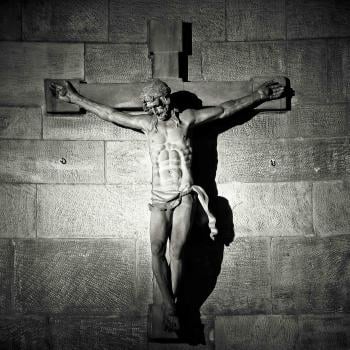
Jesus Christ Superstar's Holy Week Testimony: Part 1
Alleluia! Music and the Christian Life

Alleluia! Music and the Christian Life

Elvis's Five Most Spiritual Performances
Alleluia! Music and the Christian Life
TRENDING AT PATHEOS General Christian

A Biblical Vision of Success in Christian Life...
The Concern and Quest Recent trends and tendencies I note around me...

Indigenous Peoples’ Day and the Church
Indigenous' Peoples Day or Columbus Day? Depending on where you live...

When Spiritual Growth Looks Like Losing Ground
Four Passive Spiritual Disciplines: An Introduction When I was a college freshman,...

Faith and Finding Your Current Season
“To everything there is a season,” Ecclesiastes tells us, “and a time...

Did Jesus Fear God's Wrath in Gethsemane?
That Time Jesus Was Terrified Before we begin, let me say at...

A Generation Searching for God in All the...
Revival Begins With God’s People! Holidays Are Upon Us! Welcome to October!...
view all General Christian blogs
Ad-Free & Subscriber Log-In Subscription Support
- About Us
- 2026 Calendar
- Videos
- Podcasts
- Library of World Religions
- Faith In Media Tracker
- Advertise With Us
- Write for Us
- Privacy Policy
- Terms of Service
- Do Not Sell My Data
- Contact Us
- Radiant Digital
- Manage Newsletter Subscriptions
- Unsubscribe From Notifications
- Sitemap
Copyright 2008-2026, Patheos. All rights reserved.
Subscription Support Ad-Free & Subscriber Log-In
Follow Patheos