
BuddhistCatholicContemplativeEvangelicalGeneral ChristianHinduJewishLatter-day SaintMuslimNew VisionsProgressive Christian
Beliefs
- Buddhist
- Catholic
- Contemplative
- Evangelical
- General Christian
- Hindu
- Jewish
- Latter-day Saint
- More Voices
- Muslim
- New Visions
- Pagan
- Progressive Christian
Topics
- Religion News
- Food and Religion
- Sports and Religion
- Religious Art
- Religious Music and Entertainment
- Religious Events
- History and Religion
- Style and Religion
- Politics and Religion
- Women in Religion
- Recreation Outdoors and Religion
- Business Finance and Religion
- Careers Workplace and Religion
- Education and Religion
- Family Parenting and Religion
- Health Fitness and Religion
- Home and Religion
- Relationships and Religion
- Technology and Religion
- Travel and Religion
Columnists
- Buddhist Columnists
- Business Finance and Religion Columnists
- Careers Workplace and Religion Columnists
- Catholic Columnists
- Contemplative Columnists
- Education and Religion Columnists
- Evangelists Columnists
- Family Parenting and Religion Columnists
- General Christian Columnists
- Health Fitness and Religion Columnists
- Hindu Columnists
- History and Religion Columnists
- Home and Religion Columnists
- Jewish Columnists
- More Voices Columnists
- Latter Day Columnists
- Muslim Columnists
- New Visions Columnists
- Nonreligious Columnists
- Pagan Columnists
- Politics and Religion Columnists
- Progressive Columnists
- Recreation Outdoors and Religion Columnists
- Relationships and Religion Columnists
- Religion News Columnists
- Religious Art Columnists
- Religious Events Columnists
- Religious Music and Entertainment Columnists
- Sports and Religion Columnists
- Style and Religion Columnists
- Technology and Religion Columnists
- Travel and Religion Columnists
- Women in Religion Columnists
Resource Library
- 2026 Calendar
- Library of World Religions
- The 100 Most Holy Places on Earth
- Patheos Answers
- Podcasts
- Videos
- Faith Leaders Database
- Anglican Episcopalian
- Bahai
- Baptist
- Buddhism
- Christianity
- Confucianism
- Eastern Orthodoxy
- Hinduism
- Holiness and Pentecostal
- ISKCON
- Islam
- Judaism
- Lutheran
- Methodist
- The Church of Jesus Christ of Latter-day Saints
- New Age
- Paganism
- Presbytarian and Reformed
- Protestantism
- Religion Behind the Scenes
- Roman Catholic
- Scientology
- Shia Islam
- Sikhism
- Sufism
- Sunni Islam
- Taoism
- Zen
- See all religions
Research Tools
 Ad-Free & Subscriber Log-In Subscription Support
Ad-Free & Subscriber Log-In Subscription Support
Follow Patheos 

- Trending:
- Forgiveness
- |
- Marriage
- |
- Consciousness
- |
- Death Penalty
- |
- Election
- |
- Halloween
 Alignment
- Home
- Contemplative
- Education and Religion
- Don’t Know How to Pray? Here’s How.
Don’t Know How to Pray? Here’s How.
Last updated on: February 8, 2024 at 2:55 pm by Rev. Dr. Margaret Somerville
Don’t Know How to Pray? Here’s How. 2024-02-08T14:55:15-05:00 Rev. Dr. Margaret Somerville
Patheos Explore the world's faith through different perspectives on religion and spirituality! Patheos has the views of the prevalent religions and spiritualities of the world.
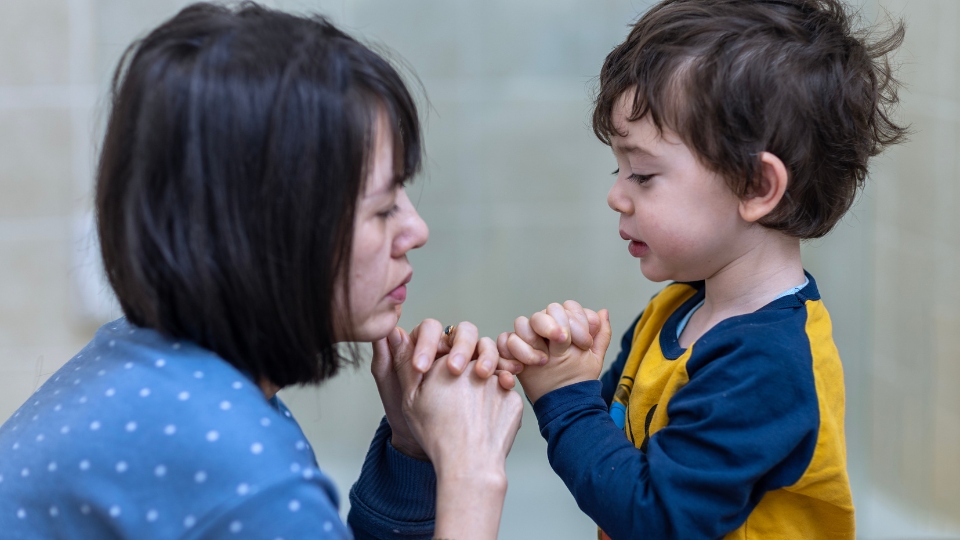
What if we never really learned how to pray and now we don’t know what prayer is? (Canva)
Prepared or unprepared. If one were to break down prayer into two basic categories, there would be the prayers of the carefully crafted words and the prayers of the flowing thoughts. The prayers handed down through generations of faithful supplicants sometimes in languages not truly known to those using them. And the prayers that have been composed like poetry to be delivered during a service or at a special occasion. Versus the words that seem to be coming from a wellspring unfathomed, ready to slip from the lips of someone asked to pray on the spot. Both very different gifts. One takes the time of memorization from early days of religious training or the time of composition. The other takes some level of practice or surety that the words are there. But what if I don’t know how to pray? What if I haven’t memorized or learned the special formulae to write prayers, or what if I do not possess the ability to draw on powers of praying that come extemporaneously? Then it is time to expand our understanding of what it means to pray, how to pray, and why it is important to us.
How to Pray 101
I attended a workshop, meant for people who were not faith leaders, to address their concerns about learning to pray. Several different faith leaders gave their own take on the process of preparing prayers for a religious service. It’s a good thing to have a bank of congregation members who feel confident enough to help lead worship services or to be ready to make a hospital visit where they might be asked to pray. The focus was on the composed form of prayer, not on knowing how to recite the Amidah or Dhuhr or Lord’s Prayer. Different types of prayers were explained, templates given, as well as the opportunity to practice writing prayers and offering them to the group. Your basic How to Pray 101 workshop. It was surprising to see how concerned participants were about getting the words just right. Perhaps the prayers would not work if they did not write them correctly. What if I don’t know how to pray?
Who Knows How to Pray
When I was first in seminary and ordained as a minister, I had a dear friend who began asking me to pray for different situations. A daughter getting a divorce. A mother with cancer. A best friend suffering from anxiety. And her own insecurity about her belief in God. Although her faith was wavering amidst the onslaught of circumstances where she felt as if God was not present, she did still believe that prayers were necessary. And that they would be more effective coming from me. I did have a closer connection now, seeing as I was official. My prayers had a more direct line, as she saw it. So I dutifully accepted her prayer requests, and occasionally prompted her to lift her own prayers as well. But I had to tread lightly. The power of prayer, its necessity and effectiveness, was even more deep-seated than her belief in the power to which I was praying. The danger here, of course, was when my prayers didn’t work. The daughter divorced; the mother died; the prayers had failed.
Perhaps the more necessary workshop would have been the one to address our understanding and our expectations of prayer. The one that teaches us that there are a million more categories of prayer than the composed and the spontaneous. Than the ones passed down through generations and the ones thought up on the spot. These have their place and purpose, most certainly, but what if we took the need for place and purpose of prayer out of the equation? What if we even took the need for words off the table? And opened up to people the fact that a million times a day, we engage in prayer without actually knowing that we are praying.
Prayer as Presence in Pain
Thomas Merton beautifully explained that prayer is about seeking the experience of presence. Yes, there are petitions on behalf of devastating conditions. There are prayers in the deepest, darkest moments of our own grief, isolation, and despair. There are times when we cannot hold the anxieties that put a vice around our chest and squeeze. And if only we could know that to pray is to seek the experience of presence, with a God that is in those heaviest of moments with us – then perhaps we would be free to burst in prayer with sighs and tears and even exclamations of joy, assured that we don’t need to know how to pray. Just opening up our heart and letting it feel, that is praying. Praying can be closer to an emotion than an action. And it doesn’t need words, and it doesn’t need training, or composition, or memorization, or formulae. It needs only the recognition that in feeling whatever you are feeling, there is more than you feeling it. And holding it.
So I will take your prayer requests and pray them for you, but that only opens the door to a prayer not met. But if I could teach you how to pray (like teaching you how to fish), I would say you already know how. Feel everything that is a weight on your heart, that is a worry taking over your thoughts, that is a fear gripping your chest, and know you are not alone.
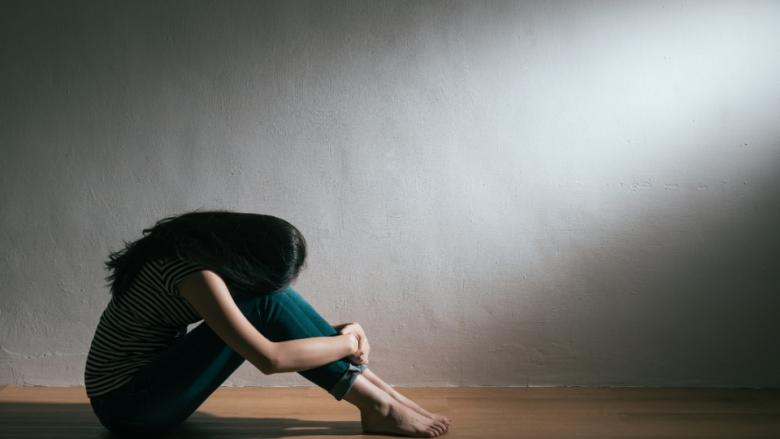
Whatever you are feeling, there is more than you feeling it. And holding it. You are not alone. (Canva)
Jewish
Family, Parenting and Religion
Interfaith Contemplative Practices
Previous Post
January 12, 2024
Can a Muslim and a Jew Pray Together?
Next Post

January 25, 2024 Ordinary Rituals That Create Sacred Space
Recent Comments
"denying prayer among people of different faiths b ased on the actions of secular governments ..."
"On October 15, I posted this article: https://www.patheos.com/blo...We hosted the Week of Prayer for World ..."
"Deeply moving reminder of what is needed to live a life in peace. Thank you ..."
Ground Level: The Basic Elements of ..."
"Thank you!"
Drinking Water as a Contemplative Practice: ..."
Browse Our Archives
Select a Category Earth Indigenous Interfaith Contemplative Practices Prayer Spiritual Practices Uncategorized
Select a Month February 2024 January 2024 December 2023 October 2023 September 2023 July 2023 May 2023 April 2023 March 2023 February 2023 January 2023 December 2022
Follow Us!
TAKE THE
Religious Wisdom Quiz
Which book comes directly after Job?
Select your answer to see how you score.
Psalms Proverbs Ecclesiastes Isaiah
Related posts from Alignment

What Is Your Prayer for Peace?

A Simple Way to Celebrate World Interfaith Harmony...

Ordinary Rituals That Create Sacred Space
Can a Muslim and a Jew Pray Together?
TRENDING AT PATHEOS Contemplative

Letters on Living the Faith by C.S. Lewis
Most of us met C.S. Lewis as a public intellectual. Mere Christianity....

When Halloween Unmasks Married Hearts
Written by Dr. David K. Ewen from Eternal Truth Bible College Behind...

Aristotle. He’s been called the father of logic, the father of the...

Methodist Central Hall and Westminster Abbey
Situated on the same square is Methodist Central Hall and Westminster Abbey. ...

57th Dove Awards Honor Dolly Parton, Crown New...
On gospel music’s biggest night, the 57th annual GMA Dove Awards honored...

The First Eucharistic Controversy: Christ’s Real Presence
For Catholics, the Eucharist is the source and summit of the Christian...
view all Contemplative blogs
Ad-Free & Subscriber Log-In Subscription Support
- About Us
- 2026 Calendar
- Videos
- Podcasts
- Library of World Religions
- Faith In Media Tracker
- Advertise With Us
- Write for Us
- Privacy Policy
- Terms of Service
- Do Not Sell My Data
- Contact Us
- Radiant Digital
- Manage Newsletter Subscriptions
- Unsubscribe From Notifications
- Sitemap
Copyright 2008-2026, Patheos. All rights reserved.
Subscription Support Ad-Free & Subscriber Log-In
Follow Patheos