
BuddhistCatholicContemplativeEvangelicalGeneral ChristianHinduJewishLatter-day SaintMuslimNew VisionsProgressive Christian
Beliefs
- Buddhist
- Catholic
- Contemplative
- Evangelical
- General Christian
- Hindu
- Jewish
- Latter-day Saint
- More Voices
- Muslim
- New Visions
- Pagan
- Progressive Christian
Topics
- Religion News
- Food and Religion
- Sports and Religion
- Religious Art
- Religious Music and Entertainment
- Religious Events
- History and Religion
- Style and Religion
- Politics and Religion
- Women in Religion
- Recreation Outdoors and Religion
- Business Finance and Religion
- Careers Workplace and Religion
- Education and Religion
- Family Parenting and Religion
- Health Fitness and Religion
- Home and Religion
- Relationships and Religion
- Technology and Religion
- Travel and Religion
Columnists
- Buddhist Columnists
- Business Finance and Religion Columnists
- Careers Workplace and Religion Columnists
- Catholic Columnists
- Contemplative Columnists
- Education and Religion Columnists
- Evangelists Columnists
- Family Parenting and Religion Columnists
- General Christian Columnists
- Health Fitness and Religion Columnists
- Hindu Columnists
- History and Religion Columnists
- Home and Religion Columnists
- Jewish Columnists
- More Voices Columnists
- Latter Day Columnists
- Muslim Columnists
- New Visions Columnists
- Nonreligious Columnists
- Pagan Columnists
- Politics and Religion Columnists
- Progressive Columnists
- Recreation Outdoors and Religion Columnists
- Relationships and Religion Columnists
- Religion News Columnists
- Religious Art Columnists
- Religious Events Columnists
- Religious Music and Entertainment Columnists
- Sports and Religion Columnists
- Style and Religion Columnists
- Technology and Religion Columnists
- Travel and Religion Columnists
- Women in Religion Columnists
Resource Library
- 2026 Calendar
- Library of World Religions
- The 100 Most Holy Places on Earth
- Patheos Answers
- Podcasts
- Videos
- Faith Leaders Database
- Anglican Episcopalian
- Bahai
- Baptist
- Buddhism
- Christianity
- Confucianism
- Eastern Orthodoxy
- Hinduism
- Holiness and Pentecostal
- ISKCON
- Islam
- Judaism
- Lutheran
- Methodist
- The Church of Jesus Christ of Latter-day Saints
- New Age
- Paganism
- Presbytarian and Reformed
- Protestantism
- Religion Behind the Scenes
- Roman Catholic
- Scientology
- Shia Islam
- Sikhism
- Sufism
- Sunni Islam
- Taoism
- Zen
- See all religions
Research Tools
 Ad-Free & Subscriber Log-In Subscription Support
Ad-Free & Subscriber Log-In Subscription Support
Follow Patheos 

- Trending:
- Forgiveness
- |
- Marriage
- |
- Consciousness
- |
- Death Penalty
- |
- Election
- |
- Halloween
 The Cordial Catholic
- Home
- Catholic
- Why I Became a Catholic this Easter
Why I Became a Catholic this Easter
Last updated on: August 3, 2015 at 3:59 pm by K. Albert Little
Why I Became a Catholic this Easter 2015-08-03T15:59:32-04:00 K. Albert Little
Patheos Explore the world's faith through different perspectives on religion and spirituality! Patheos has the views of the prevalent religions and spiritualities of the world.
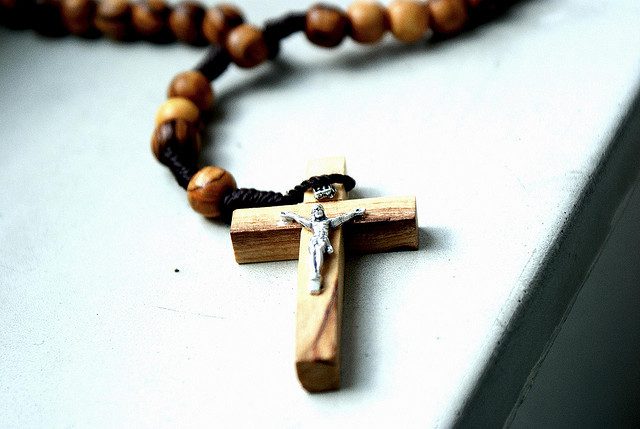
Photo Credit: Rchard.
After a radical conversion to Christ at the age of about fifteen years old, I lived as a genuinely devout Protestant, earnestly seeking after Christ in my life as best I could. Sometimes, of course, doing a miserable job.
This Easter, after a long journey, I became a Catholic.
My journey began when a Protestant pastor—himself on a journey towards a more ancient faith—asked me the question, “What’s more important the Bible or tradition?” When I answered, like the good Protestant, that it was, “Of course, the Bible.” He followed up by asking, “But who put the Bible together?”
That was the tradition of the Church, of course.
I was subsequently set on a path that lasted nearly a decade. A journey which introduced me to a podcasting priest, some Catholic friends, and even saw me attending Mass a couple of times. But Catholicism held no great appeal to me, at least not until I began to read.
I began to read about Catholicism from authors who were actual Catholics, instead of reading about what Protestant authors thought, or knew, about Catholicism. I found out, in a hurry, that much of what I knew about Catholicism (from the Protestant sources I’ve read, and from the few Catholics I’d met) was inaccurate, to say the least.
If I’d known what Catholics really believed, I would’ve become Catholic a lot sooner.
But I’m a Catholic now.
I read my way into the Church through authors like Louis Bouyer, Pope Benedict XVI, Scott Hahn, Stephen Ray, and G.K. Chesterton. Then I began to live like a Catholic by going to Mass and praying the Rosary and the Liturgy of the Hours.
And then I became Catholic.
If I were to distill my journey into only a few words I would say this. I’ve become a Catholic because I’ve found the Catholic faith to be historically, intellectually, spiritually, and aesthetically satisfying. Although, satisfying is hardly the right word, I’ve struggled to find a better one.
The Catholic Church is Historically Satisfying
I don’t say this to be facetious but I have a hard time understanding a reading of the Early Church Fathers that doesn’t result in the conclusion that the Catholic Church must’ve been what Jesus had in mind.
I say this because, I believe, the Catholic Church makes the most historical sense.
The Catholic Church traces its origins to Jesus Christ himself.
When Jesus gave Peter and the apostles the authority to bind and loose, to forgive sins and drive out demons, and charged them with the care of God’s people they did just that. The New Testament Scriptures are clear: they established churches. When leaders, like the Apostle Judas, died or were killed (or betrayed Christ and killed themselves), they appointed new leaders to take their places. There was a clear authoritative structure.
It’s even more clear, as I said, from even a cursory reading of the Early Church Fathers.
Clement, the earliest of the Church Fathers, who, scholars say, was appointed to his position as Bishop of Rome by the Apostle Peter himself, writes, in the oldest epistle we have apart from the New Testament, to correct a church in Corinth who weren’t respecting their bishop and his authority.
The oldest writing of the Church Fathers that we have is a letter exhorting a church to respect it’s bishop. (This is also what the bulk of Paul’s writings were about as well, so we shouldn’t be too surprised.)
Subsequent Early Church Fathers are even more clear.
The hierarchical, authoritative structure of the Early Church was clearly Catholic and that structure has passed on, subsequently, down through the ages, these last two thousands years.
The Catholic Church can trace that lineage.
I found the Catholic Church to be historically satisfying because it’s historically sound. Because it can clearly trace it’s roots back to the very first apostles and to Christ’s promise to build a Church, and to let nothing overcome it. If we take Jesus at His word what other conclusion can we make?
Has something overcome the Church? Then Jesus is a liar and not God.
Was he speaking about an invisible Church? Then why did the very first Christians appoint leaders over a very real, physical Church? And pass on that leadership?
The Catholic Church is Intellectually Satisfying
I read my way into the Catholic Church and what I’ve read has been incredibly enriching.
What I’ve found in Catholicism, apart from anything I’ve ever encountered in my Protestant faith, has been a complete and coherent theology—an unmatched, consistent, and intelligent perspective on the world.
A perspective that’s been subjected to two thousand years worth of scrutiny, and constant refinement and reform.
As a Protestant I was, largely, left to fend for myself on issues of theology, morality, and spirituality. There’s no teaching authority in Protestantism apart from each denomination—and there are, estimably, 30,000 of them—and, in real fact, no real authority apart from each local church and congregation. Even within each congregation interpretations of important theologies can differ greatly.
Ultimately, it was left up to me to distill my own theology. To decide what I believed and what made the most sense based on what I’ve read, who I’ve listened to, and the community I’m a part of. As Protestants, we chew these kinds of things over with our friends and come to a reasonable conclusion and settled difficult theology that way.
As a Catholic, the teachings of the Church, based on the authority that Jesus gave the first apostles (that was, as I’ve shown, passed down) has the ability to speak definitively on morality, spirituality, and theology.
And what the Church presents is a clear, consistent theology. The same reason why the Church teaches that only men can be called to the priesthood is part and parcel of the same theology behind why marriage is between and woman and a man exclusively. Which is also part of the same coherent theology behind why Jesus is actually present in the Eucharistic elements, and why the Catholic Church worships the way that it does.
Rather than a piecemeal theology, the Catholic Church presents a clear narrative which stands up to the most intellectually rigorous examinations. And rather than relying on myself as a biblical scholar and theologian to piece together my own beliefs—is that what God intended?—I can dig into the teachings of two thousands years of scholarship and tradition.
The Catholic Church is Spiritually Satisfying
If you had asked me about Catholic spirituality before I began my journey into the Catholic Church I would’ve suggested that it was largely empty piety. That most Catholics warmed the pews on Sunday, prayed to statues, and didn’t know their Bibles.
While some of this may certainly be true for many Catholics the same can be said—at least as far as the pew warming and Bible study goes—for many nominal Protestant Christians we well.
Suffice to say, when I actually began to dig into Catholic spirituality I was shocked.
Did you know, for example, that Mass is offered daily at most parishes?
Devout Catholics can go to church every day.
How’s that for spiritually satisfying?
What’s more, Catholic spirituality is two thousand years old and encompasses a myriad of enriching practices and traditions.
From rich traditions of Bible study like the Ignatian Method pioneered by St. Ignatius in the 15th century to the prayers of the Rosary and even the Mass itself, which can be found profoundly expressed—and profoundly similar to the Mass of today—in a document dating from between 40-60AD.
Where my narrow practice of Christian spirituality used to be reading my Bible, personal and private prayer, and attending worship services Catholicism has opened the door to an ancient and robust spirituality practiced by some of the very earliest Christians—and carried on today.
The Catholic Church is Aesthetically Satisfying
When I first started writing about my reasons for becoming Catholic I didn’t include this category because I hadn’t been around the Catholic Church long enough to understand what it meant.
I get it now, and I hope I can explain it sufficiently.
The Catholic Church is aesthetically satisfying in that the language it uses, the level of devotion and beauty, and the message it espouses, surrounds the devout Catholic in a world completely of its own. A completely Christian world.
I was recently talking to a Protestant friend—a friend who’d been baptized Catholic but left the Church—who said one of the appeals of the Catholic Church over her experience of evangelical Protestantism was the level of devotion and reverence for God. That God is truly and deeply worshiped. That’s what I mean, exactly.
In many evangelical Protestant churches Jesus is our buddy, our friend, and there’s nothing wrong with that. He’s that to Catholics as well. But He’s also God, King Jesus, as N.T. Wright says, and He deserves our reverence as such.
That was missing in my experience of Christianity, as an evangelical Protestant.
Likewise, the emphasis on beauty, poetry, and language in the Catholic Church is so rich, and deep, it could take a lifetime just to plumb below the surface. Take a look at any older Catholic Church, even the more modern ones, and you’ll find a richness of meaning in every aspect.
All pointing to Christ. The whole environment.
Why I Became a Catholic this Easter
I became a Catholic this Easter, ultimately, because the Holy Spirit drew me in.
We can become Catholics—and Christians—in really no other way.
I can’t work my way towards God anymore than I can work my way into Heaven. God called me, and I responded.
As an evangelical Protestant, I thought I understood my faith, its roots, and what it meant to be a Christian. As a Catholic, I’ve found much more than I ever imagined.
I’ve found a faith that has its roots in history, its origins with Jesus and the apostles immediately charged by Him with the founding of a Church. I’ve found a faith that stands up to intellectual rigour—that embraces it—and that’s coherent and complete. I’ve found a deep, rich spirituality that I can spend a lifetime discovering, and rediscovering—that’s been tried and true. And, finally, I’ve found a beauty, a language, and a way of life that’s artful, reverent, and ocean-deep.
That’s why I became a Catholic this Easter.
Previous Post
April 4, 2015
Tonight's the Night --- Thank You!
Next Post
April 10, 2015 Why I Changed My Mind About Communion
Browse Our Archives
Select a Category Appearances Christian Living Explaining the Faith Podcast Tough Questions Uncategorized Why I'm Catholic
Select a Month January 2024 December 2023 November 2023 July 2023 June 2023 May 2023 April 2023 March 2023 February 2023 January 2023 December 2022 November 2022 October 2022 September 2022 August 2022 July 2022 June 2022 May 2022 April 2022 March 2022 February 2022 January 2022 December 2021 November 2021 October 2021 September 2021 August 2021 July 2021 June 2021 May 2021 April 2021 March 2021 February 2021 January 2021 December 2020 November 2020 October 2020 September 2020 August 2020 July 2020 June 2020 May 2020 April 2020 March 2020 February 2020 January 2020 December 2019 November 2019 October 2019 September 2019 August 2019 July 2019 June 2019 May 2019 April 2019 March 2019 February 2019 January 2019 December 2018 November 2018 October 2018 September 2018 August 2018 July 2018 June 2018 May 2018 April 2018 March 2018 February 2018 January 2018 December 2017 October 2017 September 2017 July 2017 May 2017 April 2017 March 2017 February 2017 January 2017 December 2016 November 2016 October 2016 September 2016 August 2016 July 2016 June 2016 May 2016 April 2016 March 2016 February 2016 January 2016 December 2015 November 2015 October 2015 September 2015 August 2015 July 2015 June 2015 May 2015 April 2015 March 2015 February 2015 January 2015 December 2014 November 2014 October 2014
Follow Us!
TAKE THE
Religious Wisdom Quiz
What is the main Christian group in Ethiopia called?
Select your answer to see how you score.
Assemblies of God Pentecostal Ethiopian Orthodox Tewahedo Church Baptist
Support this
Column


Related posts from The Cordial Catholic

235: Questions I Couldn't Answer (w/ John Martignoni)

234: The Mindblowing World of Sacramentals (w/ Shaun...

233: The Power of Good Catholic Witnesses (w/...

232: The Trajectory of Conversion (w/ Phillip Campbell)
TRENDING AT PATHEOS Catholic

Rejecting Doom: Christian Hope And Human Action
Christianity is a religion of hope. We are to have hope and...

It’s What Comes From Within Which Matters
One of the most difficult things for us to understand is why...

Why I Choose the Eucharist Over the Sermon
Choose the Eucharist, Not the Sermon What are we supposed to get...

5 Design Elements Found in Spiritually Rooted Homes
Putting Spirituality Into Home Decor Our homes are more than our living...

Credo: A Story of God Told with the...
About 10 years ago, I began to imagine a personal "Credo" that...

The Anatomy of Divine Revelation in Catholic Thought
The claim that God has made Himself known to human beings is...
view all Catholic blogs
Ad-Free & Subscriber Log-In Subscription Support
- About Us
- 2026 Calendar
- Videos
- Podcasts
- Library of World Religions
- Faith In Media Tracker
- Advertise With Us
- Write for Us
- Privacy Policy
- Terms of Service
- Do Not Sell My Data
- Contact Us
- Radiant Digital
- Manage Newsletter Subscriptions
- Unsubscribe From Notifications
- Sitemap
Copyright 2008-2026, Patheos. All rights reserved.
Subscription Support Ad-Free & Subscriber Log-In
Follow Patheos