
BuddhistCatholicContemplativeEvangelicalGeneral ChristianHinduJewishLatter-day SaintMuslimNew VisionsProgressive Christian
Beliefs
- Buddhist
- Catholic
- Contemplative
- Evangelical
- General Christian
- Hindu
- Jewish
- Latter-day Saint
- More Voices
- Muslim
- New Visions
- Pagan
- Progressive Christian
Topics
- Religion News
- Food and Religion
- Sports and Religion
- Religious Art
- Religious Music and Entertainment
- Religious Events
- History and Religion
- Style and Religion
- Politics and Religion
- Women in Religion
- Recreation Outdoors and Religion
- Business Finance and Religion
- Careers Workplace and Religion
- Education and Religion
- Family Parenting and Religion
- Health Fitness and Religion
- Home and Religion
- Relationships and Religion
- Technology and Religion
- Travel and Religion
Columnists
- Buddhist Columnists
- Business Finance and Religion Columnists
- Careers Workplace and Religion Columnists
- Catholic Columnists
- Contemplative Columnists
- Education and Religion Columnists
- Evangelists Columnists
- Family Parenting and Religion Columnists
- General Christian Columnists
- Health Fitness and Religion Columnists
- Hindu Columnists
- History and Religion Columnists
- Home and Religion Columnists
- Jewish Columnists
- More Voices Columnists
- Latter Day Columnists
- Muslim Columnists
- New Visions Columnists
- Nonreligious Columnists
- Pagan Columnists
- Politics and Religion Columnists
- Progressive Columnists
- Recreation Outdoors and Religion Columnists
- Relationships and Religion Columnists
- Religion News Columnists
- Religious Art Columnists
- Religious Events Columnists
- Religious Music and Entertainment Columnists
- Sports and Religion Columnists
- Style and Religion Columnists
- Technology and Religion Columnists
- Travel and Religion Columnists
- Women in Religion Columnists
Resource Library
- 2026 Calendar
- Library of World Religions
- The 100 Most Holy Places on Earth
- Patheos Answers
- Podcasts
- Videos
- Faith Leaders Database
- Anglican Episcopalian
- Bahai
- Baptist
- Buddhism
- Christianity
- Confucianism
- Eastern Orthodoxy
- Hinduism
- Holiness and Pentecostal
- ISKCON
- Islam
- Judaism
- Lutheran
- Methodist
- The Church of Jesus Christ of Latter-day Saints
- New Age
- Paganism
- Presbytarian and Reformed
- Protestantism
- Religion Behind the Scenes
- Roman Catholic
- Scientology
- Shia Islam
- Sikhism
- Sufism
- Sunni Islam
- Taoism
- Zen
- See all religions
Research Tools
 Ad-Free & Subscriber Log-In Subscription Support
Ad-Free & Subscriber Log-In Subscription Support
Follow Patheos 

- Trending:
- Forgiveness
- |
- Marriage
- |
- Consciousness
- |
- Death Penalty
- |
- Election
- |
- Halloween
 The Cordial Catholic
- Home
- Catholic
- Why Does the Catholic Church Have So Many Rules?
Why Does the Catholic Church Have So Many Rules?
Last updated on: October 25, 2016 at 12:42 pm by K. Albert Little
Why Does the Catholic Church Have So Many Rules? 2016-10-25T12:42:37-04:00 K. Albert Little
Patheos Explore the world's faith through different perspectives on religion and spirituality! Patheos has the views of the prevalent religions and spiritualities of the world.
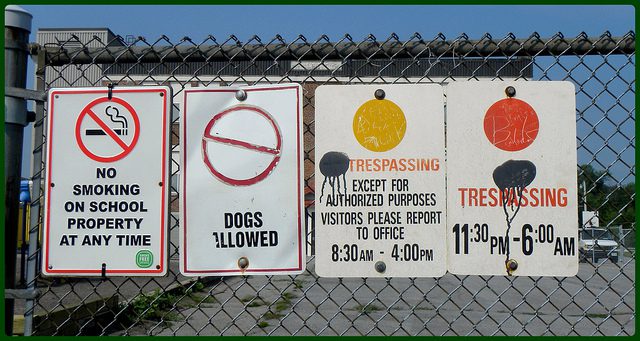
Easily one of the most frequent objections to Catholicism that I hear is that it’s a miserable religion made up of equally miserable rules.
(And miserable people!)
It’s the stuff of the Pharisees.
The stuff that Jesus railed against.
It’s all about following the rules.
I hear this objection most often from those I meet that were raised Catholic but, for whatever reason, left the faith.
There are a lot of those kinds of people, so I hear the objection a lot.
But the notion that Catholicism is a religion of rules is patently untrue.
And to equate Catholicism with the Pharisees of the New Testament is to deeply misunderstand Jesus’s interactions with the Jewish religious leaders of his time.
Catholicism has rules, certainly, like every single religion, discipline, or program that promises any sort of life-changing dimension to it. But these rules aren’t to be blindly or mindlessly followed, they aren’t the end itself, and they aren’t intended to exalt anybody in the eyes of anybody else.
The rules are a means to an end and, if anything, the rules are meant to humble.
And utterly transform.
And, yes, I recognize that many were taught by poorly formed priests. Many former and current Catholics had a horrible experience in religious education; a stifling upbringing by over-zealous parents; and many have experienced a complete lack of actual relationship within their religion.
And, so, what I want to say is this: What you’ve most likely heard about Catholicism and all its rules is completely untrue.
Please allow me to explain it a better way.
Rules for a Reason
Recognize, first, that the rules are in place for a reason.
Certainly, the Catholic Church is seen from the outside as a religion with rules but this kind of perspective belays a fundamental misunderstanding of what religion serves to do, and what rules are for.
Before lamenting the Sunday Obligation, the Church’s stance on birth control, and its categorized list of sins and vices, understand that these rules are in place to make us into saints.
Let me say that again, slowly: The rules of the Church are laid out to help make us into saints.
Fundamentally, this is the purpose of the Church.
To make us into saints.
What the Church teaches about certain aspects of how to live are, then, merely signposts to help guide us on what Jesus himself called the “straight and narrow.”
The rules of the Church are guidelines for how to live.
Now I know—I know!—that so many Catholics have never understood their Church in this way ever before. Surprisingly, for a lot of Catholics I’ve met, and continue to meet, this is a mind-blowing presentation of the Church’s teachings.
But it’s true.
I’ve met so many Evangelicals who were raised Catholic who felt drawn towards the Evangelical faith because of its straight-forward presentation of faith as a relationship with Jesus. Shockingly, this is the same message of the Catholic Church—and it always has been. Unfortunately, poor teaching and evangelization has resulted in an entire generation who didn’t get that particular memo.
A generation that was taught to follow the rules and nothing more.
But the rules aren’t the end themselves; they’re a means. A means to a better relationship with Jesus. A means to living more harmoniously within the Church and with each other. And, ultimately, a means to becoming a saint.
Do The Rules Make Us Holier Than Thou?
When Jesus, in his public ministry, encountered and clashed with the religious leaders of his day his message was not that their rules were necessarily inappropriate or out of line but that they weren’t following them for the right reasons.
The Pharasees sought to exhalt themselves in the eyes of their peers by how well they followed their own rules. They set up these rules as a burden for others so that they themselves would look better—that they would look holier than thou.
Jesus tore a strip off these leaders because of their pride and because of how they used the rules.
The Catholic Church has clear and concise teachings on many subjects, it classifies and categories a variety of vices and sins, and it constantly clashes with the secular values of the world because it sees the value of setting up guideposts for its followers.
Not so that we can point to all the wonderful things we’re doing—like the Pharasees—and boast of our own abilities. But so that we’re, shockingly, humbled by just how difficult it is to accomplish anything without grace.
Without Jesus Christ.
And without that relationship.
The so-called rules are there to help us to rely on Christ, to humble ourselves to the fact that we can’t do it alone, and to make us into saints.
The Sunday Obligation is Good Medicine
I have a brilliant non-Catholic friend who provided me with one of the most succinct explanation’s of one of Catholicism’s rules that I’ve encountered.
The Sunday Obligation, one of the Church’s rules, says that all Catholics must be at Mass on Sunday (or Saturday evening) unless they’re travelling, sick, or taking care of children.
At first blush, as an Evangelical, the idea that I had to be at church every week seemed a bit much.
Sure, as a serious disciple of Christ, I often was. In fact, it was only in the most rarest of occasions that I, as an Evangelical, wound up missing church. I went but I was never obliged to—although sometimes I didn’t really feel like going. Anyway, I went.
But the Catholic Church goes a step further: I have to go.
The rule seems awfully stern but consider, my friend said, how Pope Francis describes the Church: as a field hospital.
Imagine, then, going to the hospital for an illness, hearing the doctor’s diagnosis, and then refusing to take the medication.
This is the Sunday Obligation: the Church’s version of medicine to make us better—to make us into saints.
To keep us in the bosom of Christ, our savior.
Guideposts on How to Live More Holy
So, sure, the Catholic Church has rules but these are rules intended to help us grow closer to Christ and maintain that holy relationship. The rules aren’t the end themselves but point us to a particular goal: sainthood. And, sure, there are Catholics out there following the rules for all the wrong reasons; there are priests and laypeople out there teaching these reasons, too.
But understand this, that the Church is a saint-making machine and its rules are guideposts on how to live a more holy life. Ultimately, how to rely more and more not on ourselves but on Him who makes us holy.
And that sounds pretty good to me.
Stay in touch! Like The Cordial Catholic on Facebook:
Previous Post
October 12, 2016
Did Jesus Rise From the Dead (and Does It Matter)?
Next Post
October 26, 2016 Five Things You Need to Know About the Protestant Reformation
Browse Our Archives
Select a Category Appearances Christian Living Explaining the Faith Podcast Tough Questions Uncategorized Why I'm Catholic
Select a Month January 2024 December 2023 November 2023 July 2023 June 2023 May 2023 April 2023 March 2023 February 2023 January 2023 December 2022 November 2022 October 2022 September 2022 August 2022 July 2022 June 2022 May 2022 April 2022 March 2022 February 2022 January 2022 December 2021 November 2021 October 2021 September 2021 August 2021 July 2021 June 2021 May 2021 April 2021 March 2021 February 2021 January 2021 December 2020 November 2020 October 2020 September 2020 August 2020 July 2020 June 2020 May 2020 April 2020 March 2020 February 2020 January 2020 December 2019 November 2019 October 2019 September 2019 August 2019 July 2019 June 2019 May 2019 April 2019 March 2019 February 2019 January 2019 December 2018 November 2018 October 2018 September 2018 August 2018 July 2018 June 2018 May 2018 April 2018 March 2018 February 2018 January 2018 December 2017 October 2017 September 2017 July 2017 May 2017 April 2017 March 2017 February 2017 January 2017 December 2016 November 2016 October 2016 September 2016 August 2016 July 2016 June 2016 May 2016 April 2016 March 2016 February 2016 January 2016 December 2015 November 2015 October 2015 September 2015 August 2015 July 2015 June 2015 May 2015 April 2015 March 2015 February 2015 January 2015 December 2014 November 2014 October 2014
Follow Us!
TAKE THE
Religious Wisdom Quiz
Where did God tell Moses to remove his shoes because it was holy ground?
Select your answer to see how you score.
Mount Sinai Red Sea At the burning bush Egyptian palace
Support this
Column


Related posts from The Cordial Catholic
231: Becoming Catholic in a Church Crisis (w/...
212: Evangelicals, Here's How to Look for a...
205: Why You Should Love Mary More, and...
158: Purgatory for Evangelicals (w/ Dr. Brett Salkeld)
TRENDING AT PATHEOS Catholic

Rejecting Doom: Christian Hope And Human Action
Christianity is a religion of hope. We are to have hope and...

It’s What Comes From Within Which Matters
One of the most difficult things for us to understand is why...

Why I Choose the Eucharist Over the Sermon
Choose the Eucharist, Not the Sermon What are we supposed to get...

5 Design Elements Found in Spiritually Rooted Homes
Putting Spirituality Into Home Decor Our homes are more than our living...

Credo: A Story of God Told with the...
About 10 years ago, I began to imagine a personal "Credo" that...

The Anatomy of Divine Revelation in Catholic Thought
The claim that God has made Himself known to human beings is...
view all Catholic blogs
Ad-Free & Subscriber Log-In Subscription Support
- About Us
- 2026 Calendar
- Videos
- Podcasts
- Library of World Religions
- Faith In Media Tracker
- Advertise With Us
- Write for Us
- Privacy Policy
- Terms of Service
- Do Not Sell My Data
- Contact Us
- Radiant Digital
- Manage Newsletter Subscriptions
- Unsubscribe From Notifications
- Sitemap
Copyright 2008-2026, Patheos. All rights reserved.
Subscription Support Ad-Free & Subscriber Log-In
Follow Patheos