
BuddhistCatholicContemplativeEvangelicalGeneral ChristianHinduJewishLatter-day SaintMuslimNew VisionsProgressive Christian
Beliefs
- Buddhist
- Catholic
- Contemplative
- Evangelical
- General Christian
- Hindu
- Jewish
- Latter-day Saint
- More Voices
- Muslim
- New Visions
- Pagan
- Progressive Christian
Topics
- Religion News
- Food and Religion
- Sports and Religion
- Religious Art
- Religious Music and Entertainment
- Religious Events
- History and Religion
- Style and Religion
- Politics and Religion
- Women in Religion
- Recreation Outdoors and Religion
- Business Finance and Religion
- Careers Workplace and Religion
- Education and Religion
- Family Parenting and Religion
- Health Fitness and Religion
- Home and Religion
- Relationships and Religion
- Technology and Religion
- Travel and Religion
Columnists
- Buddhist Columnists
- Business Finance and Religion Columnists
- Careers Workplace and Religion Columnists
- Catholic Columnists
- Contemplative Columnists
- Education and Religion Columnists
- Evangelists Columnists
- Family Parenting and Religion Columnists
- General Christian Columnists
- Health Fitness and Religion Columnists
- Hindu Columnists
- History and Religion Columnists
- Home and Religion Columnists
- Jewish Columnists
- More Voices Columnists
- Latter Day Columnists
- Muslim Columnists
- New Visions Columnists
- Nonreligious Columnists
- Pagan Columnists
- Politics and Religion Columnists
- Progressive Columnists
- Recreation Outdoors and Religion Columnists
- Relationships and Religion Columnists
- Religion News Columnists
- Religious Art Columnists
- Religious Events Columnists
- Religious Music and Entertainment Columnists
- Sports and Religion Columnists
- Style and Religion Columnists
- Technology and Religion Columnists
- Travel and Religion Columnists
- Women in Religion Columnists
Resource Library
- 2026 Calendar
- Library of World Religions
- The 100 Most Holy Places on Earth
- Patheos Answers
- Podcasts
- Videos
- Faith Leaders Database
- Anglican Episcopalian
- Bahai
- Baptist
- Buddhism
- Christianity
- Confucianism
- Eastern Orthodoxy
- Hinduism
- Holiness and Pentecostal
- ISKCON
- Islam
- Judaism
- Lutheran
- Methodist
- The Church of Jesus Christ of Latter-day Saints
- New Age
- Paganism
- Presbytarian and Reformed
- Protestantism
- Religion Behind the Scenes
- Roman Catholic
- Scientology
- Shia Islam
- Sikhism
- Sufism
- Sunni Islam
- Taoism
- Zen
- See all religions
Research Tools
 Ad-Free & Subscriber Log-In Subscription Support
Ad-Free & Subscriber Log-In Subscription Support
Follow Patheos 

- Trending:
- Forgiveness
- |
- Marriage
- |
- Consciousness
- |
- Death Penalty
- |
- Election
- |
- Halloween
 The Cordial Catholic
- Home
- Catholic
- When Did the Historic Church Lose its Way?
When Did the Historic Church Lose its Way?
Last updated on: October 11, 2016 at 10:38 pm by K. Albert Little
When Did the Historic Church Lose its Way? 2016-10-11T22:38:13-04:00 K. Albert Little
Patheos Explore the world's faith through different perspectives on religion and spirituality! Patheos has the views of the prevalent religions and spiritualities of the world.
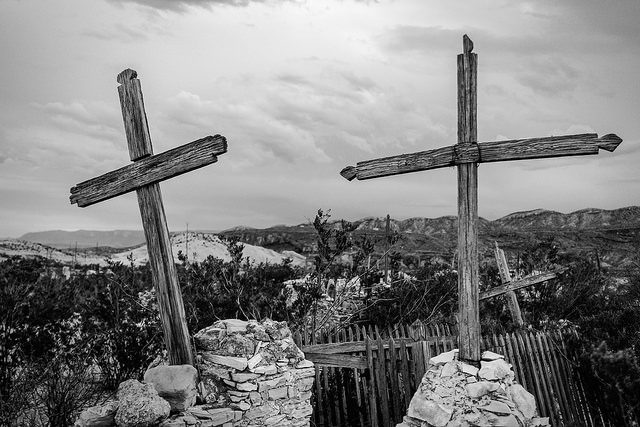
Photo Credit: drufisher.
As an Evangelical Protestant convert to Catholicism one of the most common objections I hear to the Catholic Church is an earnest one,
“The Church lost its way when it began to add stuff.”
The line of thinking runs like this:
Somewhere along the way, usually in the very early centuries, the Church got confused. They fell into a Old Testament legalistic tangle, they began to venerate the saints and Mary, and they effectively *Romanized—*becoming unrecognizable as the Church we read about in the New Testament.
The Catholic Church, as we know it today, is therefore a descendent of a church which became “lost” from the original Church that Jesus founded.
That Church—the Church of Jesus—was in some way reset and rebuilt by the Reformation which jettisoned all the built-up exclusively Catholic stuff.
It’s one of the most common objections I hear, and like I said, it’s a truly honest one.
But at the same time, it’s a truly confusing perspective.
I, as a devout Evangelical, wrestled with this same question. I had these exact same concerns. I laboured for years under the notion that, indeed, the Catholic Church had “added” onto the simple Gospel of Christ and I therefore rejected the Catholic Church.
I hope, as succinctly as possible, to provide a different perspective for my Evangelical friends.
Because I changed my mind.
Because I dug into the source material—the actual history of the Church—and I made some pretty incredible discoveries.
And because I love you, and I pray you’d consider another point of view, one which I’ve found to be far more compelling biblically, historically, and intellectually than the notion that something got “lost” along the way.
Because I don’t think that it did.
Jesus Founded a Church, Was it Overcome?
Jesus’s words in Matthew 16:18 could not be clearer,
“I also say to you that you are Peter, and upon this rock I will build My church; and the gates of Hades will not overpower it.”
Jesus founded a Church. This is clear. Jesus tells us that the “gates of Hades” will never overpower His Church.
If the Church somehow lost its way, and somehow began to add stuff as early as the first few centuries after Jesus’s death than Jesus must’ve been a liar.
How could the Church be overcome so quickly?
Remarkably, this was never the argument of the Reformers, or even of any of the early schismatics who were excommunicated by the Church for teaching heresies. Heresies like the Eucharist not being the genuine blood and body of Jesus Christ. While the Reformers certainly argued that the Church had failed to truly understand the Bible, they never argued that it had lost its way as early as the first few centuries—that Jesus’s Church had been overcome so quickly.
Incredibly, if the Early Church lost it’s way within the first few centuries this must mean that Jesus was wrong or lied or wasn’t who He said He was after all because His promise was explicitly clear.
Rejecting the Tradition but Keeping the Bible
I’ve shared this paraphrase of the incredible G.K. Chesterton by his biographer Dale Ahlquist elsewhere but it’s significance for our present purpose cannot be ignored,
“Chesterton says he can understand someone looking at a Catholic procession, at the candles and the incense and the priests and the robes and the cross and the scrolls, and saying “It’s all bosh.” But what he cannot understand is anyone saying, “It’s all bosh — except for the scrolls. We’re going to keep the scrolls. In fact, we’re even going to use the scrolls against the rest.”
An objection which says that the Early Church lost it’s way, quite early on, not only negates the promise which Jesus made to His Church (never to perish) but also resists logic.
While the apostles began writing down the teachings of Jesus, and writing to each other and their communities, as early as about 33AD, the authoritative canon of the New Testament wasn’t settled until the 300’s.
That means for some 300 years following Jesus’s death and the beginning of the Church Christians didn’t have Scripture to fact check their beliefs against. While we certainly know that they had access to various documents and it was, indeed, the affirmation of those reading these documents which helped lend credibility to them, their primary mode of passing on their faith and their beliefs was through tradition.
Jesus didn’t leave us any written record, and in those early days the faith was passed on from generation to generation by tradition.
There’s no way around that.
And by the time the biblical canon was settled it was settled by a decidedly Catholic Church. A Church which had “added” all sorts of elements like a Mass which looks strikingly similar to the one celebrated today, a robust understanding of the Eucharist as the blood and body of Jesus, a laudable tradition of the veneration of the saints and the Blessed Virgin Mary, prayers for the dead, and an understanding of the necessity of baptism for salvation.
In fact it was Augustine, a Catholic bishop who espoused fully Catholic theology and doctrine, in whom we find the first complete list of what would later become the biblical canon.
An Augustine who writes unequivocally about the Eucharist as the actual body and blood of Christ.
As G.K. Chesterton argues, it’s completely illogical to argue in favour of taking the Bible (which the Catholic Church affirmed) while rejecting the rest of its tradition.
If the Early Church lost its way then it lost its way; we cannot pick and choose.
The Reformation Didn’t Jettison the Catholic Bits
Finally, an argument that says the Early Church lost its way not only needs to sideline the promise made by Jesus, and confusingly step around all the other stuff which the Church affirmed alongside the Bible, but it needs to come to terms with the reality of the Reformation.
And it can be a confusing one.
I’d understood, and argued myself, that the Reformation put the Christian Church back on its proper footing. Lots have argued this before me, and lots will argue this after me. There’s nothing new under the sun, but this argue fails to actually appreciate or understand the Reformation in its right context.
The Early Reformers did not see themselves as resetting the Church back to a time before it became burdened with all the “Catholic” trappings.
Huldrych Zwingli, who went the furthest in his rejection of what Evangelicals may see as Catholic add-ons was extreme, to say the least, and was persecuted not only by Catholics but chiefly by other Reformed Christians for his extremism. But even Zwingli didn’t see himself as setting the Church back on a path which it had strayed from over a 1,000 years prior, Zwingli’s doctrine flatly rejected what the Church had believed from the beginning, and revived what were—perhaps unknowing to him—ancient heresies which the Church had dealt with in its infancy.
For their parts, Calvin and Luther never called for a wholesale discarding of the bits which we might call “Catholic” either. Look, for example, at a modern day Lutheran worship service and I can point out to you how very similar in all ways it is to a Catholic Mass.
Likewise, far from prying the Gospel from a Catholic Church which had become overly politcized, all the Early Reformers themselves were actually attempting, according to historical record, to have their various interpretations of Scripture validated by none other than the secular princes and rulers of Europe.
While, indeed, the Catholic Church was in many ways a political organism it’s easy to look back in hindsight, with our very different-colour spectacles, and see all the faults. A better perspective, admittedly, requires a little legwork (and a bit of reading) but provides a far more complete picture.
Yes, the Catholic Church was political, it was the largest institution in the European world, but the Reformers didn’t laudably free the Gospel from the clutches of politics—they proffered the secular princes with another way of seeing it.
A way which often freed them from having to respect the moral teachings and authority of the Catholic Church.
Paul says it best in Galatians,
As we have said before, so I say again now, if any man is preaching to you a gospel contrary to what you received, he is to be accursed!
Remember, the gospel of the Reformers was a gospel contrary to what had been received for the prior 1,500 years.
Incredibly, if one counts the Church as having become “lost” and the Reformers as having “found” it again, one must make a wholly shocking claim about the salvation of those faithful Christians that lived and worshipped in the interim thousand and a half years—were they somehow saved within the lost Church?
Was that God’s plan?
A Different Narrative Instead
In the end, there are all sorts of ways to object to the Catholic Church. I’ve heard many of them, and I’ve made many more myself. But, ultimately, I’ve found, many stem simply from a misunderstanding of either what the Catholic Church stands for, and teaches, or a misunderstanding of our shared Christian history.
I’ve been there, and it’s with nothing but love that I offer this alternative narrative.
If the Early Church went wrong then when? And how does this jive with Jesus’s clear and unmistakable words as Matthew records them?
If the Early Church added on all sorts of unnecessary bits, if they fallaciously fell into Old Testament legalism and idolatry then how can we accept a Bible from the very same bishops? And Pope?
And if the Reformation really set right the Church and jettisoned the unfortunate add-ons then what about the salvation of all those Christians in the prior 1,500 years? And what about the fact that none of the Reformers actually saw themselves as performing that supposed mission? And the fact that their teachings were remarkably tainted with the Catholic bits?
I submit, instead, that the Church did not lose its way. While its denizens haven’t been perfect, while the Reformation was a good thing and that the Church had to reform (it did, with the Catholic Counter-Reformation), I would argue that Jesus didn’t break His promise. The Church didn’t lose its way. And all that Catholic stuff is beautiful, incredible, and based on the Sacred Tradition (which includes the Bible) passed down from Christ, to His apostles, to His Church.
Stay in touch! Like The Cordial Catholic on Facebook:
Previous Post
October 7, 2016
Everything I Never Knew About the Rosary
Next Post
October 12, 2016 Did Jesus Rise From the Dead (and Does It Matter)?
Browse Our Archives
Select a Category Appearances Christian Living Explaining the Faith Podcast Tough Questions Uncategorized Why I'm Catholic
Select a Month January 2024 December 2023 November 2023 July 2023 June 2023 May 2023 April 2023 March 2023 February 2023 January 2023 December 2022 November 2022 October 2022 September 2022 August 2022 July 2022 June 2022 May 2022 April 2022 March 2022 February 2022 January 2022 December 2021 November 2021 October 2021 September 2021 August 2021 July 2021 June 2021 May 2021 April 2021 March 2021 February 2021 January 2021 December 2020 November 2020 October 2020 September 2020 August 2020 July 2020 June 2020 May 2020 April 2020 March 2020 February 2020 January 2020 December 2019 November 2019 October 2019 September 2019 August 2019 July 2019 June 2019 May 2019 April 2019 March 2019 February 2019 January 2019 December 2018 November 2018 October 2018 September 2018 August 2018 July 2018 June 2018 May 2018 April 2018 March 2018 February 2018 January 2018 December 2017 October 2017 September 2017 July 2017 May 2017 April 2017 March 2017 February 2017 January 2017 December 2016 November 2016 October 2016 September 2016 August 2016 July 2016 June 2016 May 2016 April 2016 March 2016 February 2016 January 2016 December 2015 November 2015 October 2015 September 2015 August 2015 July 2015 June 2015 May 2015 April 2015 March 2015 February 2015 January 2015 December 2014 November 2014 October 2014
Follow Us!
TAKE THE
Religious Wisdom Quiz
Jesus raised whose daughter from the dead?
Select your answer to see how you score.
Jairus Thaddeus Bartholomew Darius
Support this
Column


Related posts from The Cordial Catholic

232: The Trajectory of Conversion (w/ Phillip Campbell)
230: One Heck of a Conversion Story (w/...

229: Can Catholics and Evangelicals Agree on How...

227: What was Medieval Catholicism Really Like? (w/...
TRENDING AT PATHEOS Catholic

Rejecting Doom: Christian Hope And Human Action
Christianity is a religion of hope. We are to have hope and...

It’s What Comes From Within Which Matters
One of the most difficult things for us to understand is why...

Why I Choose the Eucharist Over the Sermon
Choose the Eucharist, Not the Sermon What are we supposed to get...

5 Design Elements Found in Spiritually Rooted Homes
Putting Spirituality Into Home Decor Our homes are more than our living...

Credo: A Story of God Told with the...
About 10 years ago, I began to imagine a personal "Credo" that...

The Anatomy of Divine Revelation in Catholic Thought
The claim that God has made Himself known to human beings is...
view all Catholic blogs
Ad-Free & Subscriber Log-In Subscription Support
- About Us
- 2026 Calendar
- Videos
- Podcasts
- Library of World Religions
- Faith In Media Tracker
- Advertise With Us
- Write for Us
- Privacy Policy
- Terms of Service
- Do Not Sell My Data
- Contact Us
- Radiant Digital
- Manage Newsletter Subscriptions
- Unsubscribe From Notifications
- Sitemap
Copyright 2008-2026, Patheos. All rights reserved.
Subscription Support Ad-Free & Subscriber Log-In
Follow Patheos