
BuddhistCatholicContemplativeEvangelicalGeneral ChristianHinduJewishLatter-day SaintMuslimNew VisionsProgressive Christian
Beliefs
- Buddhist
- Catholic
- Contemplative
- Evangelical
- General Christian
- Hindu
- Jewish
- Latter-day Saint
- More Voices
- Muslim
- New Visions
- Pagan
- Progressive Christian
Topics
- Religion News
- Food and Religion
- Sports and Religion
- Religious Art
- Religious Music and Entertainment
- Religious Events
- History and Religion
- Style and Religion
- Politics and Religion
- Women in Religion
- Recreation Outdoors and Religion
- Business Finance and Religion
- Careers Workplace and Religion
- Education and Religion
- Family Parenting and Religion
- Health Fitness and Religion
- Home and Religion
- Relationships and Religion
- Technology and Religion
- Travel and Religion
Columnists
- Buddhist Columnists
- Business Finance and Religion Columnists
- Careers Workplace and Religion Columnists
- Catholic Columnists
- Contemplative Columnists
- Education and Religion Columnists
- Evangelists Columnists
- Family Parenting and Religion Columnists
- General Christian Columnists
- Health Fitness and Religion Columnists
- Hindu Columnists
- History and Religion Columnists
- Home and Religion Columnists
- Jewish Columnists
- More Voices Columnists
- Latter Day Columnists
- Muslim Columnists
- New Visions Columnists
- Nonreligious Columnists
- Pagan Columnists
- Politics and Religion Columnists
- Progressive Columnists
- Recreation Outdoors and Religion Columnists
- Relationships and Religion Columnists
- Religion News Columnists
- Religious Art Columnists
- Religious Events Columnists
- Religious Music and Entertainment Columnists
- Sports and Religion Columnists
- Style and Religion Columnists
- Technology and Religion Columnists
- Travel and Religion Columnists
- Women in Religion Columnists
Resource Library
- 2026 Calendar
- Library of World Religions
- The 100 Most Holy Places on Earth
- Patheos Answers
- Podcasts
- Videos
- Faith Leaders Database
- Anglican Episcopalian
- Bahai
- Baptist
- Buddhism
- Christianity
- Confucianism
- Eastern Orthodoxy
- Hinduism
- Holiness and Pentecostal
- ISKCON
- Islam
- Judaism
- Lutheran
- Methodist
- The Church of Jesus Christ of Latter-day Saints
- New Age
- Paganism
- Presbytarian and Reformed
- Protestantism
- Religion Behind the Scenes
- Roman Catholic
- Scientology
- Shia Islam
- Sikhism
- Sufism
- Sunni Islam
- Taoism
- Zen
- See all religions
Research Tools
 Ad-Free & Subscriber Log-In Subscription Support
Ad-Free & Subscriber Log-In Subscription Support
Follow Patheos 

- Trending:
- Forgiveness
- |
- Marriage
- |
- Consciousness
- |
- Death Penalty
- |
- Election
- |
- Halloween
 The Cordial Catholic
- Home
- Catholic
- What Praying to the Saints is Not
What Praying to the Saints is Not
Last updated on: June 4, 2019 at 12:25 pm by K. Albert Little
What Praying to the Saints is Not 2019-06-04T12:25:43-04:00 K. Albert Little
Patheos Explore the world's faith through different perspectives on religion and spirituality! Patheos has the views of the prevalent religions and spiritualities of the world.
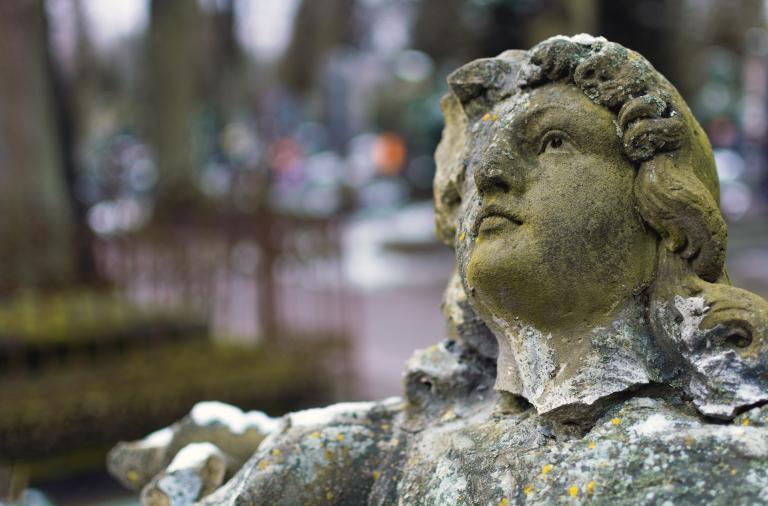
As a non-denominational evangelical exploring the Catholic faith praying to the saints was one of the very first topics I explored.
In the nominally Pentecostal church of my youth we drew a distinct line around anything we felt might cross into the territory of worship. We were, you might say, obsessed with avoiding making anything into an idol. Our church worship space was adorned with nothing more than a simple wooden cross, off to the side.
Needless to say, we didn’t post pictures, let alone talk about the saints.
It was, in hindsight, a very admirable kind of piety.
Like Puritans or the Amish, we wanted to avoid even the suggestion of sin. Catholics, ironically enough, call this the “near occasion” of sin; we didn’t have a term for it as Pentecostals. We didn’t want to get anywhere close to committing a sin, so we stayed as far away as possible. And, goes the logic, if we didn’t have any images of anything then we couldn’t fall prey to worshipping them.
But this idea, this obsessive avoidance of images, isn’t even biblical. Remember, God commanded Moses to make the image of a serpent to go atop his staff. And what about the elaborate decorations on the Ark of the Covenant? Wouldn’t the Israelites fall prey to worshipping that?
As my understanding of what consisted of “worship” of images and idols began to erode so did my questions around the “worship” of the saints.
Catholics don’t worship the saints.
Catholics, in concert with the Early Christian Church and Christians down through history, believe that the Church of Christ extends beyond death. It’s simple, really: if Christ “tore the veil” between life and death by coming and dying for us and rising from the dead, and if, as the New Testament tells us, there is no longer death for those in Christ, well then, dead Christians aren’t really dead.
Instead, deceased Christians live on with Christ in eternity.
And if deceased Christians are still alive with Christ then they can, with Christ, pray for us.
This is the simple, logically reality of what we Catholics call the “Communion of the Saints.” And it is, historically, what Christians believed without wavering since the beginning of the Christian Church. Indeed, history tells us that the very first Christians would appeal to the prayers of their predeceased brothers and sisters believing that because they lived in Christ, and died in Christ, they were able to hear these prayers of the faithful on earth and to pray for them. And how much more powerful are the prayers of those in the presence of God? In Heaven?
But what if we fall into the old trap of idol worship? What if the saints begin to take the place of Jesus?
I recently had the pleasure of sitting down with my good friend JonMarc Grodi to talk about this very topic and he said something which I had never heard before. It was shocking.
He said, “Worship is like murder.”
And he’s right.
JonMarc unpacked it eloquently like this. You can’t murder someone by accident, it requires intention and, depending on the degree, some serious planning. In the same way, says JonMarc, you can’t worship someone by accident.
Worship, like murder, requires intention.
Yes, we can let things crowd God out of the way but this is true for ordinary, everyday things as well. I am too tired to pray so I watch Netflix instead. I neglect showing my neighbour kindness because I’m too busy and have to mow the lawn. I could make it to Mass and not sleep in but I was out so late last night.
We can crowd God out with all kinds of things but we don’t need to worry about worshipping unintentionally because worship requires intent.
When we pray to the saints—which merely means we are “speaking” to the saints, asking them to pray for us—we are not confusing them with God, we are not worshipping them, because that would require an intentional act. Instead, we ask the saints to pray for us because they are our friends, our mentors, our examples of how to live holy lives and they are with God right now in eternity.
The act of drawing a line around sin is a noble one. We ought to stay as far away from sin as possible. But to jettison our ancient, venerable practice of talking to and living in relationship with the saints is an unfortunate and lamentable byproduct of going a bit too far. The saints, our predeceased brothers and sisters in Christ, can and want to pray for us and alongside us and it’s our loss if we don’t access that deep, deep pool of grace that’s waiting there and available to plumb.
And we can all stop worrying about accidentally committing murder in the process.
If you’re interested in hearing more on this topic, listen to The Cordial Catholic Podcast below,
Previous Post

May 29, 2019
009: How the Saints Can Help Us Be Holy (w/ JonMarc Grodi)
Next Post

June 5, 2019 010: The Shroud of Turin – Everything You Need to Know! (w/ Dr. Cheryl White)
Browse Our Archives
Select a Category Appearances Christian Living Explaining the Faith Podcast Tough Questions Uncategorized Why I'm Catholic
Select a Month January 2024 December 2023 November 2023 July 2023 June 2023 May 2023 April 2023 March 2023 February 2023 January 2023 December 2022 November 2022 October 2022 September 2022 August 2022 July 2022 June 2022 May 2022 April 2022 March 2022 February 2022 January 2022 December 2021 November 2021 October 2021 September 2021 August 2021 July 2021 June 2021 May 2021 April 2021 March 2021 February 2021 January 2021 December 2020 November 2020 October 2020 September 2020 August 2020 July 2020 June 2020 May 2020 April 2020 March 2020 February 2020 January 2020 December 2019 November 2019 October 2019 September 2019 August 2019 July 2019 June 2019 May 2019 April 2019 March 2019 February 2019 January 2019 December 2018 November 2018 October 2018 September 2018 August 2018 July 2018 June 2018 May 2018 April 2018 March 2018 February 2018 January 2018 December 2017 October 2017 September 2017 July 2017 May 2017 April 2017 March 2017 February 2017 January 2017 December 2016 November 2016 October 2016 September 2016 August 2016 July 2016 June 2016 May 2016 April 2016 March 2016 February 2016 January 2016 December 2015 November 2015 October 2015 September 2015 August 2015 July 2015 June 2015 May 2015 April 2015 March 2015 February 2015 January 2015 December 2014 November 2014 October 2014
Follow Us!
TAKE THE
Religious Wisdom Quiz
What is the Christian response to being wronged?
Select your answer to see how you score.
Forgive Hold a grudge Gossip Revenge
Support this
Column


Related posts from The Cordial Catholic

232: The Trajectory of Conversion (w/ Phillip Campbell)

228: The Catholic Tools for Spiritual Warfare (w/...

227: What was Medieval Catholicism Really Like? (w/...
201: Eucharistic Miracles, Marian Apparitions, and More... (w/...
TRENDING AT PATHEOS Catholic

Rejecting Doom: Christian Hope And Human Action
Christianity is a religion of hope. We are to have hope and...

It’s What Comes From Within Which Matters
One of the most difficult things for us to understand is why...

Why I Choose the Eucharist Over the Sermon
Choose the Eucharist, Not the Sermon What are we supposed to get...

5 Design Elements Found in Spiritually Rooted Homes
Putting Spirituality Into Home Decor Our homes are more than our living...

Credo: A Story of God Told with the...
About 10 years ago, I began to imagine a personal "Credo" that...

The Anatomy of Divine Revelation in Catholic Thought
The claim that God has made Himself known to human beings is...
view all Catholic blogs
Ad-Free & Subscriber Log-In Subscription Support
- About Us
- 2026 Calendar
- Videos
- Podcasts
- Library of World Religions
- Faith In Media Tracker
- Advertise With Us
- Write for Us
- Privacy Policy
- Terms of Service
- Do Not Sell My Data
- Contact Us
- Radiant Digital
- Manage Newsletter Subscriptions
- Unsubscribe From Notifications
- Sitemap
Copyright 2008-2026, Patheos. All rights reserved.
Subscription Support Ad-Free & Subscriber Log-In
Follow Patheos